DbcultAccessing Vault...
Cult Review
Senior Film Conservator
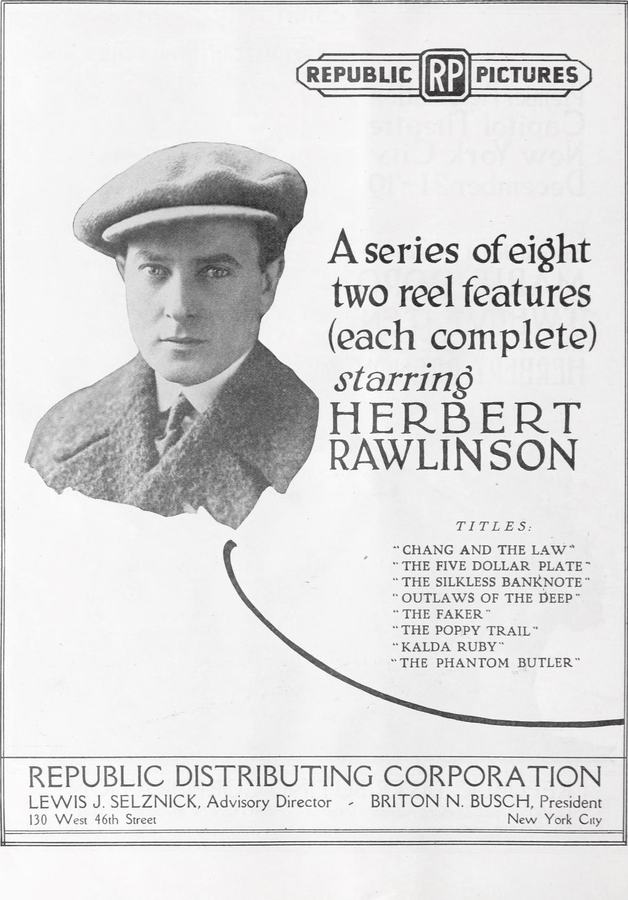
A nickelodeon fever dream soaked in brimstone and lemonade, The Five Dollar Plate lands like a moth with singed wings against the klieg light of 1925.
Watch it once and you swear the celluloid itself exhales prison air—cold, metallic, laced with counterfeit ink. Watch it twice and you realize the film’s true protagonist is absence: the absent sight of Herbert Rawlinson’s nameless engraver, the absent mother swallowed by influenza, the absent moral absolutes that most silent crime pictures still clung to like life rafts.
Director William J. Flynn, a former Secret Service ace, threads the narrative with procedural DNA: the way a treasury plate is etched, how rag paper whispers under a watermark lamp, the exact tremor in a counterfeiter’s wrist when he hears a distant siren. Yet the camera—courtesy of gritty German émigré Günther Krampf—cares less for documentation than for chiaroscuro poetry. Every beam of light is a scalpel, every shadow a confession booth.
Rawlinson’s performance is a masterclass in tactile cinema. His eyes, milked over like opals left in the rain, still manage to accuse, to yearn, to terrorize. When he runs his fingers across his daughter’s face—Ann Dvorak at six years old, all bobbed hair and orphanage wisdom—the gesture feels invasive and sacramental at once. You remember that touch was the first language of silent film, and here it regains its primordial power.
Dvorak, billed simply as “Little Sister,” hijacks every frame without the aid of intertitles. Her reactions are micro-storms: a blink held half a second too long, a jaw slackening at the sound of a gun hammer. Compare her to the more saccharine juvenile turns in The Dream Girl or Just Sylvia and you’ll see how Flynn and Mizner refuse to let childhood equal innocence. This kid knows the price of bread and the weight of a secret. She negotiates with gangsters using cherry candy as currency; she lies to the cops with the fluency of a riverboat gambler.
Herbert Rawlinson shares the screen with another Herbert—Herbert Greaves as Detective Arnold—creating a mirroring effect that feels like a hall of ethical funhouse mirrors. Arnold’s morality is bespoke: measured, cut, hemmed to fit the exigencies of justice. One minute he’s slipping nickels into the newsstand so the blind man can eat; the next he’s using the child as an unwitting bloodhound. Greaves plays him with a fatigue that smells of midnight coffee and unreported bribes. You can’t decide whether to hug him or testify against him.
This ambiguity vaults the film leagues past contemporaries like The Devil's Trail, where law and lawlessness wear color-coded hats. Flynn knows that in post-war America, the line between Treasury agent and racketeer is just a ledger page waiting to be cooked.
Mid-film, the narrative pivots from urban alleyways to a shuttered amusement pier. Here the Harrison plate—an innocuous copper sheet capable of birthing five-dollar bills—becomes the Maltese Falcon of the proletariat. The gang’s kingpin, a dandy with a gardenia who speaks only in past tense, offers the blind man “a lake of ink for your night.” The exchange happens inside the skeleton of a Tilt-A-Whirl while calliope music hiccups from a broken organ. Shadows fall through the ride’s ribs like black confetti. It’s as if Lang and Murnau sneaked into an American backlot and graffitied their nightmares across the celluloid.
Technically, the sequence is a miracle of early handheld camerawork. Krampf straps a Debrie camera to a carnival worker and lets it lurch, creating a disembodied waltz that predates the roller-coaster shot in Sullivan’s Travels by sixteen years. The plate itself is never shown in full; we glimpse serifs and scrollwork through half-open satchels, a visual tease that turns the MacGuffin into a ghost. Compare this restraint to the gleeful expositions in The Burglar and the Lady, and you’ll appreciate the film’s trust in audience imagination.
For 1925, the movie’s sexual politics skew surprisingly progressive. The only female gangster, a flapper sharpshooter named Remi, wears tuxedo trousers and quotes Salome while target-practicing on porcelain dolls. Her comeuppance—being forced to sew prison uniforms—feels less like moral correction and more like systemic vengeance against gender nonconformity. The film doesn’t forgive her; instead it mourns her, a nuance miles ahead of the virgin-whore binary in A Modern Magdalen.
Surviving prints lack an original score, so modern screenings often invite improvisational ensembles. I caught a 16 mm exhibition at the Roxie with a trio wielding accordion, musical saw, and typewriter. When the blind man first fondles a genuine five-dollar note, the accordion exhaled a chord that smelled of wet paper and fear. The audience gasped—not at the image, but at the synesthetic punch. Silence, it turns out, is just another frequency waiting for contraband resonance.
William J. Flynn brings the bureaucratic rigor of a man who once catalogued every mole on every forger in Sing Sing. Wilson Mizner, the famed wit who claimed “gambling is the only sure way to make money while remaining a gentleman,” sprinkles epigrams that gleam like brass knuckles: “A blind man can’t see the wall, but he can still paste it with bills.” Together they craft dialogue cards sharp enough to shave with. One intertitle reads: “Money is only paper until memory prints its face.” It’s a line that echoes through the ages every time crypto crashes or NFTs evaporate.
Set the film beside The Forbidden City and you notice how both use architecture as psychological echo chambers—palace labyrinths vs. carnival detritus. Pair it with The Return of O'Garry and you’ll see mirrored patriarchal guilt: fathers returning from exile to children who must parent them. Yet none of those films dare the ethical hopscotch Flynn plays here, where lawmen weaponize minors and criminals mentor the blind.
The only known surviving element is a French Pathé 16 mm print discovered in a nunnery outside Lyon, mislabeled as Ambroise au Paradis. The George Eastman Museum spearheaded a 4 K scan, coaxing lavender hues from nitrate rot. Streaming rights are tangled in international limbo; your best bet is a repertory house or a bootleg torrent whispered among cine-nuns. Physical media? Not yet. A Kickstarter for a Blu-ray with Tony Rayns commentary languishes at 42 percent. Do what morality and geography allow.
So why should you chase a film that exists in fragments and whispers? Because The Five Dollar Plate reminds us that American cinema’s soul was never pure; it was printed on contraband plates in backrooms where children counted bills by candlelight. It anticipates the moral quicksand of noir, the child-parent role reversal of Italian neorealism, the tactile obsession of Amour. It’s a nickel bought for a dollar, a blind man’s map of a sighted world’s sins.
Seek it, if only to remember that every image has a counterfeit double, and every ticket buys you not just a story, but the smudged fingerprints of everyone who once touched the money that bought the dream.
IMDb —
1924
Community
Log in to comment.