DbcultAccessing Vault...
4.3/10
Senior Film Conservator
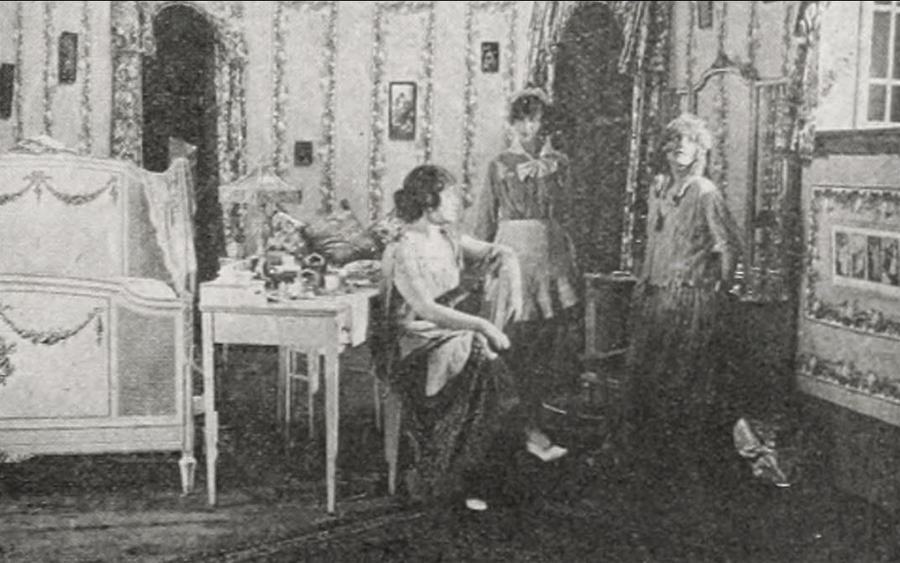
A definitive 4.3/10 rating for a film that redefined the boundaries of cult cinema. The Fixer remains a cornerstone of transgressive art.
A name is a fragile currency; spend it twice and the second purchase may cost you blood-orange sunsets and every future dawn.
Willis M. Goodhue’s The Fixer—released in the same twelvemonth that hyper-inflation turned German cinemas into flea markets—understands this axiom with the marrow-deep cynicism of a card-sharp counting aces. The film is a three-act confidence trick played on its characters, its audience, and, cheekily, on the censor boards who mistook its breezy slapstick for harmless hokum. Yet beneath the custard-pie chassis hums a dirge about class mobility: how far a man can climb when the rungs are made of other people’s reputations.
Director John Nicholson—barely remembered outside archival dissertations—shoots Rye, New York as though it were a snow-globe diorama: white clapboard mansions pinned under a sky so pure it feels sarcastic. Note the repeated motif of mirrored doorways: every time a character crosses a threshold he is doubled, tripled, until the screen becomes a kaleidoscope of fraudulent selves. The Mexico sequences, by contrast, are bathed in umber and rust, the tinting so aggressive you can almost smell the mesquite and gunpowder. This chromatic whiplash—pastoral ivory to imperial ochre—mirrors the moral vertigo of assuming another man’s history.
Snitz Edwards, whose profile resembles a question mark that doubts itself, plays Christopher Cutting with the furtive glee of a banker juggling books at midnight. Watch his eyes in the calaboose scene: they flicker left-right-left like a metronome counting the seconds until the next lie is born. The performance is silent-film venom delivered with a smile borrowed from a choirboy.
Modern comedies often mistake volume for wit; The Fixer prefers clockwork. Consider the sugar-cube dice gag that opens the bachelor supper: the cubes are filmed in extreme close-up, their granular faces resembling miniature Alpine ranges. When the constable’s billy-club scatters them, the ensuing avalanche is under-cranked so that each cube hops like a startled moth. The absurdity is both tactile and metaphysical—fortune reduced to confectionery, authority reduced to slapstick.
Equally sly is the chloroform sequence. Cutting soaks his handkerchief, but the camera lingers on the bottle’s label: “For Dental Use Only.” A single intertitle later, the constable snores like a walrus with sinus trouble, and the bottle re-appears—now half-empty—in the pocket of a man about to be married. The implication? Matrimony itself is a kind of anesthesia.
Critics hunting for lineage will spot DNA from Ready Money—another tale where liquidity trumps legitimacy—but The Fixer is nastier, more feral. Where The Lion and the Mouse moralizes about power, this picture shrugs: power is simply the best story that survives the night. Admirers of Germinal; or, The Toll of Labor will note a shared obsession with bodies commodified—yet here the mine is society itself, and the ore is identity.
Isabel Dare, essayed by Alma Hanlon with a regal fatigue, is no wilted magnolia. She wields widowhood like a equity stake, calculating each suitor’s net emotional worth. Her terror upon glimpsing the presumed-resurrected husband is filmed in a Dutch angle so severe the chandeliers look like dangling question marks. The birthmark reveal—executed via a handheld mirror passed among servants—becomes a symposium on male gaze: the woman’s body as palimpsest, overwritten by male dread.
Dorothy, the daughter, appears at first to embody the flapper-in-waiting, yet her farewell to Lieutenant Hemmingway is shot in chiaroscuro; her tears glisten like shrapnel. The film refuses her the closure of a wedding, granting instead the vertiginous romance of postponed uncertainty—a trope later pilfered by A Victim of the Mormons.
Though released two years before The Jazz Singer detonated the talkie boom, The Fixer anticipates sound cinema by choreographing noise we cannot hear: the constable’s boots echo like gunshots on cobblestone; the rustle of banknotes is implied by the way Cutting licks his thumb before counting. The intertitles, penned by Goodhue, crackle with flapper slang: “Zack’s nappers nabbed the whole shebang—now the big cheese is in a pickle!” Try reading that without hearing the syncopated clatter of a typewriter hammering out tomorrow’s headlines.
The Mexico chapters risk lapsing into gringo caricature—banditos with gold teeth and serapes stitched from cliché. Yet Nicholson undercuts imperial swagger by making the American protagonists buffoons: they swagger into camp wearing uniforms tailored on Fifth Avenue, only to be strip-searched by rebels who can’t read the insignias but know silk when they loot it. The real diplomat’s eventual appearance—sunburned, threadbare, fluent in dialect—serves as an unspoken indictment of Yankee entitlement.
The climactic duel is staged in a half-built courthouse whose scaffolding resembles a rib-cage. Bill, draped in braid like a Christmas ham, faces the real Fowler, whose plain blue coat bears only dust. The camera alternates between medium shots—each man’s pistol arm trembling like a tuning fork—and overhead vertigo shots that make the onlookers resemble betting chips on a green felt table. When Cutting’s brick arcs from the shadows, the film achieves a moral inversion: the fixer who once used cash now resorts to masonry, a blunt metaphor for capitalism’s collapse into brute force.
In the final reel, reconciliation arrives not via truth but via exhaustion. Lieutenant Hemmingway persuades the diplomat to “let the parade pass,” a euphemism for institutional lying. Isabel retains her widow’s leverage, Dorothy her tearful embrace, and Cutting—left alone on the courthouse steps—counts invisible coins in his palm, discovering only splinters. The iris closes on his grin, equal parts rictus and resignation, a perfect encapsulation of the Jazz Age’s article of faith: the fix is always temporary, the bill always overdue.
Only one 35mm nitrate print is known to survive, housed at the Cinémathèque de Toulouse, rescued from a basement flooded by the Garonne in 1935. A 4K photochemical restoration premiered at Pordenone 2019, accompanied by a new score—tuba, celesta, and slide-whistle—performed by the ensemble Le Cinéma Sauvage. Kino Lorber’s 2022 Blu-ray offers both the restoration and a 1918 short, The Family Cupboard, as a chaser, though the disc is region-locked. For streamers, the film flickers on Criterion Channel during silent-comedy rotations, usually buried three pages deep beneath Keaton and Lloyd.
The Fixer is a venom-laced bonbon: you taste the sugar first, then the arsenic warmth spreads through the bloodstream. It is less a comedy than a forensic report on the moment America learned that identity—like credit—could be leveraged, bundled, and sold back to the desperate at compound interest. View it, then glance at your driver’s license and wonder how many bricks are airborne, waiting.
IMDb —
1928
Community
Log in to comment.