DbcultAccessing Vault...
Cult Review
Senior Film Conservator
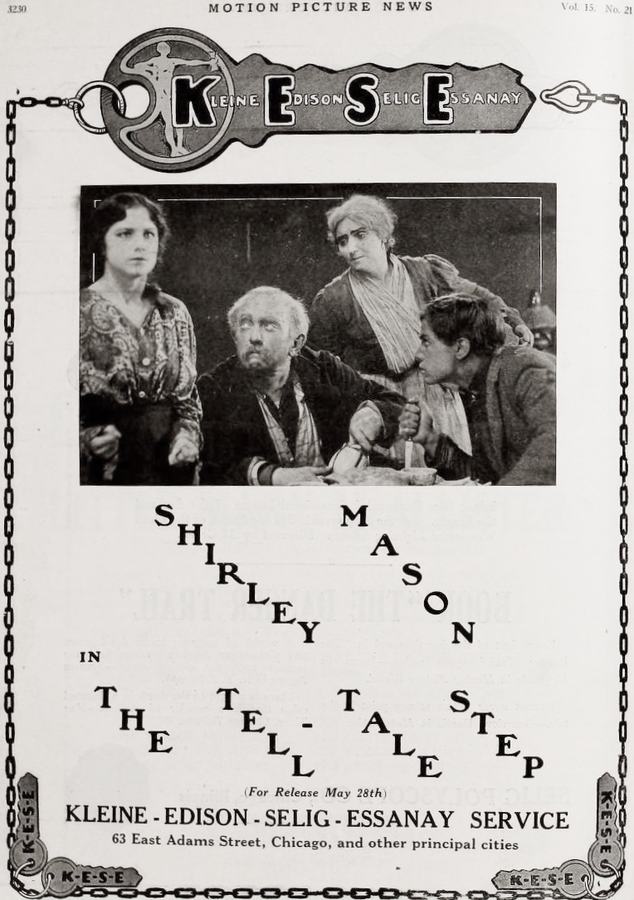
In the annals of early cinema, certain films emerge not just as historical artifacts but as profound statements on the human condition, pushing the boundaries of storytelling even without the aid of spoken dialogue. One such gem is 'The Tell-Tale Step', a silent era masterpiece that, despite its age, resonates with a startling immediacy. It’s a narrative that delves deep into the shadows of a criminal underworld, the resilience of the human spirit, and the extraordinary power of senses beyond sight. As a critic, I find myself continually drawn to works that defy conventional expectations, and this film, with its audacious premise and compelling execution, certainly fits the bill. It's not merely a crime drama; it's a sensory experience, an exploration of how truth can be perceived even in the absence of visual evidence.
The narrative begins with Giovanni Pallazzi, a character burdened by a past steeped in the murky waters of the Black Hand, an infamous Italian criminal organization. His journey to America is a familiar one for many immigrants of the era: a quest for a new beginning, a chance to escape the suffocating grip of old world entanglements and build a life untainted by former transgressions. Giovanni’s success, however, proves to be a double-edged sword. Prosperity, it seems, casts a long shadow, attracting the very elements he sought to leave behind. The Black Hand, a relentless and pervasive force, views his newfound wealth not as a testament to his industriousness but as a resource to be plundered. Their demands for aid are not requests but dictates, a chilling reminder that some debts, particularly those owed to such an organization, are never truly settled. Giovanni’s refusal to acquiesce to their extortionate demands sets in motion a tragic chain of events, sealing his fate with an inevitability that feels both ancient and tragically modern. This portrayal of an inescapable criminal past and its transatlantic reach resonates with other period pieces exploring similar themes of organized crime, such as The Adventures of Lieutenant Petrosino, which similarly grappled with the early 20th-century American struggle against powerful criminal syndicates. The film brilliantly captures the psychological weight of Giovanni's past, making his initial prosperity feel fragile, a temporary reprieve before the storm.
At the heart of this poignant drama is Lucia, Giovanni's blind daughter, portrayed with remarkable sensitivity by Sally Crute. Lucia’s blindness is not merely a physical impairment; it is the very lens through which the audience experiences much of the film’s narrative tension and emotional depth. Her world, devoid of visual cues, is instead a vibrant tapestry woven from sound, touch, and intuition. Her hearing is not just acute; it is preternatural, a finely tuned instrument that perceives nuances and distinctions that elude the sighted. This sensory acuity transforms her vulnerability into a unique strength, a heightened awareness that will ultimately prove pivotal. The film invites us to step into her shoes, to imagine a world where a specific cadence of footsteps can be as distinctive as a facial feature, where a whisper carries the weight of a shout, and where the absence of light forces a profound internal illumination. Crute's performance, relying on subtle gestures and expressions, masterfully conveys this internal landscape, making Lucia a character of immense empathy and quiet power. Her portrayal is a testament to the expressive capabilities of silent cinema, allowing audiences to connect with her character on a deeply emotional, almost visceral, level. It’s a remarkable feat of acting, particularly given the constraints of the medium, that she conveys such a rich inner life.
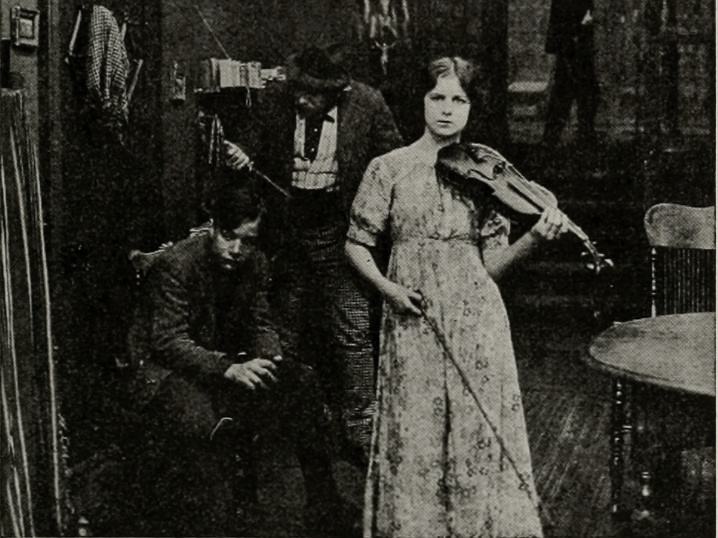
The tragic climax of Giovanni’s defiance arrives swiftly and brutally. While he is at prayer, a moment of profound vulnerability and spiritual contemplation, his life is violently extinguished. This act of sacrilege, committed under the cloak of night, is a stark demonstration of the Black Hand’s ruthless efficiency and disregard for moral boundaries. For Lucia, this moment is not defined by what she sees—or rather, what she cannot see—but by what she hears. Amidst the chaos and horror, a singular detail imprints itself upon her hyper-attuned auditory memory: the distinct, peculiar cadence of her father’s slayer’s footsteps. This 'tell-tale step' becomes the central motif of the film, a sonic signature of guilt. Following Giovanni’s murder, the film introduces Luigi, played with chilling effectiveness by Robert Brower. Luigi, the leader of the Black Hand faction, emerges as a figure of pure malevolence, embodying the organization's predatory nature. His attempts to force Lucia into marriage are not born of affection but of a desire for control and further exploitation, a sinister echo of the threats made against her father. When she refuses, he subjects her to a cruel fate, forcing her onto the streets to play her violin for meager gratuities. This period of destitution and exploitation highlights Lucia’s profound vulnerability and the ruthless cruelty of her oppressors, painting a grim picture of immigrant life at the mercy of organized crime. Brower’s performance as Luigi is a masterclass in silent film villainy, his expressions and posture conveying a palpable sense of menace that transcends the lack of dialogue. The juxtaposition of Lucia's delicate musicality against the harshness of her circumstances makes this section particularly heartbreaking and compelling, a testament to the film's powerful emotional resonance.
Just when Lucia’s plight seems most dire, a glimmer of hope appears in the form of the prosecuting attorney, who takes her under his wing. This intervention marks a turning point, not only in her fortunes but in the narrative’s trajectory. Through the wonders of medical science, Lucia’s eyesight is miraculously restored. This development, while seemingly a joyous resolution, presents a fascinating paradox within the film’s central theme. One might expect that with her sight restored, the path to identifying her father’s killer would become straightforward. Yet, the film masterfully subverts this expectation. It is not her newly acquired vision, but the profound, deeply ingrained auditory memory from her time in darkness, that holds the key to justice. The film posits that some truths are perceived not through the eyes, but through a deeper, more primal understanding of the world. The climactic scene, where Lucia, now sighted, voluntarily dons a blindfold to identify Luigi by the sound of his step, is arguably one of the most powerful and symbolically rich moments in silent cinema. It is a profound declaration that her blindness, far from being a deficit, forged an unparalleled sensory acuity that ultimately serves as the instrument of justice. This choice elevates the film beyond a simple revenge plot, transforming it into a meditation on the nature of perception and the enduring power of memory. It’s a bold narrative stroke that reinforces the film’s unique premise and ensures its lasting impact, distinguishing it from more conventional crime dramas of the period like The Mystery of the Black Pearl, which relied more on visible clues and overt action.
The success of 'The Tell-Tale Step' rests heavily on the shoulders of its cast, who, without the benefit of spoken dialogue, had to convey complex emotions and motivations through gesture, facial expression, and physical presence. Sally Crute’s portrayal of Lucia is nothing short of exceptional. Her ability to embody both the fragility and the formidable inner strength of a blind young woman, and then transition to a newly sighted individual who still trusts her other senses above all else, is a masterclass in silent acting. Her eyes, even when unseeing, communicate a profound depth of character, and her body language eloquently expresses both her suffering and her unwavering resolve. Robert Brower, as the villainous Luigi, delivers a performance that is chillingly effective. He embodies pure, unadulterated menace, his sneering expressions and predatory movements creating a tangible sense of threat. His interactions with Crute’s Lucia are particularly potent, highlighting the stark contrast between innocence and depravity. Robert Huggins, as the ill-fated Giovanni, evokes sympathy and pathos, making his tragic end all the more impactful. The supporting cast, including Leonora von Ottinger, Grace Morrissey, and Jessie Stevens, contribute to the film's rich tapestry, each adding layers to the vibrant, often dangerous, world depicted. Their collective efforts ensure that the emotional beats land with precision, drawing the audience into the narrative despite the absence of sound. The power of these silent performances reminds us that true acting transcends language, communicating directly from the heart to the audience's imagination. In an era where melodrama could easily tip into caricature, these actors maintain a remarkable degree of realism and emotional sincerity, a challenging feat for any performer, let alone those working without dialogue.
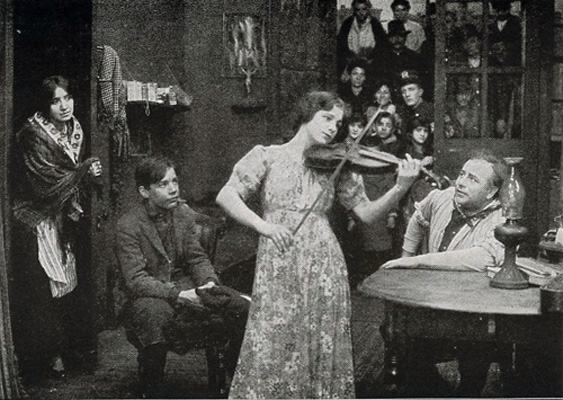
While specific directorial credits for many early silent films can be ambiguous, the cohesive vision of 'The Tell-Tale Step' is undeniable, a testament to the collaborative artistry of its production, guided by the script of William Addison Lathrop. Lathrop’s writing is remarkably nuanced for its time, crafting a plot that is both suspenseful and emotionally resonant. The narrative’s structure, with its focus on sensory perception as a means of detection, is a stroke of genius, setting it apart from more conventional detective stories. The cinematography, while perhaps lacking the sophisticated techniques of later eras, effectively uses stark contrasts and evocative framing to convey mood and character. Close-ups on Lucia’s face, for instance, emphasize her internal struggles and sensory focus, while wider shots establish the grim reality of her street existence. The pacing is deliberate, building tension gradually, allowing the audience to fully grasp the weight of each event. The film’s ability to communicate complex ideas and intense emotions without dialogue speaks volumes about its visual storytelling prowess. Every gesture, every prop, every shift in lighting is meticulously employed to advance the plot and deepen character understanding. This careful orchestration of visual elements ensures that the narrative remains compelling and comprehensible, even to a modern audience accustomed to the complexities of sound cinema. It’s a masterclass in how to tell a story purely through imagery and performance, proving that a powerful narrative transcends technological limitations.
'The Tell-Tale Step' is more than just a thrilling crime drama; it also serves as a fascinating piece of social commentary, reflecting the anxieties and realities of early 20th-century America. The portrayal of Italian immigrants, navigating prosperity and peril, touches upon themes of assimilation, prejudice, and the struggle to escape the past. While the depiction of the Black Hand leans into the prevalent stereotypes of Italian-American crime, it also highlights the very real societal fears surrounding such organizations at the time. The film’s exploration of poverty and exploitation, particularly through Lucia’s forced street performances, offers a stark glimpse into the socio-economic conditions faced by many marginalized communities. In cinematic context, 'The Tell-Tale Step' stands out for its innovative approach to sensory perception. While films like Eye of the Night might explore themes of darkness or hidden elements, few so explicitly foreground a non-visual sense as the primary mechanism for justice. It's an early example of how cinema could transcend literal representation to delve into the psychological and physiological aspects of human experience. The film’s thematic depth, tackling justice, vengeance, and the immigrant dream, positions it alongside other thought-provoking silent era dramas such as Not My Sister or The Ticket of Leave Man, which also explored the darker facets of society and personal struggle. Its unique premise ensures its place as a significant, if perhaps overlooked, entry in the history of crime films, offering a fresh perspective on a genre often reliant on purely visual clues. The film effectively uses its setting to ground the fantastical elements of Lucia's heightened senses in a tangible, relatable world, making the extraordinary feel entirely plausible within the narrative's framework.
In conclusion, 'The Tell-Tale Step' is a profoundly engaging and surprisingly sophisticated silent film that deserves wider recognition. Its daring narrative, which hinges on the extraordinary auditory perception of its protagonist, remains as compelling today as it must have been upon its release. The film masterfully weaves together elements of crime, melodrama, and social commentary, delivering a powerful message about justice, resilience, and the often-underestimated capabilities of the human senses. Sally Crute’s performance as Lucia is particularly memorable, anchoring the film with her nuanced portrayal of vulnerability and strength. It serves as a potent reminder that the silent era was anything but unsophisticated, producing works of profound artistic merit and enduring thematic relevance. For anyone interested in the evolution of cinematic storytelling, or simply in a gripping tale of justice found in unexpected ways, 'The Tell-Tale Step' is an essential viewing experience, a testament to the timeless power of compelling narrative and exceptional performance.
IMDb 4.9
1935
Community
Log in to comment.