DbcultAccessing Vault...
6.1/10
Senior Film Conservator

A definitive 6.1/10 rating for a film that redefined the boundaries of cult cinema. The Flame of Love remains a cornerstone of transgressive art.
Alright, so The Flame of Love is one of those movies you watch today not because it’s a timeless masterpiece, but because it’s a *time capsule*. If you’re a film historian, a really dedicated silent film fan (or early talkie, it’s right on the cusp), or someone deeply interested in how Asian characters were portrayed on screen back then, then yeah, it’s probably worth a look. For pretty much everyone else? You might find yourself checking your watch. 🕰️ It’s got that very specific, heavy melodrama feel that just doesn't quite land with modern pacing, and some of its creative choices are pretty jarring now.
The plot is as dramatic as it gets: a dancer named Yaris, in some vaguely Russian setting, has to essentially offer herself to a powerful duke to save her brother’s skin. High stakes, right? It’s all about sacrifice and a really, *really* tough decision.
Mona Goya, as Yaris, commits fully to the part. She’s got these huge, expressive eyes, and every gesture is just *so* dramatic. You can see her trying to convey a whole world of pain and resolve without saying much sometimes. There’s this one close-up, I remember, where she’s just staring into the distance after making her decision, and the silence just stretches. It's meant to be poignant, but it feels a little endless. 😬

And speaking of Yaris being a "Chinese dancer" in the plot description, it’s hard not to notice Mona Goya, who was French, in the role. It’s a stark reminder of casting practices from that era. Then you have Anna May Wong in the cast, a genuinely iconic Chinese American actress, but her role here is comparatively small. She has this *presence* though, even in her brief scenes. Her face just tells a whole story with a single glance. You almost wish the entire film was centered on her.
John Longden, playing the Duke, does a decent job of being suitably brooding and powerful. He’s not overtly evil, more like a man caught by his own station, which makes his dynamic with Yaris a bit more complex than just good vs. bad. Their scenes together are always charged with this nervous tension.
The pacing is, shall we say, *leisurely*. This movie really takes its time. There’s a lot of lingering shots, people walking slowly, thinking deeply, staring off into space. If you’re used to anything remotely fast-paced, you'll feel the drag. It's like the film wants you to sit with every single emotion, for a long, long time.
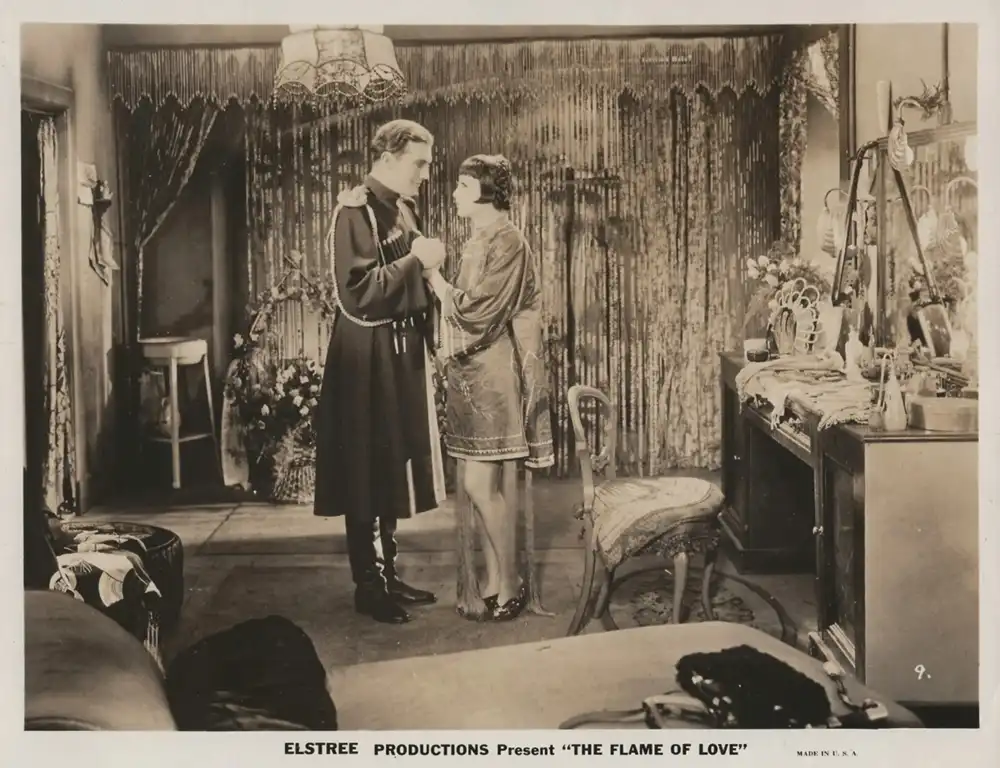
Visually, some of the costumes are quite lavish, especially for the duke’s court. Lots of heavy fabrics and fur trims, very much in line with a grand historical drama. The sets sometimes feel a bit like they're from a stage play, which isn't unusual for films of this period.
There's a scene with a particular letter that gets passed around, and it's treated with such gravity. You can practically feel the weight of destiny hanging on that piece of paper. It's a small detail, but it stood out.
The ending, without giving anything away, leans *hard* into tragic romance. No real surprises there, but the journey to get to that point is something else. It feels like a big, dramatic sigh. This isn't a film that aims for neat, happy bows.
Ultimately, The Flame of Love is a curio. It’s a fascinating look at early cinema’s dramatic ambitions and the limitations or conventions they operated under. You won't walk away feeling exhilarated, but you might walk away with a lot of thoughts about what movies used to be, and how far they’ve come. It’s a specific taste, for sure. 🍿
IMDb 6.7
1923
Community
Log in to comment.