DbcultAccessing Vault...
7.4/10
Senior Film Conservator

A definitive 7.4/10 rating for a film that redefined the boundaries of cult cinema. The Man Beneath remains a cornerstone of transgressive art.
In the annals of early cinema, where narrative breadth often contended with technological infancy, certain films emerge as incandescent testaments to the power of pure storytelling. “The Man Beneath” stands as one such luminous example, a silent era gem that deftly weaves together threads of cross-cultural romance, desperate intrigue, and profound personal sacrifice. It's a film that transcends its period, offering a complex emotional landscape and a thrilling plot that would feel at home in any era, delivered through the evocative artistry unique to its time. Far from a mere historical curiosity, it presents a compelling case for the enduring potency of human drama, rendered with an intensity that speaks volumes without uttering a single word.
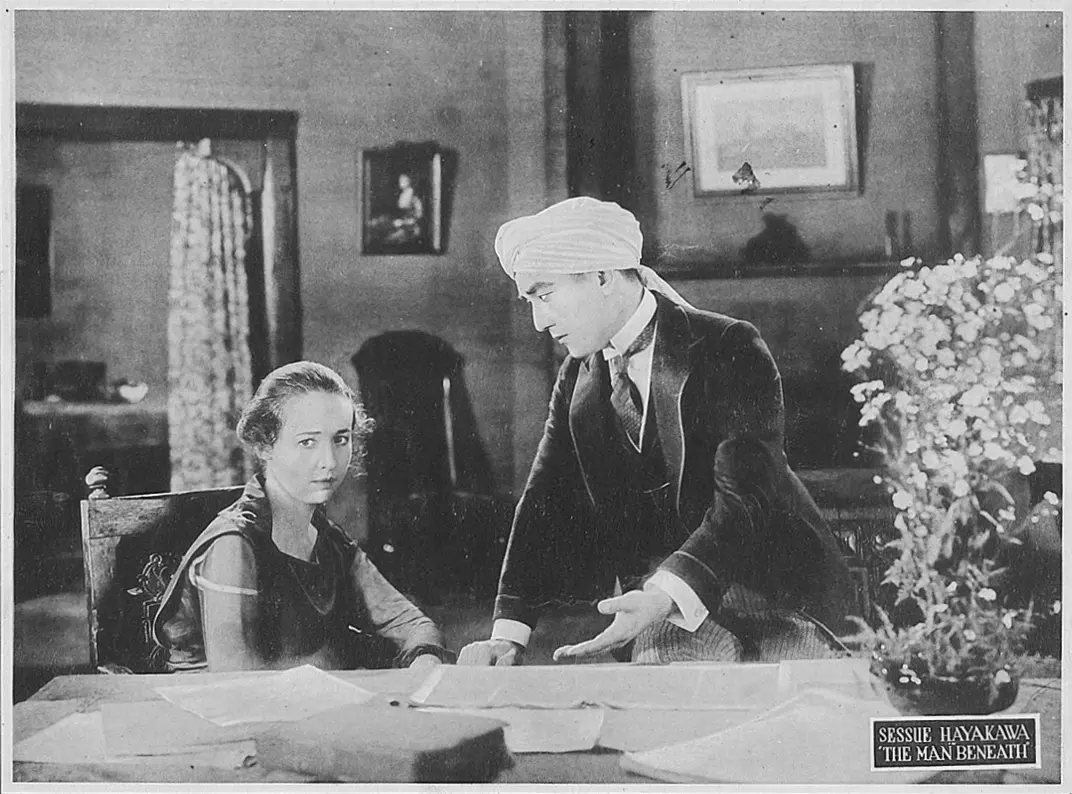
The narrative pivots around Dr. Chindi Ashutor, a figure of almost mythic proportions. Heralded as a scientific saviour in his native India for his triumph over the scourge of plague, Ashutor is introduced not through his epidemiological prowess, but through his unexpected vulnerability to matters of the heart. His journey to Scotland, initially a respite or perhaps a scholarly pursuit, transforms into a crucible of personal awakening when he encounters Kate Erskine. This initial premise immediately establishes a fascinating dynamic: a man of immense global achievement, yet navigating the tender, intricate terrain of personal affection in a foreign land. His character, likely brought to life with understated power by an actor of Sessue Hayakawa's caliber, embodies a quiet dignity, a keen intellect, and an unwavering moral compass that will be tested to its absolute limits.
Kate Erskine, for her part, is no less a compelling figure. She is the embodiment of societal constraints, a woman caught between genuine affection and the crushing weight of prevailing social norms. Her love for Ashutor is palpable, yet her apprehension about the consequences of a mixed-race marriage in early 20th-century Scotland is equally profound. Her tragic decision to spurn Ashutor, driven by a pragmatic fear of social ostracization, imbues their romance with a poignant, melancholic resonance. It's a testament to the film's nuanced writing that Kate isn't portrayed as cold or uncaring, but rather as a product of her time, making her choice understandable, if heartbreaking. This internal conflict, conveyed through the expressive silent acting of Fanny Midgley, would have been a powerful emotional anchor, drawing audiences into the very real dilemmas faced by individuals navigating rigid social structures. One might find echoes of such societal pressures on romance in films like Rose o' the River, where class divides often dictated the course of love, or even the subtle class implications in My Little Boy, though “The Man Beneath” adds the significant layer of racial and cultural difference.
The narrative then executes a dramatic, almost jarring shift, propelling the audience from the romantic sensibilities of Scotland to the dangerous underbelly of international intrigue in India. Here, Ashutor's college friend, James Bassett, appears, not as a symbol of domestic tranquility, but as a man in profound peril. His entanglement with the nefarious Black Hand – a secret society demanding he commit murder – introduces a thrilling, almost noirish element to the story. Bassett's youthful curiosity, his initial flirtation with danger, has blossomed into a life-threatening nightmare, forcing Ashutor to confront a different kind of plague: human malevolence. This sudden pivot showcases the film's ambition, refusing to be confined to a single genre, instead embracing a multi-faceted storytelling approach that keeps viewers on the edge of their seats. The transition from a gentle romance to a high-stakes thriller is masterfully handled, demonstrating a sophisticated understanding of pacing and dramatic tension.
What follows is a brilliant sequence of deception, a testament to Ashutor's quick thinking and unwavering loyalty to his friend. Aboard a ship bound for Italy, he orchestrates a meticulous fake death for Bassett. The use of an injection to induce a death-like state, followed by the burial at sea of a dummy, is a stroke of cinematic genius for the silent era. It’s a moment of pure spectacle and nerve-wracking suspense, designed to fool the watchful eyes of Black Hand agents, François and the chillingly composed Countess Petite Florence. This scene would have relied heavily on visual storytelling – the hushed movements, the solemn faces, the dummy's convincing descent into the waves – to convey the elaborate nature of the ruse. The tension here is palpable, a silent ticking clock as Ashutor gambles with his friend's life and his own integrity. This kind of intricate plotting, involving elaborate schemes and hidden identities, brings to mind the thrilling escapism found in films like The Trap (1919), which often hinged on dramatic revelations and clever stratagems, or even the moral quandaries presented in Blood Will Tell, where characters are forced into desperate measures.
The intricate web of deceit, however, proves fragile. The narrative deftly brings the two disparate plotlines crashing together when the Black Hand agents, now in Scotland, inadvertently overhear Ashutor reassuring the Erskines that Bassett is, in fact, alive and well. This moment of accidental revelation is a masterstroke of dramatic irony, unraveling Ashutor's carefully constructed illusion. The subsequent confrontation, where Ashutor attempts to bribe François, is a tense dance of power and desperation. But the true ruthlessness of the Black Hand is brutally unveiled when the Countess Petite Florence, portrayed with chilling efficacy by Fontaine La Rue, murders François for his perceived weakness or potential betrayal. This sudden, violent act elevates the stakes dramatically, transforming a game of cat-and-mouse into a deadly struggle where loyalties are fleeting and life is cheap. The countess emerges as a formidable antagonist, her silent menace more terrifying than any spoken threat.
Ashutor, ever the pragmatist and strategist, seizes this horrific turn of events as leverage. He demands Bassett's perpetual immunity from the Black Hand, his silence regarding François's murder acting as the ultimate bargaining chip. This act solidifies his heroic status, not just as a man of science, but as a man of unwavering principle and courage, willing to descend into the moral gray areas to protect those he cares for. His final farewell to Kate is steeped in a profound sense of resignation and enduring love. It's a silent scene, yet laden with unspoken emotions – regret, affection, and the bittersweet acceptance of a love that cannot be. The camera would have lingered on their faces, allowing the audience to read the depth of their shared sorrow and the strength of their unresolved connection. This poignant departure reinforces the film's thematic core: that sacrifice often comes in many forms, not just physical danger, but also the relinquishing of personal happiness for a greater good or for the safety of others.
The success of “The Man Beneath” in conveying such a rich tapestry of emotion and plot complexity without dialogue is a testament to the artistry of silent cinema. The actors, trained in a different lexicon of performance, relied on exaggerated yet precise facial expressions, grand gestures, and nuanced body language to communicate internal states. The judicious use of intertitles provided crucial exposition and dialogue, but it was the visual storytelling – the composition of shots, the dramatic lighting, the editing rhythm – that truly propelled the narrative and engaged the audience. Imagine the stark contrast between the misty Scottish landscapes and the bustling, exotic portrayal of India, or the claustrophobic tension of the shipboard deception versus the quiet despair of Kate’s internal conflict. This visual grammar was the language of the film, expertly deployed to build suspense, evoke empathy, and articulate the film's intricate themes. The early masters of this craft understood that silence could amplify emotion, forcing the viewer to lean in, to interpret, to become an active participant in the story's unfolding.
Comparing “The Man Beneath” to other films of its era reveals its unique blend of genres. While films like Your Obedient Servant or Just Sylvia might have explored more straightforward melodramas or romantic entanglements, “The Man Beneath” dares to introduce elements of espionage and international crime that elevate its scope. The dark machinations of the Black Hand, and Ashutor's resourceful counter-schemes, place it alongside thrillers such as Bondage or even the more action-oriented The Boss of the Lazy Y, though with a distinctly intellectual and moral core rather than brute force. The film's willingness to cross geographical and cultural boundaries, much like the broader world was shrinking through increasing travel and communication, gives it a prescient quality. It doesn't shy away from depicting the complexities of identity and belonging, an aspect that might have been subtly present in films touching on immigrant experiences or cultural clashes, but rarely with such a central, heroic figure from a non-Western background. The sheer ambition of its plot, encompassing both intimate romance and global conspiracy, sets it apart, demonstrating a sophistication in storytelling that belied the nascent technology of the time.
Moreover, the film's exploration of moral ambiguity is particularly striking. Ashutor, a man of science and healing, is compelled to orchestrate a deception, to lie, and to manipulate dangerous individuals to achieve justice and protect his friend. This isn't a simplistic hero's journey; it’s a nuanced portrayal of a good man forced to engage with darkness, a theme that resonates deeply even today. His final act of leveraging a murder for Bassett's safety is a chilling yet necessary compromise, underscoring the brutal realities of the world he inhabits. This moral complexity, where the lines between right and wrong blur in the face of extreme circumstances, adds significant depth to Ashutor's character and to the film's overall message. It forces the audience to grapple with uncomfortable truths about what it truly means to be a hero when faced with truly villainous forces.
In an era often stereotyped for its straightforward narratives and theatrical acting, “The Man Beneath” offers a refreshing counter-narrative. It's a film that challenges expectations, delivering a story rich in emotional texture, intellectual intrigue, and visceral thrills. Its enduring appeal lies not just in its historical significance, but in its timeless depiction of human courage, the enduring power of friendship, and the often-painful choices demanded by love and loyalty. It remains a powerful reminder that even in silence, cinema could speak volumes, crafting narratives that were both deeply personal and grandly epic. For those willing to delve into the treasures of the silent era, this film promises a journey as complex and rewarding as any contemporary masterpiece, a true testament to the universal language of compelling drama and the quiet heroism that often lies beneath the surface.

IMDb 7.2
1920
Community
Log in to comment.