DbcultAccessing Vault...
Cult Review
Senior Film Conservator
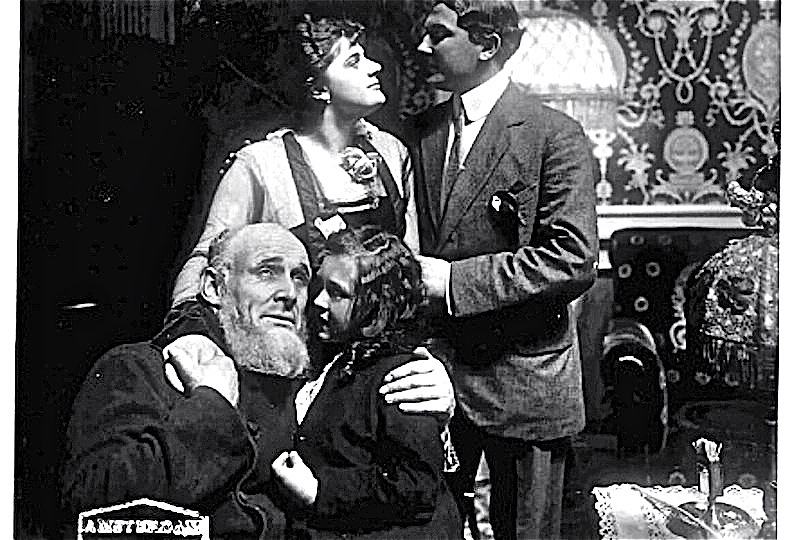
There’s a certain, almost palpable, melancholic beauty that emanates from the silent era, a particular kind of storytelling that speaks directly to the soul without the need for spoken dialogue. Levensschaduwen, a remarkable work from the visionary Theo Frenkel, stands as a testament to this unique cinematic power. It’s not merely a film; it’s an experience, a plunge into the depths of human emotion, rendered with an artistry that transcends its temporal origins. To revisit such a piece is to engage with history, not as a dusty relic, but as a vibrant, living narrative still capable of eliciting profound reactions.
From its opening frames, Levensschaduwen draws the viewer into a meticulously crafted world of societal friction and personal anguish. We are introduced to Elara, a figure of quiet grace portrayed with breathtaking subtlety by Anna Lemaire. Her performance is a masterclass in silent acting, conveying a spectrum of emotions—hope, despair, resilience—through nuanced gestures and eloquent facial expressions. Elara’s life, initially one of humble contentment, takes a dramatic turn with her entanglement with Julian, a character brought to life by Cor Smits, whose portrayal expertly balances charm with a palpable moral ambiguity. Smits captures the essence of a man torn between his artistic sensibilities and the crushing weight of his obligations, making Julian a figure both alluring and ultimately tragic.
The narrative, penned by Theo Frenkel himself, is a quintessential melodrama, yet it avoids the pitfalls of overt sentimentality through its grounded performances and unflinching look at social injustice. The insidious influence of Baron Von Strack, played with menacing gravitas by Balthazar Verhagen, serves as the primary antagonist, a force of aristocratic entitlement and malevolent cunning. Verhagen’s portrayal is chillingly effective, embodying the predatory nature of power unchecked. His machinations set in motion a chain of events that ensnare Elara and her innocent brother, Hendrik, whose vulnerability is poignantly depicted by Willem Faassen. The film’s exploration of class disparity, a recurring theme in early cinema, feels particularly sharp here, reminiscent in its social critique of works like Builders of Castles, though with a distinctly European flavor of fatalism.
Frenkel’s directorial vision for Levensschaduwen is nothing short of audacious. He employs a visual language that is both poetic and precise, using lighting and composition to underscore the emotional states of his characters and the thematic undercurrents of the plot. The stark contrasts between the opulent drawing rooms of the Baron and the impoverished hovels where Elara and Hendrik reside are not merely set decorations; they are active participants in the narrative, silent commentators on the chasm between wealth and destitution. The use of shadow, a literal manifestation of the film's title, is particularly effective, often enveloping characters in moments of moral compromise or profound despair, hinting at the 'shadows of life' that cling to them.
The pacing is deliberate, allowing the emotional beats to resonate fully, building tension with a masterful hand. The courtroom sequence, a pivotal moment in Elara’s ordeal, is a tour de force of silent cinema. Frenkel orchestrates a palpable sense of injustice, with close-ups on the faces of the accusers, the bewildered Elara, and the conflicted Julian, each shot meticulously framed to maximize dramatic impact. The scene evokes the same visceral sense of wrongful accusation and public humiliation found in films like The Bells, where a character's fate hangs precariously on the whims of a flawed justice system. The performances from the supporting cast, including Sylvain Poons, Jan Lemaire Sr., and Mary Beekman, contribute significantly to the film’s rich texture, each bringing a distinct presence to their roles, whether as witnesses, legal figures, or members of the unforgiving societal backdrop.
Elara’s time in prison is depicted with a raw, unvarnished honesty that avoids sensationalism. It’s a period of stark introspection, where her inner strength is tested against the crushing monotony and indignity of incarceration. Lemaire conveys this internal struggle with remarkable depth, her eyes alone communicating volumes of unspoken suffering and defiant hope. This period of hardship serves as a crucible, forging a resilience that will be essential for her eventual, hard-won vindication. The film doesn't shy away from the brutal consequences of societal judgment, echoing the harsh realities faced by protagonists in narratives such as Judge Not; or the Woman of Mona Diggings, where moral condemnation often precedes a path to redemption.
Simultaneously, Julian’s arc of atonement forms a compelling counter-narrative. His initial moral cowardice slowly gives way to a gnawing guilt, catalyzed by the visible suffering he has inadvertently caused. Cor Smits masterfully portrays this internal transformation, his once carefree demeanor replaced by a haunted intensity. His quest for truth, fraught with peril and self-doubt, becomes a search not just for evidence, but for his own lost sense of honor. The film’s exploration of guilt and the arduous path to redemption offers a profound psychological depth, making Julian’s journey as compelling as Elara’s fight for justice. This moral awakening, the struggle to right a grievous wrong, finds parallels in the intricate ethical dilemmas presented in The Pursuing Vengeance, where the weight of past actions dictates future redemption.
The ensemble cast, a veritable who’s who of early Dutch cinema, contributes significantly to the film’s authenticity and emotional resonance. Beyond the central trio, figures like Toon van Elsen, Tonny Stevens, and Ben van Noorden provide crucial texture to the urban landscape and the judicial system. Even smaller roles, such as those played by Jo Vischer Sr., Theo Frenkel Jr., and Annie Wesling, are imbued with a sense of purpose, ensuring that no character feels superfluous. The intricate web of relationships, betrayals, and loyalties is meticulously woven, showcasing Theo Frenkel’s skill not just as a director but as a storyteller who understands the complexities of human interaction.
The film’s thematic richness extends beyond mere melodrama. It delves into the destructive power of secrets, the fragility of reputation, and the enduring human capacity for both cruelty and compassion. The 'shadows' of the title are multifaceted: they represent the hidden motives of men, the dark corners of society, and the indelible marks left by injustice on the human spirit. In an era where cinema was still finding its voice, Levensschaduwen dared to tackle weighty subjects with a sophistication that belied its nascent medium. Its exploration of moral ambiguity and the search for truth resonates strongly, perhaps even more so, with contemporary audiences, offering a mirror to our own societal challenges, much like the timeless quest for identity in Cy Whittaker's Ward or the intricate societal critiques found in La comtesse de Somerive.
In the grand tapestry of silent cinema, Levensschaduwen occupies a significant, if sometimes overlooked, position. Its restoration and renewed availability allow a new generation to appreciate Theo Frenkel’s pioneering efforts in Dutch filmmaking. The film is a vital piece of cultural heritage, demonstrating the artistic ambition and technical prowess present in European cinema during the early 20th century. It stands as a powerful counterpoint to the more commonly celebrated American and French productions of the era, asserting a distinct Dutch voice in the global cinematic conversation.
The enduring appeal of Levensschaduwen lies in its universal themes. While the costumes and settings firmly place it in its historical context, the struggles of its characters—for justice, for love, for redemption—are timeless. The performances by Cor Smits and Anna Lemaire, in particular, remain captivating, their ability to communicate complex emotions without spoken word a testament to their immense talent. The careful craftsmanship evident in every frame, from the art direction to the nuanced acting, makes this film a compelling watch for anyone interested in the evolution of cinematic storytelling. It reminds us that powerful narratives can transcend the limitations of technology, speaking directly to the human condition with an eloquence that defies the passage of time. Indeed, its intricate plot and emotional depth might even be compared to the complex narrative threads found in thrillers like 99, despite their vastly different eras and genres.
The contributions of additional cast members such as Coen Hissink, Jan Wensma, Manus Hulsman, Jacques Sluyters, Kees Lageman, Herre de Vos, and Piet Urban, though perhaps less prominent, are integral to the film's immersive world-building. Each actor, through their subtle contributions, helps to solidify the intricate social fabric against which Elara’s personal tragedy unfolds. Their collective efforts under Theo Frenkel’s direction create a rich, believable environment that draws the audience deeper into the 'shadows' of its narrative. Much like the intense psychological drama of Mortmain or the compelling character studies in Hjertestorme, Levensschaduwen masterfully uses its ensemble to deepen its central themes and elevate its emotional impact.
Viewing Levensschaduwen today is an exercise in historical appreciation and a reminder of the foundational artistry of cinema. It’s a compelling argument for the preservation and study of silent films, which often offer a purity of storytelling that can be lost in more modern, dialogue-driven productions. The film's ability to communicate complex ideas and emotions through purely visual means is a powerful demonstration of cinema’s fundamental strength. It’s an essential watch for cinephiles, historians, and anyone who appreciates a meticulously crafted human drama. The film's narrative complexity and emotional depth are on par with the best of its era, even standing proudly alongside more widely known titles like Won on the Post or The Man Who Beat Dan Dolan, showcasing a universal appeal that transcends national borders and language barriers. It’s a truly captivating journey into the 'shadows of life,' illuminating the timeless struggles and triumphs of the human spirit.
In conclusion, Levensschaduwen is more than just a historical curiosity; it is a vibrant, emotionally charged film that continues to resonate. Its masterful direction, powerful performances, and enduring themes ensure its place as a significant achievement in early Dutch cinema and a compelling piece of world film history. It invites us to ponder the nature of justice, the corrosive effects of deceit, and the arduous, yet ultimately rewarding, quest for truth and redemption, echoing the profound moral questions posed in films such as A kuruzsló and In the Balance. Don't let the silence fool you; this film speaks volumes.
IMDb —
1920
Community
Log in to comment.