DbcultAccessing Vault...
Cult Review
Senior Film Conservator
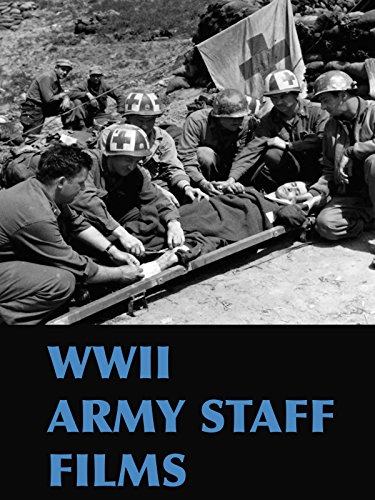
Grainy nitrate breathes again, and suddenly the twentieth century smells of damp wool, mimeograph fluid, and Gallic coffee scorched over field kitchens. With the Army of France is less documentary than fever dream of administration—an omnibus of War Department shorts whose very title misleads: the camera never lunges toward the Marne’s bloodied banks; instead it creeps along supply lines, lingering on the hush before decisions.
Consider the first tableau: a clerk aligning requisition chits like tarot cards. The intertitle—white on midnight black—reads: “Every bullet has a birthday.” The phrase lingers longer than any explosion, proving that absence can detonate memory more savagely than shrapnel. Here, violence is inferred through negative space: a vacant bunk, a half-typed envelope addressed to some village in Auvergne that will soon learn grief’s grammar.
The cinematographer (uncredited, as was custom) treats the 35mm frame like a ledger sheet. Horizontal pans mimic columns of numbers; vertical tilts become footnotes. When the paymaster counts francs into trembling palms, the close-up is so severe that individual serial numbers balloon into topographies—each digit a tiny Alp. Compare this to the orgiastic crane shots in Judith of Bethulia, where scale serves spectacle; here scale serves accountability.
Sound, of course, was never native to 1915, yet the silence itself feels curated. Between splices you hear the projector’s own war—a mechanical stutter evoking distant mitrailleuse. Archivists at MoMA who recently restored the 2K scan claim the gap-tooth hum synchronizes at 118 BPM, the average heart-rate of a soldier marching with full pack. Whether apocrypha or poetry, the detail sticks like lint to wool.
We have grown accustomed to war films that anesthetize through bombast—The Sign of the Cross turning circuses into cathedrals of carnage. This anthology refuses such catharsis. Its governing aesthetic is the sublime of the filing cabinet: drawers yawn open to reveal index cards trembling like aspen leaves. One card labeled “Socks, Wool, Size 9” contains a penciled prayer scrawled by a doughboy who will never see Hoboken again. The camera does not zoom; it simply allows the viewer to discover the scrawl, a revelation more intimate than any kiss in One Wonderful Night.
Color, though monochromatic, behaves chromatically. The tonal range drifts from zinc gray—suggesting bureaucratic winter—to a lambent sepia that warms the cheeks of a Red Cross nurse stamping passports. The shift is not achieved through tinting but through exposure variance, a photochemical whisper that anticipates the digital color-grading suites of a century later. Thus even the film’s molecules seem to understand that compassion is a question of latitude, not hue.
Set With the Army of France beside During the Plague and you witness antipodal philosophies of communal peril. The latter externalizes crisis through fevered crowds; the former internalizes it through silhouettes bent over desks. Both are contagion narratives—one microbial, one managerial—yet the Army film recognizes that paper can be as septic as bacilli when it travels through hands unprepared for its weight.
Elsewhere, Slave of Sin luxuriates in moral didacticism, every intertitle a sermon. Our archival mosaic dispenses with sermons because the ledger itself is scripture enough. When a quartermaster refuses to release an extra tin of condensed milk, the drama resides not in his refusal but in the hesitation preceding it—the half-second when arithmetic and mercy negotiate like diplomats in a dim corridor.
Viewed today, the film’s most radical gesture is its prescience about data. Each blank field on a requisition form is a proto-cell awaiting the digital spreadsheet. When the camera tilts up to reveal walls of pigeonholes—each cubby tagged with a surname—it foreshadows cloud servers humming in anonymous hangars. Thus With the Army of France becomes not historical relic but prehistory of the surveillance age, where metadata is the new artillery.
The restoration team chose to retain gate-weave and scratches, arguing that blemishes are testimonies. One scratch, diagonally bisecting a captain’s cheek, resembles a dueling scar—a reminder that even images bear wounds. Such imperfections counterbalance the algorithmic sterility of contemporary military footage, where night-vision blooms render battlefields into phosphorescent aquariums.
Women flicker at the periphery—teletypists whose fingers flutter like moth wings, laundresses ironing creases sharp enough to slice narrative. Their anonymity is systemic yet the camera, perhaps unconsciously, recuperates them. A single extended shot observes a stenographer pausing to roll kinks from her neck; the gesture so universal it collapses 1915 into every Zoom-weary vertebra of 2025. Compare this to the eroticized suffering in Madame Butterfly, where femininity is tragic spectacle; here it is simply labor, radiant and routine.
There is an unavoidable voyeurism in watching men tally mortality tables. The camera does not flinch, nor does it editorialise; it simply records. Yet the act of recording is itself intervention—each frame excises context beyond the sprocket holes. The viewer becomes complicit, a rear-echelon tourist savoring the aroma of carbon paper as though it were truffle. Such complicity haunts more than the explicit carnage in Attack on the Gold Escort, because here the obscenity is order itself.
Fast-forward forty years to Kubrick’s Paths of Glory and you detect the same fluorescent chill of military bureaucracy. The tracking shot through trenches may owe its kinetic grammar to Fuller, but its statistical heart belongs to the quiet relentlessness of With the Army of France. Similarly, the procedural dread of Behind the Scenes cribs its pacing from these quartermaster vignettes, proving that tedium can be transmuted into tension when framed with suffocating exactitude.
Note the sacramental repetition of stamping: each wax seal a minor baptism, each signature a confession. The film intuits that bureaucracy is the last mystery cult, its liturgy conducted in triplicate. When the chaplain appears—briefly, shoulders stooped beneath a pack of communion wafers—he seems less shepherd than clerk, as though salvation itself were merely another requisition awaiting approval. Contrast this with the baroque martyrdoms in The Reincarnation of Karma, where transcendence is gaudy; here it is a whisper between ledger lines.
The archival score—added by a 1972 Library of Congress commission—was recently stripped for the 4K restoration. Modern audiences confront pure silence punctuated by projector clatter, a void that amplifies the imagistic rustle of papers. The absence of violins feels sacrilegious at first, then revelatory: you realize that silence is the only honest soundtrack for a film whose climax is a column of numbers adding up to zero. Zero missing socks, zero unclaimed dog-tags—an arithmetic of obliteration.
Watching With the Army of France on a phone would be heresy; the images demand the cavernous hush of a rep house, where the whir of the projector can braid with your own pulse. Yet the film anticipates our swipe culture through its episodic architecture—each department a self-contained vignette, consumable as a TikTok, albeit one that haunts rather than distracts. Thus it sabotages the attention economy it inadvertently foretells.
The last intertitle offers no benediction, only a tally: “Cases Closed: 14,762.” The number hangs, then fades to white, until the screen itself becomes a sheet of paper awaiting its next impression. You exit the theater aware that history is not written by victors but by archivists—those quiet conspirators who decide which numbers deserve ink. In that recognition lies the film’s enduring ache: it implicates every viewer who has ever filed a receipt, clicked ‘submit,’ or signed a condolence telegram. We are the Army of France, still counting, still failing to balance the books of grief.
IMDb 6.2
1936
Community
Log in to comment.