DbcultAccessing Vault...
5.9/10
Senior Film Conservator
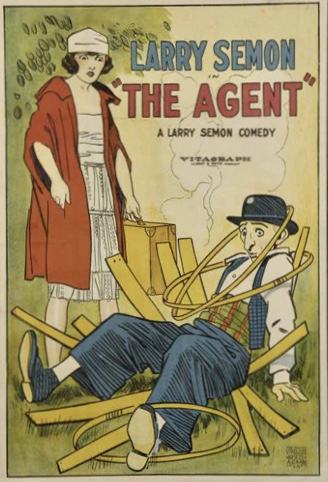
A definitive 5.9/10 rating for a film that redefined the boundaries of cult cinema. The Agent remains a cornerstone of transgressive art.
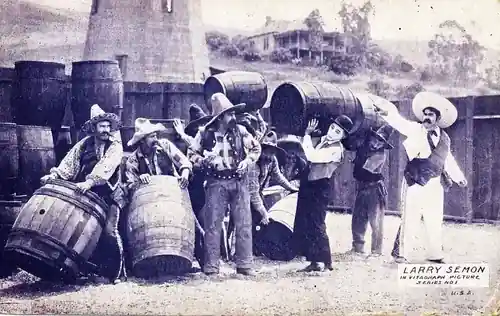
Stepping back into the nascent years of cinematic artistry often reveals treasures that, while perhaps not universally acclaimed in their time, nonetheless lay crucial groundwork for the art form's evolution. The Agent, a fascinating relic from 1922, serves as a vibrant testament to the boundless energy and inventive spirit of the silent film era. It's a film that, despite its relative obscurity today, deserves a thorough re-evaluation for its audacious comedic ambition and the early, albeit pivotal, contributions of its extraordinary cast and crew. Directed and co-written by the prolific Larry Semon, alongside Tom Buckingham, this picture is a veritable carnival of physical comedy, a relentless ballet of escalating absurdity that captures the very essence of early 20th-century slapstick.
At its core, The Agent is a masterclass in controlled chaos, a narrative scaffold built specifically to showcase the unique comedic talents of its leads. Larry Semon, a genuine pioneer of the form, takes center stage as Percival Piffle, a theatrical agent whose agency is teetering on the precipice of financial ruin. Semon's portrayal of Percival is a symphony of nervous tics, wide-eyed optimism, and spectacular ineptitude. His rubbery face, capable of morphing through a dozen expressions in as many seconds, is perfectly suited to the exaggerated demands of silent comedy. Percival is not merely a bumbling fool; he is a man perpetually out of sync with the world around him, a human magnet for disaster, yet possessed of an indomitable, if utterly misplaced, self-belief. His physical comedy, often involving elaborate contraptions and impossible escapes, is a hallmark of the Semon style – a blend of precise timing and a willingness to endure outrageous indignities for a laugh. There's a particular sequence involving a runaway stage set that, for its sheer inventiveness and the precise execution of Semon's frantic scramble, stands as a testament to his unique vision, echoing the grand-scale destruction and intricate gags seen in films like The Big Idea, but with a distinctly Semonian flair for the utterly preposterous.
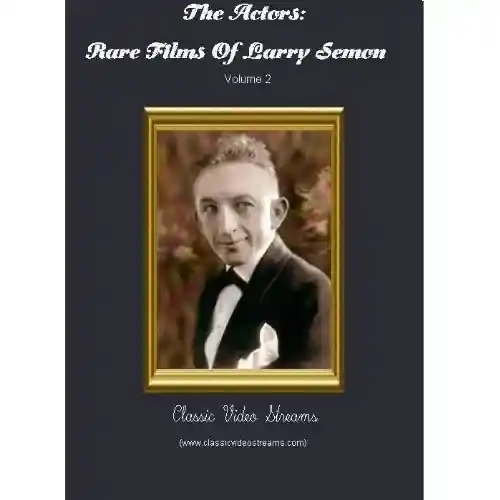
Then there's Oliver Hardy, an actor whose very presence, even in these formative years, promised comedic greatness. Here, he embodies Reginald 'Reggie' Ruggles, a private investigator whose formidable bulk is matched only by his formidable lack of insight. Hardy, still refining the persona that would later become legendary, already displays flashes of the exasperated dignity and slow-burn frustration that would define his partnership with Stan Laurel. As Ruggles, he is a force of nature, a well-meaning but utterly destructive presence who consistently misinterprets every situation, leading to a parallel narrative of comedic pursuit. His scenes, often involving the unwitting destruction of property or the accidental apprehension of the wrong person, are a joy to behold. The contrast between Semon's frenetic energy and Hardy's more ponderous, almost balletic clumsiness creates a dynamic tension that elevates the film beyond mere slapstick. It's an early glimpse into the power of comedic foils, a concept explored with different nuances in films such as His Own People where character dynamics drive the narrative, though here, it's firmly rooted in the physical.
Lucille Carlisle, a frequent collaborator with Semon, delivers a wonderfully exaggerated performance as Madame Esmeralda, the imperious prima donna whose signature is the Holy Grail of Percival's desperate quest. Carlisle imbues Esmeralda with a captivating blend of vanity, theatricality, and an underlying, almost childlike capriciousness. Her expressions, often a study in dramatic indignation or self-absorbed delight, are perfectly calibrated for the silent screen. She is not merely a prize to be won but an active participant in the chaos, often unwittingly contributing to the escalating mayhem. Her interactions with both Semon and Hardy are particularly memorable, highlighting her ability to play both the straight woman and the catalyst for further comedic complications. Her demanding nature, beautifully rendered, provides a believable obstacle for Percival and a source of perpetual frustration for Baron von Sneak.
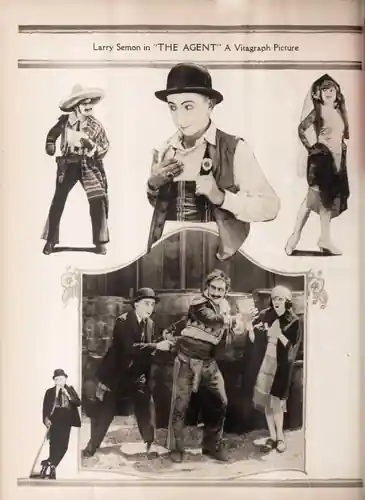
Al Thompson, as the dastardly Baron von Sneak, provides the perfect moustache-twirling antagonist. Thompson, with his sneering countenance and exaggerated gestures, is the archetypal silent film villain. He embodies the nefarious rival agent with relish, his every move calculated to thwart Percival, yet inevitably leading to his own undoing. The Baron’s elaborate schemes, from booby-trapped contracts to strategically placed banana peels, are wonderfully over-the-top, providing ample opportunities for Semon’s character to navigate (or more accurately, stumble through) a gauntlet of comedic perils. The rivalry between Percival and the Baron is a classic comedic trope, but in The Agent, it's executed with an infectious energy that keeps the plot hurtling forward. One might draw a thematic parallel to the clear-cut antagonist dynamics in a film like The Adventures of Lieutenant Petrosino, though here, the stakes are delightfully absurd rather than genuinely perilous.
The screenplay, a collaborative effort between Larry Semon and Tom Buckingham, is a marvel of intricate plotting, designed to maximize comedic potential. It’s not just a series of gags strung together; there’s a genuine narrative momentum, driven by the escalating stakes of Percival’s agency and the mysterious MacGuffin of the ancient scroll. The introduction of the 'Crimson Hand' syndicate, though largely serving as a background threat, adds a layer of pseudo-thriller intrigue that cleverly underpins the comedic chaos. The writers demonstrate a keen understanding of pacing, building each comedic sequence with an almost architectural precision, ensuring that one misstep logically (or illogically) leads to the next, ratcheting up the tension and the laughs. This layered approach to comedic storytelling is a testament to the sophistication already present in silent film writing, moving beyond simple chase sequences to more complex, interlocking narratives. The way the scroll changes hands with dizzying frequency, often ending up in the most improbable places, is a testament to their imaginative scriptwriting, reminiscent of the narrative ingenuity often found in early serials.
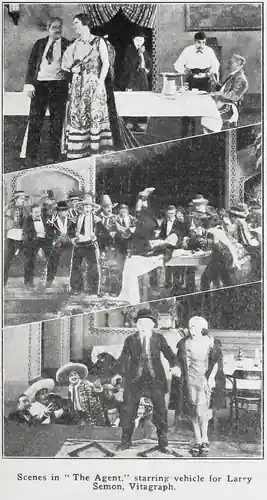
Visually, The Agent is a feast for the eyes. The production design, though typical of the era, is utilized to its fullest comedic potential. The theatrical settings – the cluttered agency, the opulent dressing rooms, the grand stage – become characters in themselves, ripe for comedic destruction and transformation. The film's climax, set during the dress rehearsal, is a particular highlight, a meticulously choreographed sequence of collapsing sets, exploding stage effects, and a general pandemonium that showcases the technical ambition of the filmmakers. The use of practical effects and clever camera work to achieve these seemingly impossible gags is genuinely impressive, demonstrating a level of craftsmanship that often goes unappreciated in early cinema. There's a raw, kinetic energy to the film's visuals that propels the audience through the narrative, a quality that, in its own way, shares a lineage with the grand spectacles of films like The Last Days of Pompeii (1913), albeit repurposed for comedic effect rather than dramatic sweep.
What truly elevates The Agent is its unwavering commitment to its comedic vision. There's hardly a moment of respite from the gags, yet they never feel tiresome. Instead, they build upon one another, creating a crescendo of laughter that culminates in a gloriously chaotic finale. The film’s pacing is relentless, a rapid-fire succession of visual jokes, physical stunts, and character reactions that demand the viewer’s full attention. This relentless energy is a hallmark of the best silent comedies, a recognition that without dialogue, the visual language must be constantly engaging and inventive. The film understands the power of the slow burn leading to an explosive payoff, a comedic rhythm that is both sophisticated and universally appealing.
The character interactions are a particular strength. The relationship between Percival and Madame Esmeralda, for instance, is a delightful dance of desperation and diva-like demands. Percival’s attempts to charm, cajole, or simply corner her are consistently thwarted by her whims, creating a dynamic that is both frustrating and hilarious. Similarly, Reggie Ruggles’s misguided pursuit of Percival adds a layer of dramatic irony, as the audience is privy to the truth that Ruggles continually misses. This interplay of character motivations and misunderstandings is expertly handled, ensuring that the comedy arises not just from individual gags, but from the very fabric of the narrative and the personalities within it. It’s a testament to the actors' abilities to convey complex emotions and intentions without a single spoken word, much like the nuanced performances often lauded in dramas such as Dzieje grzechu, but here, applied to the realm of farce.
In a broader context, The Agent offers a valuable glimpse into the evolving landscape of silent comedy. It showcases Semon at the height of his creative powers, a director and performer who was not afraid to push the boundaries of what was possible with physical comedy and elaborate set pieces. It also provides an important early showcase for Oliver Hardy, allowing us to trace the development of his comedic persona before his legendary partnership with Stan Laurel. For cinephiles and historians alike, this film is a crucial piece of the puzzle, illustrating the diverse approaches to humor that flourished in the early 1920s. It stands as a testament to the era's ingenuity, proving that sophisticated comedic storytelling was already well underway, even without the benefit of synchronized sound. One might even argue that its intricate plotting and character-driven gags anticipate the more refined comedic structures that would come to define the golden age of Hollywood, demonstrating a lineage that extends through the works of Buster Keaton and Charlie Chaplin, who also honed their craft in these early, experimental years.
The film's legacy, though perhaps not as widely celebrated as some of its contemporaries, lies in its sheer audacity and its masterful execution of visual comedy. It’s a reminder that true artistry often blossoms in unexpected places, and that the foundations of what we now consider classic cinema were built by innovators like Semon and Buckingham, brought to life by performers like Hardy and Carlisle. Their work in films such as The Agent represents a vibrant, essential chapter in the history of film, a period of boundless experimentation and creative energy. The film, in its relentless pursuit of laughter, also inadvertently captures a slice of cultural history, reflecting the popular entertainment sensibilities of its time. The theatrical world, with its inherent drama and larger-than-life personalities, provides a rich backdrop for the comedic exaggerations, allowing the film to comment, however subtly, on the performative aspects of everyday life.
In conclusion, The Agent is far more than a mere historical curiosity. It is a vibrant, exhilarating piece of silent cinema that crackles with inventive energy and showcases a pivotal moment in the careers of some of comedy's most enduring figures. Its intricate plotting, relentless pacing, and brilliant physical performances make it a compelling watch for anyone interested in the roots of cinematic humor. It’s a film that, even a century later, retains its power to entertain and impress, a true testament to the timeless appeal of well-crafted, audacious slapstick. Its influence, though perhaps subtle, can be traced through subsequent generations of comedic filmmakers who continued to push the boundaries of visual storytelling. It's a film that demands rediscovery, a joyous romp through the early days of Hollywood that reminds us of the sheer creative force that defined the silent era. The layers of comedic misunderstanding, the sheer physical commitment of the cast, and the ingenious staging of the gags all converge to create a work that, while historically significant, is also profoundly entertaining on its own merits, a delightful journey into the heart of early cinematic laughter.
IMDb —
1919
Community
Log in to comment.