DbcultAccessing Vault...
1.3/10
Senior Film Conservator
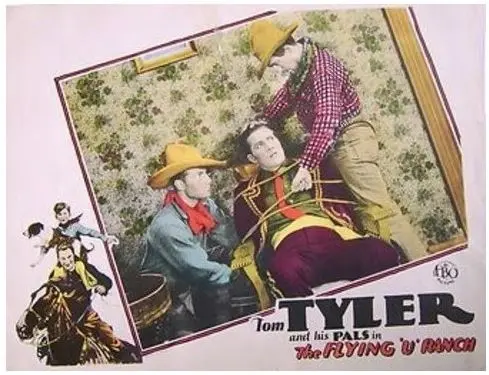
A definitive 1.3/10 rating for a film that redefined the boundaries of cult cinema. The Flying U Ranch remains a cornerstone of transgressive art.
Is 'The Flying U Ranch' worth watching today? Short answer: yes, but with significant caveats. This silent Western gem is a must-see for dedicated genre enthusiasts and film historians, yet it will likely test the patience of casual viewers seeking modern pacing or clear-cut narratives.
Released in an era when the Western genre was finding its definitive stride, 'The Flying U Ranch' offers a fascinating glimpse into the foundational tropes and evolving character dynamics that would shape decades of cinematic storytelling. It’s a film that demands a certain level of appreciation for its historical context, rewarding those willing to look beyond its technical limitations and embrace the silent film experience.
At its core, 'The Flying U Ranch' is a narrative built on misdirection and the slow, deliberate reveal of character. The film introduces Miguel Garcia, portrayed with intriguing ambiguity by Tom Tyler, as a seemingly arrogant Spaniard whose presence immediately creates friction among the ranch hands. His only ally, initially, is the young and observant Chip Bennett, a character whose youthful innocence provides a crucial lens through which the audience can interpret Miguel's less conventional actions.
This internal conflict, however, is skillfully overshadowed by a more traditional Western threat: the nefarious Dunk Whitaker. Whitaker, a neighboring rancher, embodies the classic antagonist, driven by greed and a disregard for fair play. His scheme to rustle cattle and steal a vital waterhole contract escalates the stakes, threatening the very survival of the Flying U. The added layer of his predatory interest in Sally, the ranch owner’s niece, compounds the danger, transforming a simple land dispute into a more personal and perilous confrontation.
What makes this particular setup compelling for its time is the way the film uses Miguel's initial off-putting demeanor as a narrative device. It's a bold choice for a silent film, relying heavily on Tom Tyler's ability to convey complex inner turmoil without dialogue. This approach challenges the audience to question their first impressions, a surprisingly modern sensibility for a film of this vintage. It works. But it’s flawed.
This film works because of Tom Tyler’s surprisingly nuanced, albeit silent, performance, which injects genuine intrigue into a familiar Western framework. It fails because its pacing, while authentic to its era, can feel sluggish to contemporary viewers, diminishing the impact of its climactic moments. You should watch it if you appreciate the historical significance of silent Westerns and enjoy character-driven mysteries that unfold with deliberate care.
The success of any silent film hinges on the expressive power of its cast, and 'The Flying U Ranch' is no exception. Tom Tyler, as Miguel Garcia, carries the bulk of this responsibility, delivering a performance that is both physically imposing and subtly enigmatic. His portrayal of Miguel's initial arrogance is conveyed through posture and gaze, a constant challenge to the audience's judgment. Yet, there are glimmers of something more beneath the surface, particularly in his interactions with Frankie Darro's Chip Bennett. This duality is arguably the film's most successful element, allowing for a character arc that feels earned, even without spoken words.
Frankie Darro, as young Chip, is an absolute standout. His naturalism and innocent charm are a breath of fresh air amidst the more stoic adult performances. Chip serves as the audience’s emotional anchor, his unwavering faith in Miguel offering a counterpoint to the ranch hands’ suspicion. A particular moment where Chip secretly observes Miguel performing an act of kindness, hidden from the others, perfectly encapsulates Darro’s ability to convey understanding and loyalty through simple, effective gestures.
Nora Lane, as Sally, embodies the archetypal Western heroine—beautiful, vulnerable, yet possessing a quiet strength. Her reactions to Dunk Whitaker’s advances are appropriately fearful but never entirely helpless, suggesting an inner resolve that keeps her from becoming a mere plot device. Lane’s expressive eyes and subtle facial movements communicate Sally’s emotional turmoil, particularly as she navigates the complex affections and threats surrounding her.
Bill Patton’s Dunk Whitaker is the quintessential villain of the piece. Patton uses exaggerated gestures and a menacing scowl to establish Whitaker’s malevolence, making him instantly recognizable as the antagonist. While his character lacks the complexity of Miguel, Patton’s performance is effective in creating a clear and present danger. His presence on screen is often accompanied by a palpable sense of dread, a testament to his ability to portray villainy without uttering a single word.
And then there’s Beans the Dog. While a charming addition, Beans often feels more like a scenic prop than a true narrative contributor, a missed opportunity for early animal acting that could have added another layer of personality to the ranch setting. His moments are delightful, but fleeting, never quite integrating into the plot beyond being a general companion.
Oliver Drake’s direction, while not groundbreaking, is undeniably competent for its era. He understands the visual language of silent cinema, utilizing clear staging and expressive compositions to tell the story. The film’s strength lies in its grounded approach to the Western setting. Drake makes excellent use of the authentic ranch locations, particularly in wide shots that establish the isolation and vastness of the American West. These vistas are more than just backdrops; they imbue the narrative with a sense of genuine ruggedness that many studio-bound productions of the time struggled to achieve.
One particularly effective sequence involves the cattle rustling. Drake doesn't rely on frantic editing but rather on the stark visual of the herd being driven away under cover of darkness, punctuated by the menacing figures of Whitaker’s men. It’s a quiet, methodical depiction of theft that feels more insidious than a flashy shootout might have. The simplicity of the cinematography, often relying on natural light, lends an unvarnished authenticity to these scenes, making the stakes feel more real.
The use of close-ups is judicious, reserved for moments of strong emotion or significant revelation. When Miguel’s true nature begins to emerge, Drake often cuts to a close-up of Tyler’s face, allowing the audience to read the subtle shifts in his expression. This technique, while standard now, was crucial in silent film for conveying inner thoughts and feelings, and Drake employs it effectively here to deepen the audience’s connection to the characters.
However, the film’s visual storytelling isn't without its limitations. Some of the action sequences, particularly the climactic confrontations, feel a bit constrained by the technology and conventions of the time. While effective in conveying the narrative, they lack the dynamic energy that would become a hallmark of later Westerns. Despite this, the film’s commitment to capturing the essence of ranch life and the stark beauty of its environment remains a commendable achievement.
The pacing of 'The Flying U Ranch' is perhaps its most challenging aspect for a modern audience. Silent films operate on a different rhythm, one that is often slower and more deliberate than what contemporary viewers are accustomed to. The reliance on intertitles to convey dialogue and exposition naturally breaks the flow, requiring the audience to frequently shift their attention from the visual narrative to the written word and back again. This stop-and-start rhythm can feel disjointed to those accustomed to continuous audio and faster cuts.
Despite this, the film's deliberate pace allows for a gradual build-up of tension and character development. The mystery surrounding Miguel Garcia, for instance, benefits from this slower burn, allowing his true intentions to unfold organically rather than being rushed. The tone is largely dramatic, with moments of lightheartedness provided by Chip Bennett, preventing the film from becoming overly grim. There’s a genuine sense of Western grit, but it’s balanced by a clear moral compass that guides the narrative towards a just resolution.
Compared to other silent Westerns like The Show or even later genre entries, 'The Flying U Ranch' maintains a consistent, if unhurried, narrative drive. It prioritizes clarity and character over explosive action, which might disappoint those expecting a more bombastic experience. However, for those willing to adjust their expectations, the pacing becomes less of a hurdle and more of a characteristic feature of its historical context. It's a film that asks for patience, and largely rewards it.
This film is absolutely worth watching if you are a student of early cinema, a dedicated Western aficionado, or someone interested in the evolution of character archetypes in film. It offers valuable insight into filmmaking techniques of the late 1920s and the silent era's approach to storytelling.
However, it is decidedly not for viewers who are easily disengaged by silent film conventions, require fast-paced action, or prefer contemporary narrative structures. Its deliberate pacing and reliance on intertitles can be a barrier for those unaccustomed to the format.
'The Flying U Ranch' is more than just a relic of a bygone era; it's a foundational piece of the Western genre, rich with the nascent elements that would define countless films to come. While its silent film conventions and deliberate pacing might require a shift in viewing habits, the rewards are there for those willing to engage. Tom Tyler’s performance alone is worth the price of admission for anyone interested in the craft of silent acting, demonstrating a depth that transcends the lack of dialogue.
It’s a testament to Oliver Drake’s ability to weave a compelling story with limited tools, using the vastness of the Western landscape as its own character. This isn't a film designed to assault the senses with explosive action, but rather to draw you into a world where honor, deceit, and redemption unfold at a more contemplative pace. It's a Western. Pure and simple. For those who can appreciate its historical context and unique charm, 'The Flying U Ranch' offers a surprisingly engaging and valuable cinematic experience. It’s a film that deserves to be seen, not just for its place in history, but for the quiet power of its storytelling.
IMDb —
1928
Community
Log in to comment.