DbcultAccessing Vault...
6.1/10
Senior Film Conservator
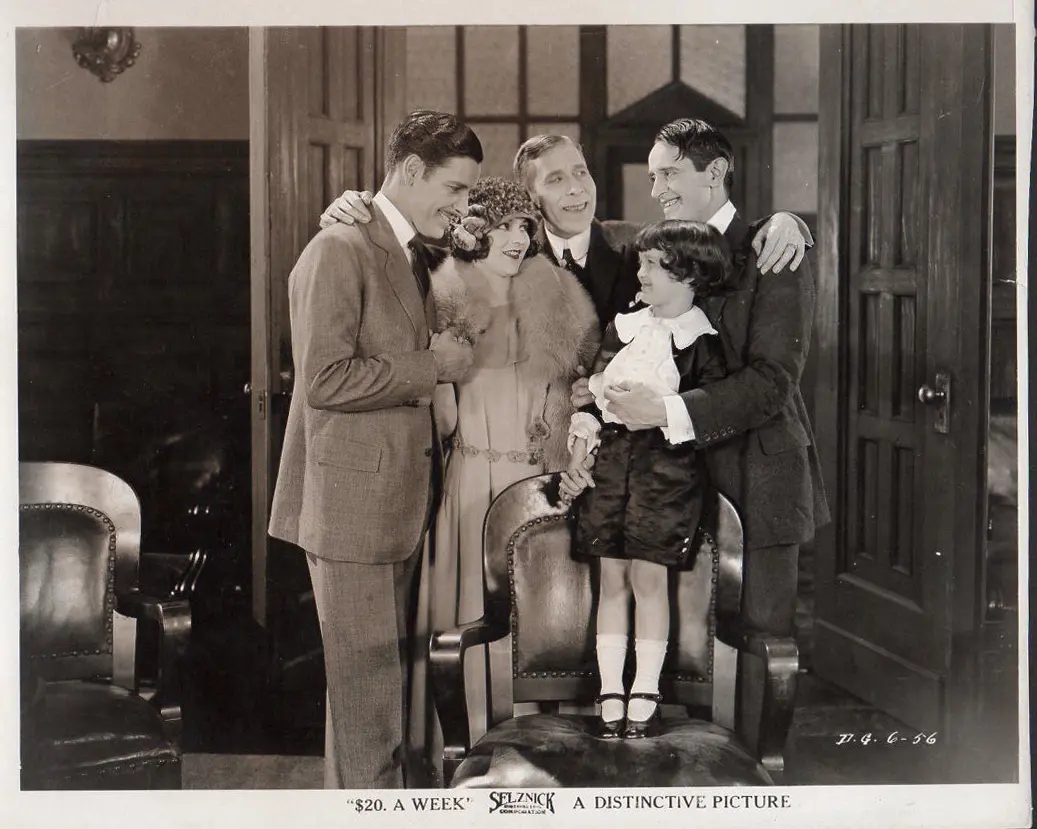
A definitive 6.1/10 rating for a film that redefined the boundaries of cult cinema. Twenty Dollars a Week remains a cornerstone of transgressive art.
In an era brimming with cinematic experiments, where narrative forms were still finding their footing and the power of visual storytelling reigned supreme, a film like Twenty Dollars a Week emerges as a remarkably poignant and surprisingly relevant piece of social commentary. It’s a compelling exploration of class, integrity, and the transformative power of genuine experience, deftly woven into a captivating drama. The premise itself, a challenge issued by a millionaire to his son to subsist on a pittance, immediately hooks the viewer, inviting contemplation on the true value of wealth and the often-unseen struggles of the working class. This isn't merely a quaint historical artifact; it's a narrative that, even without spoken dialogue, communicates profound truths about human nature and societal structures. The film, penned by Forrest Halsey and Edgar Franklin, manages to distill complex themes into an accessible and engaging story, showcasing the sophisticated storytelling capabilities of early cinema.
At the heart of Twenty Dollars a Week lies John Reeves, portrayed with a nuanced brilliance by the inimitable George Arliss. Arliss, known for his distinguished stage presence and often playing characters of considerable gravitas, brings an understated authority to John. His decision to embark on this self-imposed poverty, not out of necessity but as an intellectual and moral exercise, sets the stage for a fascinating character study. John's journey isn't a simple descent into hardship; it's a deliberate shedding of pretense, a quest for authentic understanding. One might recall similar themes of social experimentation in films like A Man About Town, where characters navigate different social strata, but here, the motivation is deeply personal, almost philosophical. John’s willingness to trade his comfortable existence for the rigors of manual labor and meager pay speaks volumes about his character, distinguishing him from the stereotypical 'idle rich.' His transformation from aloof patriarch to an empathetic participant in the daily grind is subtly depicted through Arliss's expressive acting, a testament to the power of silent film performance.
His entry into William Hart’s steel plant as a humble bookkeeper is particularly telling. The contrast between John’s vast, unacknowledged wealth and his mundane, underpaid position creates a potent dramatic irony. It allows him to observe the inner workings of an industrial enterprise not from a distant executive suite, but from the very heart of its operations. This proximity grants him an invaluable perspective, exposing him to both the diligent efforts of the workforce and the often-lax oversight of management. It’s a narrative device that effectively grounds the story in a tangible reality, even as it explores grander themes. The film expertly uses John's new vantage point to dissect the dynamics of power and labor in early 20th-century industry, a critique that resonates even today. The meticulousness with which he approaches his new role, despite its humble nature, underscores his innate capabilities, proving that true talent transcends social standing.
The Hart family, central to John's new life, provides a fascinating contrast to the Reeves' patrician world. William Hart, portrayed by Wallie Howe, embodies the archetype of the inherited fortune gone soft. His indolence and disinterest in the day-to-day affairs of his own company are starkly contrasted with John’s diligent approach. Howe’s portrayal captures the casual arrogance and lack of foresight that often accompany unearned privilege, making William a character who is both frustrating and, in a strange way, pitiable. He is a man adrift, relying on the legacy of others rather than forging his own path, a common character type in social dramas of the era. The film doesn't overtly condemn him, but rather subtly illustrates the consequences of his detached leadership.
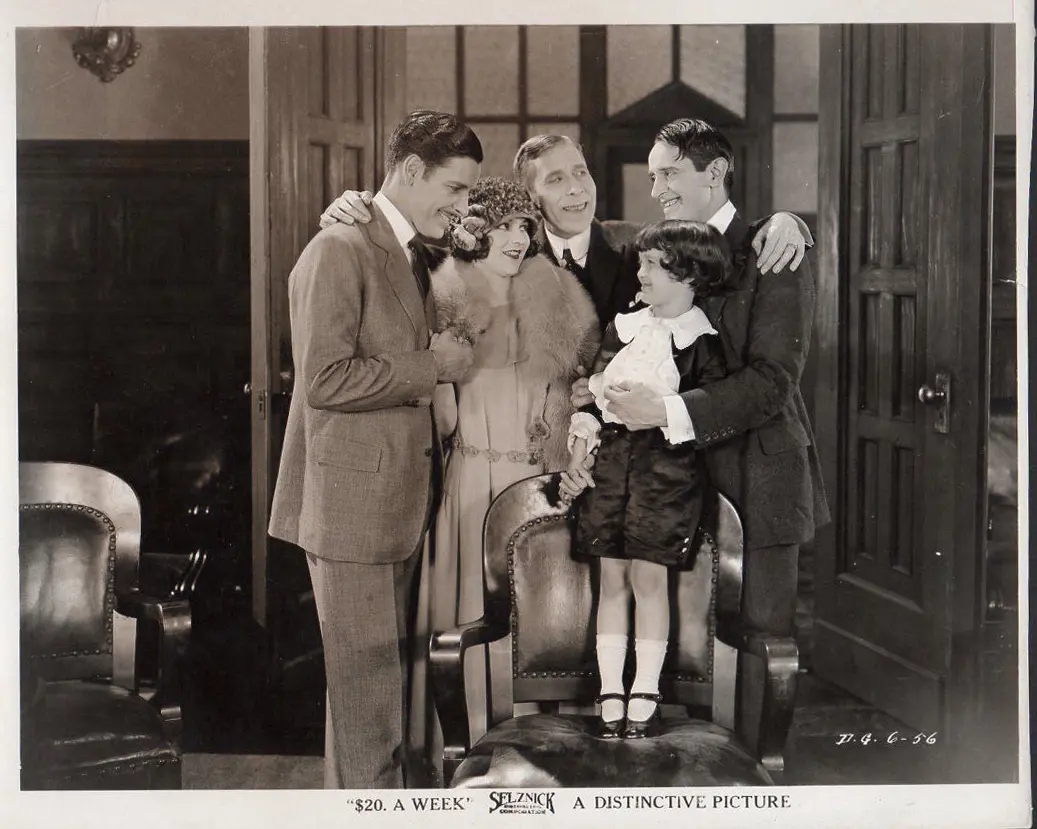
Muriel Hart, played by the luminous Edith Roberts, stands as William’s moral counterpoint. Her character is imbued with a profound sense of empathy and responsibility, particularly evident in her decision to adopt a small, vulnerable boy. Roberts brings a gentle strength to Muriel, making her a beacon of genuine compassion in a world often dominated by self-interest. This act of adoption is not merely a subplot; it’s a crucial narrative thread that highlights Muriel’s intrinsic goodness and foreshadows her ability to see beyond superficial appearances. It’s her humanity that truly sets her apart, making her an ideal romantic interest for Chester and a spiritual anchor for the narrative. The emotional weight she carries, especially in a silent film, is effectively conveyed through her subtle gestures and expressions, a testament to Roberts’s skill.
The unexpected bond that forms between William and John, with William metaphorically 'adopting' John as a father figure, is a stroke of narrative genius. It underscores William’s unconscious yearning for guidance and stability, a void left by his own lack of purpose. This ironic role reversal—a millionaire masquerading as a humble employee becoming a paternal mentor to his own employer—adds layers of complexity and subtle humor to the story. It also provides John with an intimate view of the Hart family’s vulnerabilities, further cementing his commitment to their well-being, even before the conspiracy is fully revealed. This dynamic is a masterclass in silent film character development, relying on visual cues and the actors' abilities to convey intricate emotional states without a single line of dialogue.
While John navigates the corporate world, his son Chester, portrayed by the dashing Ronald Colman, embarks on his own parallel journey of self-discovery. Colman, with his characteristic charm and earnestness, brings a youthful exuberance to Chester’s struggles. His challenge to live on twenty dollars a week is initially met with a degree of naivete, but his experiences quickly mature him. Unlike his father, Chester’s journey is less about intellectual curiosity and more about practical survival and the forging of a new identity stripped of inherited privilege. His struggles are relatable, highlighting the universal challenges of independence and self-reliance. This duality in the father-son narrative strengthens the film's thematic core, showing two different generations grappling with similar questions of worth and purpose.
Chester's burgeoning romance with Muriel is a central emotional anchor of the film. Their connection is forged not in ballrooms or exclusive social gatherings, but through shared experiences and a mutual appreciation for character over status. The simplicity and purity of their affection stand in stark contrast to the transactional relationships often depicted in stories about the wealthy. Edith Roberts and Ronald Colman share a palpable on-screen chemistry, conveying the tenderness and growing depth of their love through their expressions and subtle interactions. Their romance is a testament to the idea that true connection transcends class boundaries, a common yet always effective trope in cinema. It provides a hopeful counterpoint to the more cynical elements of corporate intrigue, reminding us that genuine human connection is often the most valuable currency. In a way, their story echoes the earnest romanticism found in other early films, albeit with a unique class-conscious twist.

The film takes a thrilling turn with the revelation of a sinister conspiracy to undermine the steel plant. This plot device elevates Twenty Dollars a Week beyond a mere social drama, injecting elements of a corporate thriller. John's role as a humble bookkeeper places him in the perfect position to uncover the malfeasance, transforming him from a detached observer into an active participant in the company's fate. The narrative deftly builds suspense as John pieces together the clues, exposing the machinations of those who seek to profit from William's naivete and the company's vulnerability. The tension is palpable, even without dialogue, relying on dramatic close-ups and the skillful performances of the supporting cast, including William Sellery, Taylor Holmes, Ivan F. Simpson, Joseph Donohue, Redfield Clarke, and George Henry, who likely embody various roles within the corporate intrigue, from conniving executives to unsuspecting employees.
This subplot serves a crucial function: it not only provides a compelling external conflict but also acts as a crucible for John's character. His decision to intervene and save the company, despite his initial detachment, underscores his inherent sense of justice and responsibility. It's a powerful demonstration that true leadership and business acumen are not solely the domain of the wealthy, but rather the product of diligence, integrity, and keen observation. The resolution of this conspiracy, with John ultimately becoming a partner, is a satisfying culmination of his journey, validating his experiment and proving that merit can indeed rise above inherited privilege. The film subtly argues for a meritocratic ideal, where genuine contribution is recognized and rewarded, regardless of one's starting point. One might draw parallels to the complexities of business ethics explored in films like Mark It Paid, where financial dealings drive much of the drama, though Twenty Dollars a Week grounds its corporate machinations in a more personal, character-driven narrative.
Beyond its engaging plot, Twenty Dollars a Week offers valuable insights into the cinematic techniques and thematic concerns prevalent during the silent era. The film's direction, while uncredited in explicit detail, demonstrates a clear understanding of visual storytelling. Intertitles are used judiciously, providing essential dialogue and exposition without overwhelming the visual narrative. The cinematography, though perhaps not as overtly experimental as some of its contemporaries, effectively conveys mood and character emotion through framing and lighting. The performances are a masterclass in silent acting, relying on exaggerated yet expressive gestures, facial nuances, and body language to communicate intricate feelings and motivations. George Arliss, Edith Roberts, and Ronald Colman, in particular, showcase the profound emotional depth achievable without spoken words. Their ability to draw the audience into their internal worlds is a testament to their craft and the directorial guidance that undoubtedly shaped their portrayals. This nuanced approach to character development is what elevates the film beyond a simple melodramatic tale.
The film's exploration of class divides and the arbitrary nature of inherited wealth resonates strongly with the social upheavals and economic disparities of the early 20th century. It subtly critiques the notion that wealth automatically confers wisdom or competence, while simultaneously celebrating the virtues of hard work, integrity, and genuine empathy. The eventual union of Chester and Muriel, a symbolic merging of old money (reformed) and innate goodness, offers a hopeful vision of societal harmony. It suggests that true value lies not in one's bank account, but in one's character and contributions. This message, delivered without didacticism, is perhaps the film's most enduring legacy. It’s a thematic thread that can be seen, albeit in different contexts, in other films exploring social mobility and identity, such as The Hoosier Schoolmaster or even the more satirical If, which critiques establishment values, though with a far more rebellious spirit. Twenty Dollars a Week, in its own gentle way, challenges its audience to reconsider their preconceptions about wealth and poverty.
While Twenty Dollars a Week might not be as widely discussed as some of its more epic silent counterparts, its quiet power and well-crafted narrative make it a film deserving of renewed attention. It’s a testament to the storytelling prowess of writers Forrest Halsey and Edgar Franklin, who managed to craft a story that is both entertaining and thought-provoking. The film avoids overly simplistic moralizing, instead presenting a nuanced view of its characters and their choices. The performances, particularly Arliss's, provide a masterclass in silent acting, demonstrating how much can be conveyed through expression and subtle gesture. For enthusiasts of early cinema, or anyone interested in the social history reflected through film, Twenty Dollars a Week offers a rich and rewarding viewing experience. It reminds us that the fundamental human questions about worth, identity, and connection transcend the limitations of any particular cinematic era, continuing to resonate with audiences across generations. The film stands as a quiet but firm declaration that true character is forged in the crucible of experience, not inherited through circumstance. Its understated brilliance ensures its place as a significant, if perhaps unsung, contribution to the silent film canon.
IMDb —
1926
Community
Log in to comment.