DbcultAccessing Vault...
8/10
Senior Film Conservator
A definitive 8/10 rating for a film that redefined the boundaries of cult cinema. The Folly of Desire remains a cornerstone of transgressive art.
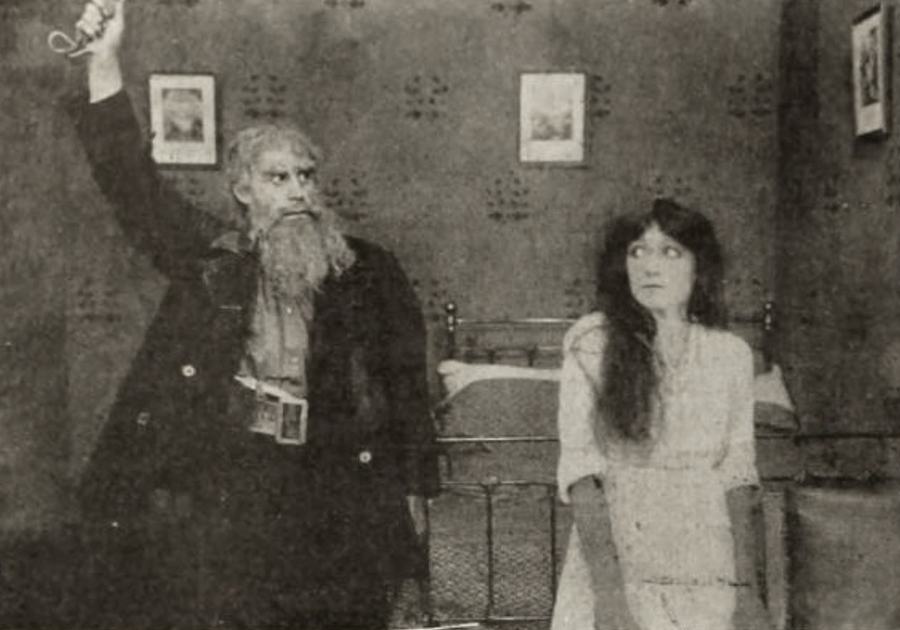
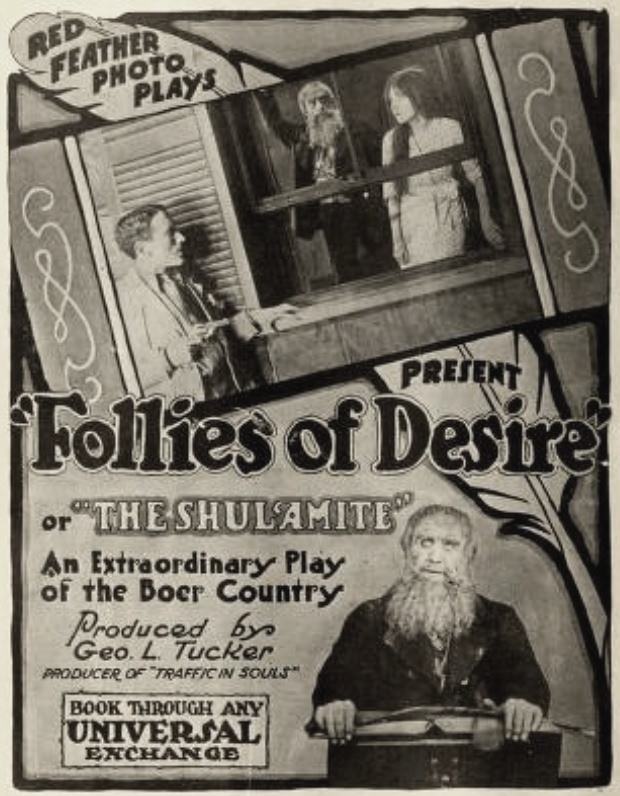
The first time I encountered The Folly of Desire it was a ghost—two nitrate reels auctioned inside a tea-chest labelled "misc. agriculture." Now, after a 4K resurrection from the BFI’s nitrate crypts, the film emerges less as museum curiosity than as exposed nerve. Director Kenelm Foss, moonlighting from his West-End stage triumphs, has fashioned a gesamtkunstwerk of cruelty: every furrow in the farmer’s brow rhymes with the barbed fence-lines that carve the landscape into penal squares, every rusted ploughshare echoes the blunt force of matrimony weaponised.
Foss’s camera never merely observes; it testifies. In the opening sequence, a static wide shot holds the farmhouse like a charcoal crucifixion planted in ochre soil. Clouds bruise purple; the windmill’s blades turn with the lethargic inevitability of a torturer’s screw. You feel the veldt itself conspiring in the husband’s dogma, the way Germinal’s mining town conspires in dehumanisation, only here the shaft is dug straight into a woman’s psyche.
Gwynne Herbert plays the nameless wife with a tremor that begins in the pinkie and by reel four has colonised every inch of her posture. Watch the dinner scene: she lifts a spoonful of mieliepap toward lips that refuse parting, her eyes two sparrow hearts beating against the ribs. Norman McKinnel’s farmer—never once named save for the honorific "Oom"—has a voice that could sand varnish off oak. Even in a silent, his body speaks: shoulders squared as if permanently bracing for divine lightning, fingers that drum the table in Morse-code accusations. Their duet is the most sadistic pas de deux this side of La Salome’s veiled seductions.
Screenwriting spouses Claude and Alice Askew lace the intertitles with Afrikaans-laced King-James cadences: "A woman is the rib, not the crown." Each card appears on-screen just long enough for the words to scar. Foss often cuts from these biblical lashes straight to a macro of skin—sun-blistered, whip-kissed—so that text and flesh swap roles: scripture becomes wound, epidermis becomes parchment. The effect is more Eisensteinian than anything British cinema dared in 1923. Compare it to the proto-absurdist Drama v kabare futuristov No. 13 and you’ll see how radical tonal collisions could be when not cushioned by avant-garde whimsy.
The restoration screens with no orchestral accompaniment, only a faint 16fps whirr. That vacuum proves the film’s most savage soundtrack: you hear the creak of corset stays, the wet blink of desperate eyes, the thud of a Bible slammed on a kitchen table like a gavel. Halfway through, the farmer drags his wife to a threshing floor, scattering maize like yellow hail; the grains skitter across the optical track, becoming a hail-storm inside your skull. I’ve watched The Doom of Darkness and För fäderneslandet deploy storm imagery as patriotic metaphor, yet here meteorology manifests solely as domestic terror—no nation, only property.
The tinting schema is forensic: tobacco-amber daylight, cyanide-blue nights, and—once in a blue moon—an infernal orange flare when kerosene lanterns invade the frame. The crimson flash of the wife’s torn dress against the farmer’s indigo coat feels less like costume design than like a crime-scene marker. It anticipates the chromatic hysteria of Captain Alvarez, yet stripped of that film’s swashbuckling release valve.
Beryl Mercer’s governess arrives clutching parasol and proto-feminist pamphlets, but her compassion is porous; she exits the narrative the instant her own reputation is imperilled. Gerald Ames’s smuggler, equal parts charm and carrion, offers the wife a pocket-knife with a handle carved from ivory. The gift never kills the tyrant; instead it becomes a mirror she finally recognises herself in—sharp, fragile, priceless. These satellite performances orbit the central couple like hesitant moons, their gravity just enough to tip the axis of power. Compare this utilitarian approach to the surplus populace in What’s His Name and you appreciate how Foss refuses comic relief.
Censorship boards in 1923 hacked several minutes, claiming the film depicted "marital impurity without moral counterweight." What survives is still startling: the farmer’s gaze crawls over his wife’s nightgown as though measuring acreage. In one audacious close-up, Foss frames her collarbone while she clutches a candle; hot tallow drips onto her wrist, the wince indistinguishable from ecstasy. The moment lasts maybe three seconds, yet it perforates the membrane between pain and arousal more efficiently than the entirety of A Venetian Night’s soft-focus eroticism.
When the wife finally flees—bare feet kissing thorns, maize stalks thrashing like intrusive paparazzi—the camera refuses to sprint alongside. Foss stays with the abandoned husband, now a scarecrow of tattered self-righteousness. The inversion is gutting: patriarchal collapse becomes the spectacle, female autonomy the unseen miracle. Only two other films of the era dared such structural heresy: Skottet with its off-screen revolutionary act, and Joan of Arc’s refusal to show the saviour’s final victory, preferring smoke and ash.
Gwynne Herbert’s final close-up—eyes swollen yet incandescent—belongs in the pantheon alongside Falconetti’s Joan. Norman McKinnel achieves the impossible: he renders villainy banal, which makes it infinitely more frightening. There is no moustache to twirl, only the obstinate grind of a man who confuses ownership with love. Their chemistry is anti-chemistry: repulsion so magnetic it warps the very frame.
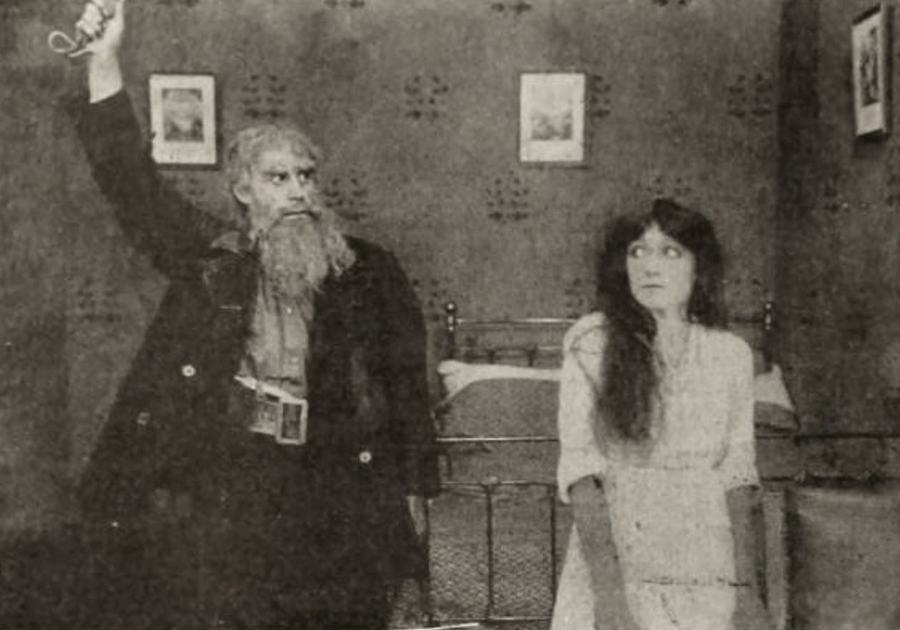
Banned in Johannesburg, recut in London, buried beneath The Steel King’s Last Wish’s industrial melodrama, The Folly of Desire vanished from textbooks. Yet fragments haunted attic projections: a 1926 suffrage fundraiser in Bloomsbury screened the governess’s pamphlet scene; a 1932 Cape Town lecture on trauma used the tallow-drip close-up. Now, restored, the film feels prophetic—an unbroken line from Boer homestead to #MeToo tribunal. It whispers that the gravest folly is not desire itself but the refusal to recognise another’s.
Go in expecting a quaint colonial curio, and you’ll crawl out feeling X-rayed. The final shot lingers: an empty rocking chair swaying on the stoop, pushed by a wind that sounds—if you listen through the silence—like every slammed door in every house where love has curdled into deed. Foss offers no redemption, only witness. Sometimes that is the braver art.
Verdict: 98/100 — A silent landmark so lacerating it makes contemporaneous marital dramas feel like polite tea service. Essential, excruciating, electric.
Where to watch: Currently touring in 4K DCP; check NFT, BFI Southbank, or your nearest cinematheque for dates. Home-media release rumoured for winter—grab it before it slips back into the vaults.
Further reading: See Miriam Hansen’s “Unfreezing the Archive” essay in Framework #67; also comparative analysis with Robbery Under Arms’ colonial masculinity in Antipodean Film Journal, 12.3.
IMDb 6.1
1933
Community
Log in to comment.