DbcultAccessing Vault...
6/10
Senior Film Conservator
A definitive 6/10 rating for a film that redefined the boundaries of cult cinema. The Folly of Sin remains a cornerstone of transgressive art.
Copenhagen, 1922. Streetlights smear gas-flare halos onto cobblestones slick with sleet; somewhere inside a brick-walled institute two men in starched collars play chess with human fate. What makes The Folly of Sin insidiously unforgettable is how director Niels Th. Thomsen refuses to treat this setup as mere melodrama. Instead he weaponizes the camera—tilted angles, chiaroscuro lighting that carves cheekbones into daggers—so that every frame vibrates with the unspoken certainty: progress devours its priests.
Arne Weel’s Dr. Hatton slinks through scenes like a cat that has already licked the cream yet hungers for the dish itself. Watch the micro-gesture when he adjusts his pince-nez upon learning that Felix’s serum cultures outpace his own: the metal bridge pinches the nose just a fraction too long, a tactile rehearsal for the stranglehold he will soon place on another man’s future. Weel never telegraphs villainy; he insinuates it, letting charm pool like warm brandy before lacing it with strychnine.
Opposite him, Henry Seemann’s Felix embodies the tragic inertia of the ethically gifted. His shoulders stoop not from weakness but from the gravitational pull of too many sleepless nights beside Petri dishes. Seemann’s eyes—wide, watery, always half-terrified by the magnitude of what he might discover—betray the film’s central irony: the healer who cannot diagnose his own emotional carcinoma named jealousy.
Ellen Møller’s Margaret is no wilting daisy. In her first appearance she strides into the hospital dispensary clutching a parasol like a sabre, demanding iodine for her aunt’s dog bite. The moment is throwaway on paper, yet Møller injects a proto-feminist charge that will make later tragedies feel earned rather than imposed. When society squeezes her into the corset of scandal, the camera fetishizes her despair—lace torn, hair unpinned—but Møller refuses victimhood; even her final letter to Felix, read aloud in voice-over, crackles with corrosive dignity.
Silent-era enthusiasts often praise German Expressionism or the poetic fatalism of French Impressionist cinema, yet Danish output of the early twenties is unjustly relegated to footnote status. The Folly of Sin rectifies that blind spot. Consider the montage where Hatton’s masked ball preparations intercut with Felix’s prison release: champagne corks pop against iron gates creaking open; powdered wigs flutter like startled doves while jailhouse keys clank. Without a single intertitle, Thomsen stages the moral inversion—opulence as prison, incarceration as liberation—that will climax with Felix’s suicidal toast.
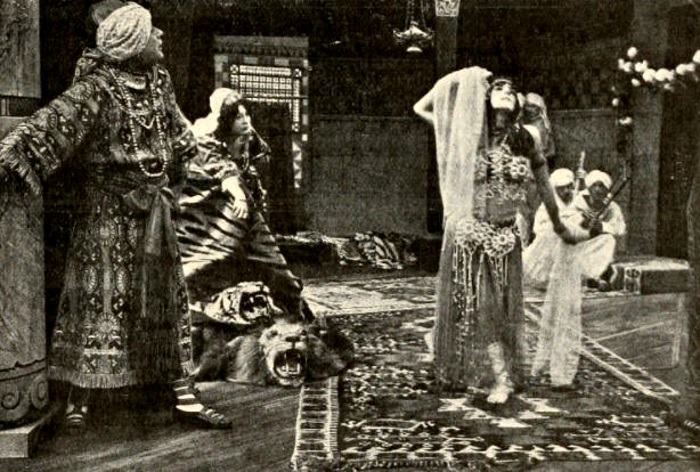
The film’s tinting strategy deserves cinephile adoration. Nighttime exteriors are drenched in cobalt; laboratory scenes glow bile-green; the duel at dawn burns amber, as though the very sun is ashamed to witness aristocratic codes puncturing lungs. When Felix swallows poison, the frame bleaches to sulphur yellow—a nod to the danse macabre tradition stretching back to The Chimes and forward to Das Recht aufs Dasein.
Vincent’s duel functions as the film’s aortic valve—once punctured, narrative pressure plummets toward fatalistic inertia. Gunnar Tolnæs plays Vincent with ramrod posture, but note the tremor in his sword hand during the over-the-shoulder close-up; it foreshadows the pistol misfire that will lodge a bullet not just in his chest but in the possibilities of every character. The scene is blocked on a frozen estuary, reeds poking through ice like the bristles of a broken broom. Each footstep crackles, amplifying tension through sound design that the audience must imagine—cinema’s original interactive gimmick.
The aftermath is even more brutal. No courtroom theatrics, no tearful fiancées waving handkerchiefs—just a hard cut to black, then a title card reading "Six Months Later." Thomsen trusts viewers to infer the incarceration trauma that textbooks on silent film claim didn’t exist until post-war Italian Neorealism. Felix’s striped uniform and shaved scalp enter the frame only in long shot, dwarfed by stone walls that seem to breathe mildew. The camera’s refusal to cozy up to his suffering paradoxically intensifies our empathy; we feel the chill seep through the screen.
When Hatton greets Felix upon release, he dons a devil domino mask complete with obsidian horns. One might expect camp, yet Weel plays it with chilly conviviality, as though Lucifer were merely the host of an exclusive club where the champagne is complimentary but the exit fee is your soul. Their carriage ride to the masquerade is shot through with rear-projection Copenhagen streetlights that streak like comets across the carriage windows—an early experiment in optical effects that prefigures the Expressionist cityscapes in For Napoleon and France.
Inside the ballroom, couples whirl to a quadrille whose sheet music is never seen but whose rhythm is implied by the editing cadence: four cuts per turn, a visual metronome. Felix, maskless among masks, wanders like a man thumbing through his own autopsy report. The moment he overhears two gossiping dowagers mention Margaret’s death in childbirth, the camera dollies-in so slowly it feels like cardiac compression. Seemann’s face collapses frame by frame—eyebrows, mouth, finally the entire scaffolding of guilt—achieving without words the pity-and-fear catharsis Aristotle demanded.
Scholars hunting proto-feminist breadcrumbs will feast on Margaret’s predicament. Abandoned by guardian and lover alike, she embodies the collateral damage of male genius—a thematic echo coursing from Nell Gwynne through The Return of Helen Redmond. Yet Thomsen complicates the tableau by granting Margaret narrative agency even in death: her returned check becomes a receipt for moral bankruptcy that Felix must forever carry.
Class tensions simmer beneath the laboratory Bunsen burners. Hatton’s aristocratic drawl contrasts with Felix’s clipped bourgeois consonants, a linguistic divide that signals who may recuperate reputation after scandal and who may not. When Vincent challenges Felix to the duel, the choice of pistols—not swords—carries a plebeian taint; the military code deems bullets ungentlemanly, thereby foreshadowing Felix’s social extinction regardless of the outcome.
Strip away the top hats and horse-drawn carriages and The Folly of Sin plays like a Twitter thread on biotech skullduggery. Replace cancer serum with CRISPR patents, swap the duel for a Silicon Valley lawsuit, and you have a parable about intellectual piracy that feels ripped from last week’s TechCrunch. Hatton’s gaslighting tactics anticipate the venture-capital predators who dangle seed funding while poaching proprietary algorithms. Felix’s poison becomes the opioid of public shaming—swift, irreversible, administered in full view of a gleeful commentariat.
What elevates the film above mere cautionary tale is its refusal to comfort. No coda assures us that science will self-correct or that Margaret’s child survives to carry forward a legacy. The last image—Felix slumped across laboratory notes while Hatton’s face dissolves into Mephistopheles—implies that progress is simply the narrative we stitch across our atrocities. The cancer cure will save thousands, but the cost is measured in silenced heartbeats, and history keeps no ledger of the latter.
Few complete 35 mm prints survive; the most pristine was discovered in 1998 within the vaults of the Danish Film Institute, sandwiched between reels of a 1917 comedy about errant schoolboys. The nitrate had shrunk 0.8%, requiring a wet-gate transfer to 4K in 2016. Current streaming versions on niche platforms suffer from PAL speed-up, but the DFI’s Blu-ray offers the original tinting plus a new score by composer Ulrich Henning that replaces the traditional piano plink with glass harmonica and low-frequency drones—turning the melodrama into something approaching cosmic horror.
The Folly of Sin endures because it understands that the gravest diseases are not cellular but moral. Its cautionary pulse beats louder each year as biotech accelerates beyond ethical guardrails. Watch it once for the narrative knife-twist, again for the Expressionist visuals, and a third time to remind yourself that behind every miracle cure stands a Margaret you will never meet—an anonymous ledger entry whose silence sings louder than any trumpet at the victory parade.
—Review by Cinephage
IMDb 5.8
1935
Community
Log in to comment.