Unearthing the Pulse of Pendleton: A Documentary for the Ages
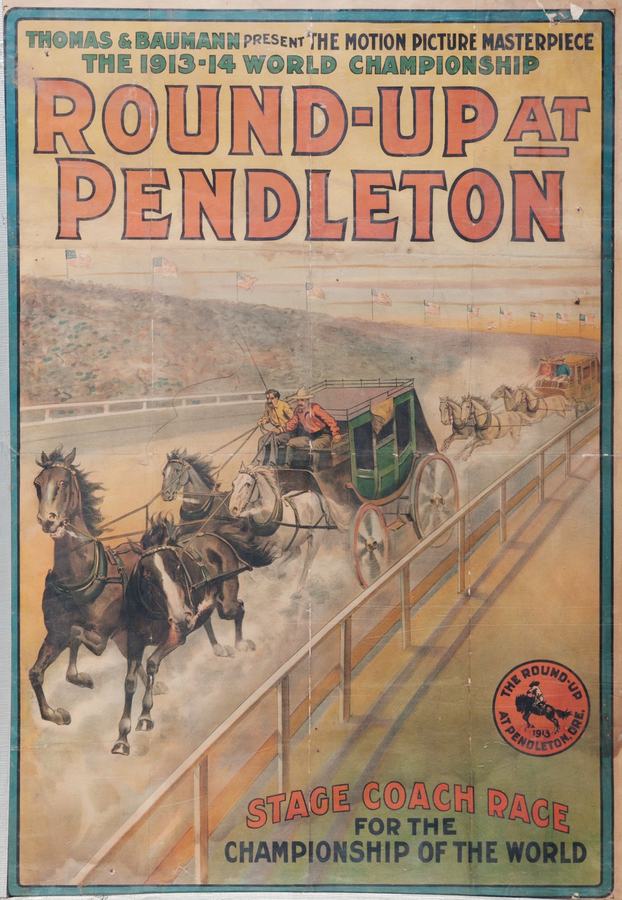
The Pendleton, Oregon, Round-Up is not merely a film—it is a seismic pulse, a thundering echo of the American West’s unyielding spirit. Released in 1913, this documentary immerses viewers in the heart of a community where the line between man and beast, tradition and modernity, is as razor-thin as the tip of a spurs’ point. The film’s stark black-and-white palette amplifies its power, stripping away the distractions of color to focus on the raw, unvarnished essence of the rodeo. There is no artifice here; only the visceral clash of wills, the primal roar of cattle, and the sun-scorched earth that bears witness to it all.
The documentary’s opening sequences are a masterclass in atmospheric storytelling. The camera glides over the vast, arid plains of Pendleton, framing the rodeo grounds as a sacred arena where history is etched into the dust. The sound design—a cacophony of hooves, clattering spurs, and the occasional whoop of encouragement from the crowd—immerses the viewer in a world where every heartbeat syncs with the rhythm of the land. This is not a stage for spectacle but a crucible of endurance, where every competitor is a myth in the making.
A Canvas of Contrasts: Tradition vs. Progress
What elevates The Pendleton, Oregon, Round-Up beyond a simple ethnography of rodeo is its nuanced exploration of cultural duality. The film juxtaposes the rugged individualism of cowboys with the collective identity of the community. For instance, a sequence depicting a bronco buster being thrown from his horse is followed by a close-up of his hands—calloused and scarred—before cutting to the crowd’s muted applause. The tension between personal glory and communal respect is palpable, echoing themes found in films like Way Outback (1913) and The Miner’s Curse (1913), where the struggle against nature and societal expectations defines the protagonist’s arc.
The documentary also grapples with the passage of time. A scene showing a veteran rider mentoring a younger competitor underscores the generational transfer of skills, a thread linking past and future. This motif is reminiscent of the mentor-protégé dynamic in A Tale of the Australian Bush (1914), albeit set against a different landscape. Yet in Pendleton, the setting itself—the harsh, sunbaked plains—acts as both antagonist and ally, a force that demands respect and offers no mercy.
Visual Poetics: The Language of Dust and Muscle
Cinematographically, the film is a triumph of restraint and precision. The director employs a dynamic range of shots—from wide, sweeping panoramas to intimate close-ups—to capture the rodeo’s duality. A long take of a bull rider clinging to his mount, muscles taut and eyes locked in concentration, is intercut with a wide shot of the arena’s perimeter, where onlookers sway in a trance-like rhythm. This visual counterpoint mirrors the tension between individual struggle and collective awe, a theme that permeates the entire documentary.
The use of light is particularly striking. In the early morning scenes, the golden hour bathes the arena in a warm, almost ethereal glow, creating a sense of divine ordination. By contrast, the midday sequences are harsher, the shadows sharper, reflecting the unforgiving nature of the competition. This interplay of light and shadow is reminiscent of the chiaroscuro techniques in The Student of Prague (1913), though Pendleton’s approach is more grounded in naturalism than fantasy.
The Unseen Threads: Subtext and Symbolism
Beneath its surface-level focus on rodeo events, The Pendleton, Oregon, Round-Up reveals a deeper narrative about the American psyche. The repeated images of ropes—used to lasso cattle, tether riders to their horses, and bind the community together—serve as a potent metaphor for control and freedom. A rope is both a tool of dominance and a lifeline, a paradox that mirrors the broader tension between civilization and wilderness.
This duality is further emphasized through the film’s sound design. The absence of a traditional score (save for the occasional off-screen cheer) allows the natural sounds of the rodeo to dominate. The snort of a horse, the creak of leather boots, and the crack of a whip are not mere background noise—they are the heartbeat of the film. This aural minimalism draws parallels to The Life Story of John Lee, or The Man They Could Not Hang (1913), where silence often speaks louder than any dialogue.
Comparative Echoes: A Benchmark in Early Cinema
When placed beside other early 20th-century documentaries, The Pendleton, Oregon, Round-Up stands out for its unflinching realism and emotional depth. Unlike the romanticized portrayals of cowboys in The Student of Prague (1913) or the fantastical elements of The Genet (1913), Pendleton offers no narrative contrivances. It is a document of lived experience, where victory is fleeting and failure is inevitable. This approach aligns it more closely with the stark realism of Strike (1925), though Pendleton predates that film by over a decade.
The documentary’s focus on communal rituals also finds resonance in The Rajah’s Diamond Rose (1913), which explores the intersection of tradition and modernity in an Indian context. However, Pendleton’s setting—rooted in the American frontier—gives it a uniquely iconoclastic edge. It is a film that dares to ask, without answers, what it means to be part of a tradition that is both a source of pride and a burden.
Legacy and Relevance: The Enduring Call of the Rodeo
A century after its release, The Pendleton, Oregon, Round-Up remains a vital artifact of early cinema. Its unembellished portrayal of the rodeo’s physical and emotional toll challenges contemporary audiences to reconsider the mythos of the American West. In an age where digital landscapes often replace natural ones, this film serves as a reminder of the raw, untamed beauty that once defined the frontier.
The documentary’s influence can be traced in later works like Revolución orozquista (1913), which similarly captures the grit of historical events, and The Sin of a Woman (1914), which explores the moral complexities of rural life. Yet Pendleton’s unique contribution lies in its ability to balance documentary authenticity with poetic resonance, a feat few films of its era achieve.
For modern viewers, the film is both a window into the past and a mirror for the present. It invites reflection on the role of tradition in an ever-evolving world and the cost of preserving cultural identity. In this sense, The Pendleton, Oregon, Round-Up is not just a film about a rodeo—it is a meditation on the human condition, rendered in the language of dust, muscle, and unyielding will.