DbcultAccessing Vault...
Cult Review
Senior Film Conservator
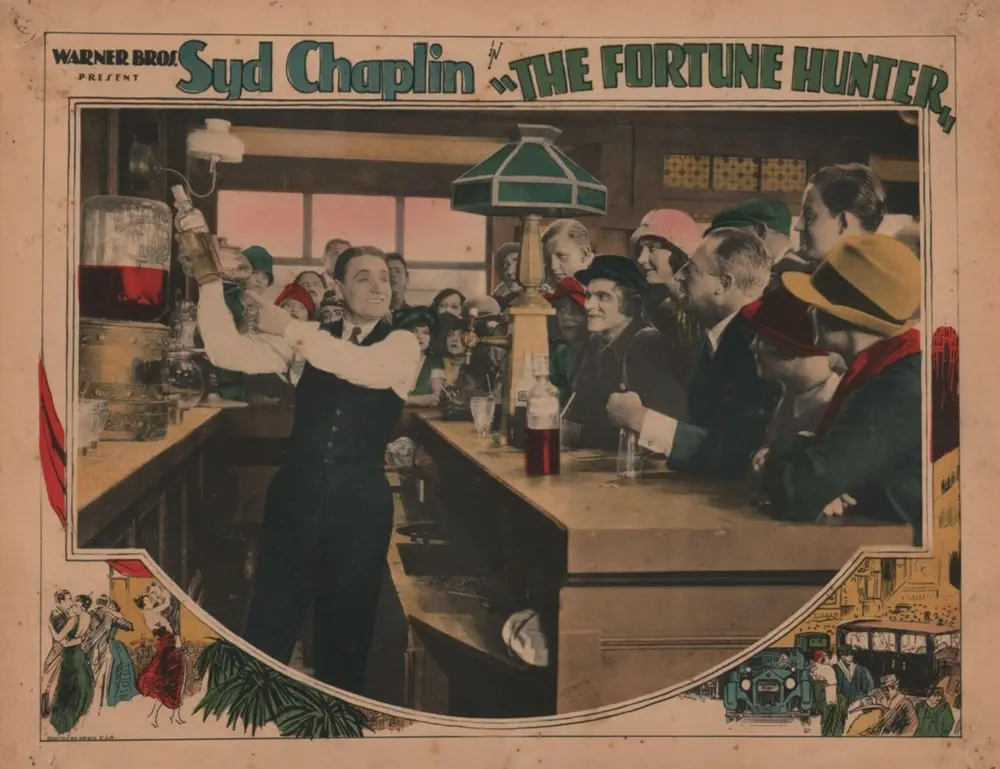
Should you spend your precious viewing hours on a nearly century-old silent film like The Fortune Hunter? Short answer: yes, but with significant caveats. This film is a delightful, if uneven, discovery for silent cinema enthusiasts and those curious about early American comedies, but it will likely test the patience of viewers accustomed to modern pacing and intricate narratives.
It's a curious artifact, a window into a specific brand of early 20th-century Americana, offering genuine laughs alongside moments that feel decidedly outmoded. For those who appreciate the historical context and foundational elements of cinematic storytelling, there’s much to unpack. For others, it might feel like more of a historical exercise than pure entertainment.
At its core, The Fortune Hunter is a classic rags-to-riches, or perhaps more accurately, rags-to-respectability, tale wrapped in a comedic premise. Nat Duncan, played with a charmingly bewildered everyman quality by Syd Chaplin, is a cafe bouncer whose life takes an unexpected turn. His encounter with Handsome Harry (Erville Alderson), a former panhandling associate now surprisingly affluent, sets the entire farcical plot in motion. Harry’s proposition – marry for money, split the spoils – is the kind of audacious, morally ambiguous setup that propelled many silent comedies.
The film then transplants Nat from the gritty urban landscape to the quaint, unsuspecting 'hick town' of Radville. Here, he undergoes a remarkable transformation, shedding his bouncer persona for that of a virtuous, well-heeled churchman. This fish-out-of-water scenario is where much of the film’s comedic potential lies, as Nat navigates the social intricacies and romantic advances of small-town life with a mixture of genuine goodness and calculated pretense.
This film works because of its charming lead performance and a surprisingly forward-thinking comedic premise for its era.
This film fails because of its occasionally sluggish pacing and a reliance on tropes that have, understandably, not aged gracefully.
You should watch it if you have an appreciation for silent-era comedies, enjoy character-driven farces, or are keen to explore the early career of talents like Syd Chaplin.
Syd Chaplin, often overshadowed by his more famous half-brother Charlie, delivers a performance here that is both nuanced and genuinely funny. His Nat Duncan isn't a broad caricature; he's a man trying his best to uphold a facade while his innate decency shines through. Chaplin's physical comedy, though less exaggerated than his sibling's, is effective, particularly in the scenes where he's literally fending off eager women in Radville.
Consider the scene where Nat, in his newly acquired 'man of means' guise, attempts to navigate a church picnic. Chaplin's subtle facial expressions, a mixture of discomfort and forced piety, speak volumes without a single intertitle. He portrays Nat's internal conflict – the desire to maintain his cover versus his growing affection for Betty Graham – with a quiet sincerity that grounds the more outlandish plot points.
Helene Costello, as Betty Graham, provides a lovely counterpoint to Chaplin's Nat. Her performance is earnest and understated, embodying the kind of wholesome, hardworking woman who would naturally appeal to Nat's emerging conscience. Their chemistry, though constrained by the conventions of silent film romance, feels genuine. Erville Alderson as Handsome Harry, meanwhile, plays the conniving, almost cartoonish villain with relish, providing the necessary external conflict that drives Nat's ultimate redemption.
Directed by Bryan Foy, The Fortune Hunter showcases a competent, if not groundbreaking, approach to silent filmmaking. Foy, who would later become known for his prolific work as a producer, demonstrates a solid understanding of visual storytelling. The film's pacing, while slow by today's standards, is fairly typical for the era, allowing scenes to unfold gradually and relying on character reactions rather than rapid-fire editing.
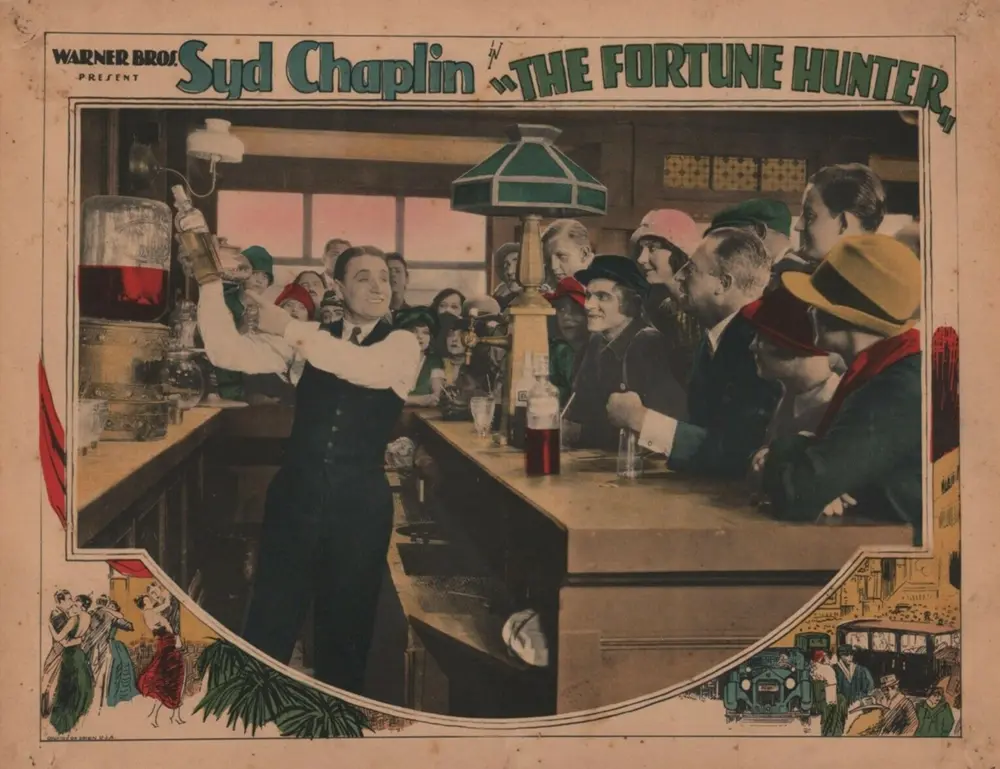
The cinematography, while not particularly artful in the vein of a F.W. Murnau or a Victor Sjöström, effectively captures the contrast between the bustling city and the tranquil, almost idyllic Radville. Shots of the small town, with its quaint storefronts and community gatherings, establish a clear sense of place. The camera often frames Nat in a way that emphasizes his initial awkwardness and later, his growing confidence within this new environment. For instance, early shots of Nat in Radville often place him slightly apart from the townsfolk, highlighting his outsider status, a visual cue that slowly dissolves as he integrates.
There's a straightforward charm to the visual style, prioritizing clarity and narrative progression over stylistic flourishes. It’s a functional beauty, one that serves the story without drawing undue attention to itself. This is not a film that attempts to push the boundaries of cinematic language, unlike some of its more experimental contemporaries. Instead, it perfects the accessible, narrative-driven style that made silent cinema so popular.
The pacing of The Fortune Hunter is undeniably a product of its time. Modern viewers accustomed to quick cuts and constant narrative propulsion might find its rhythm a little languid. However, within the context of 1927, it’s quite effective. The film allows its comedic situations to breathe, building to payoffs with a deliberate, unhurried precision. This gives Syd Chaplin ample room for his character work, letting Nat’s evolving personality shine through.
The tone is largely lighthearted and farcical, leaning into the absurdity of Nat’s predicament. There are moments of genuine sweetness, particularly in Nat’s interactions with Betty and his efforts to help her father’s struggling business. The film manages to maintain a sense of innocence despite its somewhat mercenary premise, largely due to Nat’s inherent good nature. Even the villainous Harry isn't truly menacing, more of a bumbling opportunist, which keeps the stakes comedic rather than dramatic.
One could argue that the film occasionally struggles to maintain a consistent comedic energy, with some scenes feeling a little drawn out. However, the payoff, particularly in the climax involving the wax model, demonstrates a cleverness that justifies the build-up. It's a testament to the writers, Winchell Smith, Robert Dillon, and Bryan Foy, that they manage to pull off such an outlandish resolution with a straight face.
Beneath its comedic veneer, The Fortune Hunter touches upon several interesting themes. The most obvious is the tension between appearance and reality, and the idea that identity can be constructed and performed. Nat literally reinvents himself, adopting a new persona to achieve his goals. This speaks to a nascent American dream, where one could, theoretically, shed their past and forge a new future, though the film ultimately champions authenticity over artifice.
The film also subtly critiques the allure of wealth for its own sake. Harry’s rapid depletion of his wife’s fortune serves as a cautionary tale, while Nat’s growing affection for Betty and his genuine efforts to help her family show a shift in his priorities from material gain to emotional fulfillment. This moral arc, while somewhat predictable, is handled with a certain grace that elevates the film beyond pure slapstick.
There's also a fascinating, if dated, portrayal of small-town life and the role of women within it. The aggressive pursuit of Nat by Radville’s eligible bachelorettes, while played for laughs, offers a glimpse into societal expectations and the limited opportunities for women in that era. It’s a surprising observation: the film, perhaps unintentionally, paints a picture of women who, despite their agency in pursuing Nat, are still largely defined by their marital prospects. This is a far cry from the more complex female characters seen in films like Ingeborg Holm, for instance, but it's a valuable historical snapshot nonetheless.
For silent film aficionados, The Fortune Hunter is absolutely worth seeking out. It offers a solid example of early American comedy, a strong central performance from Syd Chaplin, and a glimpse into the narrative conventions of the era. It's not a forgotten masterpiece, but it's a thoroughly enjoyable and historically significant piece of cinema.
For casual viewers, the answer is more nuanced. Its slower pace and reliance on visual storytelling without dialogue might be a barrier. However, if you approach it with an open mind and an appreciation for film history, you might find yourself charmed by its wit and sincerity. It’s a film that asks for a little patience but rewards it with genuine warmth.
The Fortune Hunter is a charming, if imperfect, piece of silent cinema. It works. But it’s flawed. Syd Chaplin's performance is the undeniable highlight, elevating what could have been a standard comedic farce into something genuinely endearing. The film successfully navigates its morally ambiguous premise with a light touch, ultimately delivering a message that values integrity and true affection over superficial wealth.
While it won't resonate with every modern viewer, especially those unaccustomed to the rhythms of silent film, it offers a delightful escape for those willing to engage with its historical context. It’s a testament to the enduring appeal of simple, well-told stories and the magnetic power of a charismatic lead. Dive into The Fortune Hunter if you're seeking a gentle, humorous journey back in time, and you'll find a quietly satisfying experience, far from a cinematic journey, but certainly a pleasant visit.
IMDb 5
1924
Community
Log in to comment.