DbcultAccessing Vault...
7.2/10
Senior Film Conservator
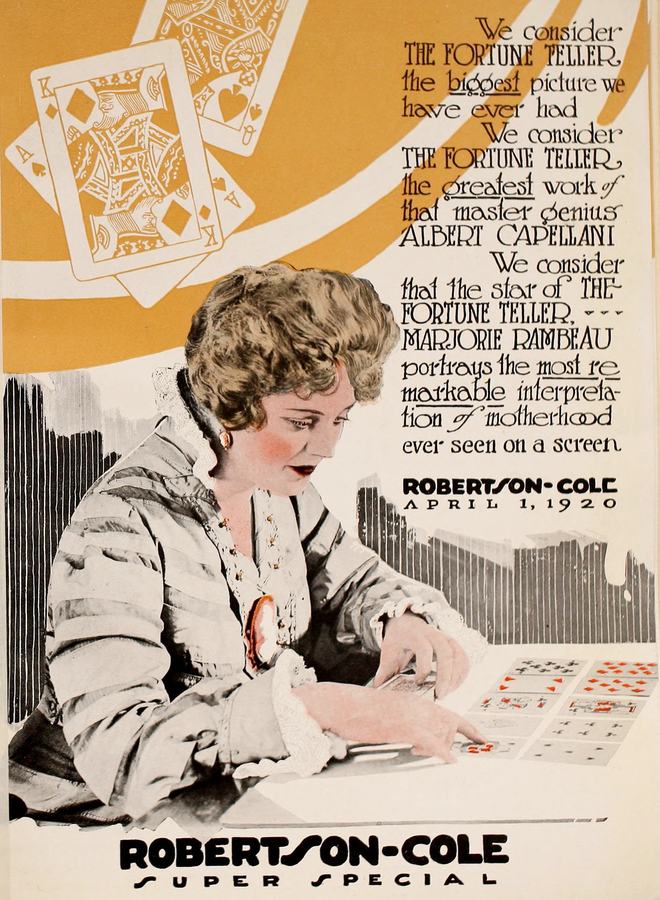
A definitive 7.2/10 rating for a film that redefined the boundaries of cult cinema. The Fortune Teller remains a cornerstone of transgressive art.
The flickering shadows of early cinema often captured the grandest human dramas with an intensity that modern audiences, accustomed to a cacophony of sound and color, frequently underestimate. Among these silent epics, 'The Fortune Teller' emerges as a particularly potent exploration of societal judgment, maternal sacrifice, and the serpentine path to redemption. It's a film that, even a century later, resonates with a raw, emotional power, a testament to the enduring craft of its writers, George DuBois Proctor and Leighton Osmun, and the evocative performances of its cast, particularly Marjorie Rambeau, whose portrayal anchors the film's tragic heart.
At its core, 'The Fortune Teller' is a narrative steeped in the melodramatic conventions of its era, yet it transcends mere sensationalism through its profound character study. We are introduced to Renee Browning, a woman whose life is characterized by an unwavering devotion to her son, Stephen. This idyllic existence is cruelly sundered by a false accusation of an illicit affair with Tony Salviatti, the charismatic, perhaps too charismatic, circus manager. The swift, unyielding judgment of her husband, Horatio, epitomizes the rigid moral codes that often dictated women's fates in early 20th-century society. Horatio’s decision to divorce Renee and seize custody of Stephen is not merely a legal act; it is an emotional amputation, severing a mother from the very essence of her being.
The ensuing descent of Renee into the world of a circus fortune-teller, and her subsequent degradation through alcoholism, is painted with a poignant, almost visceral sadness. This isn't a story of a woman succumbing to inherent weakness, but rather one of a spirit crushed by an unjust world, seeking oblivion in the bottom of a bottle. The circus, a place of transient spectacle and hidden sorrows, becomes both her refuge and her prison. It's a fascinating choice of setting, mirroring the theatricality of life and the masks people wear, even as Renee herself becomes a grotesque caricature of her former self, veiled by the mysticism of her new profession and the haze of drink.
The power of silent film lies in its ability to communicate complex emotions through purely visual means. The nuanced expressions of actors like Marjorie Rambeau, the careful staging, and the evocative intertitles carry the narrative weight. In 'The Fortune Teller', the camera becomes a window into Renee’s soul, capturing her initial despair, her gradual decline, and ultimately, her flicker of hope. This visual storytelling demands a particular kind of performance, one where gestures and facial contortions speak volumes, a skill Rambeau clearly possessed in abundance. Her journey from a respectable mother to a drunken fortune-teller is not merely a plot point; it's a profound psychological transformation rendered with heartbreaking authenticity.
The narrative’s dramatic climax, the unwitting reunion between Renee and her now-grown son, Stephen, twenty years later, is a masterstroke of dramatic irony. Stephen, himself down on his luck and discouraged, seeks solace or guidance from the very woman whose life he unknowingly shaped. The scene where Renee recognizes her son, yet chooses to conceal her identity, is fraught with a tension that transcends the spoken word. Her encouragement, delivered under the guise of a mystical prophecy, is a selfless act of maternal love, a poignant echo of her earlier devotion. It’s a moment that resonates with the same kind of hidden sacrifice seen in other melodramas of the era, where a parent’s love often dictated the most painful decisions. One might draw a thematic parallel to The Battle of Life, another film that might explore the profound impact of life's struggles on familial bonds, though 'The Fortune Teller' elevates this to a grand, almost mythical scale of fate.
Stephen’s subsequent rise to success as a political candidate and his engagement to the governor’s daughter is a direct consequence of this serendipitous, yet profoundly orchestrated, encounter. It showcases the film's belief in the power of inspiration, even when its source remains hidden. This upward trajectory for Stephen, fueled by an anonymous oracle, provides the catalyst for Renee’s own reformation. Her journey from degradation back to dignity is not an easy one, but it is driven by the purest of motivations: to finally earn the respect and recognition of the son she lost and then found again, albeit under extraordinary circumstances. This journey of self-improvement and societal reintegration is a powerful testament to the human spirit's capacity for resilience, themes that often underpinned the moralizing narratives of silent cinema.
Beyond the compelling narrative, the performances are what truly elevate 'The Fortune Teller'. Marjorie Rambeau, as Renee Browning, delivers a tour de force. Her portrayal of a woman unjustly cast out, descending into the depths of despair, and then finding the strength to rise again, is nothing short of captivating. She conveys Renee's inner turmoil and strength without uttering a single word, relying solely on her expressive eyes, her posture, and her nuanced gestures. This is the essence of silent acting at its finest, a skill that few could master. Her transformation from the radiant mother to the haggard fortune-teller, and then to the reformed woman, is utterly believable, a testament to her profound understanding of the character’s arc.
The supporting cast also plays their roles with conviction. Raymond McKee, portraying the adult Stephen, effectively conveys the character’s initial despondency and his subsequent blossoming into a confident public figure. His interactions with the mysterious fortune-teller are imbued with a subtle yearning for guidance, making his transformation feel earned. Cyprian Gilles as Horatio, the jealous husband, embodies the stern, unforgiving patriarchy of the era, his rigid morality serving as the initial catalyst for Renee’s tragedy. Franklyn Hanna as Tony Salviatti, the circus manager, likely brings the necessary charm and ambiguity to the character whose mere presence ignites the drama. The ensemble, including Virginia Lee, E.L. Fernandez, Frederick Burton, and T. Morse Koupal, collectively contribute to the rich tapestry of this cinematic world, each playing their part in the intricate dance of fate and consequence.
The direction, while not explicitly detailed in the provided information, must have been adept at guiding these performances and crafting the visual narrative. The effective use of close-ups to capture facial expressions, the careful composition of scenes to convey mood, and the pacing of the story through intertitles would have been crucial to its success. Without these elements, even the most compelling story can fall flat in the silent era.
'The Fortune Teller' is more than just a dramatic plot; it's a rich thematic tapestry. The theme of injustice is perhaps the most striking. Renee’s suffering stems from a false accusation and an unforgiving husband, highlighting the precarious position of women in a society quick to judge and slow to forgive. This theme resonates with many silent films that explored the plight of the 'fallen woman' or those wronged by circumstance. The journey of Renee could be seen in the same vein as characters in films like The Lure of Heart's Desire, where moral dilemmas and societal pressures often dictate tragic outcomes for female protagonists.
Redemption, however, is the film's ultimate message. Both Renee and Stephen undergo significant transformations. Stephen, initially disheartened, finds purpose and success, while Renee, through her selfless act and subsequent reformation, reclaims her dignity and maternal bond. This dual redemption arc is particularly powerful, emphasizing that it is never too late to turn one's life around, or to mend broken relationships, however fractured they may seem. This concept of earning back respect and rebuilding a life from ruins is a classic narrative trope, often explored in films centered on character growth and moral fortitude.
The concept of fate, or the unseen hand guiding human destinies, is also central. The very title, 'The Fortune Teller', speaks to this. The chance encounter between mother and son, orchestrated by circumstances beyond their control, feels less like coincidence and more like an inevitable unfolding of destiny. Renee, in her guise as a fortune-teller, becomes an unwitting instrument of fate, shaping her son’s future while simultaneously shaping her own. It’s a compelling exploration of how our lives are intertwined, and how one individual's actions, even when anonymous, can have far-reaching consequences. This element of preordained encounters and hidden identities might find echoes in stories like The Grandee's Ring, where objects or prophecies often steer the characters' paths.
'The Fortune Teller' stands as a poignant reminder of the power and artistry of silent cinema. It tells a story that is both deeply personal and universally resonant, touching upon themes of family, loss, sacrifice, and the unwavering hope for a second chance. While the technical limitations of the era meant a reliance on exaggerated gestures and dramatic intertitles, these very constraints often fostered a heightened sense of emotional expression and visual poetry. The film’s ability to evoke such strong feelings without dialogue is a testament to the skill of its creators and performers.
In an age where cinematic experiences are often defined by special effects and complex soundscapes, revisiting a film like 'The Fortune Teller' offers a unique perspective on storytelling. It forces the audience to engage more actively, to interpret expressions, and to fill in the unspoken dialogue. This active engagement often leads to a deeper, more personal connection with the characters and their struggles. The film serves as a historical artifact, preserving a style of acting and storytelling that paved the way for modern cinema, yet it also remains a timeless piece of art in its own right.
The lasting impact of films like 'The Fortune Teller' lies in their ability to transcend their historical context and speak to enduring human truths. The pain of separation, the sting of injustice, the warmth of maternal love, and the triumph of the human spirit over adversity are themes that remain as relevant today as they were a century ago. It’s a film that quietly demands reflection, urging us to consider the unseen forces that shape our lives and the profound connections that bind us, even across years of silence and sorrow. The journey of Renee Browning is a powerful narrative of resilience, proving that even after the deepest falls, the possibility of redemption and reunion always remains, perhaps just a fortune away.
The film's exploration of societal judgment and personal degradation, followed by a hard-won redemption, makes it a compelling piece for anyone interested in the social commentary woven into early cinematic narratives. It doesn't shy away from the harsh realities faced by individuals, particularly women, when caught in the unforgiving machinery of public opinion and marital discord. This unflinching look at human frailty and strength is what gives 'The Fortune Teller' its lasting resonance. It’s a narrative that, despite its silent presentation, speaks volumes about the human condition, inviting viewers to ponder the nature of fate, forgiveness, and the enduring power of a mother's love.
Ultimately, 'The Fortune Teller' is a testament to the fact that compelling storytelling transcends technological limitations. With a potent script, evocative performances, and a keen understanding of human emotion, it weaves a tale that is both heartbreaking and ultimately uplifting. It reminds us why these silent masterpieces continue to captivate and move audiences, offering a window into a bygone era while reflecting timeless aspects of the human experience. It's a film that should be rediscovered and appreciated for its profound dramatic impact and its subtle, yet powerful, exploration of destiny's intricate designs.
IMDb —
1918
Community
Log in to comment.