DbcultAccessing Vault...
9/10
Senior Film Conservator
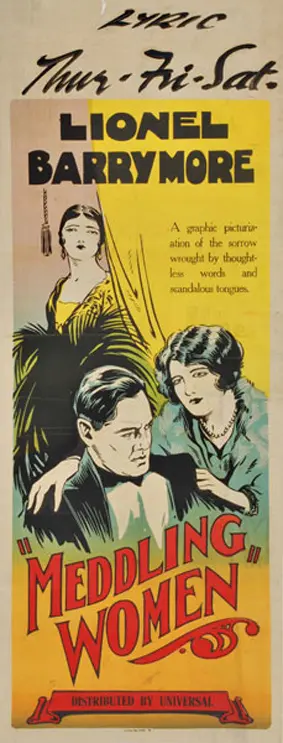
A definitive 9/10 rating for a film that redefined the boundaries of cult cinema. Meddling Women remains a cornerstone of transgressive art.
In the silent film era, narratives often revolved around the dichotomies of personal aspiration versus societal expectation, love versus ambition. Meddling Women, directed by Ivan Abramson, presents a compelling exploration of these themes through the story of Ida Darling, a woman whose dreams of an opera singing career are poignantly complicated by her marital commitments.
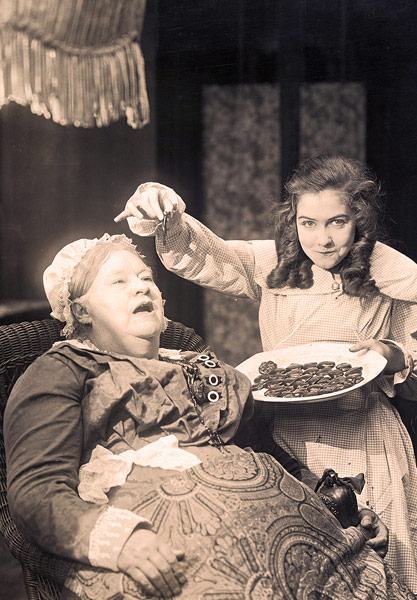
The film stars Ida Darling as the protagonist, an accomplished vocalist whose journey towards reclaiming her position in the opera world is fraught with emotional turmoil and self-doubt. Her husband, played by Lionel Barrymore, emerges as a significant impediment to her ambitions, embodying the societal norms that constrain women's choices during this period. This marital dynamic serves as the focal point around which the narrative oscillates, probing the complexities of love, loyalty, and personal fulfillment.
A critical examination of Meddling Women reveals a cinematic work that engages with sociological and psychological nuances. The character of Ida Darling is multifaceted, imbued with a depth that invites viewers to empathize with her plight. Her journey is not merely a pursuit of artistic recognition but a struggle for autonomy and self-expression within a matrimonial framework that threatens to stifle her creative aspirations.
In comparison to contemporaneous films such as Nothing But Nerve and The Black Night, Meddling Women distinguishes itself through its explicit focus on the challenges faced by women in pursuing their professional ambitions amidst marital obligations. While films like Menschen im Rausch and The Queen's Jewel may touch upon themes of love and societal constraint, Meddling Women delivers a nuanced portrayal of the intricate dynamics at play in Ida Darling's journey.
The cinematography and production design of Meddling Women contribute significantly to its narrative impact. The utilization of lighting and shadow accentuates the emotional intensity of key scenes, while the set design provides a vivid backdrop against which Ida's story unfolds. These technical aspects, coupled with the performative prowess of the cast, immerse the viewer in the world of the film, enhancing the overall viewing experience.
In examining Meddling Women, it becomes evident that the film is more than a simple tale of marital discord and artistic ambition. Rather, it transcends its generic classifications to offer a thought-provoking commentary on the human condition. Through its protagonist's turbulent journey, the film illuminates the universal themes of love, ambition, and the quest for self-fulfillment, rendering it a timeless classic of the silent film era.
Films such as Die weißen Rosen von Ravensberg, Gypsy Anne, and Cora also navigate themes of love, societal expectation, and personal ambition, yet Meddling Women's distinctive approach to these issues sets it apart. The film's capacity to engage with such themes in a manner that is both entertaining and probing underscores its significance within the canon of silent cinema.
Ultimately, Meddling Women stands as a testament to the enduring power of cinema to illuminate the complexities of human experience. Through its rich narrative, nuanced characterizations, and technical artistry, the film offers a compelling viewing experience that continues to resonate with audiences today. As a work of cinematic art, Meddling Women endures as a poignant exploration of the human condition, inviting viewers to reflect on the timeless themes that underpin its narrative.
IMDb —
1917
Community
Log in to comment.