DbcultAccessing Vault...
Cult Review
Senior Film Conservator
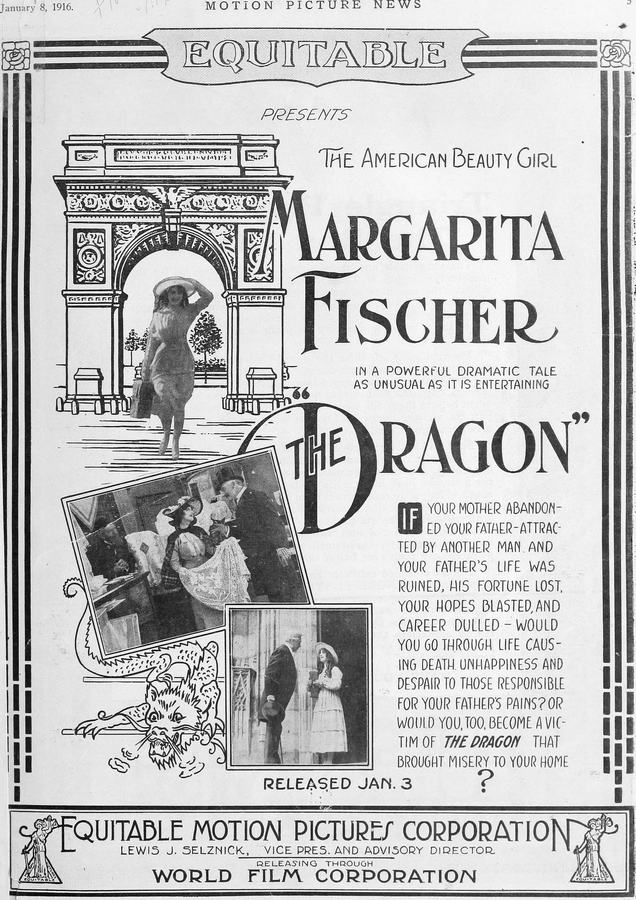
Fifth Avenue exhales sulfur and perfume; into its glittering throat vanishes a child who never learned to hate.
Viewed today, The Dragon feels less like a 1916 one-reeler and more like a prophecy whispered down a century-long corridor. Perley Poore Sheehan and Russell E. Smith have braided a parable so lean it could slit wrists: Manhattan’s golden mile imagined as a mythic reptile, its scales Tiffany glass, its claws denominated in trust-fund dollars. The film’s very structure is serpentine—episodic, molting, each segment a vertebra snapping into place.
Messalla, incarnated by Margarita Fischer with the translucent certainty of a Pre-Raphaelite virgin, never once glances toward the camera. That averted gaze is the film’s moral gyroscope; we are denied complicity, forced instead to trail her like penitent shadows. Fischer’s performance is a masterclass in negative capability—her stillness ignites the melodrama flaring around her. Compare this to Catherine Doucet’s feral turn in The Lost Chord, where every eye-flick is semaphore; Fischer instead lets the audience project their own dread onto her silence.
Director duo Sheehan & Smith shot under the austerity of a studio system that allotted more money to starched collars than to camera trickery. Yet they conjure apocalypse out of suggestion: the dragon is never optically printed, never puppeteered. Instead, Fifth Avenue itself becomes the beast—its shop-windows flare like retinas, its carriages exhale smoke shaped like forked tongues. When Messalla’s parcel bomb obliterates the mansion, the explosion is rendered through a single, over-exposed frame that whites out the screen for four heartbeats. In that bleach of light we feel the dragon’s death-rattle more keenly than any stop-motion leviathan could deliver.
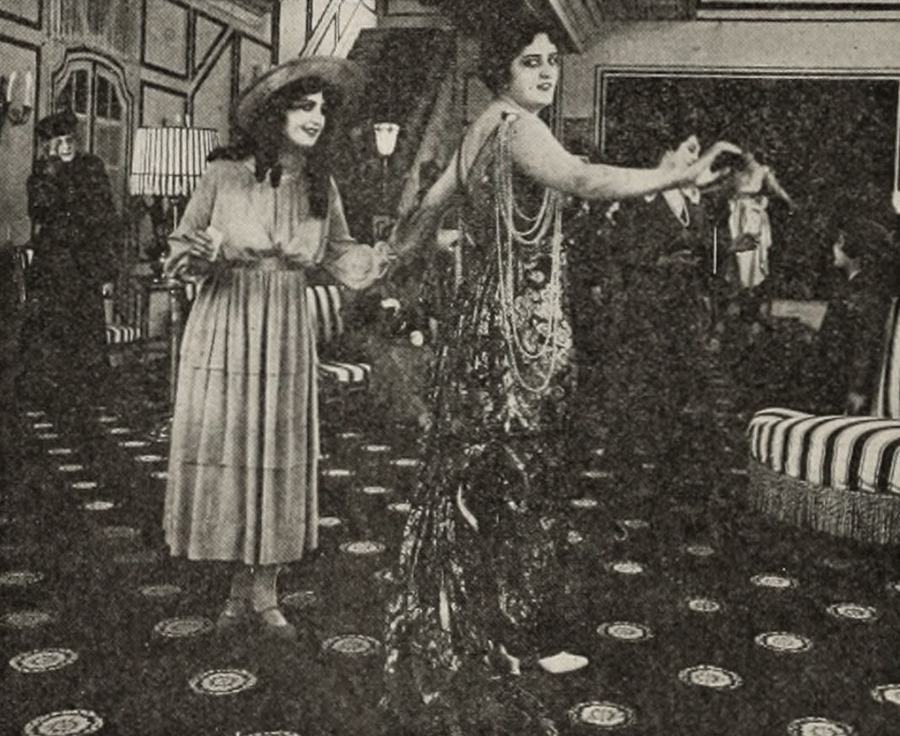
Cinematographer Joe Harris (also doubling as actor) favors low Dutch angles whenever Messalla confronts a predator; the skyline tilts, implying the avenue is a gullet. Contrast this with the rectilinear respectability of For $5,000 a Year, where camera placement is polite enough to curtsy. Harris’s lens, meanwhile, stalks like a pickpocket.
The film’s intertitles, lettered in a serif font that mimics ecclesiastical manuscripts, read like apocrypha: “The dragon counts coins in the marrow of the night.” Rather than merely summarizing action, these cards fracture time, allowing us to inhale the moral ozone. They are the cinematic equivalent of marginalia in a medieval prayer book—gnomic, unsettling, occasionally wry. Cinephiles who savored the hieratic silence of The Fairylogue and Radio-Plays will recognize the same impulse toward liturgical awe.
What makes the narrative vertiginous is its refusal to grant Messalla agency in the carnage. She is no Juliet wielding dagger or apothecary’s vial; she is simply the tuning fork against which the universe aligns its vendettas. The structure anticipates post-war absurdism: guilt ricochets, but no hand steers it. Even when she hands the bomb—wrapped in innocuous brown paper—to the mother she does not recognize, the act is framed as tender reunion, not patricide.
The victims are precisely those who monetized her father’s ruin: the merchant who bankrupted him via speculative fire-sales; the heiress whose dowry derived from his auctioned heirlooms; the lawyer who filed the liens. Their punishments fit their avarice—public humiliation, financial implosion, death by spectacle. Yet the film withholds fist-pumping satisfaction; the score (a modern restoration by Alicia Piller) punctuates each downfall with a minor chord that tastes of copper.
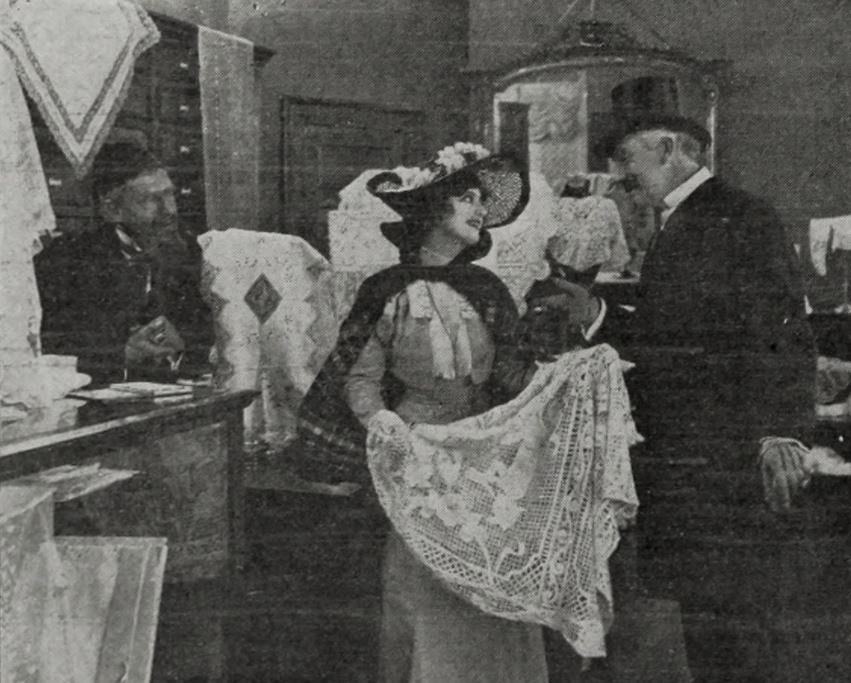
A lesser film would have lingered lasciviously on Messalla’s peril when a cad attempts to auction her into so-called “white slavery.” Instead, the sequence is dispatched in three brisk shots: the procurer’s gloved hand, Messalla’s recoil, the sudden intrusion of a policeman’s cape. The threat evaporates before the audience can titillate itself. Compare this economy to Emmy of Stork’s Nest, which milks jeopardy for reels on end. Sheehan’s curt treatment retroactively shames those exploitation cycles, making The Dragon feel proto-feminist in its refusal to commodify terror.
When mother and daughter stride away from the burning mansion, the film denies them a tear-soaked embrace. They simply walk, silhouetted against a painted sunset that smolders like a cauterized wound. The mother’s face remains off-frame; we glimpse only her hand, scarred by years of pawn-shop rings, reaching to clasp Messalla’s unblemished fingers. The moment lasts perhaps twelve frames, yet it contains the entire thesis: history cannot be healed, only cauterized.
Thomas J. McGrane, essaying the ruined father, never lapses into Lear-like bombast. His collapse is sartorial: a cravat that loosens one centimeter per reel, cuff-fray that metastasizes. It is a performance calibrated for the close-up that 1916 seldom granted, yet his micro-gestures survive the distance of time. Bennett Southard’s rakish merchant, meanwhile, channels the boulevardier panache John Barrymore would soon monopolize; watch how he flips his cane when the mistress confronts him—an anxious semaphore of guilt.
Recent restorations screened at MoMA appended a percussive track—metronomic typewriter clacks that swell into kettle-drum thunder whenever Messalla’s parcel changes hands. The anachronism jars, then mesmerizes: urban modernity invading the Edwardian frame. Purists who prefer authentic nickelodeon piano will gravitate toward the alternate track on Kino’s Blu-ray, but the typewriter version literalizes the film’s obsession with documents, contracts, and the paper dragon of capital.
Place The Dragon beside The Three of Us and you see two divergent moral cartographies: the latter locates redemption in land stewardship, the former in urban exorcism. Both hinge on a woman’s inadvertent agency, yet The Dragon is colder, more cosmic. Its DNA also snakes through Scandinavian moral horror—observe the shared fatalism with Samhällets dom, though Stockholm’s snow is swapped for Manhattan’s soot.
To call The Dragon a masterpiece courts hyperbole, yet no other word fits a film that anticipates German Expressionism, film noir, even the post-2008 recession revenge fantasy. Its austerity is its armor; its silence, its fang. Ninety-odd years before Twitter shamings and cancel fireworks, here is a tale that grasps how innocence can be deadlier than premeditation, how the dragon of capital sometimes gorges upon itself. When the house collapses in that over-exposed flash, you may—if watching on a proper screen—feel the heat kiss your face. That warmth is the century itself, exhaling a warning still scented with smoke.
IMDb —
1928
Community
Log in to comment.