DbcultAccessing Vault...
Cult Review
Senior Film Conservator
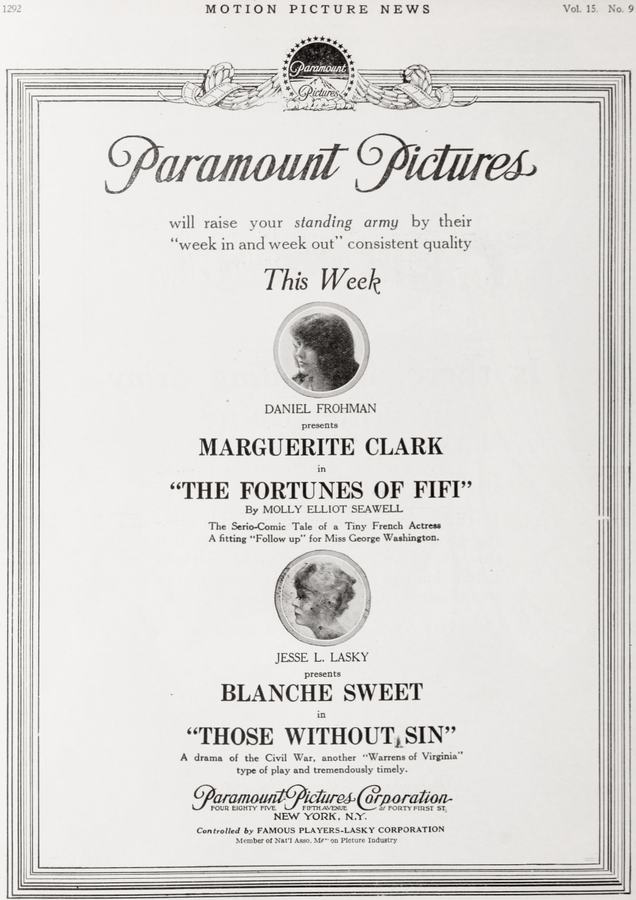
In the flicker of 1922, when Europe still tasted cordite and America danced on bathtub gin, The Fortunes of Fifi arrives like a hand-tinted postcard slipped between the pages of a ledger—an anarchic ledger where assets and affections refuse to balance. Director Robert Z. Leonard and scenarist Eve Unsell adapt Molly Elliot Seawell’s serialized confection into a prism that refracts postwar fatigue through slapstick, melodrama, and the chiaroscuro of poverty that only silent film can render as both punchline and dirge.
Fifi’s first act is a master-class in mise-en-abyme: a play within a film that dies nightly, its cadaver reanimated by a heroine who literally spices the footlights. The ginger she hurls becomes a synecdoche for art’s impotence against indifference; the grains hang in the projector beam like embers, foreshadowing the combustion of sudden wealth. Yvonne Chevalier plays her with the elasticity of Louise Brooks minus the glacial sheen—more rag-doll than vamp, more gamine than goddess—her eyes telegraphing a moral vertigo that keeps the picture from collapsing into mere farce.
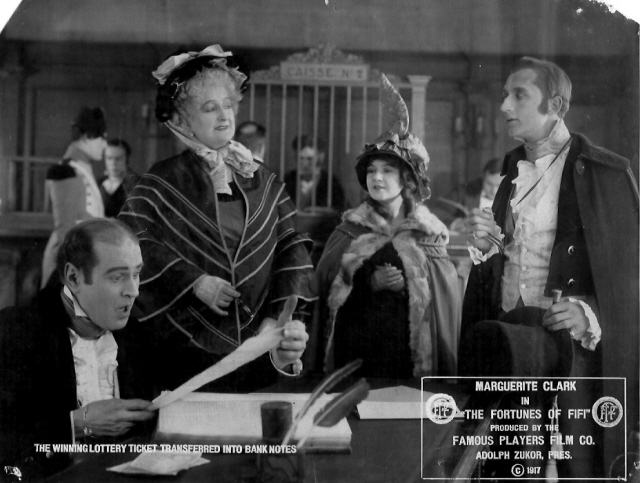
William Sorelle embodies Cartouche with the slump of a man whose spine has been re-curved by both cuirass and costume trunk. His limp—achieved with a leather brace hidden beneath trousers—rhythms every scene with the ghost of Dust’s shell-shocked farmers. When he presses the lottery ticket into Fifi’s palm, the gesture reverberates like a communion: bread and circus distilled into a slip of numbered paper. Their lodging-house room, wallpapered in faded toiles de Jouy, becomes a chapel of deferred desire; the camera lingers on a cracked Saint Joan icon whose eyes match Fifi’s in startling direct address—an accusation, perhaps, that all gifts come tethered.
Once Fifi descends into the faubourg respectability of attorney Bourcet, the film’s palette shifts from charcoal to ivory. Cinematographer Allen G. Siegler floods parlors with mercury-vapor arcs that bleach cheekbones into porcelain, turning every soirée into an auction of carcasses. John St. Polis plays Louis with the prissy sadism of a man who keeps swamp-water in a crystal decanter: he calculates Fifi’s dowry down to the sou, yet trembles when she orders a pianola that belts out forbidden republican anthems. The erotic charge lies not in seduction but in accountancy; balance sheets flutter like garters, and a broken engagement is merely a debit unreconciled.
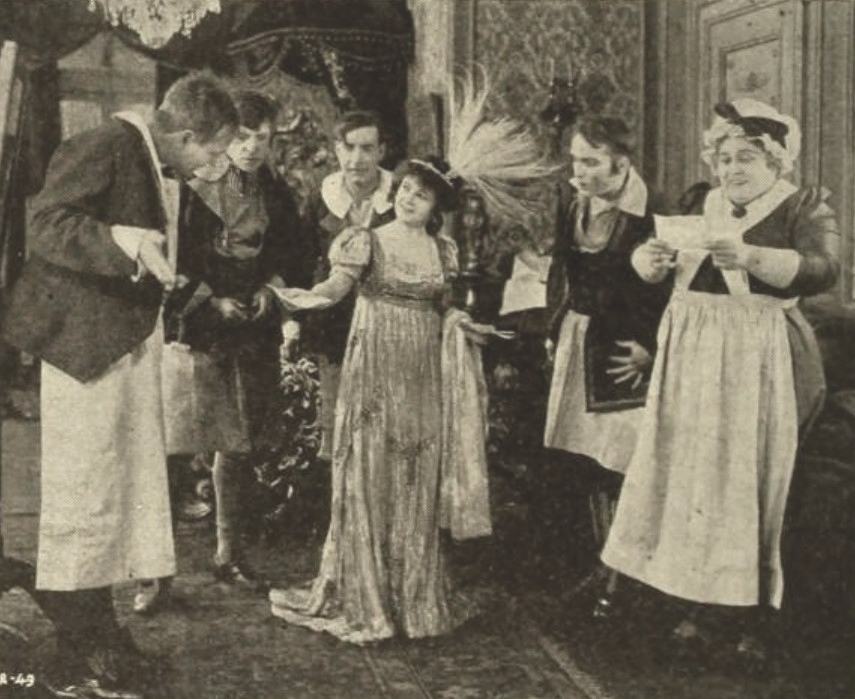
Fifi’s shopping sprees play like Buñuel before Buñuel. She purchases a diorama of Napoleon’s retreat from Moscow where wolves gnaw at tin soldiers, then commissions a life-size marzipan pièce-montée of the Battle of Austerlitz—a dessert that bleeds strawberry jam when sliced. Each extravagance is a cri de coeur aimed at Cartouche, a dare: love me before the money evaporates. The film slyly links her spending to postwar inflation; francs balloon and burst like artillery shells, and the only safe treasury is the human heart—an institution with no vault.
Intertitles sparkle with Wildean bite: “A lottery ticket is a passport to everywhere except the place you already are.” Yet the real dialogue occurs in glances—when Fifi, clad in a gown stitched from shredded military maps, catches Cartouche’s reflection in a ballroom mirror, the frame freezes for four beats, long enough for the audience to read the cartography of regret etched across his brow. The absence of spoken word amplifies the rustle of banknotes, the tick of Toto’s clockwork heart, the hush of snow that falls during the final exterior shot outside the Imperial, each flake a spent promise.
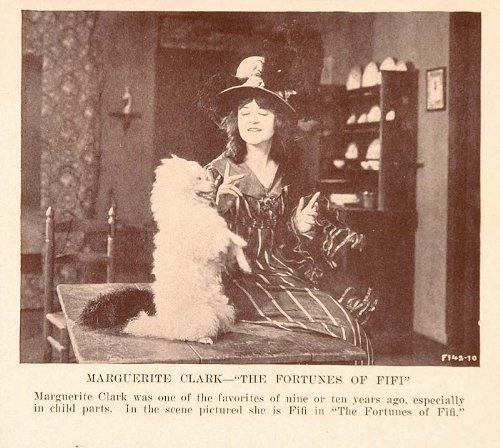
Marguerite Clark’s cameo as Mme. Bourcet is a masterstroke of corseted menace; she enters rooms sideways, as though her profile can slice bread. Kate Lester, playing the abonnée who bankrolls the veterans’ gala, supplies a tremulous contralto laughter that the intertitles can only approximate: “Charity, my dear, is the only investment that returns in heaven—at five percent.” Even the toy dog Toto, animated by stop-motion in two brief shots, earns pathos; its glass eyes reflect Fifi’s face distorted, a prophecy that wealth magnifies while it melts.
The picture weaponizes 1920s gender anxiety without sermon. Fifi’s fortune momentarily reverss the era’s dowry economy; suddenly she holds the pen that signs contracts, and suitors become supplicants. Yet the film refuses a facile girl-boss fantasy. Her power derives from chance, not labor, and chance—like a fuse—burns toward detonation. When she divests herself of every franc, the act reads less as renunciation than reclamation: a refusal to let capital script her romantic narrative. Cartouche’s eventual capitulation—lifting her off the stage in a fireman’s carry as extras applaud—acknowledges that love, too, is a lottery where the prize is the right to keep playing.
Cinephiles will catch visual rhymes with The Golden God’s gilded excess, yet where that film mythologizes lucre, Fifi demystifies it. The climactic donation to veterans anticipates Renoir’s La Grande Illusion: both understand that postwar healing demands not monuments but money, preferably redistributed by those who never learned to salute. Leonard’s camera, gliding through ballroom doors on a makeshift wheelchair dolly, prefigures Ophuls’ labyrinthine tracking shots; the world is a corridor of exits that lead only to other corridors.
For decades the sole print languished in a Lyon vault, nitrate bloated like spoiled fruit. A 4K restoration by Cinémathèque Française in 2022 retrieved amber hues unseen since its première: Fifi’s ginger now dusts the frame in saffron, Cartouche’s medal ribbons regain their bruise-blue sheen. The new Milestone Blu-ray pairs the film with An Alabaster Box, offering scholarly commentary that situates Fifi between commedia dell’arte and postwar feminism. Seek it out; streamers have yet to license it, making physical media the only portal to this Pierrot’s paradise.
The greatest fortune Fifi bestows is its refusal to console. When the curtain falls, our heroine has neither husband nor hoard, only the promise of tomorrow’s matinee. Yet the smile she flashes—half-moon of chipped grease paint—feels richer than any jackpot. In an age when algorithms sell us lottery tickets disguised as destiny, this ninety-year-old whisper from a war-bruised France reminds us that luck is a costume; love, if it fits, is the only outfit that never goes out of style.
IMDb 5.7
1926
Community
Log in to comment.