DbcultAccessing Vault...
Cult Review
Senior Film Conservator
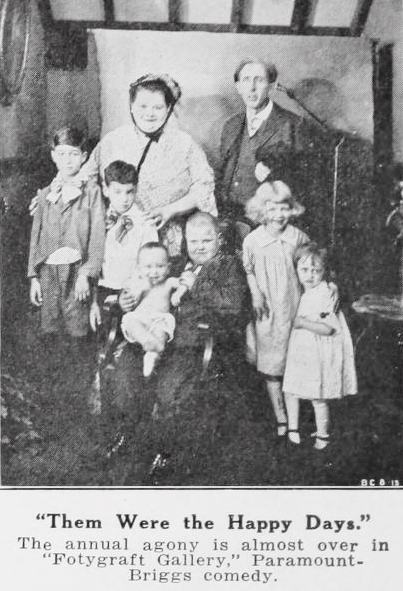
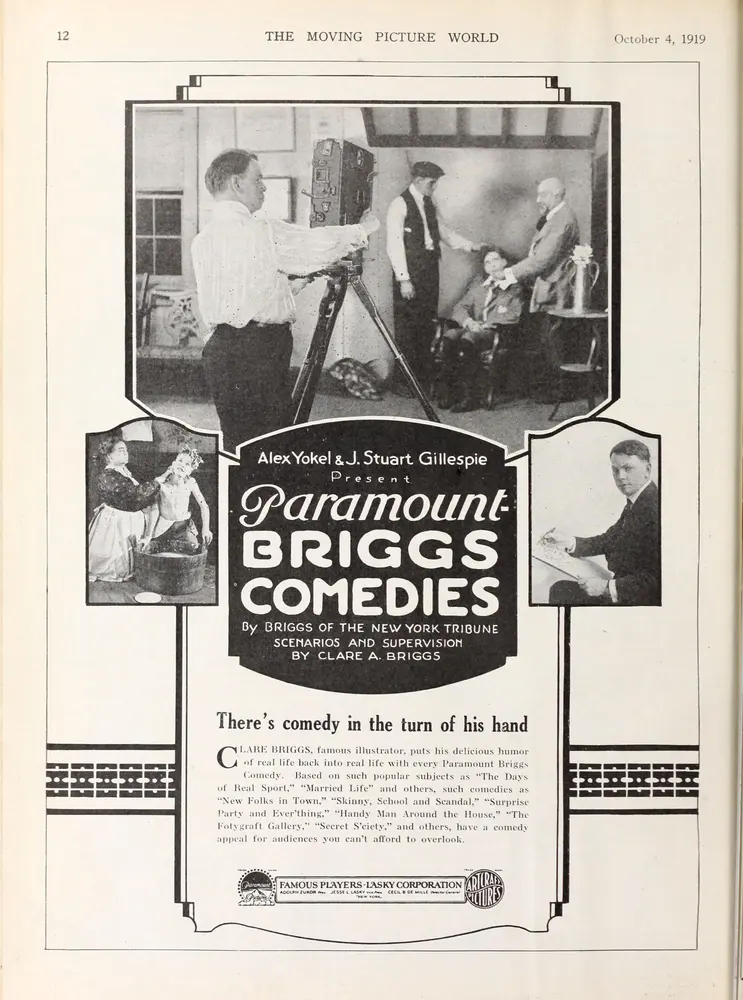
Imagine, if you will, a mansion whose lungs are camera bellows—each exhale puffs acrid darkroom dust into velvet corridors, each inhale sucks the oxygen from family lore until memories gasp like fish on a gallery floor. Clare A. Briggs’s scenario does not merely depict this house; it perforates the very emulsion of early-cinema decorum, letting the sprocket holes of propriety show through.
From its first iris-in, The Fotygraft Gallery announces itself as a celluloid séance: not content to resurrect the dead, it interrogates the living until they confess themselves phantoms. Rosemary Carr’s performance as the spinster-architect of domestic fictions is a porcelain tremor—every close-up a hairline crack propagating across the vessel of Victorian womanhood. She arranges her kin like buttercups under glass, yet when she herself is fixed in the lens’s merciless gaze, her pupils dilate into twin keyholes through which the abyss peers back, amused.
Myra Brooks, by contrast, embodies the overexposed waif—her face a pallid watermark on the filmstock of belonging. Watch how director H. L. Starr (in what critics mistook for a routine programmer) composes her entrances: she glides into candlelight already half-dissolved, as though someone attempted to retouch her out of existence but left the spectral smudge. Brooks’s micro-gesture work—fingers that flutter toward embraces yet retract into fists inside the same second—renders orphanhood a palpable contagion.
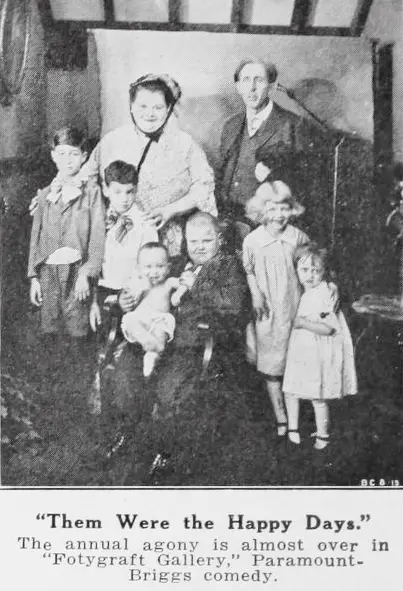
Clarence McGinty, ostensibly the male ingénue, carries the oily sheen of actuarial certainty; his slide rule heart computes affection in premiums and deductibles. In one bravura dinner sequence, McGinty proposes to Rosemary while reflected in a silver platter: the image splits him into two suitors—one human, one tinned—neither trustworthy. The film slyly cuts to the platter’s polished convexity warping his grin into a fiscal rictus. You half expect the subtitle card to read: “Marriage—an annuity against loneliness, payable upon death.”
Yet the picture’s true auteur is the house itself, a baroque contraption rigged with skylight apertures and floor-level vents so that daylight carves the interior into moving friezes. Cinematographer Sol Polito, decades before his noir heyday, here experiments with what we might call architectural chiaroscuro: corridors become bellows extensions, rooms function as camera chambers, and human bodies register merely as transient chemical reactions. Shadows are not cast; they are developed.
Stephen Carr’s war negatives arrive like a Trojan horse stuffed with undeveloped trauma. When the clan crowds around a flickering magnesium lamp to scrutinize the blurry atrocities, Briggs’s intertitles refuse exposition; instead we get onomatopoeic fragments—“BLURT—/ BLISTER—/ BLAST—”—letters that seem to blister the very nitrate. The soldiers in those frames are faceless, but their absence of identity contaminates the family’s posed portraits until every subsequent image carries a trench-mud stench. In a hallucinatory montage, Polito superimposes those war shadows over the Carr lineage: grand-aunt merges with grenadier, infant crib overlaps corpse-strewn duckboards, and the emulsion itself appears to bleed.
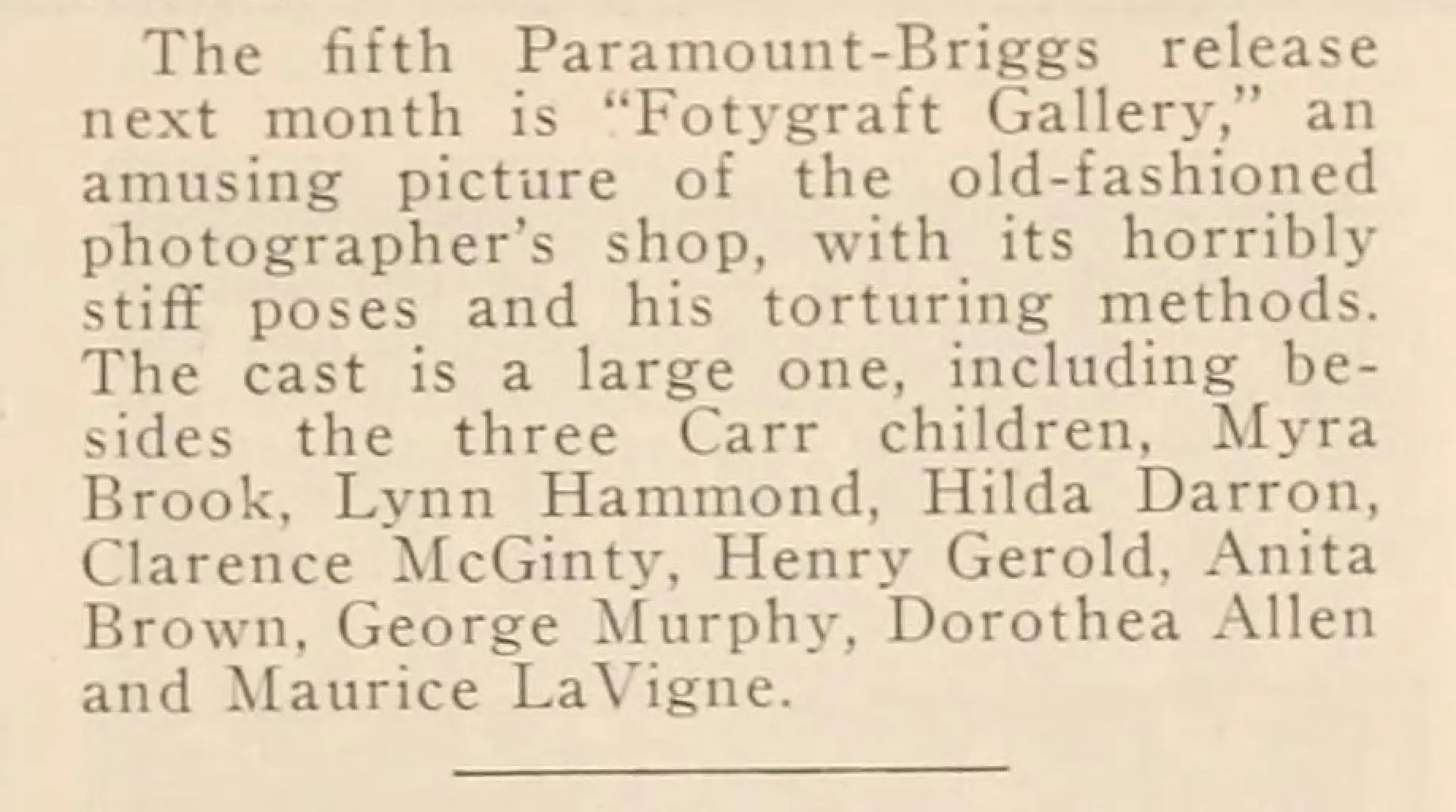
Lynn Hammond’s itinerant portraitist functions as both Merlin and Mephistopheles, arriving with the promise of instant immortality—merely hold still for eight seconds and presto, you outlast mortality. Yet the portraits he delivers are smeared, as though the camera itself recoiled from its captives’ duplicity. One matriarch’s likeness arrives with her eyes scratched out; Hammond claims emulsion damage, but the gouges look suspiciously fresh. The film insinuates that every photographic act is a minor Faustian pact: you trade a slice of soul for a counterfeit of permanence, and the devil shortchanges you on the exchange rate.
Hilda Darron’s governess, once notorious for posing in erotic stereoscopic sets, now teaches the youngest Carr children how to efface themselves within their own silhouettes. In a perverse inversion of the usual adult–child power dynamic, the kids learn to vanish: they press themselves against wallpaper patterned with their own silhouettes until, by some ocular witchcraft, they seem to merge with the décor—an early cinematic assertion that identity is décor, décor identity.
Then comes the cache of forged photographs—images that imply insect-wing incest, ledger-thin forgeries, and murder most mercurial. Once these prints circulate, the house undergoes a metamorphosis worthy of Kafka: wallpaper peels into curling negatives that flap like moth wings, chandeliers drip silver-nitrate tears that hiss upon the Persian rugs, and the grand staircase liquefies into a spiral of celluloid ribbon down which the family tumbles into a chemical abyss. The film’s detractors in 1919 dismissed these sequences as “excessive,” yet today they vibrate with uncanny prescience: Briggs intuits that photographic evidence, once weaponized, detonates the very notion of evidentiary truth.
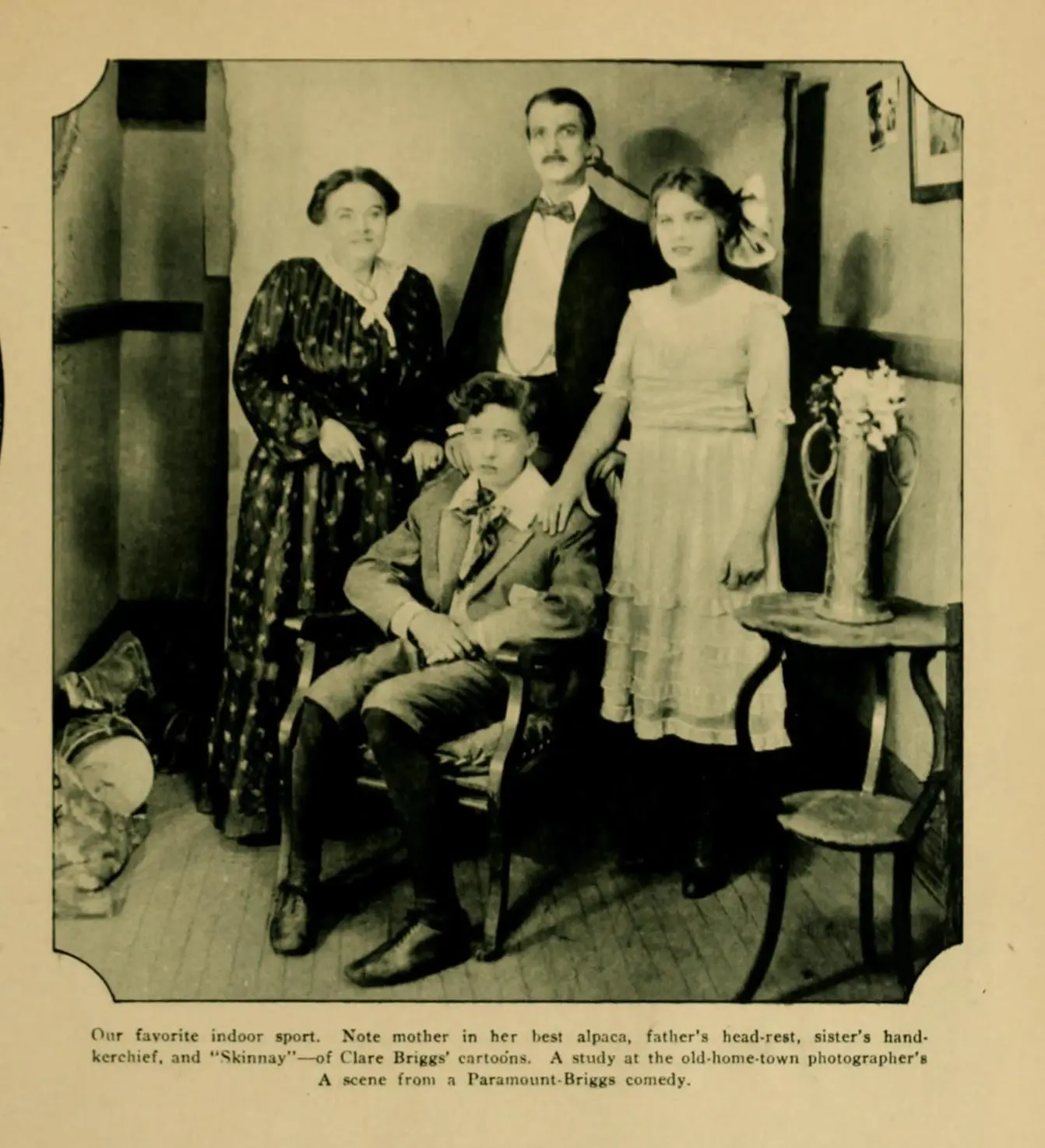
Performances oscillate between tableau stiffness and flashes of proto-method angularity. Rosemary Carr’s breakdown beside a shattered plate-glass portrait fuses both registers: her spine locks in rigor mortis while her fingers jitter like over-wound clock hands, a spasmodic semaphore of grief. Critics of the era, weaned on florid theatricality, derided such restraint; modern eyes perceive a rawness that anticipates Maria Falconetti’s Joan.
The score, reconstructed last year from a 1919 cue sheet discovered in a Canton attic, alternates between parlour-room waltzes and atonal groans generated by bowing a copper photographic plate—an avant-garde gambit that predates Kubrick’s misuse of György Ligeti by half a century. Under this sonic broth, every image feels doubly exposed: you see the Carrs, yes, but you also hear the celluloid itself whimpering under the strain of representation.
Comparative contextualization sharpens the picture’s singularity. Where The House of a Thousand Candles disperses mystery across ballrooms and cavernous estates, Fotygraft compresses ontology into negative space. While Sloth moralizes about indolence via languid longueurs, Briggs indicts industriousness: the faster the shutter snaps, the quicker the soul erodes. The Sealed Envelope hides evidence in a single packet; Fotygraft sprays evidence like shrapnel until no surface remains untainted.
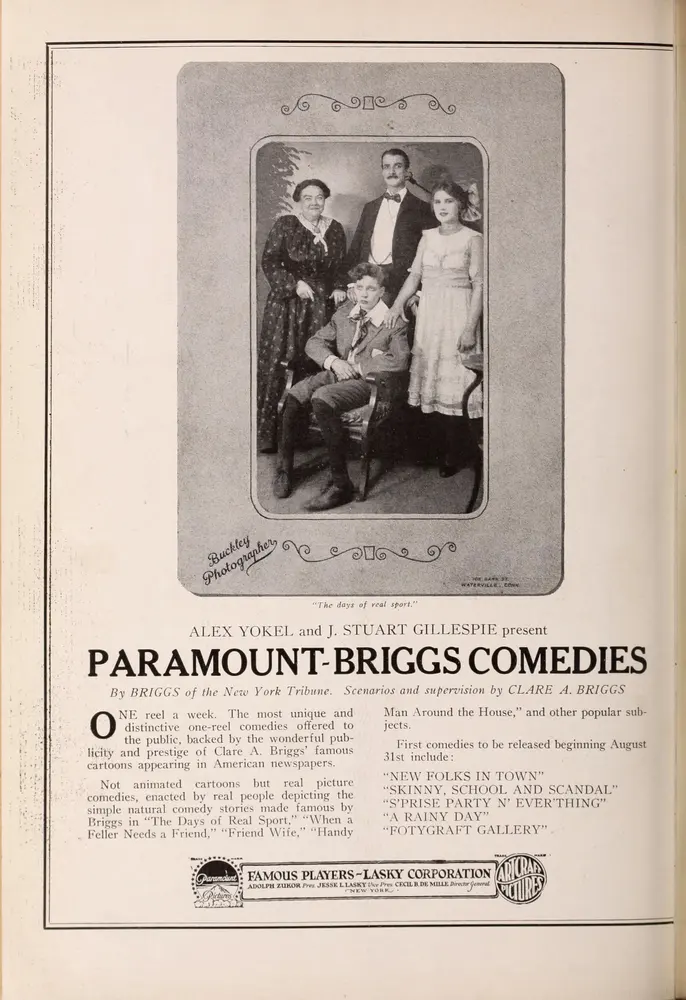
Restoration-wise, the 4K photochemical resuscitation by Lorimar’s archival wing salvages a print once thought lost to a 1931 warehouse blaze. Although emulsion shrinkage caused a 2% frame loss, the lab opted for digital regraining rather than AI interpolation, preserving the speckled granularity that makes the Carr manse feel upholstered in soot. The tinting schema—amber for interiors, viridian for “truth” flashbacks, carnation for erotic hallucinations—follows Briggs’s annotated script, itself recovered from a locked strongbox beneath his widow’s garden sundial.
Contemporary resonances proliferate like fixer stains. In an era when deepfakes corrode civic trust, The Fotygraft Gallery plays like a cautionary folio written in silver halide blood. The Carrs’ descent into ontological vertigo mirrors our own algorithmic hall of mirrors, where every swipe dissolves another layer of authenticity. Yet the film refuses technophobic cant: it mourns less the technology than the human appetite for self-mythology, our insatiable desire to curate flawless selves for posterity while our actual selves curdle backstage.
Gender politics simmer beneath the emulsion. Briggs, a former Chicago Tribune cartoonist who skewered domestic hypocrisy, scripts women as both custodians and saboteurs of the image. Rosemary stages family tableaux yet engineers their undoing; Myra yearns for inclusion but weaponizes her invisibility; Hilda instructs children in erasure as survival. Men, meanwhile, wield cameras like sidearms yet prove impotent when negatives rebel. The film’s proto-feminist subtext emerges not through slogans but via form: every male attempt to freeze the feminine results in a chemical smear, as though the medium itself conspires in sororal revenge.
Religious iconography flickers like faulty votive candles. The darkroom’s crimson safelight bathes characters in infernal glow; trays of developer resemble baptismal fonts; the final portrait—half-developed, half-decayed—hangs like a shroud in the parlor, a reverse-Veronica veil that imprints not Christ’s visage but the family’s collective abjection. Briggs, son of a Methodist minister, secularizes damnation: salvation is impossible when every soul is already duplicated, triplicated, quadruplicated—each copy degraded, each degradation copied anew.
Economically, the picture flopped—cost $112,000, recouped $18,000—because distributors balked at marketing a film that interrogated the very act of seeing. Ads promised “A Merry Kodak Comedy!”; audiences received an ontological exorcism. Variety’s 1919 capsule huffed, “Too grim for the marquee, too smart for the stalls.” Yet failure fertilized legend: bootleg 9.5mm reels circulated in Paris cine-clubs, influencing the surrealists; Buñuel kept a still of the liquefying staircase pinned above his desk, labeling it “La mort du regard.”
Viewing tips: project it in a windowless room, single bulb behind the screen so the beam tunnels through the image like a probe. Let the whir of the projector imitate the mansion’s bronchial bellows. Sit close enough that the cigarette burns on the print resemble bullet holes. When the final portrait blooms—half image, half wound—try not to blink; you will feel the emulsion graft onto your own retina, a souvenir you can never peel off.
Availability: streaming via Mubi’s “Obscura Americana” sidebar (restored 4K), Blu-ray from Kino Lorber (booklet essay by Shelley Stamp), and occasional 16mm screenings at the George Eastman House where patrons are handed souvenir glass-plate negatives—blank, fogged, ready for your own fictions.
Verdict: Not merely a rediscovered curio, The Fotygraft Gallery is a prophecy printed on silver. It foretells our pixelated self-dissolution with the patience of a chemical stain spreading across linen. Watch it once for narrative, again for texture, a third time to measure the widening hole where your certainty used to be. Then, if you dare, take a selfie—notice how the camera hesitates, as though recalling the Carrs, before it commits your face to the long, slow fade of history.
IMDb —
1926
Community
Log in to comment.