DbcultAccessing Vault...
Cult Review
Senior Film Conservator
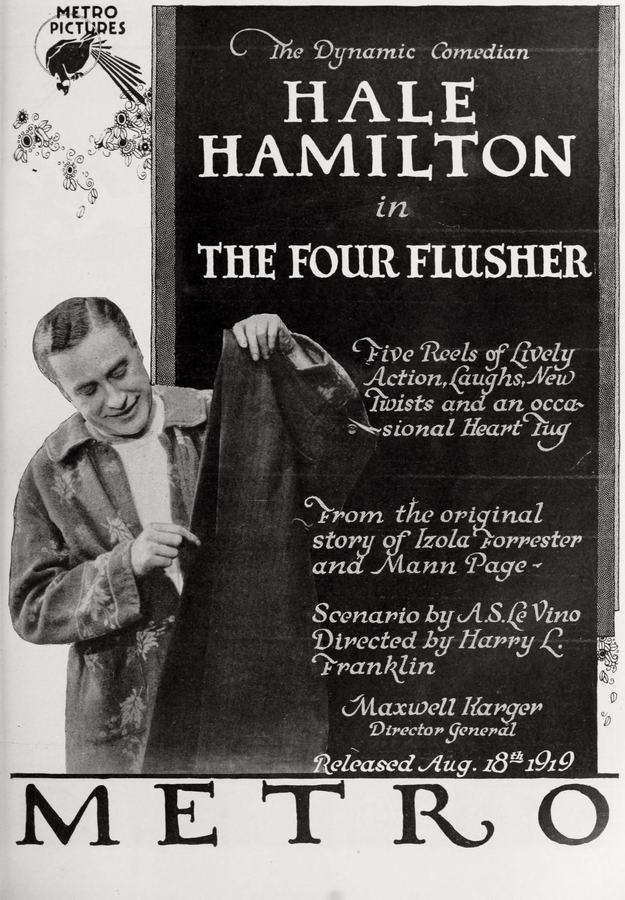
In the annals of early cinema, where the nascent art form was still finding its voice, certain films emerge as delightful time capsules, offering not just glimpses into bygone eras but also enduring insights into human foibles and aspirations. ‘The Four-Flusher’, a 1919 offering, stands as one such artifact—a charmingly audacious comedy that, despite its vintage, resonates with a timeless tale of ambition, artifice, and ultimately, affection. Directed with a keen eye for comedic timing and character-driven narrative, this film, penned by the collaborative talents of Mann Page, Albert S. Le Vino, and Izola Forrester, spins a yarn that is both whimsical and surprisingly astute in its observation of the lengths one might go to for love and lucre.
At its heart lies Lon Withers, portrayed with an endearing blend of restless energy and naive charm by Ralph W. Bell. Lon is not merely a clerk for an exporter; he is a dreamer, a perpetual motion machine of get-rich-quick schemes that, while never quite materializing, serve to constantly exasperate his sweetheart, Suzanne Brooks. Suzanne, played with a delightful blend of exasperation and affection by Ruth Stonehouse, is no mere damsel in distress; she is the architect of Lon’s comeuppance, a clever and resourceful young woman who decides a practical lesson in humility is precisely what her ambitious beau requires. Her decision to enlist the aid of her father’s business associate, the South American millionaire importer Señor Romez (Hale Hamilton), sets in motion a chain of events that is both hilariously convoluted and ultimately heartwarming. This kind of proactive, intelligent female lead, though perhaps not as common as the more passive archetypes, can also be observed in films like ‘When a Girl Loves’ or even the more dramatic ‘The Sentimental Lady’, where women often drive the narrative through their choices and manipulations, albeit for different ends.
The central conceit of the film hinges on Lon’s spectacular bluff. Upon receiving a fabricated cable from Romez—a ruse orchestrated by Suzanne—Lon perceives an unparalleled opportunity. He envisions himself as the chosen American representative, ready to ascend the corporate ladder with a single, audacious leap. What follows is a masterclass in performative wealth, a meticulously constructed facade designed to impress the visiting magnate. Lon cajoles the life savings from his unsuspecting bookkeeper, Ford (Louis Fitzroy), a move that highlights both his persuasive charm and his alarming lack of foresight. This borrowed capital becomes the fuel for his grand illusion: the creation of ‘F. F., Inc.’, or Four Flusher, Inc., a fictitious company whose sole asset is a lavish suite in a ritzy hotel. The irony is palpable; a company built on nothing but a bluff, housed in opulence, an empty shell designed to project an image of robust success. This kind of high-stakes deception, though played for laughs here, echoes the thematic undercurrents of films like ‘The Long Chance’, where characters often gamble everything on a single, improbable opportunity, or even the desperate measures seen in ‘The Eleventh Hour’, where time and resources are dwindling, forcing protagonists into increasingly precarious situations.
The ensuing two weeks are a whirlwind of extravagant expenditure. Lon, in his desperate attempt to embody the successful American entrepreneur, squanders Ford’s entire fortune on entertaining Señor Romez with a relentless succession of cabarets, boxing matches, and horse races. The film cleverly portrays the escalating desperation behind Lon’s seemingly carefree generosity. Each champagne flute, each ticket to a prize fight, each bet placed at the track, chips away at his dwindling funds, simultaneously solidifying Romez’s impression of Lon’s supposed prosperity and pushing Lon deeper into financial ruin. The humor derives from this growing disparity between perception and reality, a classic comedic trope that ‘The Four-Flusher’ executes with admirable precision. The supporting cast, including Effie Conley, Fred Malatesta, Robert Badger, and Harry Holden, contribute to the vibrant tapestry of hotel staff and city dwellers who witness Lon’s increasingly frantic attempts to maintain his charade, their reactions often underscoring the absurdity of the situation.
As his funds evaporate entirely, Lon’s schemes grow increasingly desperate and outlandish. In a final, ill-advised gambit, he attempts to solicit contributions from the very hotel staff who have been serving him, pitching his phantom company as a lucrative investment opportunity. This moment marks the precipice of his downfall. The absurdity of a man, barely able to pay his own bills, attempting to lure hotel employees into a non-existent business venture, is both tragic and comical. Predictably, this brazen act attracts the attention of the hotel detective, leading to Lon’s inevitable arrest. The sudden shift from high-flying socialite to apprehended fraudster is swift and impactful, a stark reminder of the fragile nature of his meticulously constructed illusion. It’s a moment that could have veered into pure drama, but the film, under the guidance of its writers, maintains its lighthearted tone, hinting at a resolution rather than a grim outcome.
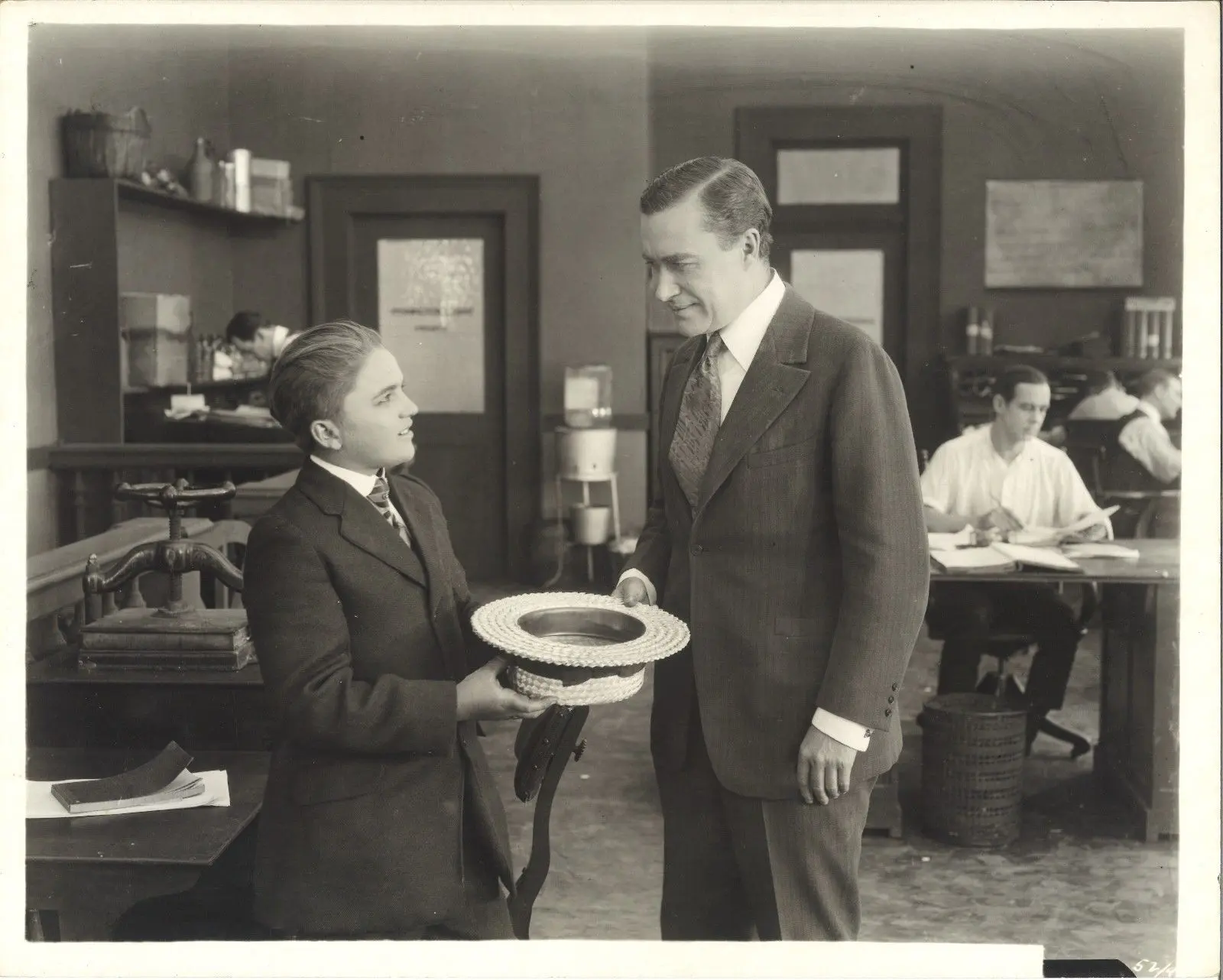
The denouement is where the film truly distinguishes itself. Just as Lon’s world seems to crumble around him, Suzanne and Romez step in, revealing the truth behind the elaborate deception. What could have been a scene of stern reprimand or public humiliation transforms into something far more unexpected and delightful. Romez, rather than being incensed by Lon’s audacious con, finds himself genuinely impressed. He sees not a swindler, but a man of extraordinary initiative, resourcefulness, and sheer nerve. In a world where conventional success often relies on established credentials, Romez recognizes the raw, untamed spirit of a true hustler. This unconventional appreciation for Lon’s chutzpah is the film’s most charming twist. It challenges the traditional notions of integrity versus ambition, suggesting that sometimes, the very qualities that lead one astray can, in different contexts, be admirable assets.
Romez’s decision to hire Lon as his American representative is a testament to this unique perspective. It’s a resolution that not only brings Lon’s story full circle but also validates Suzanne’s initial, albeit mischievous, assessment of him. She knew, perhaps better than Lon himself, that beneath the veneer of impractical schemes lay a genuine drive and an undeniable charm. The happy ending, with Lon and Suzanne united and his ambitions finally channeled into a legitimate, if unconventionally acquired, career path, leaves the audience with a sense of buoyant satisfaction. This kind of resolution, where a seemingly flawed protagonist finds success through unexpected means, is a common thread in many comedic narratives, particularly those of the era, which often championed the underdog or the clever rogue.
From a technical standpoint, ‘The Four-Flusher’, as a silent film, relies heavily on visual storytelling, exaggerated expressions, and well-timed intertitles. The cinematography, though perhaps not groundbreaking for its time, effectively captures the bustling energy of city life and the opulent settings of Lon’s charade. The pacing is brisk, maintaining a comedic momentum that prevents the narrative from dragging, even during Lon’s more desperate moments. The performances, particularly Ralph W. Bell’s, are a masterclass in silent film acting—his facial expressions and body language convey a wide range of emotions, from frantic anxiety to triumphant bravado, without uttering a single word. Ruth Stonehouse, too, shines as Suzanne, her knowing glances and subtle smiles communicating her intelligence and control over the unfolding events. Her role as the catalyst and eventual savior gives the film a progressive edge, showcasing a woman who is not just an object of affection but an active participant in shaping her own destiny and that of her lover.
Thematically, the film explores the enduring allure of the ‘American Dream’—the idea that through ingenuity and hard work (or in Lon’s case, audacious bluffing), one can rise above their circumstances. It playfully critiques the superficiality of appearances and the ease with which one can be swayed by a show of wealth, while simultaneously celebrating the very spirit of entrepreneurial daring, however misguided. It's a comedy of errors with a heart, reminding us that sometimes, what appears to be a flaw can, in the right light, be seen as a strength. In this respect, it shares a certain spirit with other lighthearted comedies of the period, such as ‘Good Gracious, Annabelle’, which also revels in charming misunderstandings and the delightful chaos that ensues from well-intentioned deceptions.
In conclusion, ‘The Four-Flusher’ is more than just a relic from the silent era; it’s a vibrant, engaging comedy that continues to entertain with its witty script, charismatic performances, and a surprisingly nuanced take on ambition and authenticity. Its message, that true talent can sometimes be found in the most unconventional of packages, remains as relevant today as it was over a century ago. It reminds us that sometimes, a little bit of audacious bluffing, when tempered with genuine drive and a dash of luck, can indeed lead to unexpected triumphs. For enthusiasts of early cinema or anyone seeking a charming, character-driven comedy, this film offers a delightful journey into the whimsical world of a man who dared to dream big, even if it meant faking it till he made it.
IMDb —
1915
Community
Log in to comment.