DbcultAccessing Vault...
5/10
Senior Film Conservator
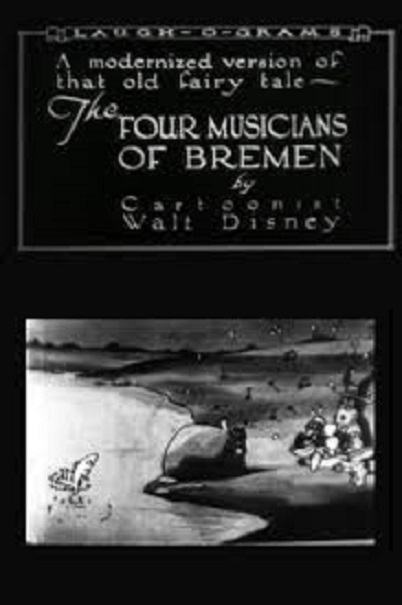
A definitive 5/10 rating for a film that redefined the boundaries of cult cinema. The Four Musicians of Bremen remains a cornerstone of transgressive art.
Listen closely: beneath the celluloid crackle of a 1922 Disney short lurks a pagan carnival where discarded beasts reinvent noise itself.
There is a moment—blink and the nitrate might combust—when the rooster’s throat unfurls like a crimson banner against a cobalt sky, and the soundtrack, previously a tinny piano, suddenly swells into a hot, syncopated riff that feels decades ahead of its time. That rupture is the soul of The Four Musicians of Bremen, a film orphaned between silent pathos and pre-code irreverence, auctioned off to trivia hounds yet still humming with subversive vitality.
Walt Disney, not yet the benevolent uncle of American childhood, serves here as ringmaster of an animal apocalypse: his ink line frays, his shadows pool into Germanic gloom, and his sense of humor smells faintly of barnyard ammonia.
The plot, deceptively simple, is a liturgy of rejections. An aging cart horse discovers his fetlocks are no longer worth their oats; a mouser with Lisztian whiskers is tossed for preferring nocturnes to vermin patrol; a Dog—part bloodhound, part baritone sax—howls loneliness into the night; and a vainglorious rooster, bred for cockfights that never materialize, crows at an indifferent cosmos. Each exile carries a private leitmotif, and when these strands intertwine on a moon-slick road, the film becomes a fugue of solidarity among the obsolete.
Visually, the short is a stained-glass window shattered and reassembled by anarchists. Backgrounds jitter between Bavarian storybook cottages and expressionist voids where trees claw like tuning forks. Character animation, still wedded to rubber-hose limbs, nevertheless anticipates the more angular menace of Homunculus, 1. Teil, with silhouettes that elongate grotesquely when the animals perform—bodies warping to the music rather than moving through it.
The score, credited to a pseudonymous “J. Pfeiffer,” is a proto-jazz fever that predates Disney’s later Silly Symphonies by almost a decade. Imagine a Keystone chase scored by a young Duke Ellington trapped inside a calliope: cymbals crash like garbage-can lids, clarinets sneer, and a muted trumpet does its best impression of a rooster ejaculating dawn. In 1922, such sonic collage was deliriously modern, a middle finger to the prim parlour accompaniment that still padded most silents.
What elevates the film from mere curio to minor masterpiece is its tonal whiplash. One minute we’re in a Disney meadow dappled with storybook sincerity; the next, villagers with pitchforks morph into a medieval lynch mob, their faces sketched with the same angular cruelty found in The Catspaw. The swordfish sequence—absurd on paper—becomes a surrealist jab: the animal quartet float on a paper boat across an ink-black sea while a marlin with a sabre for a snout leaps overhead, its shadow swallowing the frame. It’s as if Max Ernst hijacked the storyboard.
Violence, here, is not the sanitized menace of later Disney but something primally comic: a dog’s jaw unhinges like a bear trap, a horse’s kick sends assailants into orbit, stars spinning around their heads in sardonic mockery of cartoon physics. Yet every blow lands with a musical punctuation, turning brutality into percussion. The film posits that to survive is to improvise, that every wound can be transposed into a new key.
Critics who relegate the short to a footnote between Alice Comedies and Mickey Mouse miss its ideological sting: it is a parable about collective art as the last refuge of the dispossessed.
Place Bremen beside Just Pals and you’ll notice a shared obsession with social castaways finding dignity in camaraderie. Both films flirt with the Great American Fear of being useless, though Ford’s hobo reverie opts for pastoral sentiment where Disney opts for musical riot. Conversely, the fatalistic romance of Love’s Toll feels like the hangover after Bremen’s anarchic night—proof that the same decade could cradle both nihilistic heartbreak and animal jouissance.
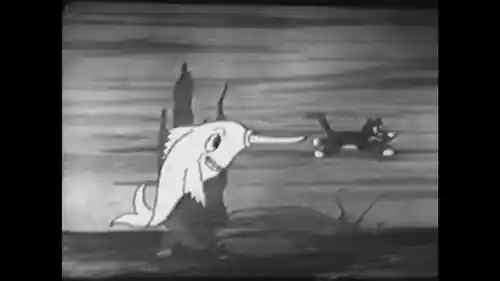
Meanwhile, the Expressionist DNA of Homunculus seeps into Disney’s shadow work: the bandits’ cottage, when first glimpsed, is a crooked prism of ochre and bruise-violet, a cousin to the angular sets of Kapten Grogg och fru. The difference is that Disney relights that gloom with comic timing, letting the rooster’s tail feathers ignite like sparklers against the darkness.
In the absence of spoken dialogue, personalities are carved through kinetics. The horse’s gait slows with the heaviness of unpaid mortgages; each clop is a sigh in 4/4 time. The cat arcs its spine in perfect parabolas, tail flicking staccato as if conducting an invisible baton. The dog oscillates between slobbering buffoon and baritone sentinel, ears flapping like cymbals. And the rooster—oh, the rooster—struts with the self-importance of a tenor who believes the cosmos requested an encore.
Disney’s animators lavish micro-gestures that anticipate the psychological nuance of later features: the horse’s lower lip trembles when memories of the plough surface; the cat’s pupils dilate at the scent of fish, an iridescent lust. These subtleties make the climactic chord—four voices merging into one—feel like a political act: the moment when private pathologies braid into communal anthem.
It is impossible to watch without recalling the camaraderie in A Soldier’s Oath, though where that film trades in patriotic sacrifice, Bremen trades in aesthetic insurrection.
Historians often frame Disney’s evolution as a march toward sentimental coherence; the studio learned to sand down its edges, to replace Grimm with balm. Yet Bremen stands as a veering path that was never fully paved—a prototype for what Disney might have become had it embraced Brechtian alienation instead of lullaby nostalgia. Imagine an alternate canon where every princess is a feral musician, every castle a squatters’ hall echoing with jazz.
The short’s influence, though subterranean, surfaces in unlikely places: the alley-cat aria in The Aristocats owes its swinging hips to the rooster’s tail-feather shuffle; the junkyard symphony of Oliver & Company replays Bremen’s thesis that survival equals ensemble noise. Even the cacophonous climax of The Explosion of Fort B 2 feels like a live-action echo of Bremen’s belief that destruction can be percussive, that ruin has a back-beat.
Surviving prints are scarred: emulsion bubbles, nitrate shrinkage, frames missing like teeth in an old comb. Yet those scars amplify the film’s thesis—art persists through damage. Recent 4K scans by an Italian archive reveal background gags previously swallowed by fog: a spider that conducts with its web, a beetle that keeps time on an acorn drum. The restoration’s color tinting—sepia for daylight, cobalt for night, rose for the final chord—honors the original playbook while acknowledging modern sensitivities to contrast.
Purists complain about digital de-flicker, arguing that the stroboscopic tremor was integral to the film’s anxious heartbeat. They have a point; yet even scrubbed, the short retains its jittery soul, a reminder that early animation is always dancing on the lip of oblivion.
In an era when algorithms feed us pre-chewed nostalgia, stumbling upon The Four Musicians of Bremen feels like biting into a wild apple: tart, startling, maybe containing a worm, but alive. It teaches that harmony is not the absence of discord but the alchemy of turning discord into story. It whispers that every outcast carries a pent-up aria, that cities may promise gold but true fortune lies in finding the three other freaks whose dissonance completes your chord.
Seek it out on archival streaming channels, or haunt the dim corners of film festivals where archivists project 16mm prints that smell faintly of vinegar and revolution. When the final chord hits—the horse’s hoof on the cottage floor, the cat’s tail snapping like a conductor’s baton, the dog’s howl bending into a blue note, the rooster’s crow spilling sunrise into the frame—you may find yourself applauding with the same stunned joy as those animated bandits, terrified yet exhilarated by the racket of finally being heard.
Because sometimes the road to Bremen doesn’t end in a city, but in a crooked cottage where four imperfect voices discover that the echo of solidarity is the only fame worth chasing.
IMDb 5.1
1927
Community
Log in to comment.