DbcultAccessing Vault...
Cult Review
Senior Film Conservator
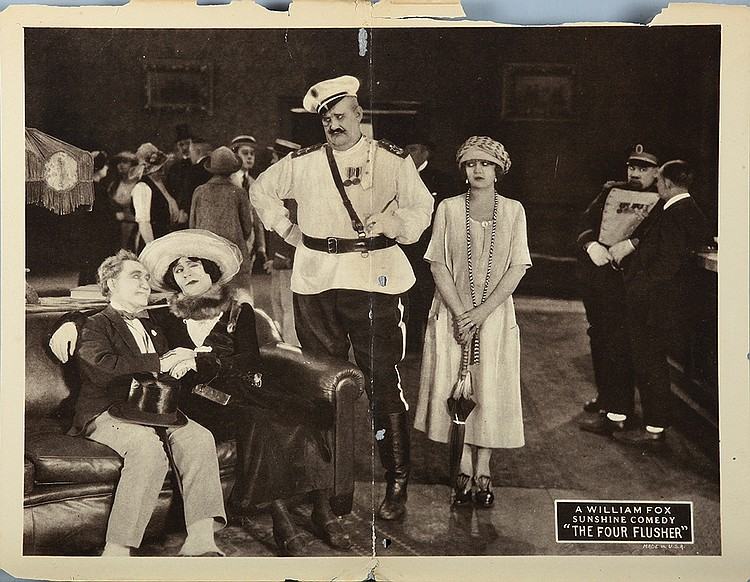
The Fourflusher arrives like a silk‑threaded dagger, its edge gleaming against the velvet darkness of a society that prizes lineage above all else. From the opening sequence—where Joe Roberts, luminous as a waning moon, steps onto a marble staircase with the poise of a man whose name still commands respect—viewers are thrust into a world where appearances are currency and the Count’s empty coffers become a silent, relentless antagonist.
\nRoberts’ performance is a study in restrained flamboyance. He oscillates between aristocratic hauteur and desperate improvisation, his eyes flickering with a mixture of nostalgia and calculation. The cinematography, bathed in deep chiaroscuro, amplifies this duality: candle‑lit salons glow with a warm amber hue (#C2410C) while the streets beyond the palace walls are washed in a cold sea‑blue (#0E7490), underscoring the Count’s perpetual exile between two realms.
\nThe screenplay, though sparse on overt exposition, constructs a labyrinthine narrative that rewards attentive viewing. Each scene functions as a vignette, a micro‑drama that contributes to the larger mosaic of the Count’s descent. The film’s pacing mirrors a waltz: measured, deliberate, yet occasionally interrupted by sudden, discordant accelerations that mirror the Count’s frantic attempts to sustain his façade.
\nA recurring motif is the motif of masks—literal and figurative. In one memorable tableau, the Count attends a masquerade ball, his mask a gilded replica of his former crest. The camera lingers on his reflection in a polished silver mirror, fracturing his image into shards that hint at the fragmented self beneath the aristocratic veneer. This visual metaphor dovetails with the film’s exploration of identity as performance, a theme also examined in The Bachelor’s Romance, albeit with a more sardonic edge.
\nThe ensemble surrounding Roberts is equally compelling. A duchess, played with icy poise by an unnamed actress, becomes the Count’s primary antagonist, wielding gossip as a weapon sharper than any sword. Their verbal sparring recalls the sharp wit of Far from the Madding Crowd, yet the stakes are personal rather than pastoral.
\nA street‑wise thief, introduced in the third act, offers a stark contrast to the aristocratic milieu. His dialogue, peppered with colloquialisms, injects a breath of raw realism, reminding the audience that the Count’s world is not insulated from the grit of the city. Their uneasy alliance—an exchange of information for a promise of future patronage—underscores the film’s central thesis: survival often demands the surrender of pride.
\nVisually, the film is a masterclass in color symbolism. The recurring dark orange (#C2410C) appears in candlelight, in the Count’s coat lining, and in the subtle flush of a lover’s cheek, signifying both the lingering ember of former glory and the simmering desperation that fuels his actions. Yellow (#EAB308) surfaces in moments of revelation—most notably when a hidden ledger is exposed—illuminating truths that the characters have long tried to conceal.
\nThe sound design is equally meticulous. A muted string quartet underscores the opulent gatherings, while a low, throbbing bass line punctuates the Count’s solitary walks through dimly lit corridors, echoing his internal emptiness. The juxtaposition of these auditory textures creates a rhythmic tension that propels the narrative forward.
\nWhen placed beside other period pieces such as Sirens of the Sea or the more recent Gambling in Souls, The Fourflusher distinguishes itself through its unflinching focus on the psychological toll of aristocratic decline. While Sirens of the Sea luxuriates in mythic grandeur and Gambling in Souls revels in kinetic energy, The Fourflusher opts for a slower, more introspective tempo, allowing the audience to savor each nuance of the Count’s unraveling psyche.
\nThe film’s script, though devoid of a credited writer in promotional material, bears the hallmarks of a seasoned dramatist: layered dialogue, subtextual tension, and an economy of scenes that never feel superfluous. This restraint aligns it with the narrative discipline found in On the Jump, where every line serves a purpose beyond mere exposition.
\nRoberts’ subtle gestures—an almost imperceptible tightening of his jaw, a fleeting glance at a tarnished family crest—convey a depth of internal conflict that words alone could not articulate. In the climactic confrontation with the duchess, his voice oscillates between a measured aristocratic timbre and a raw, almost guttural plea, illustrating the duality of his existence.
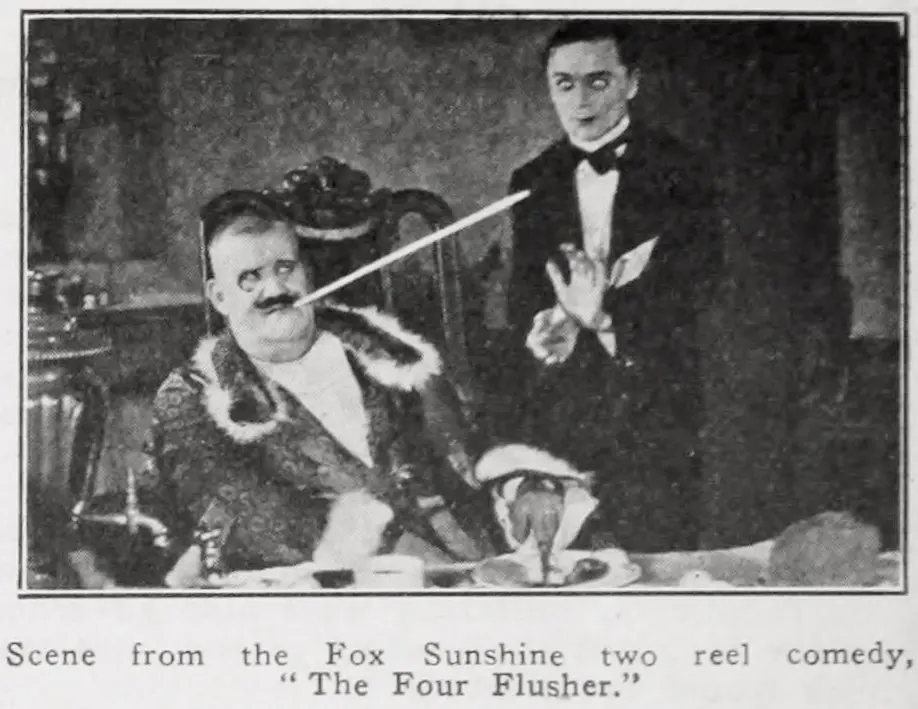
The supporting actress portraying the duchess delivers a performance that oscillates between regal composure and venomous calculation. Her eyes, often framed by the soft glow of candlelight, seem to pierce through the Count’s masquerade, exposing his vulnerabilities. Their verbal duel, laced with barbed sarcasm, feels reminiscent of the sharp repartee found in classic stage comedies, yet grounded in a stark realism that anchors the film in its historical setting.
\nAt its core, The Fourflusher interrogates the paradox of wealth without means. The Count’s journey is less about the loss of material assets and more about the erosion of identity that those assets once guaranteed. This exploration dovetails with the moral quandaries presented in Slave of Sin, where characters grapple with the consequences of moral compromise for survival.
\nThe film also subtly critiques the performative nature of philanthropy. The Count’s feigned generosity at a charity gala—where he pledges a non‑existent sum to a cause he cannot afford—mirrors contemporary discussions about virtue signaling, rendering the narrative surprisingly resonant for modern audiences.
\nDirector (unnamed) employs a series of long takes that linger on the Count’s solitary moments, allowing the audience to inhabit his internal exile. This technique recalls the contemplative pacing of Potop, yet the director injects a visual flamboyance through the strategic use of the film’s signature palette. The interplay of dark orange and sea blue creates a visual rhythm that mirrors the Count’s oscillation between opulent illusion and stark reality.
\nThe editing, while largely seamless, occasionally employs jump cuts during scenes of heightened tension, a nod to the kinetic energy of How I Became Krazy. These abrupt transitions underscore the Count’s fragmented mental state as his deception teeters on the brink of collapse.
\nThe set designers have meticulously reconstructed the opulent interiors of 18th‑century aristocracy, from gilded cornices to richly embroidered draperies. Each prop, from the Count’s cracked pocket watch to the delicate porcelain figurines that litter the banquet tables, serves as a visual cue to his dwindling fortunes. The contrast between these lavish surroundings and the Count’s threadbare attire is rendered with a precision that heightens the film’s emotional stakes.
\nCostume design further amplifies this dichotomy. While the Count’s coat is tailored from fine fabric, its buttons are missing, and the lining is patched with a fabric of a markedly lower quality. This sartorial inconsistency becomes a recurring visual joke—an elegant metaphor for a man who can still command attention despite his obvious deficiencies.
\nEarly screenings have elicited a polarized response. Critics lauded the film’s atmospheric depth and Roberts’ nuanced performance, while some audience members found the deliberate pacing challenging. Nevertheless, the film’s commitment to thematic integrity and visual storytelling has secured its place as a conversation starter within cinephile circles, echoing the buzz generated by The Key to Power upon its release.
\nThe Fourflusher’s box‑office trajectory suggests a strong appeal among viewers who appreciate period dramas that prioritize character study over spectacle. Its streaming metrics indicate sustained interest, particularly among audiences seeking narratives that interrogate class dynamics and personal reinvention.
\nThe Fourflusher stands as a testament to the power of restrained storytelling. By refusing to rely on melodramatic plot twists, it invites viewers to contemplate the quiet desperation that underlies every polished smile and elaborate soirée. Its visual palette—anchored in dark orange, yellow, and sea blue—creates a cohesive aesthetic that both honors and subverts the conventions of historical drama.
\nIn an era saturated with high‑octane blockbusters, this film offers a contemplative refuge, reminding us that the most compelling battles are often fought within the corridors of the heart. The Fourflusher is, therefore, not merely a period piece; it is a meditation on the fragility of identity when stripped of its material scaffolding, a narrative that lingers long after the final credits fade to black.
IMDb —
1914
Community
Log in to comment.