DbcultAccessing Vault...
Cult Review
Senior Film Conservator
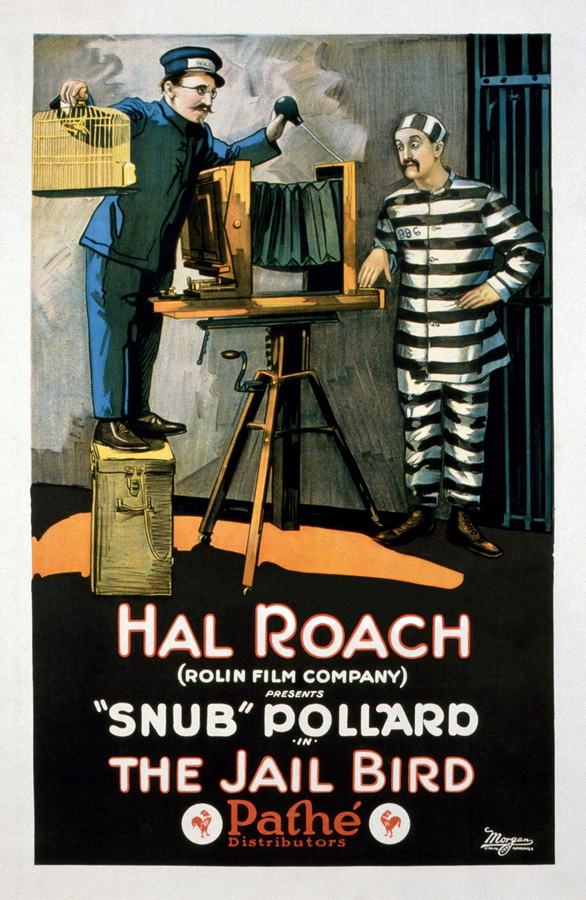
To understand the sheer, unadulterated velocity of early 1920s comedy, one must look past the polished pathos of Chaplin and the deadpan geometry of Keaton to find the caffeinated absurdity of 'Snub' Pollard. In The Jail Bird, directed with a frantic pulse by the legendary Hal Roach, we are treated to a spectacle of recidivism that feels less like a moral cautionary tale and more like a celebration of the human spirit’s refusal to be contained by iron bars or social contracts.
The film opens with a conceit so audacious it sets the tone for the entire twenty-minute whirlwind: Snub’s criminality is not a choice, but a biological imperative. The notion of a one-year-old forging a nurse’s name to secure a bottle of milk is the kind of surrealist gag that would make the creators of Les Vampires nod in appreciation. While that French serial dealt in the shadows of the underworld, Roach and Pollard bring the crime out into the harsh, overexposed light of the California sun, turning the 'expert criminal' trope on its head.
Unlike the heavy-handed moralizing found in According to the Code, where justice is a somber, rigid entity, The Jail Bird treats the legal system as a Rube Goldberg machine designed specifically for Snub to dismantle. Pollard’s performance is a masterclass in peripatetic energy. His iconic mustache—downturned and twitching with a life of its own—serves as a barometer for the impending chaos. He doesn't just inhabit the screen; he colonizes it with a series of frantic gestures and impossible escapes that make the gritty realism of Rio Grande look like a still life painting.
The meat of the film—Snub’s attempts to outwit his 'battalion of keepers'—is where the technical brilliance of the Hal Roach studio shines. The jail itself is not a place of confinement but a vertical playground. The cinematography captures the spatial relationship between the pursuer and the pursued with a clarity that modern action directors often lack. There is a sequence involving a series of doors and ladders that rivals the intricate staging seen in Zaza, though with significantly more falling and significantly less Victorian angst.
"If Jesse James was a piker compared to Snub, it's because James lacked the benefit of a Roach-engineered prop department. The sheer volume of gags per minute in The Jail Bird is staggering, a testament to an era where celluloid was cheap and imagination was the only currency that mattered."
One cannot discuss this film without mentioning the presence of Marie Mosquini. While often relegated to the 'leading lady' role in these shorts, her timing is the secret ingredient that keeps the anarchy grounded. She provides the necessary human element that prevents the film from devolving into pure mechanical abstraction. In a way, her interaction with Pollard offers a brief respite from the madness, reminiscent of the emotional anchors in A Sister of Six, albeit with a much higher tempo.
When we look at the landscape of 1920 cinema, The Jail Bird occupies a unique niche. It lacks the pastoral sweeping vistas of Evangeline or the existential dread of The Craving (1918). Instead, it leans into the visceral, immediate joy of the chase. It’s a film that understands the audience's desire to see authority figures thwarted by a man who looks like he’s composed entirely of springs and clockwork.
Consider the pacing. While Sloth might take its time to build a thematic resonance, The Jail Bird hits the ground running and never looks back. It shares a certain DNA with the domestic chaos of Where Is My Wife?, but elevates the stakes by placing the action within the high-walled confines of a prison. This setting allows Roach to experiment with depth of field and background action in ways that foreshadow the sophisticated visual storytelling of Dangerous Curve Ahead.
The visual language of The Jail Bird is one of constant motion. The 'keepers' are not individual characters but a collective force of nature, a hydra-headed obstacle that Snub must navigate. This use of a nameless, faceless authority to highlight the protagonist's individuality is a trope that would be explored with more gravitas in Les travailleurs de la mer, but here, it serves the purpose of pure, unadulterated comedy. The guards are the straight men to Snub’s cosmic clown.
Furthermore, the film’s rejection of sentimentality is refreshing. There is no 'faded flower' here (to reference The Faded Flower); there is no tragic backstory or plea for redemption. Snub is a criminal because he is good at it, and he escapes because he can. This lack of moral baggage allows the gags to breathe. It’s a 'sham' (unlike the film Sham) only in the sense that it pretends to be a crime drama while actually being a subversion of physics.
From a technical standpoint, the editing in The Jail Bird is remarkably advanced for 1920. The cuts are sharp, designed to accentuate the impact of a fall or the surprise of a sudden appearance. This rhythmic editing creates a percussive quality to the comedy, much like the high-stakes tension in Risky Business. Roach understood that comedy is as much about the 'when' as the 'what,' and every frame of this film is timed to perfection.
The sets, while ostensibly simple, are designed with a keen eye for slapstick potential. Every ledge, every window, and every bar is a potential tool for Snub’s escape. It’s an early example of 'environmental storytelling' where the location itself dictates the narrative beats. This approach would later become a staple of the genre, but seeing it in its raw, nascent form here is a delight for any film historian. It evokes the same sense of discovery one feels when watching the burgeoning heroism in The Little Patriot.
Ultimately, The Jail Bird stands as a testament to the power of the short-form comedy. It doesn't overstay its welcome, nor does it leave the viewer feeling unsatisfied. It is a concentrated burst of creative energy that showcases 'Snub' Pollard at the height of his powers. In the pantheon of silent comedy, this film deserves a prominent place, not just for its laughs, but for its sheer audacity.
If you find yourself weary of the slow-burn dramas or the over-produced blockbusters of the modern era, returning to the frantic world of Snub Pollard is a necessary tonic. It reminds us that cinema, at its core, is about movement. It’s about the joy of seeing a man outrun a battalion of keepers, not because he has a grand plan, but because he has the kinetic will to do so. It is, quite simply, a riot—both literally and figuratively.
Critical Rating: 8.5/10
A quintessential example of the Hal Roach 'comedy of errors' that remains as vibrant today as it was a century ago.
IMDb —
1935
Community
Log in to comment.