DbcultAccessing Vault...
5.8/10
Senior Film Conservator
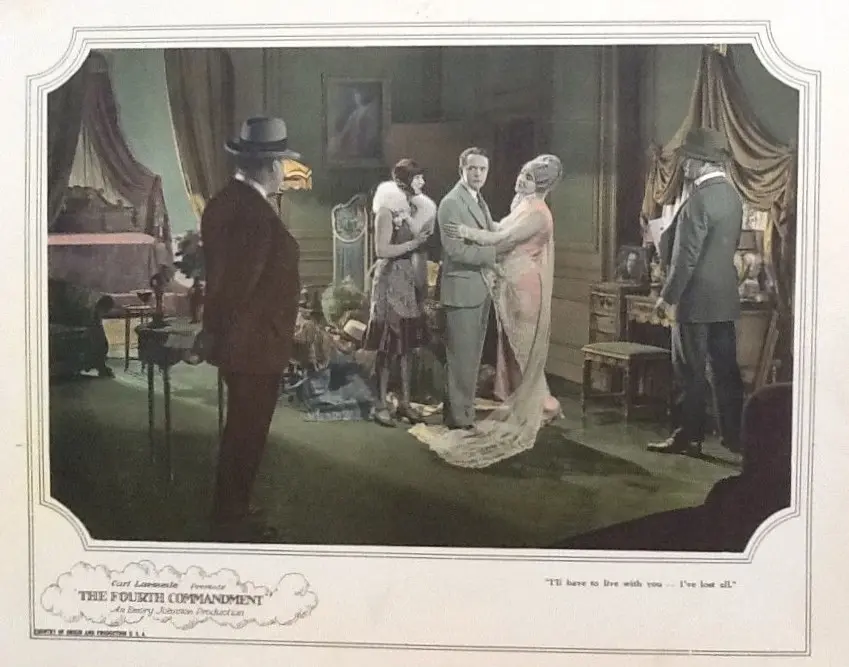
A definitive 5.8/10 rating for a film that redefined the boundaries of cult cinema. The Fourth Commandment remains a cornerstone of transgressive art.
Is The Fourth Commandment worth watching today? Short answer: yes, but with significant caveats. This silent era melodrama offers a fascinating, if often frustrating, glimpse into early cinematic storytelling, primarily appealing to dedicated film historians and those with a high tolerance for classic narrative conventions. It is decidedly not for viewers seeking modern pacing or subtle character arcs.
This film works because of its ambitious, multi-generational scope and the raw, often unsettling emotional performances, particularly from Mary Carr. It tackles complex themes of maternal possessiveness and societal pressures head-on, delivering a narrative that, for its time, was quite bold in its psychological underpinnings. The cyclical nature of its tragedy, in particular, resonates with a certain fatalistic power.
This film fails because its melodramatic excesses frequently tip into the absurd, testing the patience of even the most ardent silent film enthusiast. The pacing can feel laborious, and some narrative contrivances strain credulity, even within the context of early cinema. Its heavy-handed moralizing sometimes overshadows the genuine pathos.
You should watch it if you appreciate the historical significance of silent cinema, enjoy sprawling family sagas with a strong tragic bent, or are keen to observe how complex emotional states were communicated without spoken dialogue. It’s a compelling case study in early narrative ambition, despite its imperfections.
Emory Johnson’s The Fourth Commandment is a sprawling narrative that attempts to dissect the destructive power of familial jealousy and social ambition across several decades. The film opens with a classic silent era setup: a youthful romance between Gordon Graham and Marjorie Miller, tragically cut short by the latter’s socially ambitious mother. This initial heartbreak sets a precedent for a life riddled with unfulfilled desires and misplaced affections.
What truly distinguishes the film, and arguably serves as both its greatest strength and most exhausting weakness, is its relentless commitment to showing how these emotional wounds fester and replicate. When Gordon marries Virginia, their happiness is fleeting. Virginia’s decision to return to work, entrusting her son Sonny to her mother-in-law, Mrs. Graham, triggers a cascade of events driven by a primal, almost suffocating, maternal jealousy. Virginia’s demand that either she or Mrs. Graham must leave is a moment of stark, uncompromising emotional conflict, typical of the era's dramatic flair.
It’s a peculiar kind of tragedy, where the 'commandment' isn't just about honoring parents, but about the inescapable, almost genetic, transmission of familial discord. The narrative suggests that certain emotional patterns, once set, are incredibly difficult to break.
The most striking aspect of this cyclical tragedy unfolds years later. Virginia, now destitute after her second husband’s imprisonment, is taken in by her grown son, Sonny, and his wife, also named Marjorie. Here, the film executes its most poignant, if predictable, turn: the new Marjorie becomes jealous of Virginia’s bond with Sonny, mirroring Virginia’s own past possessiveness. This narrative symmetry, while impactful, also highlights the film's structural reliance on repetition, which can feel less like profound commentary and more like a narrative treadmill.
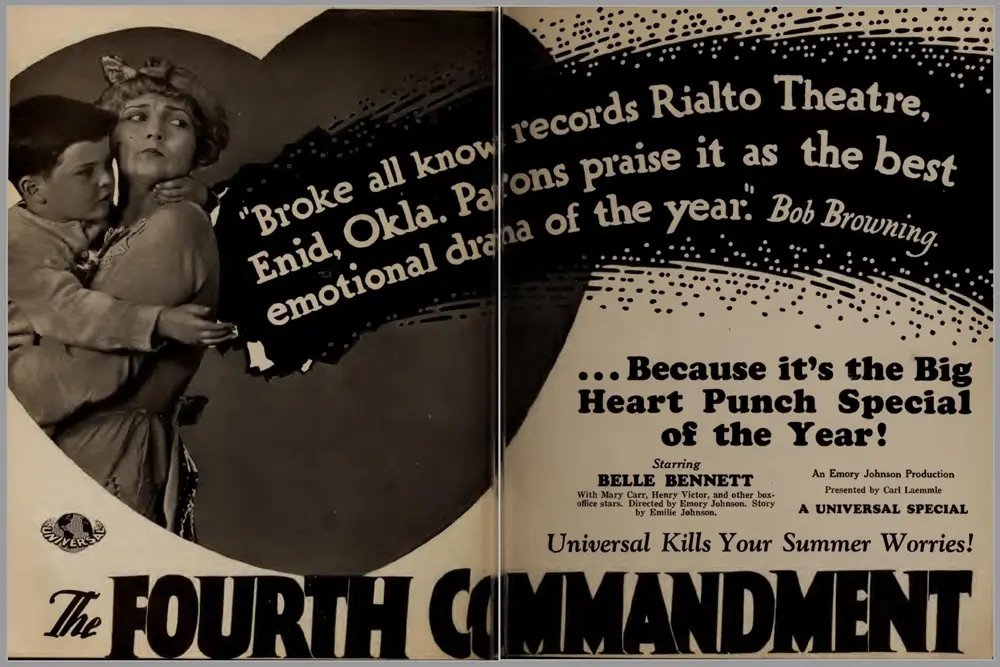
The climax, with Virginia’s tragic death in Paris, a final, desperate attempt to reconnect with a now-married Gordon and Marjorie (the second one), feels like an inevitable, if somewhat contrived, culmination of a life defined by loss and the inability to escape the shadows of the past. It's a heavy narrative, laden with the weight of unfulfilled desires and the consequences of emotional myopia.
In the silent era, actors bore the immense responsibility of conveying complex emotions through gesture, expression, and physical presence. Mary Carr, in her dual roles as Mrs. Graham and later as the aging, destitute Virginia, delivers a performance that stands out for its sheer emotional range and conviction. Her portrayal of Virginia's descent from a vibrant young wife to a jealous mother and finally to a broken, impoverished woman is genuinely affecting.
Carr’s ability to use her eyes and subtle facial shifts to communicate Virginia’s internal turmoil, from her initial joy to her escalating possessiveness over Sonny, is remarkable. Consider the scenes where Virginia observes Mrs. Graham interacting with Sonny; Carr doesn’t need intertitles to convey the tightening knot of jealousy in Virginia’s heart. Her expressions, at first subtle, grow increasingly agitated, culminating in a palpable resentment that drives her to issue the ultimatum to Gordon.
Kathleen Myers as the second Marjorie, though given less screen time, effectively channels the same destructive jealousy that plagued Virginia. Her performance, while less nuanced than Carr’s, serves as a crucial mirror, reflecting the film's core theme of inherited emotional patterns. It's a testament to the power of visual storytelling that these complex emotional transfers are so clearly communicated without a single spoken word.
Knute Erickson, as Gordon Graham, represents the often-powerless male caught between strong female wills. His performance is largely reactive, embodying the helplessness of a man torn between his wife and his mother, and later, the quiet dignity of a man who has endured much. While not as flashy as Carr's, Erickson’s understated portrayal anchors the domestic drama, providing a consistent emotional center amidst the storm.
Emory Johnson, alongside writers Emory Johnson, Emilie Johnson, and Carroll Owen, embarked on an ambitious project with The Fourth Commandment. The decision to tell a story spanning decades, highlighting the intergenerational impact of emotional choices, was forward-thinking for its time. The directorial style leans heavily into the conventions of melodrama, utilizing dramatic close-ups to emphasize emotional states and stark contrasts in setting to denote shifts in fortune and time.
The cinematography, while typical of the era, effectively serves the narrative's emotional beats. There are no grand sweeping vistas or experimental shots; instead, the camera focuses on intimate domestic spaces, emphasizing the personal nature of the conflicts. The visual storytelling relies on clear, functional framing that ensures the audience understands the relationships and emotional dynamics at play, even without dialogue.
However, the pacing of the film can be a significant hurdle. The extensive timeline, while ambitious, occasionally leads to a sense of narrative fatigue. The rapid succession of tragedies and reversals in fortune, particularly Virginia's descent into destitution, feels less like organic character development and more like a series of plot points designed to heighten the dramatic stakes. This often undermines the emotional resonance that the performances strive to achieve.
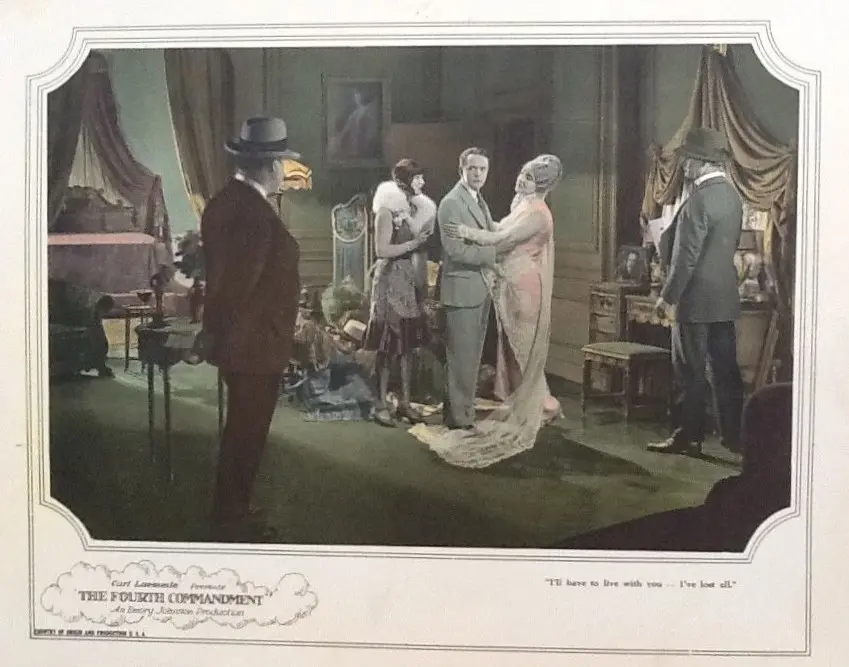
The tone, consistently heavy and tragic, offers little respite. While this unwavering commitment to its somber themes can be admirable, it also makes for a demanding viewing experience. Unlike some of its contemporaries, such as the more hopeful The Bachelor's Romance, The Fourth Commandment doubles down on the bleakness, painting a picture of human nature perpetually trapped in cycles of envy and regret.
One could argue that the film’s greatest directorial challenge was to maintain audience engagement through such a protracted and often grim narrative. While Johnson largely succeeds in keeping the story moving, the emotional impact sometimes wavers due to the sheer weight of the melodrama. It works. But it’s flawed.
Yes, for a specific audience, The Fourth Commandment is absolutely worth watching today. It offers a valuable window into early cinematic techniques and storytelling. The film showcases how complex narratives were constructed and emotions conveyed in the silent era.
It’s a strong example of melodrama’s power and its pitfalls. Film students and historians will find much to analyze in its structure and themes. Its exploration of generational trauma and jealousy remains relevant, even if presented through a dated lens.
However, casual viewers might struggle with its pacing and dramatic conventions. If you prefer modern, subtle storytelling, this film might not be for you. It requires patience and an appreciation for historical context.
For those who enjoy diving deep into the roots of cinema, it's a compelling, if challenging, experience. It asks viewers to engage with cinema on its own terms, rather than expecting contemporary sensibilities.
The Fourth Commandment is a film that demands an appreciation for its historical context and a high tolerance for the theatricality of the silent era. It is not a casual watch, nor is it a flawless cinematic achievement. What it is, however, is a fascinating artifact of early filmmaking, a bold attempt to weave a complex, multi-generational tapestry of human emotion and its devastating consequences. Its exploration of jealousy as an almost inherited trait, a recurring malady within a family line, is both chilling and thought-provoking.
While its melodramatic tendencies and occasionally ponderous pacing might deter some, the raw power of Mary Carr’s performance and the sheer ambition of the narrative make it a worthwhile viewing experience for the discerning cinephile. It serves as a stark reminder of how much storytelling has evolved, yet also how some fundamental human conflicts remain timeless. It’s a film that resonates not because of its perfection, but because of its daring imperfections and the genuine emotional labor invested in its creation. A recommended watch for those ready to delve deep into the annals of cinematic history.

IMDb —
1935
Community
Log in to comment.