DbcultAccessing Vault...
7.5/10
Senior Film Conservator
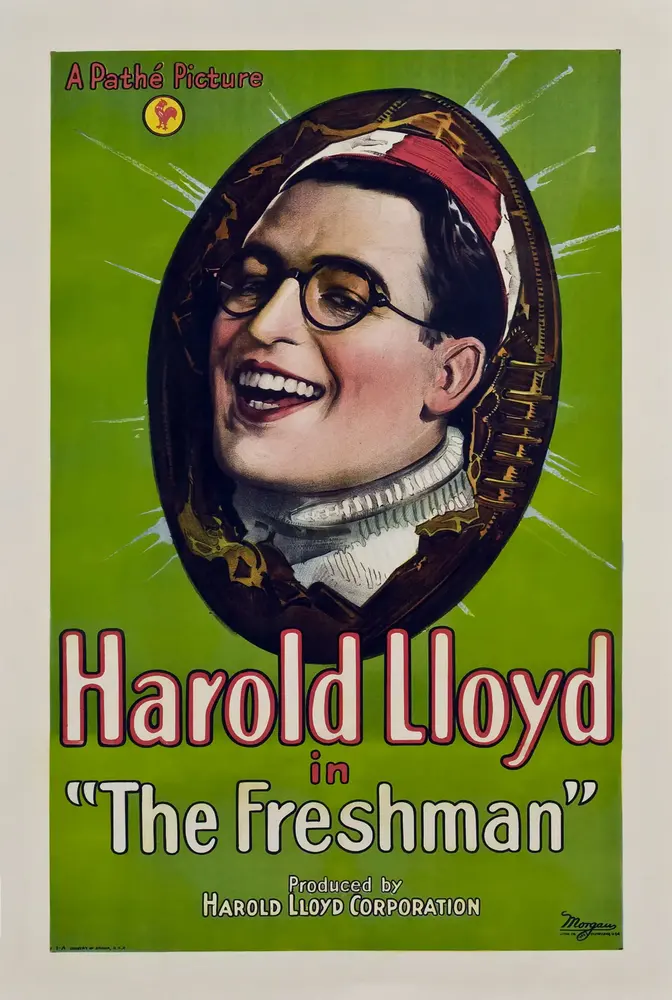
A definitive 7.5/10 rating for a film that redefined the boundaries of cult cinema. The Freshman remains a cornerstone of transgressive art.
The year 1925 was a watershed moment for the American cinematic landscape, a period where the silent comedy was reaching its zenith of technical and narrative sophistication. Amidst this era of creative ferment, Harold Lloyd unleashed The Freshman, a film that would not only define his career but also establish the foundational DNA for every college comedy that followed in its wake. While contemporaries like Buster Keaton were exploring the mechanical sublime and Charlie Chaplin was weaving Dickensian pathos into his slapstick, Lloyd focused on the quintessential American neurosis: the desperate, agonizing need to be liked. This isn't just a movie about football or college pranks; it is a visceral exploration of social performance and the fragility of the ego.
Harold Lloyd’s protagonist, Harold Lamb, is often referred to as the "Glass Character," a moniker reflecting both his trademark spectacles and his inherent transparency. Unlike the surreal resilience of Keaton, Lamb is painfully human. He represents the burgeoning middle-class aspiration of the 1920s—a figure who believes that success is a matter of following the right manual or mimicking the right icons. In The Freshman, this mimicry is manifested in the "Speedy" persona, a character Lamb adopts from a film he saw, complete with a bizarre little dance and a signature greeting. It is a heartbreakingly accurate depiction of how young people attempt to construct an identity out of the cultural scraps they find around them.
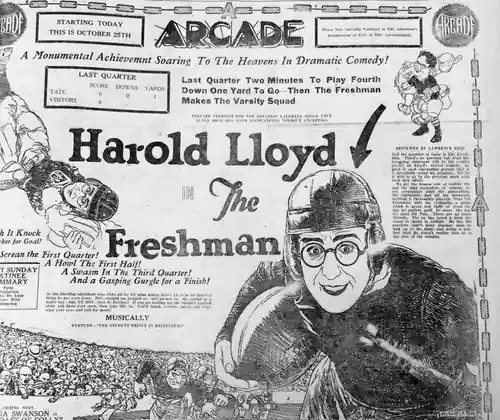
When we compare this to the thematic isolation found in Miss Crusoe, we see a different kind of solitude. While Miss Crusoe deals with a literal physical isolation, Lamb suffers from a social isolation that is far more agonizing because it occurs in the middle of a crowd. He is surrounded by people, yet he is utterly alone in his misunderstanding of his own standing. He mistake’s the campus's mockery for affection, a delusion that Lloyd plays with a perfect balance of comedy and tragedy. This psychological depth elevates the film beyond mere gag-work into the realm of social commentary.
One of the most celebrated sequences in cinematic history is the Fall Frolic, where Lamb attends a formal dance in a suit that is literally held together by basting threads. This sequence is a masterclass in escalating tension. As Lamb dances, his clothes begin to unravel, piece by piece. It is a literalization of his social standing—a facade that is slowly but surely coming apart at the seams. The inclusion of a tailor who suffers from fainting spells, necessitating his presence behind curtains and pillars to perform emergency repairs, adds a layer of frantic, rhythmic comedy that few modern directors could hope to replicate.
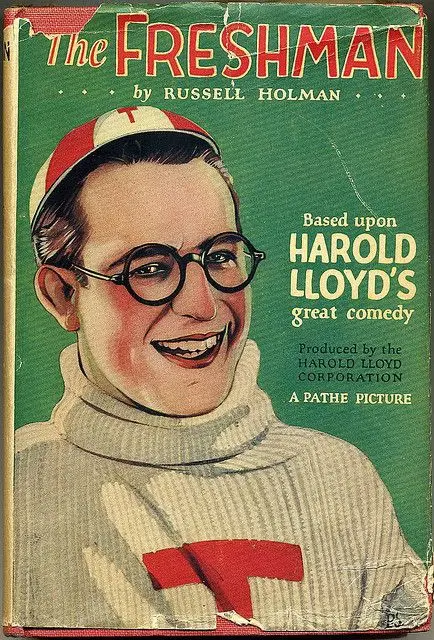
This scene functions as a synecdoche for the entire film. Lamb is trying to maintain a veneer of sophistication while the reality of his situation—his poverty, his lack of social grace, his outsider status—threatens to expose him. It echoes the social pressures explored in Foolish Lives, where the characters are often victims of their own societal aspirations. In The Freshman, however, the tone remains optimistic, anchored by Lloyd’s relentless energy and the genuine sweetness of his relationship with Peggy, played by the luminous Jobyna Ralston.
The final act of the film shifts from the ballroom to the football field, a transition that mirrors the shift from social maneuvering to physical confrontation. Lamb’s desire to join the football team is not born of athletic prowess but of a desperate need to be the "hero" he thinks a college student should be. The training sequences, where Lamb is used as a human tackling dummy because the team lacks a proper one, are both hilarious and physically harrowing. There is a masochistic quality to Lamb’s perseverance that borders on the religious; he is willing to sacrifice his body for the promise of a smile from the "Big Man on Campus."

The actual game is a tour de force of editing and stunt coordination. Lloyd, who famously performed his own stunts despite having lost several fingers in a prop explosion years prior, moves with a kinetic grace that belies the character's clumsiness. The sequence is a chaotic ballet of mud, leather, and limbs. It provides a visceral catharsis that is often missing from the more melodramatic offerings of the time, such as The Yellow Traffic. While that film sought to provoke through shock and social ills, The Freshman achieves its impact through the universal language of the underdog’s struggle.
While Lloyd is the face and the force behind the film, the contributions of writers like John Grey, Tim Whelan, and Ted Wilde cannot be overstated. The structure of the film is remarkably tight, with every gag feeding into the overarching narrative of Lamb’s emotional growth. There is no wasted motion. Each set piece, from the initial train ride to the final touchdown, serves to heighten our empathy for Lamb. The writing team managed to imbue a silent comedy with a level of character development that was quite rare for the genre. We don't just laugh at Harold; we root for him, we cringe for him, and ultimately, we celebrate with him.
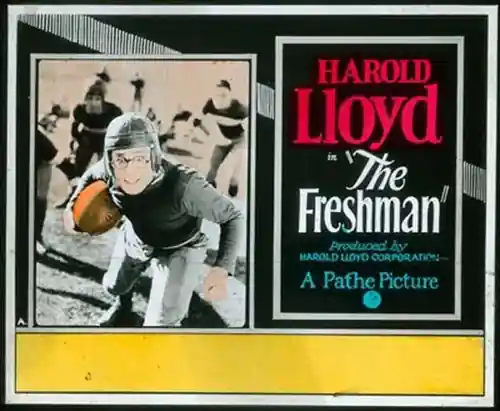
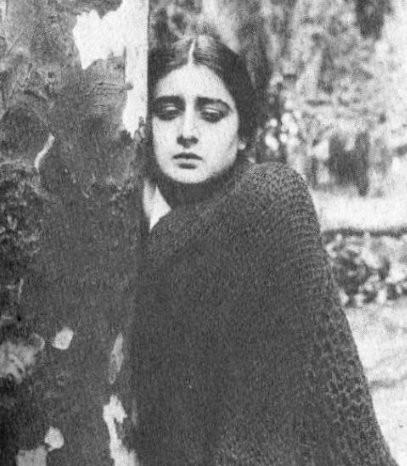
This narrative cohesion stands in contrast to the more episodic nature of films like The Flower Girl, which relied more heavily on sentimental vignettes. In The Freshman, the sentiment is earned through the protagonist's suffering and his eventual realization that authenticity is more valuable than popularity. The moment when Peggy tells Harold the truth—that the students have been laughing at him, not with him—is one of the most poignant scenes in silent cinema. It strips away the comedy and leaves us with the raw, beating heart of a young man who has realized his life is a lie.
Looking back from a century’s distance, it is staggering to see how much of our modern understanding of "college" in the cultural imagination stems from this single film. The tropes of the cruel upperclassman, the sweet girl-next-door, the big game that decides everything, and the nerdy outsider trying to fit in were all codified here. Lloyd captured the zeitgeist of the 1920s—a decade obsessed with youth, vigor, and social mobility—and distilled it into a narrative that remains shockingly relevant today.
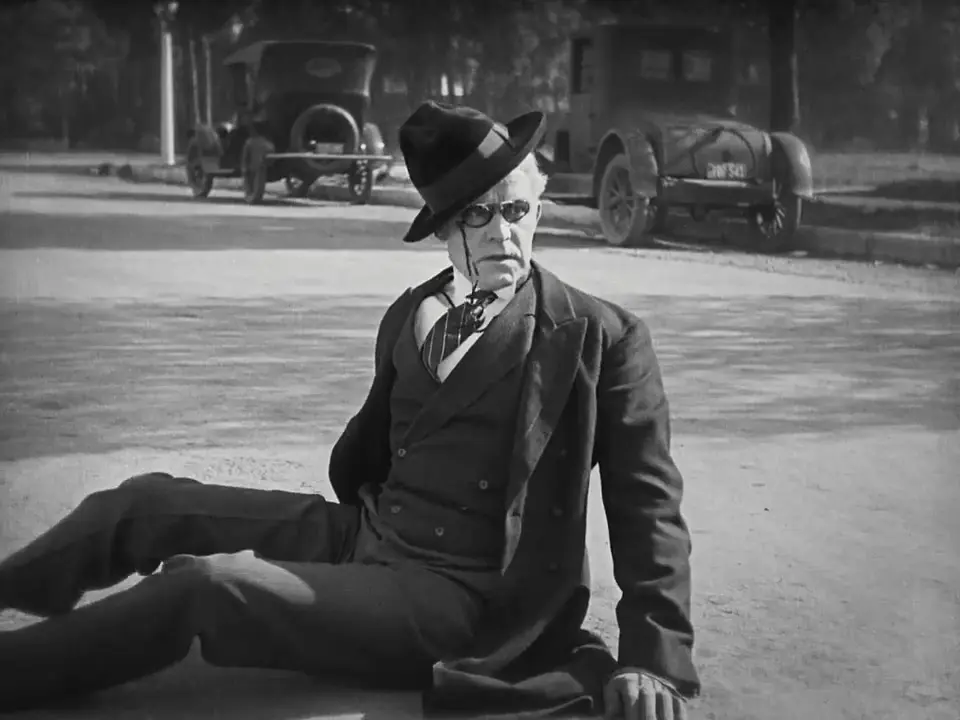
Even when compared to the epic scale of Lest We Forget (1924), Lloyd’s film feels more intimate and, paradoxically, more timeless. While historical epics are tied to their specific eras, the anxiety of a freshman walking onto a new campus is a perennial human experience. The technical brilliance of the film, from the innovative use of close-ups to capture Lamb’s internal panic to the sweeping wide shots of the stadium, ensures that it remains a visual feast. The use of Pal the Wonder Dog adds a touch of whimsy that never feels forced, a testament to the directorial control of Sam Taylor and Fred Newmeyer.
One might argue that silent films lack the ability to convey complex internal monologues, but The Freshman proves otherwise. Through physical acting and the clever use of intertitles, we are given full access to Lamb’s "inner voice." It is a voice of hope, then of doubt, and finally of fierce determination. This internal journey is as compelling as any found in contemporary dramas like The Inner Voice. Lloyd uses his entire body to communicate this—the way he adjusts his glasses, the slight slump of his shoulders when he realizes he's been mocked, and the manic energy of his jig.
In the end, The Freshman is a celebration of the resilient spirit. It suggests that while we may all be 'freshmen' in some aspect of our lives—clueless, desperate for approval, and wearing metaphorical suits held together by threads—there is a path to dignity through honesty and hard work. It is a film that refuses to let its protagonist remain a victim of his own delusions, forcing him through the fire of public humiliation so that he can emerge as a man of substance. Harold Lloyd didn't just make people laugh; he made them see themselves in the reflection of his glasses, and for that, The Freshman remains an untouchable pinnacle of the art form.
IMDb 6.4
1936
Community
Log in to comment.