DbcultAccessing Vault...
Cult Review
Senior Film Conservator
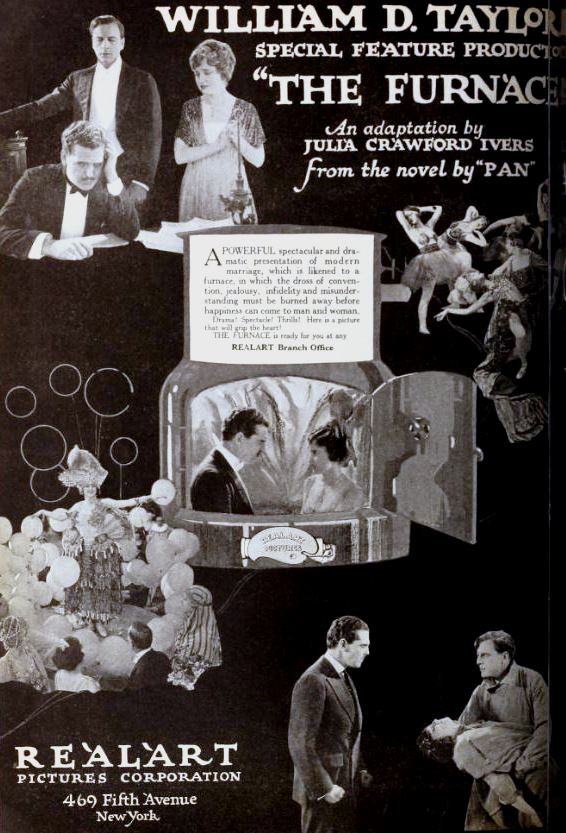
The silent era, often unfairly dismissed as a mere precursor to sound, consistently delivered narratives of profound emotional complexity and moral ambiguity, proving that the absence of dialogue in no way diminished the power of storytelling. Among these gems, The Furnace stands as a testament to the period's capacity for nuanced character development and intense dramatic conflict. This isn't merely a tale of a woman marrying for money; it’s a searing exploration of the emotional crucible that transforms cynical calculation into genuine affection, a journey undertaken by Folly Vallance, brought to vivid life by the remarkable Agnes Ayres.
From the outset, we are introduced to Folly not as a villainess, but as a product of her societal pressures, a woman who perceives matrimony as a strategic alliance rather than a romantic ideal. Her decision to wed the wealthy Anthony Bond, portrayed with understated gravity by Milton Sills, is rooted in a pragmatic pursuit of financial security and social standing. This initial premise, while seemingly straightforward, immediately establishes a fascinating dynamic. Bond, a man of considerable means and, crucially, keen insight, quickly penetrates Folly's carefully constructed façade. His subsequent insistence on a marriage purely in name, a union devoid of personal intimacy, acts as the primary catalyst for the dramatic tension that unfolds.
This rejection, this denial of the very social currency Folly sought, plunges her into a vortex of exasperation and wounded pride. Her subsequent immersion into the glittering, yet ultimately hollow, social whirl is a desperate attempt to reclaim a sense of agency and validation. It’s a compelling portrayal of a woman adrift, navigating a world where appearances often supersede genuine connection. Agnes Ayres, with her expressive eyes and subtle gestures, masterfully conveys Folly's internal turmoil – the initial defiance, the simmering resentment, and the underlying vulnerability that begins to surface. This period of Folly's life, flitting from one social engagement to another, is not merely a distraction; it's a dangerous dance with temptation and misdirection, setting the stage for deeper complications.
It is within this social milieu that Keene Mordaunt, a close friend of Anthony Bond and played by Edward Martindel, enters Folly's orbit. Keene’s friendship appears genuine, perhaps initially unaware of the strained marital dynamics between Folly and Anthony. His presence offers Folly a semblance of companionship and understanding, a stark contrast to the emotional void within her own marriage. This developing camaraderie, however innocent in its inception, inadvertently creates a fertile ground for misunderstanding and misinterpretation, especially given the already fragile state of Folly's relationship with her husband. The narrative skillfully builds this tension, implying the inevitable collision of these complex personal relationships.
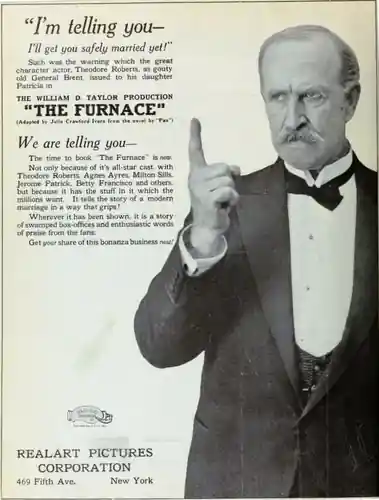
The true turning point, the spark that ignites the titular 'furnace' of Folly's emotional awakening, arrives with the malevolent intervention of Count Svensen, a character personified by Jerome Patrick. Svensen, a quintessential silent film antagonist, represents the darker undercurrents of the social landscape Folly has chosen to inhabit. His attempt to blackmail Folly into running away with him is a desperate, predatory act designed to exploit her precarious position and perceived vulnerability. This threat of public scandal and personal ruin forces Folly to confront the dire consequences of her choices and the superficiality of her current existence. It’s a moment of reckoning, a stark reminder that the pursuit of external validation can lead one down treacherous paths.
Keene Mordaunt, demonstrating a loyalty that transcends his friendship with Bond, pursues Folly and Svensen to a secluded country house. This dramatic chase sequence, a staple of silent film, is not merely for thrills; it underscores the urgency of the situation and the escalating stakes for all involved. The confrontation at the country house forms the emotional climax of the film. Anthony Bond, arriving on the scene, misinterprets the situation entirely, accusing his friend Keene of treachery. This accusation, born of wounded pride and a profound sense of betrayal, is a pivotal moment, pushing the characters to their emotional limits.
It is in this crucible of misunderstanding and raw emotion that Folly undergoes her profound transformation. Witnessing the collateral damage of her actions, the pain inflicted upon both her husband and his friend, she experiences a searing epiphany. The superficial desires that once guided her choices recede, replaced by a dawning realization of her genuine, nascent love for Anthony. This isn't a sudden, unearned shift; it's the culmination of her journey through exasperation, social maneuvering, and near-disgrace. Her subsequent explanation, a heartfelt confession of her initial motivations and the complex web of circumstances that followed, is the emotional core of the film. It requires immense vulnerability and courage, and Agnes Ayres delivers this moment with compelling sincerity.
Bond's forgiveness, a moment of quiet grace after a storm of suspicion and hurt, signifies the true reconciliation. It's not just a forgiveness of her past actions but an acceptance of her transformed self. The 'furnace' metaphor here is particularly apt: their relationship, initially cold and transactional, has been tested, refined, and ultimately forged anew in the fires of adversity and self-discovery. This narrative arc, from mercenary intent to genuine affection, is a powerful testament to the redemptive potential of love and understanding.
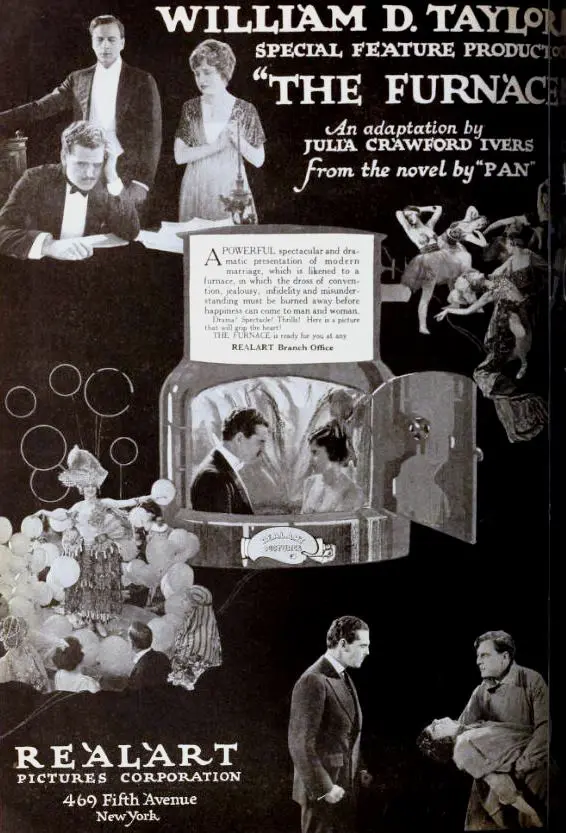
The film’s thematic depth extends beyond individual character arcs. It delves into the timeless conflict between love and materialism, a theme particularly resonant in the post-World War I era, a period often characterized by both economic boom and a certain moral permissiveness. The allure of wealth, the societal pressures to 'marry well,' and the consequences of prioritizing financial gain over emotional connection are explored with considerable insight. Folly's journey is a cautionary tale, yet also one of hope – demonstrating that even the most calculated heart can be softened and transformed by genuine human connection. The redemption arc is not simplistic; it's earned through suffering and self-awareness.
Julia Crawford Ivers and Leslie Beresford, the film's writers, deserve immense credit for crafting such a nuanced and emotionally resonant narrative. Their ability to weave together themes of betrayal, forgiveness, social ambition, and the true nature of marriage within the constraints of the silent medium is truly remarkable. They understand that a compelling story doesn't require verbose dialogue but rather well-defined characters whose motivations drive the plot forward with a relentless, almost poetic, inevitability. The script’s structure meticulously builds tension, introduces complications, and ultimately delivers a satisfying, earned resolution, avoiding the saccharine sentimentality that could easily plague such a story.
The performances across the board are exemplary. Agnes Ayres as Folly Vallance is a revelation. She navigates the character's complex emotional landscape with remarkable skill, transitioning from a woman of steely resolve to one of vulnerable honesty. Her facial expressions and body language convey volumes, making her transformation utterly believable. Milton Sills, as Anthony Bond, provides a perfect counterpoint. His initial portrayal of a disillusioned millionaire, wounded yet dignified, slowly gives way to a man capable of profound love and forgiveness. The chemistry between Ayres and Sills, conveyed through glances and subtle interactions, is palpable, making their eventual reconciliation all the more impactful. The supporting cast, including Edward Martindel as the well-meaning Keene and Jerome Patrick as the villainous Svensen, all contribute to the rich tapestry of the film, each playing their part in driving Folly's journey through her personal 'furnace.'
In the broader context of silent cinema, The Furnace shares thematic echoes with other films of its era that explored the complexities of female agency and societal expectations. One might draw parallels to the struggles faced by protagonists in films like The Sex Lure or A Woman of Impulse, where women often navigate treacherous social landscapes, making choices that challenge conventional morality. While 'The Furnace' focuses more on marital reconciliation, the underlying tension of a woman striving for autonomy and respect, even if initially misguided, resonates deeply with these contemporary narratives. The film also evokes the dramatic intensity seen in character-driven dramas like Outcast, where societal judgment and personal redemption often form the core narrative.
The film’s enduring relevance lies in its exploration of themes that remain timeless: the corrosive nature of greed, the redemptive power of love, and the often-arduous path to self-discovery. It reminds us that true connection is forged not in convenience or calculation, but in shared experience, vulnerability, and the willingness to forgive. The 'furnace' of the title isn't just a physical place; it's a powerful metaphor for the trials and tribulations that refine character and deepen relationships. It’s a testament to the fact that even a seemingly transactional beginning can, through the crucible of life, yield a bond of profound and lasting affection.
Ultimately, The Furnace is more than just a historical artifact; it is a compelling piece of cinematic art that speaks to the human condition with clarity and emotional force. It showcases the immense talent of its cast and crew, demonstrating how effectively a story can be told without a single spoken word, relying instead on the universal language of human emotion. For enthusiasts of silent film and anyone interested in the enduring power of dramatic storytelling, this film offers a deeply satisfying and thought-provoking experience, proving that some narratives, like true love, are forged in fire and emerge stronger for it.
IMDb —
1930
IMDb 5.8
1910
Community
Log in to comment.