DbcultAccessing Vault...
Cult Review
Senior Film Conservator
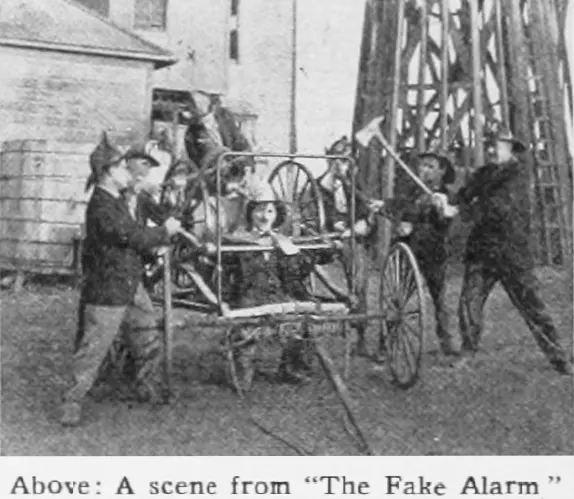
To understand the kinetic energy of A Fake Alarm, one must first appreciate the precarious landscape of 1920s silent comedy. Unlike the sprawling, existential weight found in masterpieces like Greed, Bobby Dunn’s vehicle operates on a frequency of pure, unadulterated absurdity. It is a film that treats the domestic sphere not as a sanctuary, but as a playground for mechanical and social failure. Dunn, an actor often overshadowed by the giants of the era, brings a frantic, twitchy desperation to the role of the blacksmith’s helper, a man whose ambitions are constantly throttled by his own clumsiness.
The central conceit of the film—the firehouse-blacksmith shop hybrid—is a stroke of genius in set design and thematic irony. Fire, in the context of the smithy, is a creative, industrial force. It is the tool through which iron is bent and livelihood is secured. However, the moment Bobby dons the Chief’s hat, fire transforms into a malevolent antagonist. This duality creates a constant tension; the very sparks that signify a job well done at the anvil are the same sparks that trigger Bobby’s Pavlovian response to hunt for a blaze. It is a far more domestic and localized tension than the elemental fury seen in The Storm, yet it carries a similar weight of impending disaster.
The blacksmith shop itself is a cavernous, shadowy realm where the hierarchy of labor is clearly defined. The employer is the master of the flame, while Bobby is the subsidiary. This power dynamic is mirrored in their pursuit of the girl. In many ways, the film functions as a critique of the working-class struggle for dignity. Bobby’s desire to 'shine' as the Fire Chief is not merely about civic duty; it is an attempt to transcend his status as a helper. He seeks a title that commands respect, a uniform that masks his soot-stained reality. This search for identity is a common trope, yet Dunn imbues it with a particular brand of pathetic charm that reminds one of the moral complexities in As a Man Sows.
The climax of the film—the response to the 'fire'—is a masterclass in escalating slapstick. When the alarm sounds, the transition from labor to rescue is chaotic. The film’s pacing accelerates, mimicking the frantic heartbeat of its protagonist. Upon arriving at the girl’s house, we witness the total subversion of the hero myth. Bobby doesn't save the house; he colonizes it with water. The visual metaphor of flooding a home to 'protect' it from a non-existent threat is a biting commentary on bureaucratic overreach and the dangers of unearned authority.
As the water cascades through windows and down staircases, the physical comedy reaches a fever pitch. Dunn’s interactions with the hose—a serpentine, uncontrollable beast—highlight his physical prowess as a comedian. He is tossed, turned, and drenched, yet he maintains a deluded sense of purpose. This sequence shares a certain DNA with the frantic legal entanglements of Hello, Judge, where the protagonist’s attempts to rectify a situation only lead to deeper quagmires of social embarrassment. The destruction is thorough, leaving the interior of the house a sodden wreck, a stark contrast to the high-stakes melodrama of The Deemster.
What sets A Fake Alarm apart from its contemporaries is its refusal to grant a happy ending. In the world of 1920s shorts, there is often a redemptive beat where the bumbling hero accidentally saves the day. Not here. The revelation that there was no fire is the final nail in the coffin of Bobby’s aspirations. The 'fake' nature of the alarm renders his 'heroism' a form of domestic terrorism. The loss of his job and his romantic prospects serves as a harsh, almost naturalistic conclusion to a film that, until that point, seemed content with mere silliness.
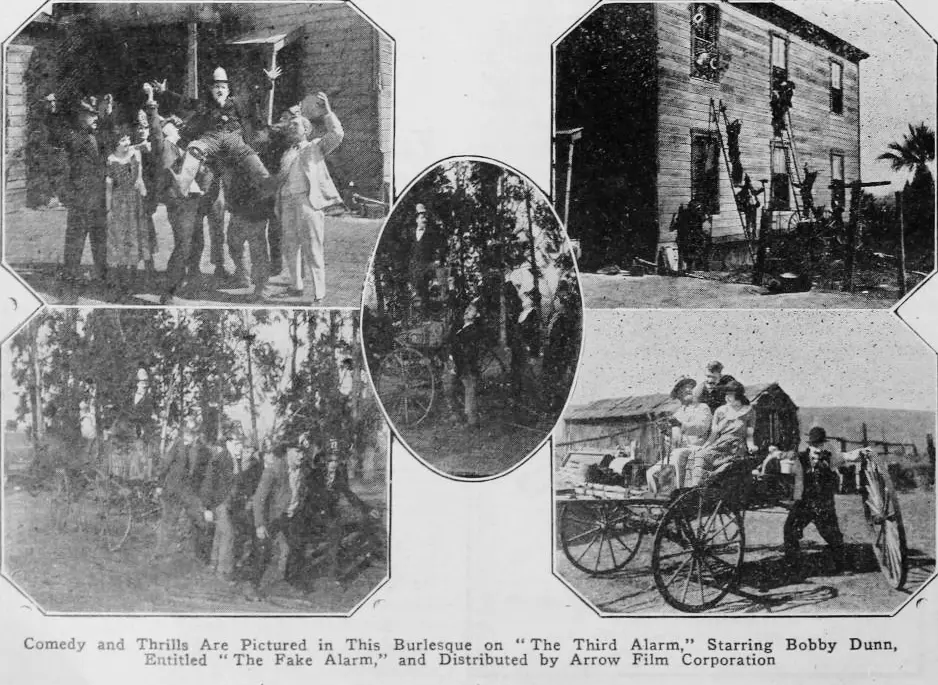
The dismissal of the entire Fire Department reflects a cynical view of communal institutions. If the protectors are more dangerous than the threats they fight, the institution must be dismantled. This bleak outlook is reminiscent of the somber undertones in Whom the Gods Would Destroy, albeit wrapped in the packaging of a two-reel comedy. Bobby and the blacksmith, once rivals, are united in their failure, both standing amidst the metaphorical and literal puddles of their own making.
From a technical standpoint, the film utilizes the limited technology of its time to create a sense of scale. The 'flooding' effects, likely achieved through simple practical means, feel visceral. The way the water interacts with the furniture and the actors provides a tactile quality that modern CGI often lacks. The cinematography captures the claustrophobia of the smithy and the sprawling chaos of the 'fire' site with equal efficacy. It lacks the haunting atmosphere of Drama na okhote, but it replaces atmosphere with a relentless, percussive rhythm.
Bobby Dunn’s performance is the glue that holds these disparate elements together. His face is a map of anxiety, his movements a series of staccato bursts. He doesn't just walk; he vibrates with the possibility of disaster. In comparing his work here to other genre pieces like Trigger Fingers, one can see how Dunn prioritized the 'reaction' over the 'action.' He is the ultimate recipient of the world’s cruelty, a punching bag for fate who keeps coming back for more.
In the broader canon of silent film, A Fake Alarm stands as a testament to the power of the 'small' story. It doesn't aim for the epic scope of The Man Unconquerable or the gothic depths of Der Leibeigene. Instead, it focuses on the universal human capacity for self-delusion. We have all, at some point, tried to 'shine' in a way that only caused more damage. We have all mistaken a wisp of steam for a conflagration of the soul.
The film’s ending, where Bobby is left with nothing, is a poignant reminder of the fragility of social standing. It echoes the themes of social displacement found in His Convict Bride, suggesting that for the working man, one mistake is all it takes to lose everything. Yet, because this is a comedy, we are invited to laugh at the wreckage. It is a cruel laugh, perhaps, but one that is earned by the sheer audacity of the film’s destructive climax.
Ultimately, A Fake Alarm is a fascinating artifact of an era where comedy was built on the ruins of dignity. It is a loud, wet, and wonderfully misguided adventure that proves that sometimes, the most dangerous thing in the world is a man with a badge and a hose who has something to prove. It is a cautionary tale for the ages, wrapped in the soot of the forge and the spray of the hydrant. For those seeking a glimpse into the raw, unpolished heart of silent slapstick, this film is an essential, if damp, experience.

IMDb 5
1933
Community
Log in to comment.