DbcultAccessing Vault...
Cult Review
Senior Film Conservator
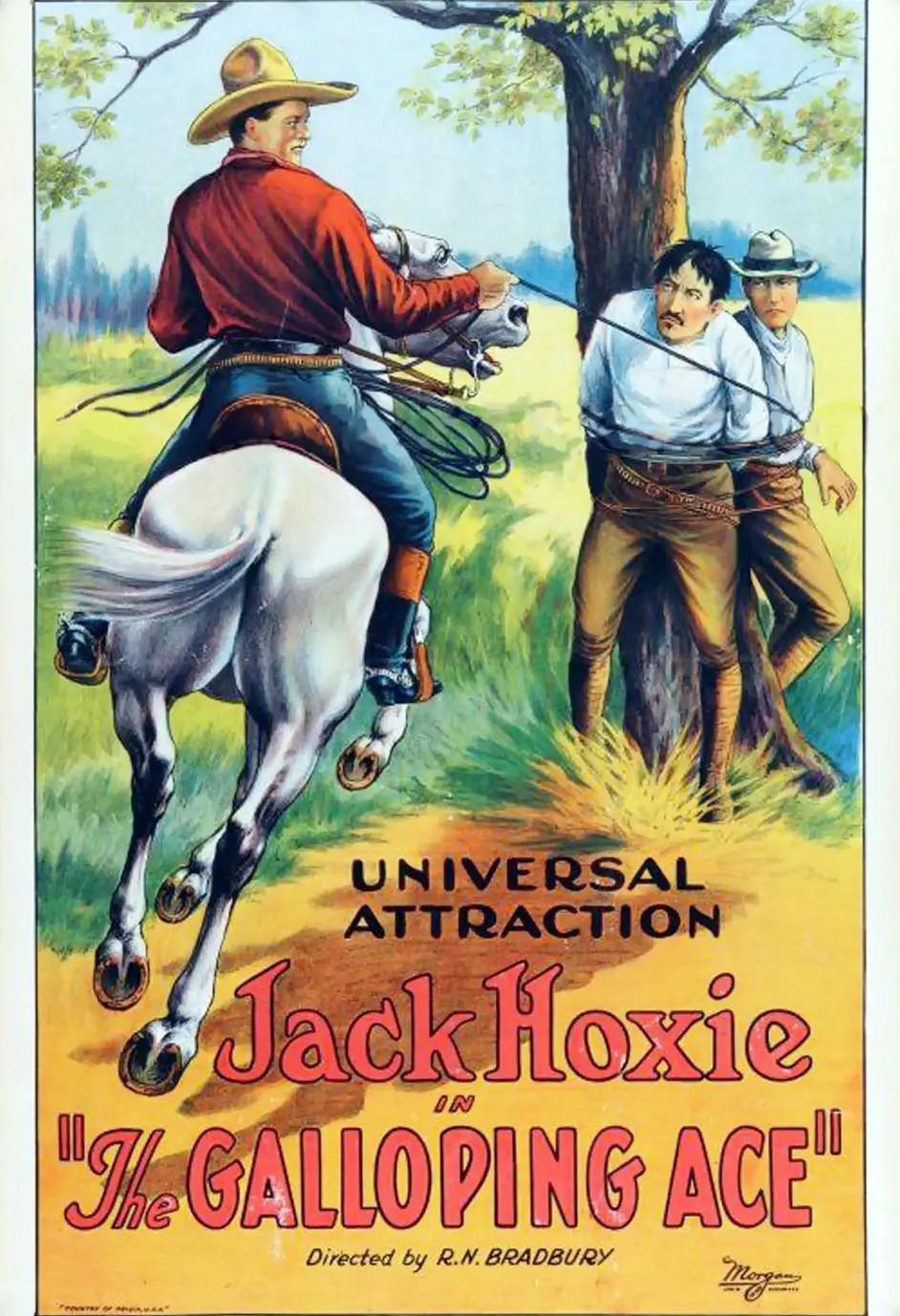
The Galloping Ace, directed by Jacques Jaccard and Isadore Bernstein, weaves a narrative rich with the essence of the American West, where honor, love, and the battle against injustice are the driving forces. Dorothea Wolbert stars as Jim Jordon, a war hero whose journey takes an unexpected turn upon his return from the battlefield.
Jim finds himself in a predicament when he's unable to reacquire his old ranch job, a situation that echoes the broader theme of returning veterans struggling to find their place in a rapidly changing society. Seeking solace and a new purpose, he accepts a position at a ranch owned by Anne Morse, portrayed by Julia Brown. This decision sets the stage for a series of events that will test Jordon's resolve and define the course of his future.
It quickly becomes apparent that Kincaid, the owner of a nearby marble quarry, is harboring sinister intentions. Kincaid is played by Jack Hoxie, a character whose cold demeanor and unyielding ambition foreshadow his nefarious plans. Jordon, with his military training and unwavering sense of justice, is determined to thwart Kincaid's attempts to seize Anne Morse's land. The tension builds as Jordon works to uncover Kincaid's plot, employing his tactical skills to protect the land he's come to care about deeply.
The romance between Jordon and Anne Morse is a central element of the film. Julia Brown's portrayal is nuanced, capturing the complexities of Anne's character—strong, independent, and yet vulnerable. Her scenes with Dorothea Wolbert, particularly those set against the backdrop of the vast, open landscapes of the West, are particularly moving. The chemistry between the two actors is palpable, and their interactions add a layer of depth to the narrative, making the characters more than just archetypes of love and conflict.
Frank Rice, Robert McKim, Margaret Morris, Fred Humes, and the supporting cast bring a rich tapestry to the film, each contributing to the overall atmosphere of authenticity and emotional resonance. The cinematography, by Isadore Bernstein, is particularly noteworthy, with sweeping shots of the rugged terrain and close-ups that capture the subtle expressions of the actors. The visual style, reminiscent of other films like 'Snobs' and 'The Wood Nymph', creates a cohesive aesthetic that enhances the storytelling.
The plot of 'The Galloping Ace' is intricately woven with elements of adventure, romance, and social commentary. It delves into themes of land ownership, the challenges faced by veterans, and the moral imperative to stand up for what is right. The film's pacing is well-managed, allowing viewers to become fully immersed in the world it presents. The script, penned by Jacques Jaccard and Isadore Bernstein, is tightly constructed, with dialogue that is both compelling and naturalistic.
The climax of the film is a masterful blend of action and drama. Jordon's confrontation with Kincaid is a testament to the actors' performances and the directors' vision. The resolution is satisfying, but not without its bittersweet moments, reflecting the film's nuanced approach to its characters and their journeys.
In conclusion, 'The Galloping Ace' is a commendable effort that stands out for its compelling storytelling, strong performances, and the evocative portrayal of the American West. It successfully balances action, romance, and moral conflict, making it a worthy addition to the genre of Western dramas. Fans of classic cinema, particularly those with a fondness for films that explore the human condition through the lens of historical and social contexts, will find much to appreciate in this film.
IMDb —
1924
Community
Log in to comment.