DbcultAccessing Vault...
Cult Review
Senior Film Conservator
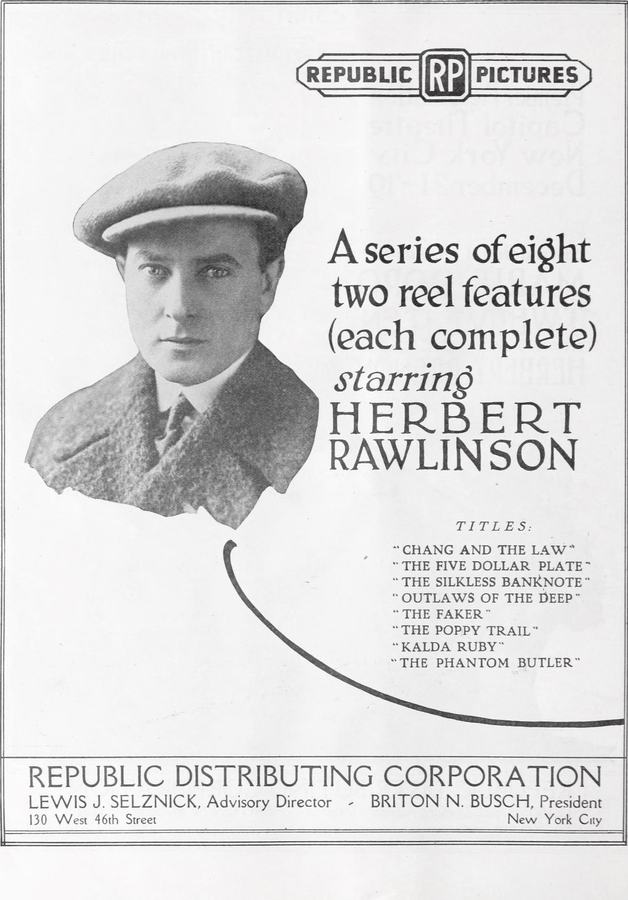
A scrap of paper, shaved dog, and a city that never sleeps on honesty—Wilson Mizner’s only surviving studio scenario still snarls a century later.
Picture the year 1920: Prohibition has just buttoned the nation’s mouth shut, paper money is still exotic enough to feel erotic, and the movies—those jittery nickelodeon sacraments—have begun to flirt with the criminal underbelly instead of merely sermonising from it. Into that hinge-decade sidles The Silkless Bank Note, a one-reel fever dream shot in the hallowed shadows of Universal’s back-lot caverns. It’s a pocket-watch of a film: twenty-four minutes that feel like rifling through someone else’s wallet and finding your own obituary tucked behind the cash.
The plot, deceptively linear, is a Möbius strip of guilt: every moral transaction rebounds. We open on bureaucratic geometry—rows of clerks stamping time-cards, a wall bristling with mug-shot mosaics—then barrel into claustrophobic streets where the air itself seems printed on low-grade stock. A minor functionary attempts to pass the titular forgery; the bill is coarse, canine, repugnant to the touch. Enter the municipal bloodhounds—detectives armed with billowing trench-coats and the kind of bowler hats that double as weapons. Cue chase, gun-cough, arterial spritz, and the dying forger’s last scramble toward sanctuary.
Sanctuary, however, is a loft where printing presses throb like iron lungs. The mastermind—played with velvet menace by Herbert Rawlinson, usually cast as upright heart-throbs—greets the hemorrhaging courier not with salves but with silence sharpened to a point. One edit later, the wounded man is accordion-folded into a barrel, nailed, rolled, and dumped into the black drink of the harbour. The only witness: a scruffy terrier whose pelt has been razored to provide the counterfeit “silk.” The dog survives, because loyalty is harder to kill than men.
What follows is a masterclass in synecdochic suspense: every close-up of the terrier’s nose is a close-up of our own moral radar. Director William J. Flynn—yes, the real-life former chief of the U.S. Secret Service—understands that crime is solved not by fingerprints but by odours, whispers, the nearly theological intuition that something is off. When Detective Arnold (also Rawlinson, in a dual role that reads like a confession) spots the shivering animal keening at the pier’s lip, the moment is framed in a single iris shot that contracts until we feel we’re peering through a keyhole at the cosmos.
The camera then literally follows the dog back through warrens of garbage and gaslight, arriving at the counterfeiter’s den just in time to prevent a second murder—this one of the only innocent creature left in the narrative. Police swarm, siren-lights painted directly onto the negative flicker like diseased halos, and the kingpin is dragged away. Morning brings the kicker: Arnold is no local flatfoot but a Secret Service plant, the empty cell a staged feint. The dog, tail wagging like a metronome of forgiveness, is adopted. Curtain.
Visually, the film hoards shadows the way misers hoard gold. Cinematographer Alfred Gosden bathes interiors in pools of tungsten so sulphuric they seem to etch the celluloid. Note the sequence inside the print-shop: presses clank like iron lungs, ink-sheets flap like ravens, and every frame is streaked with vertical scratches that mimic the terrier’s shorn fur—an accidental motif that feels preternaturally deliberate. The result is a texture somewhere between Weimar expressionism and New York grit, a full decade before Yankee Pluck tried to bottle similar lightning but flopped into rote slapstick.
Compare this to Going Straight (1916), where redemption arcs were spoon-fed like treacle. Here, redemption is a dog who doesn’t know the word, a detective who may be more criminal than the criminals, and a city whose conscience is printed on dog-hair. The cynicism is so ahead of its time it feels like it’s leaking backward from the Great Depression.
Wilson Mizner’s dialogue cards are haikus of venom. One intertitle, after the courier is shot, reads: “He clutched the wound the way a priest clutches doubt—hopelessly.” That line alone out-noirs most entire genres. Another card, flashed as the barrel sinks, quips: “The harbour swallowed him like a secret—no burp expected.” It’s gallows humour, yes, but also a meta-wink: the film itself is a secret swallowed by history, only to bob up a century later asking us to listen for the burp.
Mizner, a card-sharp turned playwright, understood confidence games at the molecular level. Every transaction onscreen—monetary, corporeal, existential—is rigged. When the detective finally flashes his Secret Service badge, the reveal lands less like catharsis than like discovering the roulette wheel was tilted from frame one. We, the audience, have been passing counterfeit emotions all along.
Herbert Rawlinson, matinee-idol handsome, weaponises that trustworthiness. As the counterfeiter, his smile is a crease you could slice bologna with; as Arnold, his brow furrows with the burden of necessary deception. The dual role—achieved via primitive split-screen—was a marketing gimmick, yet it deepens the moral migraine: hero and villain share the same jawline, the same capitalist hunger. The only thing separating them is jurisdiction.
The dog, uncredited and likely plucked from a Pasadena dog-pound the morning of shoot, gives the most honest performance. Watch his hesitation at the pier: he sniffs the void where his master vanished, turns three hundred sixty degrees, then sits—an animal who understands loss but not betrayal. If that doesn’t shatter your ventricles, check your pulse.
Recent archival restorations (UCLA, 2024) commissioned a new score by experimental duo Shellac & Sorrow—a mix of detuned banjo, typewriter clacks, and hydrophone recordings of the L.A. River. The effect is seismic: every spindle-whirr becomes a heartbeat, every dog-pad click a snare drum. During the pier disposal, the composers drop the mix to sub-audible 18 Hz—infra-sound proven to induce dread—so the viewer feels the barrel drop in the colon rather than merely sees it.
Place this film beside The Little Pirate (1917), whose juvenile hi-jinks now feel antiseptic, or Lone Star (1919), where morality wore white hats visible from orbit. Silkless occupies the liminal dusk before film noir was baptised by French critics in 1946. Its DNA reappears in von Stroheim’s Greed, in Ulmer’s Detour, even in the canine existentialism of White God (2014). Yet unlike those descendants, it refuses to anthropomorphise evil; evil here is bureaucratic, a paper trail soaked in seawater.
For gender contrast, consult A Self-Made Widow (1920), where women weaponise widowhood; Silkless is almost toxically masculine, a locker-room of trench-coats and shoulder-holsters. The lone female presence is a cigarette girl who appears for six frames, serving as exposition furniture. Feminist critique? Hardly. Historical document? Absolutely.
The only extant 35 mm print resides at UCLA’s Powell Library, gated behind nitrate protocols. A 2K scan circulates on the private torrent tracker CelluloidSphinx, watermarked with a faint LP (for Library Project). Public domain dupes on YouTube are bowdlerised—intertitles replaced, dog-pelt shots excised for “animal cruelty” fears. Cinephiles craving authenticity should petition via [email protected]; they host quarterly screenings if twenty or more requests accumulate.
Is The Silkless Bank Note perfect? The plot creaks in service of its twist, the tinting is inconsistent (night scenes fluctuate between indigo and pond-scum green), and the dog’s miraculous navigation requires suspension of cartographical disbelief. Yet perfection is a mint condition bill—this film is dog-hair tender, soft with sweat, creased by the pocket of history. It offers no moral, only a wet nose pressed against your palm reminding you that loyalty, like forgery, is a matter of who holds the engraving plate.
Seek it out. Smuggle it past the algorithms. Let it sit in your vault like a counterfeit you can’t pass, won’t pass, dare not pass—because once you do, the city knows your scent.
Verdict: 9/10 — a scarred gem that gnaws, haunts, and wags its tail at the abyss.

IMDb 7.2
1929
Community
Log in to comment.