DbcultAccessing Vault...
Cult Review
Senior Film Conservator
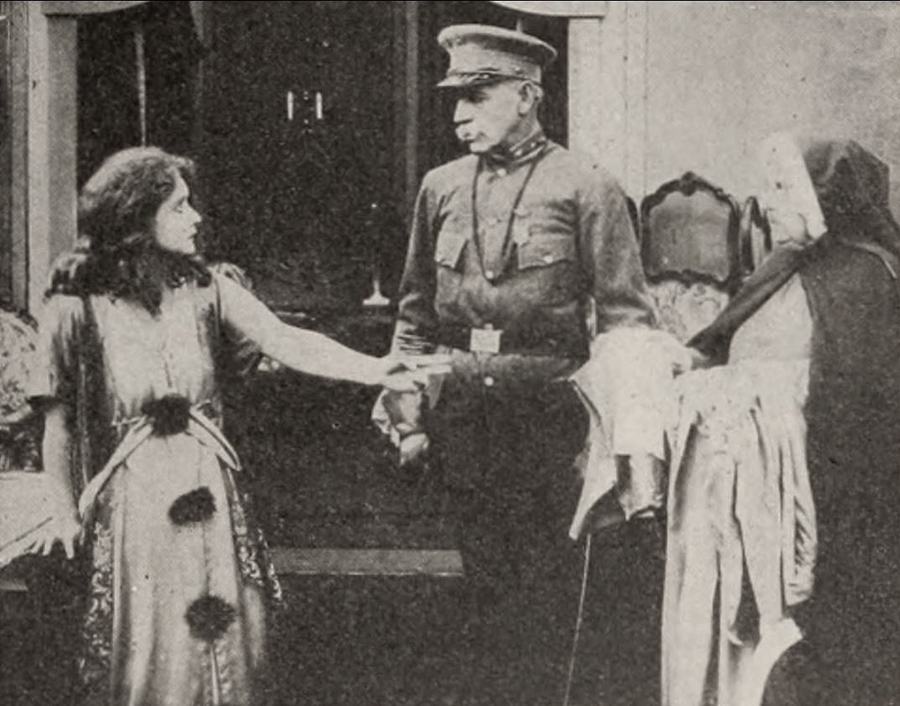
The cinematic landscape of the early 20th century, a period of fervent experimentation and burgeoning narrative sophistication, frequently served as a canvas for grand romantic tragedies intertwined with the gravitas of international politics. Among these, Bullets and Brown Eyes stands as a compelling testament to the era's capacity for intricate storytelling, presenting a narrative that is as emotionally resonant as it is politically charged. This silent film, penned by the visionary duo of J.G. Hawks and Thomas H. Ince, plunges the viewer into a maelstrom of forbidden love, familial betrayal, and the devastating ripple effects of statecraft gone awry.
At its heart, the narrative unfurls a poignant saga of star-crossed lovers, Countess Olga and Prince Carl, whose destinies are tragically entwined despite the entrenched animosity between their respective nations. Their romance blossoms in the shadow of geopolitical conflict, a fragile bloom in hostile soil. Bessie Barriscale, as Countess Olga, delivers a performance that is both delicate and fiercely passionate, her expressive eyes conveying the profound internal conflict of a woman torn between personal devotion and national allegiance. Her portrayal imbues Olga with a sympathetic vulnerability, making her a compelling figure caught in an impossible bind. Opposite her, William Desmond, as Prince Carl, embodies the noble and somewhat naive lover, his earnestness providing a stark contrast to the duplicity that soon engulfs him. Their chemistry, communicated through subtle glances and gestures characteristic of silent film acting, is palpable, lending weight to the tragic events that follow.
This central romantic conflict, reminiscent of the grand passions explored in works like Monna Vanna, quickly takes a sinister turn. Olga's brother, the calculating Count Michael, perceives her affection for Carl not as a bond to cherish, but as a strategic vulnerability to exploit. Michael, portrayed with chilling nuance by Jean Hersholt, is the architect of a deceptive scheme, leveraging his sister's love to lure Prince Carl into their country, ostensibly for a romantic rendezvous, but in reality, to imprison him. Hersholt’s performance is a masterclass in subtle villainy, his expressions shifting from feigned concern to cold calculation, revealing the depths of his Machiavellian intent without uttering a single word. His character is a stark reminder of how personal relationships can be weaponized in the ruthless pursuit of political power, a theme that resonates with the intricate deceptions found in films like The Vampires: Hypnotic Eyes, albeit with a different kind of manipulation at play.
The success of Michael's perfidious plan is depicted with an escalating sense of dread. Carl, blinded by love and trust, walks willingly into the trap. The moment of his capture is handled with commendable dramatic tension, showcasing the directorial prowess in building suspense without dialogue. However, the film wisely deviates from a straightforward narrative of triumph and defeat. Instead, it delves into the 'unintended consequences' that follow Michael's victory. The imprisonment of Prince Carl, far from being the clean, strategic maneuver Michael envisioned, unravels a complex web of moral quandaries and personal suffering. Olga is plunged into despair, her love now a tool of her brother's treachery, and her conscience a battleground. The film excels in portraying the emotional toll this betrayal takes on all characters, particularly Olga, whose anguish becomes a central emotional anchor.
The ensemble cast further enriches this intricate drama. J. Barney Sherry, a veteran of early cinema, brings a gravitas to his role, likely as a high-ranking official or a paternal figure, whose reactions to the unfolding crisis underscore the broader political ramifications. Roy Laidlaw and Wyndham Standing contribute to the intricate political backdrop, embodying figures whose allegiances and actions further complicate the narrative. Even smaller roles, such as those played by Louise Brownell, Joseph J. Dowling, and Leonard Smith, are crucial in building the world and the tension within it. It's fascinating to note the appearance of a young John Gilbert in an early role, hinting at the charismatic screen presence he would later cultivate, a stark contrast to his more prominent heroic roles in films like Don Juan.
The directorial hand of Thomas H. Ince, a titan of early Hollywood known for his innovative approach to studio production and narrative structure, is evident throughout. Ince, often credited with pioneering the 'producer system,' brought a disciplined and efficient approach to filmmaking, which allowed for complex plots to be executed with clarity and impact. The film's pacing, its use of intertitles to convey crucial dialogue and exposition, and its visual composition all speak to a sophisticated understanding of cinematic language for its time. The writing by J.G. Hawks complements Ince's vision, crafting a story that, despite its melodramatic flourishes, maintains a keen sense of psychological realism concerning its characters' motivations and dilemmas. The ability to convey such a nuanced plot without spoken dialogue is a testament to the combined genius of the writers and director, making it stand out even among other dramatic silents like The Fox Woman.
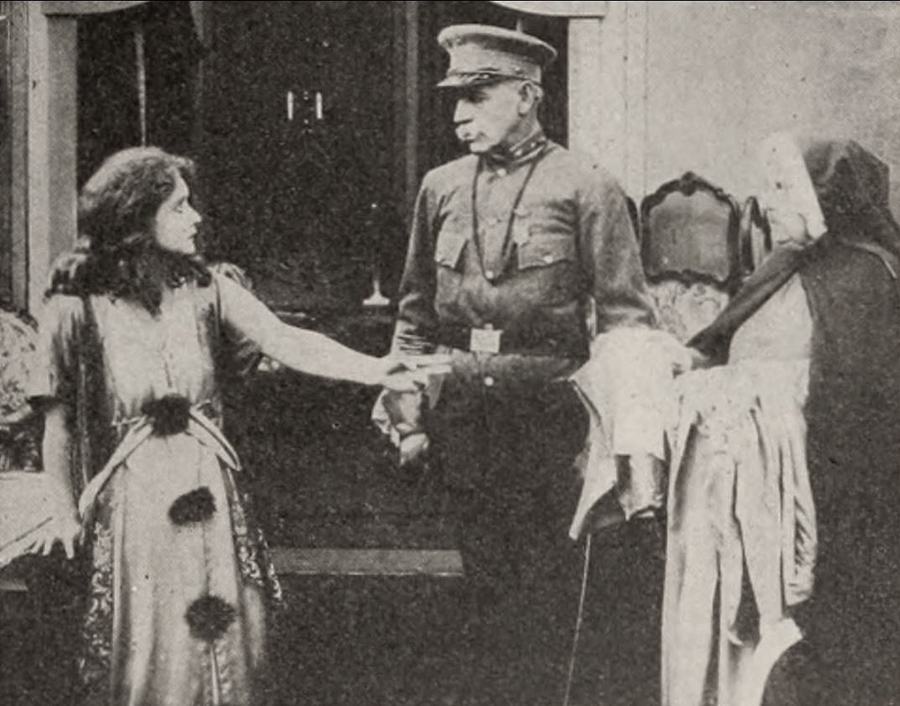
As a silent film, the onus on visual communication is paramount. The cinematography, though rudimentary by today's standards, masterfully conveys mood and tension through framing, lighting, and set design. The grand European settings, whether actual or meticulously constructed, contribute significantly to the film's atmosphere of aristocratic intrigue and national pride. The costume design, too, is instrumental in establishing character and social standing, from Olga's elegant gowns to Michael's more severe attire. The performances, relying heavily on exaggerated gestures and facial expressions, yet often tempered with remarkable subtlety, are captivating. Actors like Barriscale and Hersholt truly understood the art of conveying complex emotions through purely visual means, a skill that sets apart the enduring classics of the silent era. One might draw parallels to the visual ambition seen in other epic silent productions of the era, such as Ruslan i Lyudmila, in its attempt to create a rich, immersive world.
Beyond the surface narrative of romance and betrayal, Bullets and Brown Eyes explores profound themes. The conflict between personal love and national loyalty is central, forcing characters to make agonizing choices. Olga's predicament, in particular, highlights the devastating impact of political machinations on individual lives. The film also delves into the nature of betrayal, not just as a political tool, but as a deeply personal wound that scars relationships and consciences. Michael's actions, though initially successful, ultimately lead to unforeseen and perhaps undesired outcomes, illustrating the classic dramatic principle that even the best-laid plans can go awry. This exploration of the far-reaching consequences of a single, morally dubious act resonates with the intricate moral dilemmas presented in films like The Fifth Commandment, albeit within a different social context.
The film’s examination of power dynamics is also noteworthy. The power wielded by Count Michael, both through his position and his manipulation of his sister, is contrasted with the vulnerability of Prince Carl, despite his royal status. This interplay of power and powerlessness, of agency and victimhood, adds layers of complexity to the narrative. The resolution, or perhaps lack thereof, regarding the 'unintended consequences' leaves a lasting impression, suggesting that some wounds are too deep to heal easily, and some betrayals too profound to simply be forgotten. It’s a stark reminder of the often-brutal realities that underpin political maneuvering, a theme that echoes in the more melodramatic aspects of films like The Last Egyptian, where personal desires clash with grander societal or political stakes.
Placed within its historical context, Bullets and Brown Eyes is a fascinating artefact of early cinema. It belongs to a period when film narratives were becoming more sophisticated, moving beyond simple episodic tales to embrace complex, character-driven dramas. The cast, comprising many stalwarts of the era, showcases the acting styles prevalent before the advent of sound cinema revolutionized performance. The film's ability to engage audiences with its dramatic weight and emotional depth, despite the technical limitations of the time, speaks volumes about its enduring artistic merit. While it may not possess the grand scale of a Neptune's Daughter or the avant-garde experimentation of a Homunculus, its strength lies in its tightly woven plot and powerful emotional core.
Comparing it to other films of the era, one can see how it fits into the evolving tapestry of cinematic storytelling. Unlike the often lighter fare of a The College Widow, or the more direct action of a Via Wireless, Bullets and Brown Eyes leans heavily into the psychological drama of its characters. It shares a certain dramatic intensity with European productions of the time, such as Bryggerens datter or Lyubov statskogo sovetnika, which also explored themes of class, love, and societal pressures. The film's lasting appeal lies not just in its historical significance, but in its timeless exploration of human frailties and the destructive power of ambition when unbridled by morality. It serves as a stark reminder that even in the silent era, filmmakers were capable of crafting narratives that resonated deeply with universal human experiences, leaving an impression long after the final fade to black.
In conclusion, Bullets and Brown Eyes is more than a historical curiosity; it is a vibrant, emotionally resonant piece of cinema that offers a profound look at the intersection of love, loyalty, and political intrigue. Its masterful direction, compelling performances, and intricate narrative ensure its place as a significant contribution to early film history. It's a film that speaks to the enduring power of storytelling, proving that even without words, the human heart's deepest conflicts can be powerfully and eloquently expressed.
IMDb 6.6
1931
Community
Log in to comment.