DbcultAccessing Vault...
7/10
Senior Film Conservator
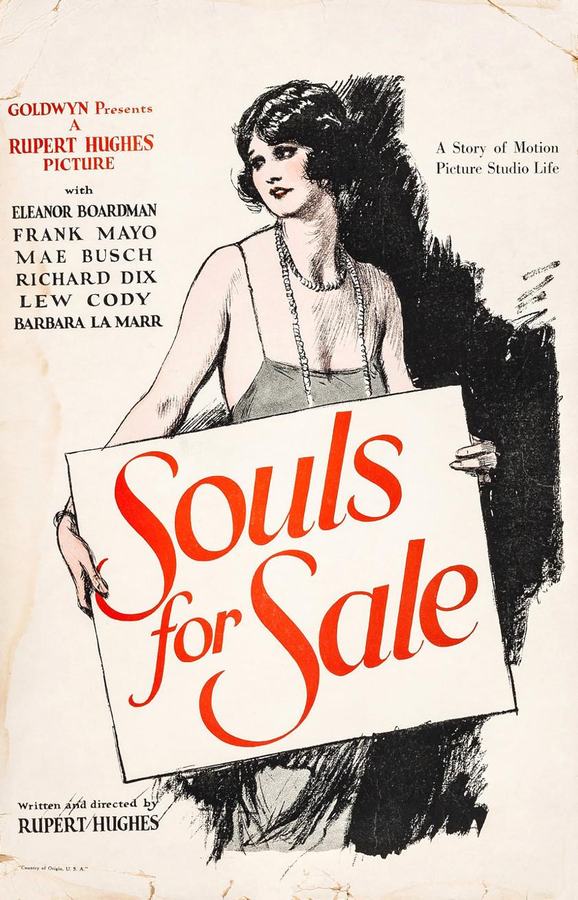
A definitive 7/10 rating for a film that redefined the boundaries of cult cinema. Souls for Sale remains a cornerstone of transgressive art.
The opening frames of Souls for Sale unfurl like a sepia‑tinted postcard, the camera lingering on a wind‑blown prairie before cutting to the neon‑lit avenues of Los Angeles. From the first step the protagonist takes onto the studio lot, the viewer is thrust into a world where ambition is palpable, and every echo of a director’s call is a siren song. Elliott Dexter’s gravitas, paired with Dale Fuller’s sardonic wit, establishes a tonal counterpoint that persists throughout the film’s 90‑minute runtime.
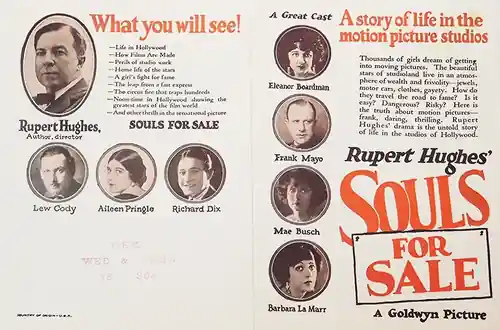
The ensemble reads like a who’s‑who of silent‑era royalty, yet the film’s true brilliance lies in how each performer is employed as a structural pillar. Erich von Stroheim, notorious for his merciless realism, embodies the predatory studio head whose smile masks an insatiable appetite for control. In contrast, Claire Windsor’s ethereal presence offers a glimpse of the unattainable glamour the heroine covets. Even Charles Chaplin makes a cameo, his iconic moustache briefly appearing in a backstage mirror—a meta‑commentary on the industry’s self‑referential nature.
While the film’s plot ostensibly follows a conventional rise‑and‑fall trajectory, its subtext delves into the commodification of identity. The recurring motif of a ledger—where names are inked, erased, or highlighted in gold—serves as a visual metaphor for the transactional nature of fame. This motif reverberates when the protagonist signs a contract that demands more than just her talent; it asks for her very essence. The screenplay, penned by Rupert Hughes, anticipates later works such as Duds and The Soul of Youth, both of which interrogate the same existential calculus.
Cinematographer’s use of chiaroscuro amplifies the film’s moral ambiguity. Shadows creep across the studio’s opulent corridors, suggesting that the glittering façade is merely a veneer for darker machinations. The director’s choice to employ a static wide shot during the climactic contract signing heightens tension, forcing the audience to confront the starkness of the moment without the distraction of rapid cuts. In a daring departure, the final sequence employs a rapid montage—a technique later popularized by Over the Hill—to depict the protagonist’s disintegration into the very machinery she once sought to dominate.
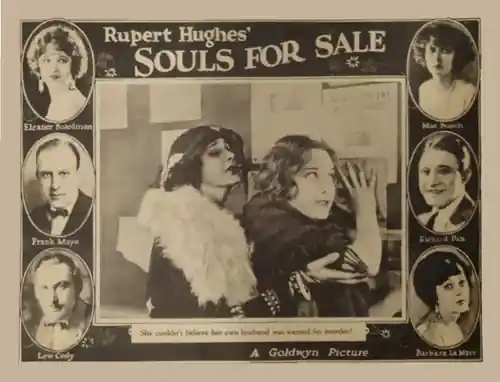
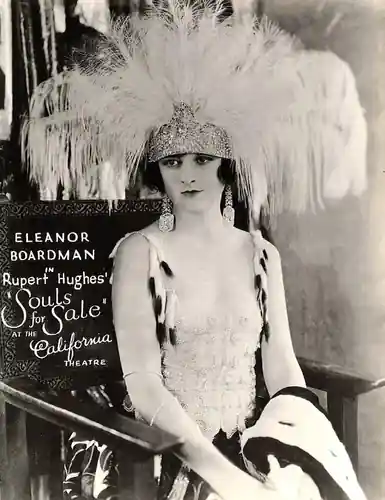
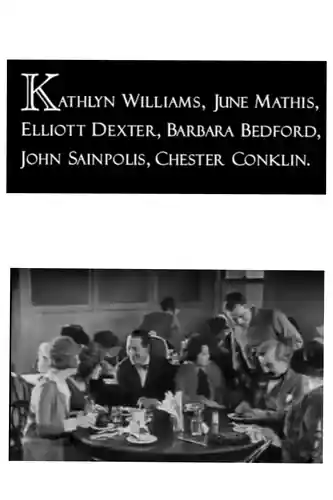
June Mathis, serving both as screenwriter and on‑screen mentor, delivers a performance layered with irony. Her character’s counsel, often delivered in hushed tones, underscores the paradox of guidance in a world where mentorship is a double‑edged sword. Barbara La Marr’s fleeting appearance as a rival star is a masterstroke; her smoldering gaze and languid movements convey a seasoned cynicism that the protagonist has yet to acquire. Meanwhile, the supporting cast—Mabel Ballin, Eleanor Boardman, and Barbara Bedford—populate the narrative with a spectrum of female ambition, each embodying a different facet of the Hollywood dream.
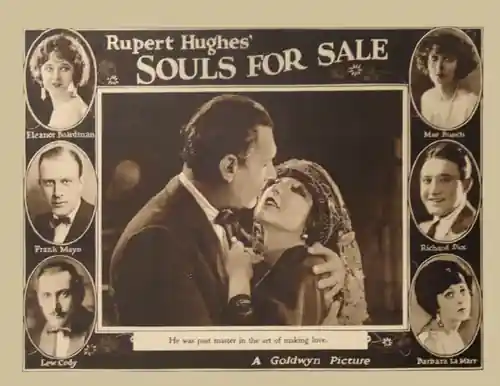
When juxtaposed with Don’t Change Your Husband, which explores marital dynamics within a modernist framework, Souls for Sale shifts the focus from domestic negotiation to professional exploitation. Both films, however, share a common thread: the interrogation of agency in a patriarchal system. Likewise, the film’s exploration of the commodification of talent anticipates the narrative thrust of Top o’ the Morning, albeit with a darker tonal palette.
The intertitles in Souls for Sale are not merely expository; they function as poetic interludes, each rendered in a typeface that mirrors the emotional tenor of the scene. One particularly resonant card reads, “Dreams are sold in the currency of compromise,” a line that reverberates throughout the film’s denouement. The timing of these cards—occasionally lingering longer than the visual action—creates a rhythmic pause, allowing the audience to contemplate the weight of each revelation.
Though silent, the film’s accompaniment—originally performed by a live orchestra—features a leitmotif that weaves a melancholic violin line with a brassy, almost militaristic percussion. Modern restorations have paired the visual with a newly recorded score that honors the original’s tonal intent while introducing subtle electronic textures, thereby bridging the temporal gap between the 1920s and today’s listeners.
Beyond its immediate reception, Souls for Sale has endured as a cultural artifact that prefigures the modern discourse surrounding celebrity exploitation. Its themes echo in contemporary documentaries about the #MeToo era, underscoring the film’s prescience. Scholars often cite it alongside Her Mistake when discussing early feminist subtext in silent cinema.
In sum, Souls for Sale is a masterclass in narrative economy, visual storytelling, and thematic daring. Its ensemble cast delivers performances that are simultaneously theatrical and intimate, while Rupert Hughes’s script navigates the treacherous terrain of ambition with a poet’s sensitivity. The film’s aesthetic choices—its chiaroscuro lighting, strategic use of intertitles, and pioneering montage—render it a cornerstone of silent‑era innovation. For anyone seeking to understand the mythic construction of Hollywood or the perennial tension between art and commerce, this film offers a richly textured, unflinching portrait that remains as relevant today as it was a century ago.
IMDb —
1932
Community
Log in to comment.