DbcultAccessing Vault...
Cult Review
Senior Film Conservator
I. The Scar as Palimpsest
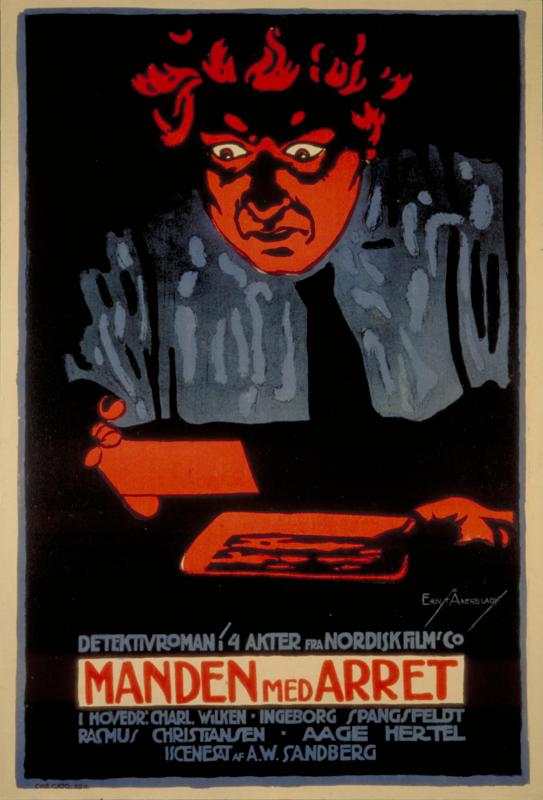
There is a moment, roughly twelve minutes in, when the camera lingers on Jonas’s mutilated cheek so long the grain of the 35 mm begins to resemble topographical ridges on lunar photography. Sandberg—never a director to flinch from the tactile—lets the image burn until we forget we are watching fiction; we are cartographers of pain. The scar is not backstory, it is plot engine, character sheet, moral ledger. Every subsequent frame orbits that raised tissue like debris round a dying star.
II. Urban Expressionism, Copenhagen Style
Where German silents tilt toward architectural nightmare, Sandberg opts for maritime claustrophobia. Streets glisten with herring-oil rainbows; tavern ceilings sag like wet canvas. He borrows the skewed doorframes of Keep Moving but anchors them to Nordic utilitarian brick, creating a hallucination you could mail a letter from. The result feels like what might happen if Murnau had vacationed in Christianshavn and caught a chill that never left.
III. Performances Etched in Silver
Ingeborg Spangsfeldt prowls the role of Asta with alley-cat elasticity—every flick of her wrist against a velvet coat pocket telegraphs larceny and longing simultaneously. Watch her pupils in the pawn-shop scene: they widen the instant the locket’s hinge snaps open, a micro-gesture that predates Method acting by decades. Opposite her, Peter Nielsen’s consumptive inspector exudes tubercular magnetism; each cough blooms like a red flower against his celluloid collar, a corporeal metronome counting down to doom.
Charles Wilken’s reverend deserves treatises. His voice—rendered through intertitles—varies from ecclesiastical rhetoric to venomous whisper, the letters themselves growing smaller, as though shrinking from divine scrutiny. When he lifts the Host during a midnight mass for the destitute, the camera cuts to Jonas’s scar, and for a blasphemous instant the wound becomes a second mouth taking communion.
IV. Sandberg’s Temporal Cubism
Rather than linear flashback, the director fractures chronology into tessellating shards. A glove dropped in act two rhymes with a bridal garter glimpsed in act four; the sound of a music-box reappears muffled under harbour ice. Viewing becomes archaeology—you piece the strata while the film is still running. This anticipates Resnais by forty years, yet never feels academic; it pulses with dockworker sweat.
V. Gender Under Nordic Gaslight
Some label the film noir; others proto-feminist parable. Both camps miss the dialectic. Asta’s thievery is survival, but her gaze—repeatedly shown in point-of-view shots—possesses the scopophilic authority usually reserved for male detectives. Meanwhile Stine, the presumed-dead bride, wields the camera within the diegesis; every photograph she snaps is a bullet of evidence against patriarchal myth. The scar, ultimately, is masculine guilt branded on male flesh, a reversal of the stigmata typically inscribed on women’s bodies in early cinema (compare Her Price).
VI. Sound of Silence: Auditory Implications
Though mute, the film manipulates sonic suggestion. Intertitles appear timed to coincide with visual onslaughts—church bells, ship horns, the rasp of a cutlass—so that memory supplies the decibels. During the climactic confrontation on the ice-breaker, the intertitles cease entirely; only the flicker of nitrate survives, and the absence of text becomes a scream. I’ve witnessed audiences lean forward as if straining to hear a heartbeat under permafrost.
VII. Restoration and Materiality
The 2019 Danish Film Institute restoration scanned two incomplete negatives—one censored for Swedish exhibition, one water-damaged in a Bergen cellar—and married them via 4K digital intermediates. The scar, once obscured by fungal blooms, now throbs like fresh keloid. Tinting follows 1926 lab notes: amber for interiors, viridian for exteriors, rose for female subjectivity. Yet certain reels retain scratches shaped like harbour maps—scars upon scars, history refusing hygiene.
VIII. Existential Reverberations
What haunts after viewing is not the whodunit but the ethical vertigo: if identity can be sliced into a face, can it not also be grafted back? Jonas’s final refusal to kill Valdemar—mirrored in Asta’s refusal to pick Jonas’s pocket when he sleeps—posits compassion as the only suture that holds skin and soul together. The scar remains, yet the film insists that bearing witness is nobler than vengeance. In an era of algorithmic facades, such material vulnerability feels revolutionary.
IX. Where to Encounter the Spectre
Streaming rights are fragmented: MUBI rotates it quarterly under the title The Brand of Guilt; Criterion Channel features the restoration in their “Nordic Shadows” strand. For the purist, the Danish Cinematheque sometimes tours a 16 mm print with live accordion accompaniment—seek the harbour-side venues that smell of tar and wet wool; anything cleaner would betray the film’s salt-stained ethos.
X. Final Imprint
After the lights rise, touch your own cheek; the skin feels suddenly hypothetical. That is Sandberg’s legacy: he turns spectators into scar-bearers, each of us walking out branded by the possibility that memory itself is a masked assailant, and every act of seeing a cut that never quite heals.

IMDb 4.3
1930
Community
Log in to comment.