DbcultAccessing Vault...
6.6/10
Senior Film Conservator
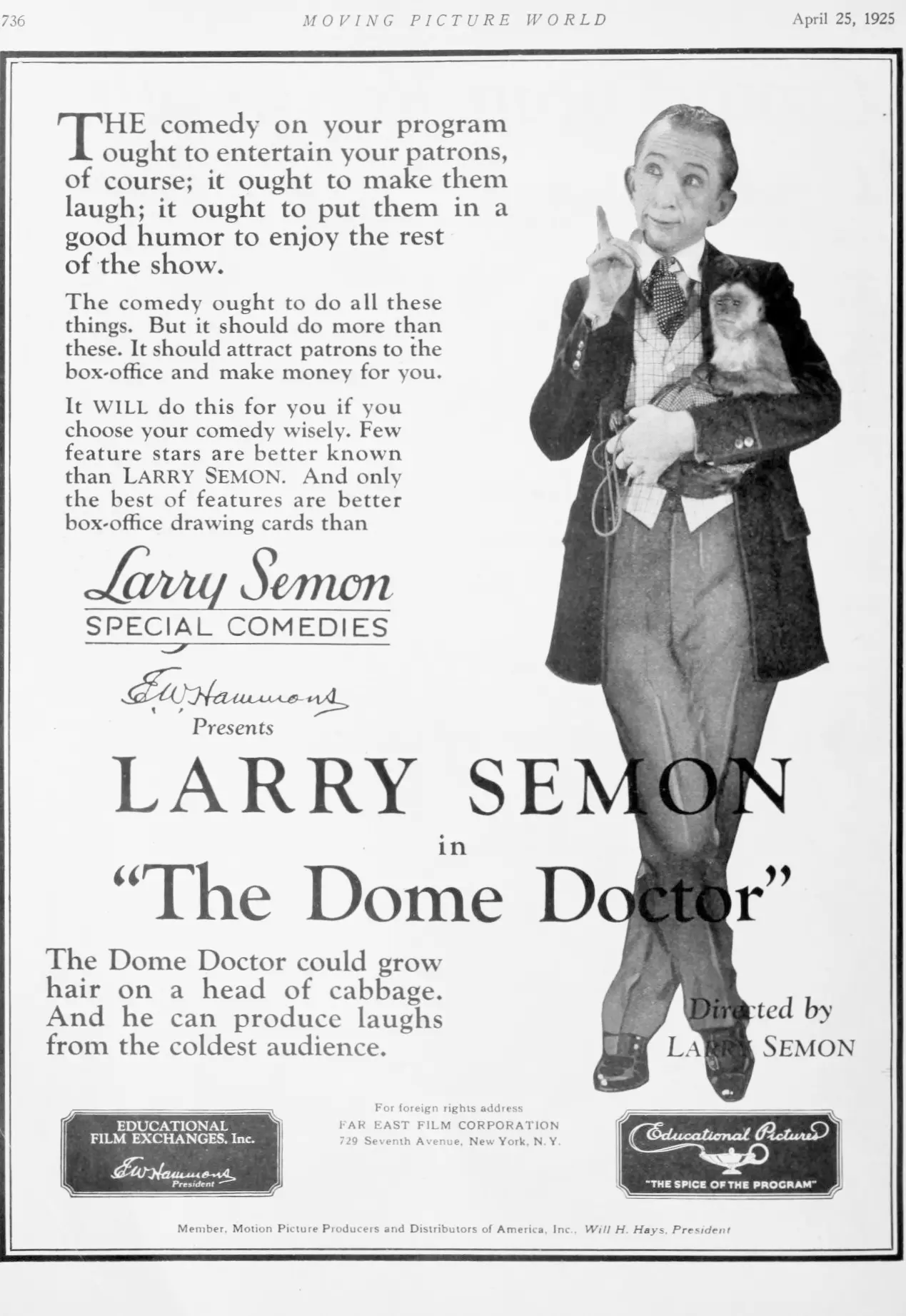
A definitive 6.6/10 rating for a film that redefined the boundaries of cult cinema. The Dome Doctor remains a cornerstone of transgressive art.
To understand the frantic, almost hallucinatory energy of The Dome Doctor, one must first reconcile with the peculiar legacy of Larry Semon. Often overshadowed by the stoic athleticism of Keaton or the pathos-driven acrobatics of Chaplin, Semon was a creature of pure, unadulterated velocity. In this 1925 short, the 'white-faced clown' of the silent era reaches a pinnacle of structural ingenuity, transforming a simple beauty parlor and an adjacent grocery store into a laboratory of kinetic destruction.
The film’s brilliance lies in its spatial economy. By positioning a high-end beauty establishment directly beside a gritty grocery store, Semon and his co-writers, C. Graham Baker and Charlie Saxton, create a friction between the refined and the raw. Larry, as the titular 'Dome Doctor,' is not merely a hairdresser; he is a performer of grooming rituals, an artist whose medium is the vanity of the suburban elite. His obsession with the grocer’s daughter (Dorothy Dwan) provides the emotional tether, but the real star is the environment itself.
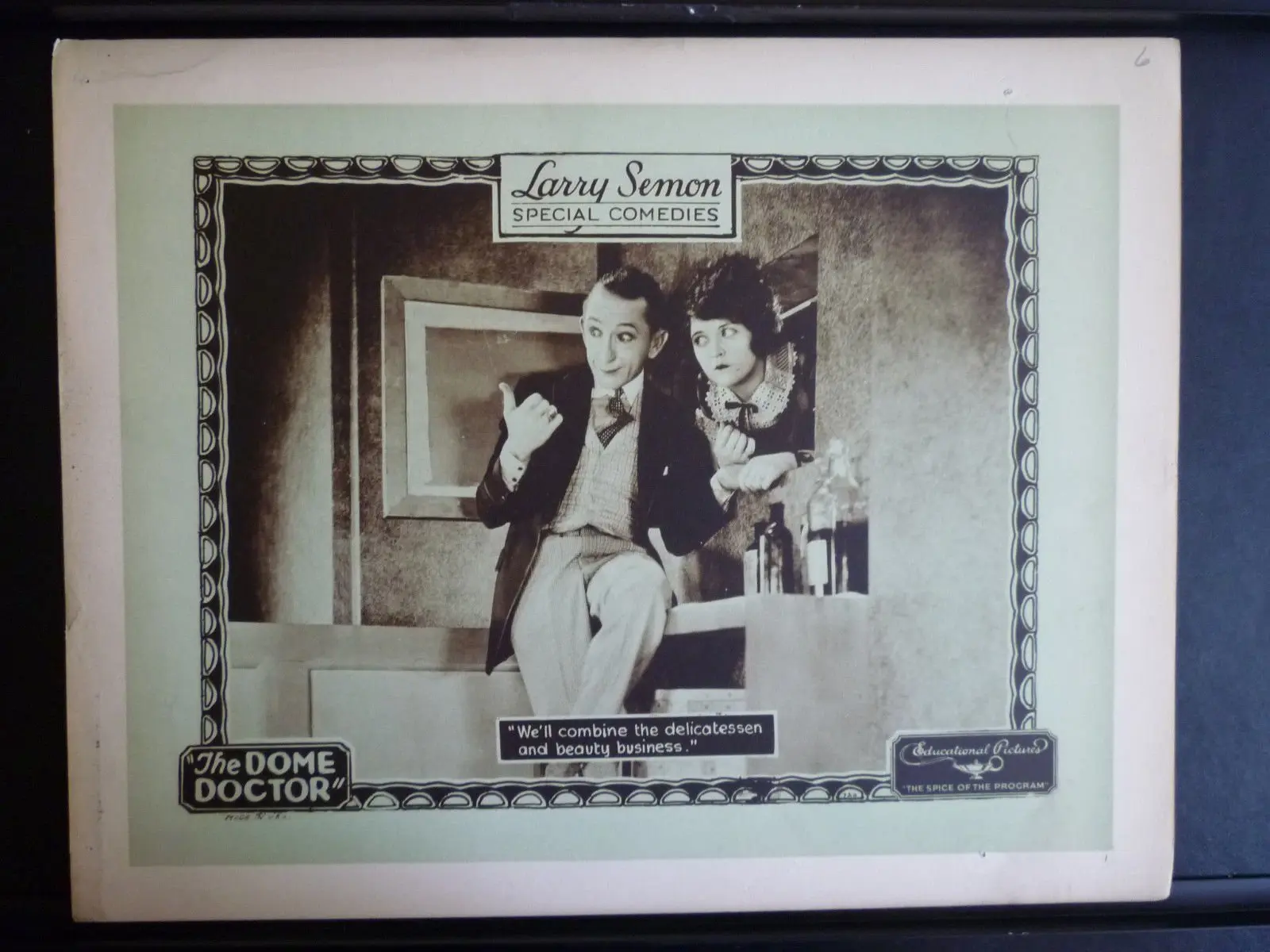
Unlike the more grounded realism found in Hick Manhattan, *The Dome Doctor* leans into the surreal. The partition between the two shops is less a wall and more a porous membrane through which chaos leaks. We see a sophisticated interplay of props—where hair tonic and flour barrels become interchangeable instruments of mayhem. This is not merely a series of disconnected gags; it is a meticulously choreographed symphony of movement that rivals the aerial daring seen in Look Out Below!.
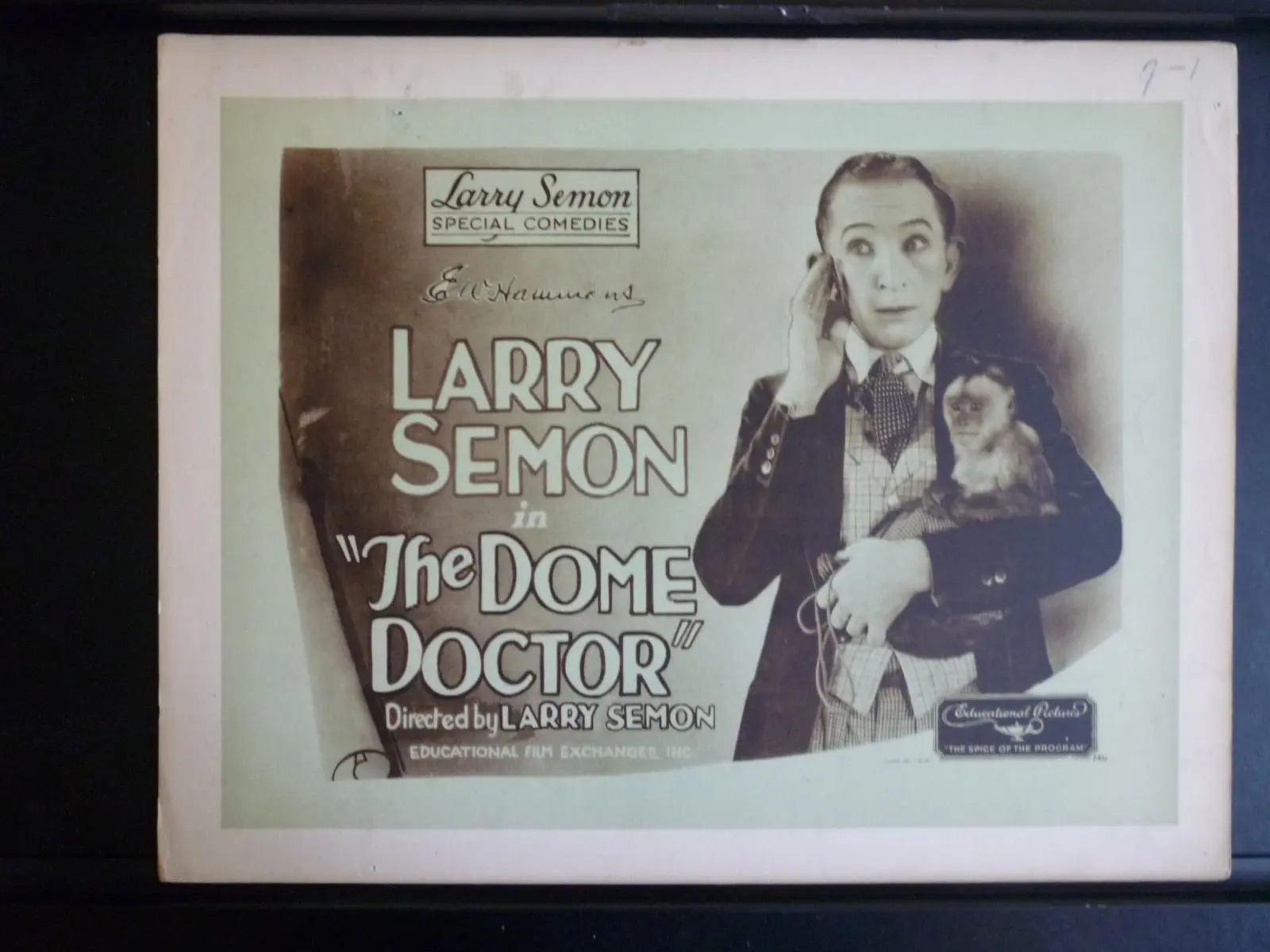
Semon’s performance is a study in hyper-expressivity. His face, coated in that iconic thick white powder, functions as a blank canvas upon which every shock, flirtation, and realization is painted with broad, unmistakable strokes. In the beauty parlor scenes, his movements are feline—precise until they are catastrophic. The way he handles a curling iron suggests a man who views himself as a surgeon, a 'doctor' of the cranium, yet his inherent clumsiness betrays his aspirations.
The supporting cast, featuring stalwarts like Grover Ligon and Earl Montgomery, provides the necessary ballast for Semon’s flighty energy. Frank Alexander, often the heavy in these productions, offers a formidable physical presence that heightens the stakes of the grocery store encounters. When compared to the ensemble dynamics in Kids and Kidlets, the chemistry here feels more refined, more attuned to the specific rhythms of the two-reel format.
While silent films are often perceived as flat, the cinematography in *The Dome Doctor* utilizes the depth of field within the shop interiors to create a sense of impending doom. There is always something happening in the background—a customer reacting, a shelf trembling, a romantic rival lurking. The lighting, though standard for the period, manages to highlight the textures of the era: the glossy sheen of hair oils against the dusty matte of the grocery’s dry goods.

This contrast is essential. It reflects the broader cinematic shift of the mid-20s where filmmakers began to experiment with more complex set designs. While films like Bella Donna focused on exoticism and high-stakes drama, Semon found the exotic in the everyday. He found the drama in a sagging shelf or a misplaced wig. The film’s pacing is relentless, a hallmark of Semon’s direction, rarely allowing the audience a moment of repose before the next set-piece begins.
What distinguishes *The Dome Doctor* from contemporary works like Singer Jim McKee or the more somber John Heriot's Wife is its absolute refusal to take its narrative seriously. The plot—a hairdresser in love with a grocer’s daughter—is merely a skeleton upon which Semon hangs his increasingly elaborate visual puns. It is a cinema of attraction in its purest form.
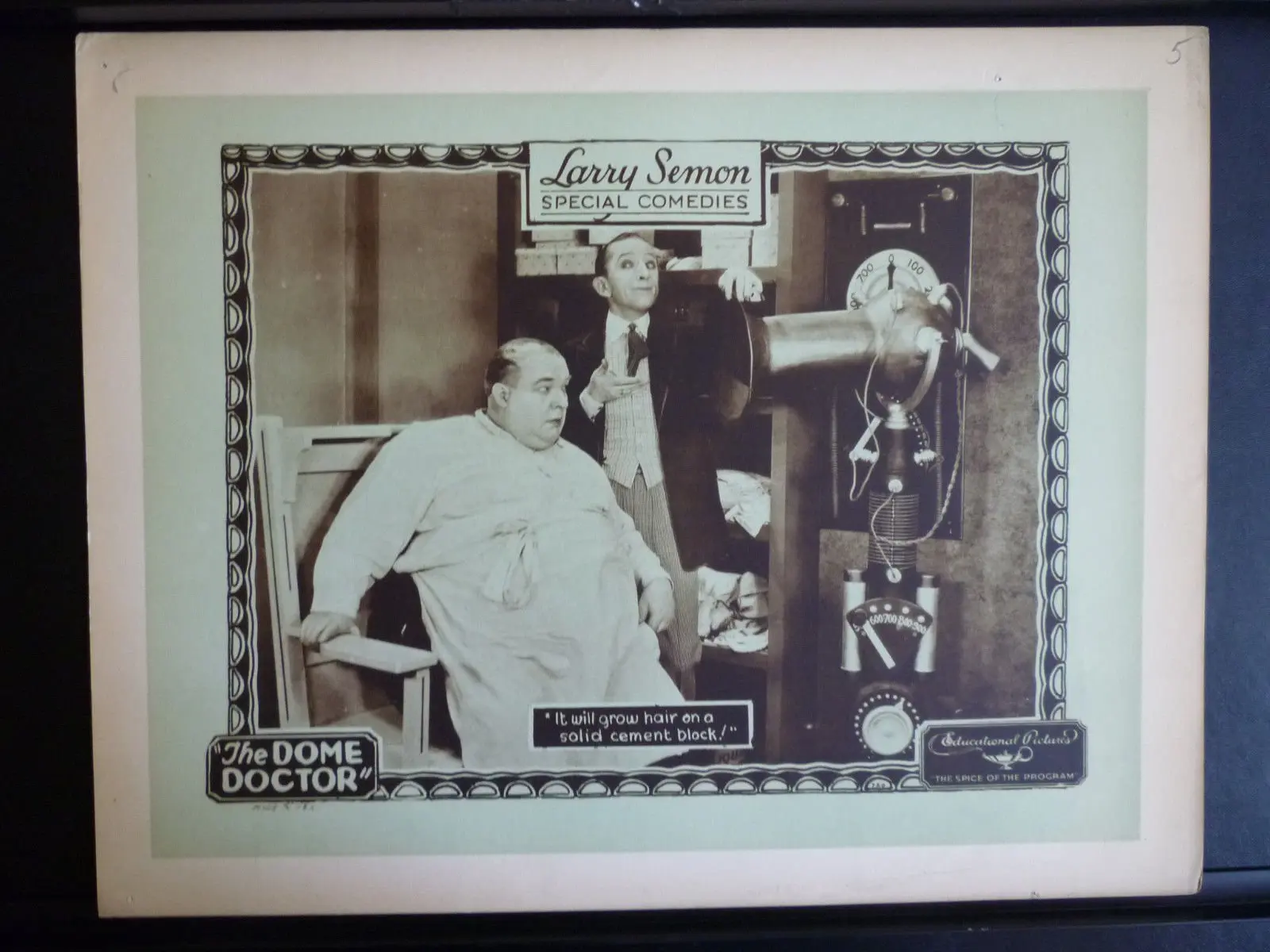
The 'doctoring' of the domes (heads) becomes a metaphor for the reorganization of social order. Larry attempts to fix, to preen, and to beautify, but his efforts always result in a more honest, chaotic reality. There is a subcurrent of working-class struggle here, albeit buried under layers of custard and soot. The grocer represents the stern, pragmatic father figure, while Larry represents the dreamer, the artist, the 'doctor' of an intangible aesthetic. This conflict is resolved not through dialogue, but through the shared experience of physical calamity.
One cannot discuss a Larry Semon film without acknowledging the sheer peril of the stunt work. While *The Dome Doctor* is more contained than his later features, it still possesses that 'how did they survive that?' quality. The interaction between the human body and the mechanical world is central. Whether it's the misuse of salon equipment or the collapse of grocery displays, the timing is impeccable. This precision is what separated the major comedy stars from the myriad of imitators.
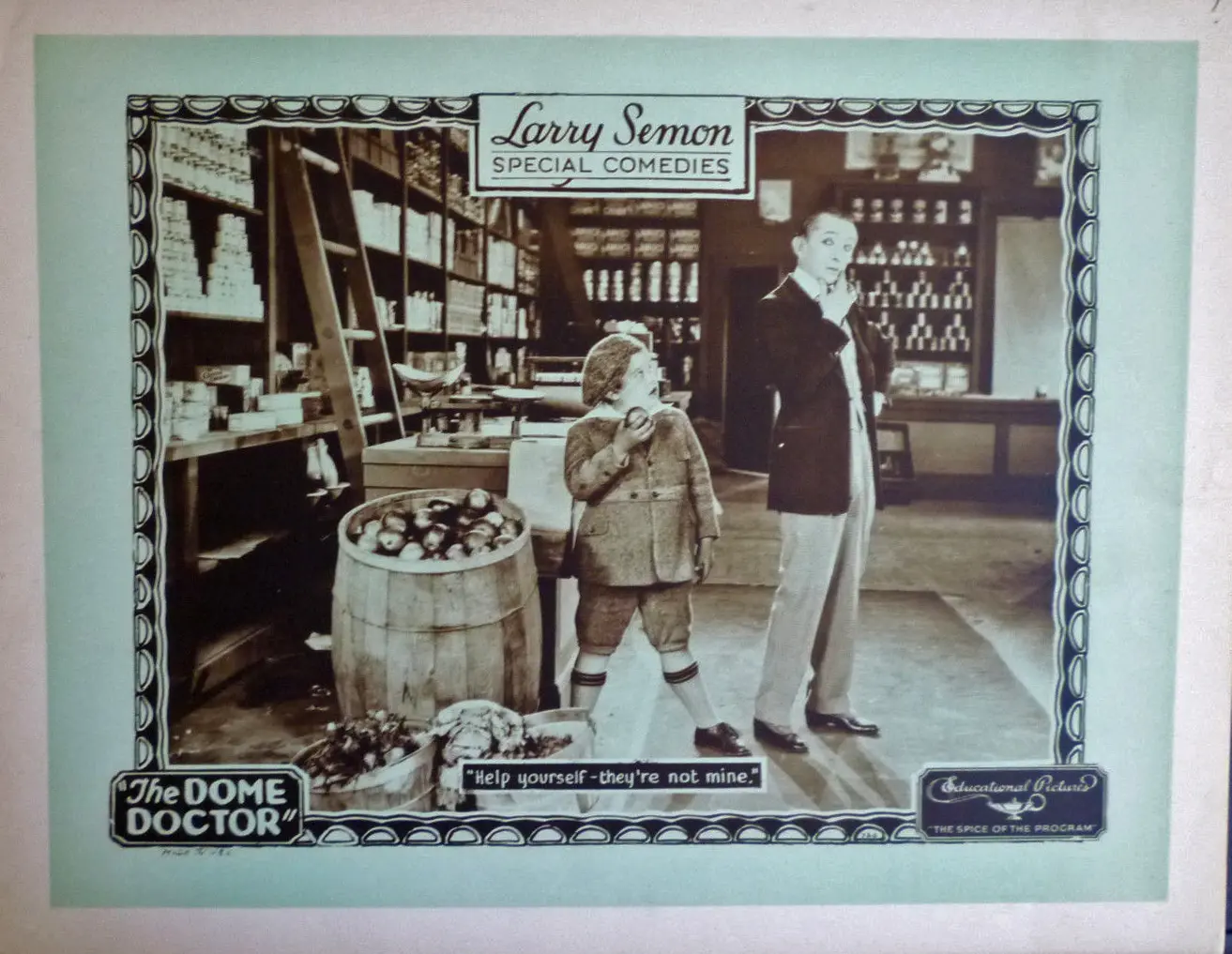
Consider the way Semon utilizes the vertical space of the grocery store. It isn't just about the floor; it's about the heights, the rafters, and the precarious stacks of cans. This 3D approach to a 2D medium was a precursor to the more elaborate stunts seen in Up and Going. Semon’s background as a cartoonist is evident in every frame; he treats his characters like ink-and-paint figures who can be stretched, squashed, and subjected to impossible physics without losing their fundamental essence.
In the pantheon of 1925 releases, *The Dome Doctor* stands as a testament to the enduring power of the short-form comedy. While the industry was moving toward feature-length epics like Willy Reilly and His Colleen Bawn or the thematic depth of Builders of Castles, Semon remained committed to the concentrated hit of the gag. He understood that a well-timed fall or a perfectly executed double-take could convey more than ten minutes of intertitles.
Comparing this work to international offerings of the time, such as the German Der verlorene Schuh or the Soviet Minaret Smerti, highlights the uniquely American obsession with industrial speed and consumerist spaces. *The Dome Doctor* is inherently about the American storefront, the hustle of the immigrant or working-class striver, and the absurdity of the service industry. It lacks the dark romanticism of Eine weisse unter Kannibalen, but it replaces it with a manic optimism that is equally compelling.
Ultimately, *The Dome Doctor* is a film about transformation. Larry wants to transform the customers' hair; he wants to transform himself from a mere employee into a suitor worthy of the grocer’s daughter; and Semon wants to transform the mundane setting of a shop into a site of cinematic wonder. The film succeeds on all these fronts, even if the 'transformation' usually involves a generous coating of soot or a broken window.
It is a reminder of a time when cinema was discovery. Every gag was a new way to see the world. When we watch Larry Semon today, we aren't just looking at old jokes; we are looking at the foundational grammar of visual storytelling. The film may not have the philosophical weight of Everyman's Price, but its price—a few reels of film and the sweat of its performers—purchased a timeless joy. It is a vibrant, loud (in spirit), and colorful (in imagination) slice of 1920s life that deserves its place in the archives of comedy history.
Final Verdict: For fans of the silent era, *The Dome Doctor* is an essential artifact. It showcases Semon at his most disciplined and his most creative. While his career would eventually face the challenges of the sound era and shifting audience tastes, this film remains a pristine example of why he was once considered a king of the comedy lot. It is fast, it is furious, and above all, it is undeniably funny.
IMDb 6.6
1925
Community
Log in to comment.