DbcultAccessing Vault...
Cult Review
Senior Film Conservator
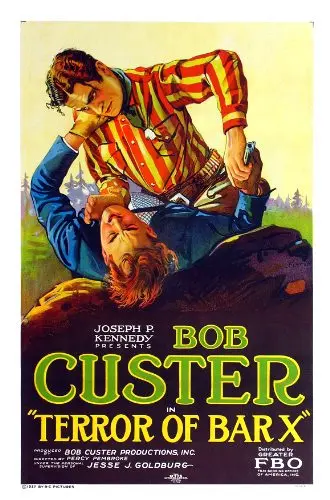
Is 'The Terror of Bar X' worth watching today? Short answer: yes, absolutely, especially if you possess a genuine fondness for the foundational narratives of the American Western. This film, while undeniably a product of its era, offers a surprisingly robust framework for understanding the genre's enduring appeal, though it won't resonate with those seeking revisionist takes or complex psychological depth.
This is a film best suited for the purist, the enthusiast who can appreciate the earnest simplicity and moral clarity that defined early cinema's take on the frontier. It is decidedly not for viewers who demand intricate character arcs, morally ambiguous protagonists, or a deconstruction of genre tropes.
In an era saturated with deconstructed narratives and morally grey characters, there's a certain refreshing honesty to a film like 'The Terror of Bar X'. It doesn't pretend to be anything other than what it is: a straightforward Western with clear heroes, dastardly villains, and stakes that feel genuinely weighty within its established world. While its age is apparent in certain technical aspects, the core storytelling remains surprisingly effective, pulling you into its dusty, high-stakes drama.
It works. But it’s flawed.
This film works because of its unwavering commitment to classic Western tropes, delivering a clear-cut battle between good and evil with earnest performances and a surprisingly effective sense of escalating dread. It fails because its narrative predictability, while comforting to some, offers little in the way of genuine surprise, and the pacing occasionally drags in its middle act. You should watch it if you appreciate the simplicity and moral clarity of early Westerns, enjoy well-staged action sequences, and are curious about the genre's historical evolution.
The film centers on Jim Carson, played by Walter Maly, a young rancher fighting a losing battle to preserve his family’s Bar X ranch. Maly imbues Carson with a stoic determination, making his struggle palpable. His adversary is the ruthless land baron Silas Blackwood, brought to life with menacing conviction by Duke R. Lee. Lee’s Blackwood isn’t just a mustache-twirling villain; he’s a force of nature, an embodiment of unchecked greed that feels genuinely threatening.
Blackwood, aided by his nefarious henchman 'Snake' Peterson (William Ryno, whose sneering portrayal adds a layer of reptilian menace), employs every dirty trick in the book – from cattle rustling to burning homesteads – to drive smaller ranchers off their land. The stakes are clear: control of the entire valley. This escalating 'terror' is the film’s central conflict, a slow burn of intimidation that threatens to consume the community.
Into this volatile mix rides Tex Randall, a mysterious, skilled rider portrayed by Jack Castle. Castle's Randall is the quintessential wandering hero, a man of few words but decisive action. His arrival is less a deus ex machina and more a catalyst, igniting the dormant resistance within the valley. He’s a man with a shadowy past, yes, but his purpose becomes crystal clear when he's drawn into Carson’s plight, especially after Carson’s spirited sister, Lily (Ruby Blaine), becomes a target of Blackwood’s increasingly desperate threats.
Blaine’s Lily isn't just a damsel in distress; she possesses a fiery independence that makes her a compelling counterpoint to the masculine frontier. As Randall and Carson unite, the film expertly unravels a deeper conspiracy, revealing that Blackwood's greed is tied to a forgotten gold claim hidden directly on Bar X land. This twist, while perhaps not shocking to modern audiences, provides a satisfying escalation, transforming a simple land dispute into a full-blown treasure hunt, culminating in a climactic showdown that promises to decide the very soul of the valley.
The ensemble cast of 'The Terror of Bar X' largely delivers on the promise of their archetypes. Walter Maly, as Jim Carson, anchors the film with a believable sense of responsibility and quiet courage. He isn't a flamboyant hero, but a man pushed to his limits, and Maly conveys this internal struggle effectively. His performance grounds the more fantastical elements of the Western.
Jack Castle, as Tex Randall, embodies the enigmatic stranger with aplomb. His stoic gaze and economical movements speak volumes, allowing the audience to project their own ideas onto his mysterious past. It’s a performance that relies more on presence than dialogue, a common but effective approach for the era. One particular scene, where he silently disarms two of Blackwood’s men with a flick of his wrist, truly showcases his understated charisma. This kind of physical storytelling is often overlooked in modern cinema.
Ruby Blaine, as Lily Carson, stands out. She injects much-needed vitality into the proceedings. While her character could easily have been a mere plot device, Blaine gives Lily an agency and spirit that is refreshing. Her defiant glare at Duke R. Lee's Blackwood in the saloon scene is a powerful moment, asserting her character's strength in a male-dominated narrative. It’s a performance that feels ahead of its time, echoing the strength of characters seen in later, more progressive Westerns.
Duke R. Lee, as Silas Blackwood, is the film's undeniable villainous highlight. He chews scenery with relish, yet never descends into cartoonishness. His booming voice and imposing stature make him a truly formidable antagonist. The scene where he coolly threatens a group of small ranchers, his eyes burning with cold ambition, is genuinely unsettling. He makes you believe his 'terror' is real, a quality often missing in lesser Western villains. Comparing his authoritative presence to the gravitas of George Arliss in Disraeli, albeit in a completely different genre, highlights a shared mastery of commanding the screen.
Bob Custer, in a supporting role as a helpful ally, brings a dependable everyman quality, while Roy Bassett, as a wise old ranch hand, provides a comforting, paternal presence that grounds the more dramatic events. William Ryno’s 'Snake' Peterson is a slimy, memorable henchman, his every appearance signaling impending trouble. The cast, as a whole, understands the assignment, delivering performances that, while broad by today's standards, are perfectly suited for the film's genre and era.
The direction, while uncredited to a single individual in the traditional sense for early films, demonstrates a clear understanding of Western aesthetics. The pacing, though occasionally deliberate, builds tension effectively, particularly in the lead-up to the final confrontation. There's a commendable effort to stage action sequences with clarity, even if the limitations of early filmmaking are evident. The climactic shootout, for instance, might lack the rapid-fire editing of modern blockbusters, but its spatial awareness and impact are undeniable. Each bullet feels consequential.
The cinematography is where 'The Terror of Bar X' truly shines. The sweeping vistas of the Western landscape are captured with an eye for grandeur, transforming the natural environment into a character in itself. The wide shots of riders silhouetted against a vast sky are iconic, evoking a sense of both freedom and isolation. There’s a particular shot of the Bar X ranch at dusk, bathed in the soft glow of the setting sun, that beautifully conveys the beauty and vulnerability of the land being fought over.
The use of natural light and shadow adds a dramatic flair, particularly in interior scenes that enhance the mood of suspense or despair. One could draw parallels to the stark, evocative landscapes that would define later Westerns, suggesting an early, intuitive grasp of the genre's visual language. The film understands that the West is not just a setting, but a state of being, a canvas for human struggle. It avoids the theatrical flatness that sometimes plagues other films of its period, like certain moments in So This is Eden, by consistently leveraging its environment.
The film's pacing is a measured trot rather than a full gallop for much of its runtime. This deliberate approach allows for the slow burn of Blackwood’s oppression to truly sink in, building a sense of dread before the hero's decisive intervention. While some modern viewers might find the middle act a touch slow, this pacing is crucial for establishing the stakes and the widespread impact of the 'terror' gripping the community. It’s not a frenetic action film, but a drama that builds towards its explosive climax.
The tone is consistently earnest and morally unambiguous. Good is good, evil is evil, and justice, while hard-won, is ultimately served. This clarity is one of the film’s strengths, providing a comforting narrative certainty that many contemporary films eschew. There are moments of genuine tension, particularly when Lily is threatened, but also splashes of frontier humor and the promise of romance, creating a balanced emotional landscape. It maintains a consistent mood throughout, a quality that makes it feel cohesive, unlike some experimental narratives of the time such as Le rêve.
Yes, 'The Terror of Bar X' is worth watching today for specific audiences. It offers a clear window into the formative years of the Western genre. It provides a straightforward, morally clear narrative. It showcases earnest performances from its cast. It features impressive cinematography for its era. It is a valuable historical artifact for film students and genre enthusiasts.
"The Terror of Bar X" might not redefine the Western genre, but it certainly exemplifies its foundational strengths. It’s a film that thrives on its simplicity and earnest delivery, offering a compelling slice of frontier drama that, despite its age, still holds a rugged charm. While it won't surprise you with narrative twists or complex moral quandaries, its commitment to classic storytelling, bolstered by strong performances – particularly from Duke R. Lee – and impressive cinematography for its time, makes it a worthwhile watch. It’s a testament to the enduring appeal of clear-cut justice in a lawless land. This isn't just a relic; it's a sturdy foundation upon which countless Westerns were built, and understanding it enriches your appreciation for the genre as a whole. Don't expect a revolution, but do expect a solid, satisfying ride into the sunset.
IMDb —
1930
Community
Log in to comment.