DbcultAccessing Vault...
Cult Review
Senior Film Conservator
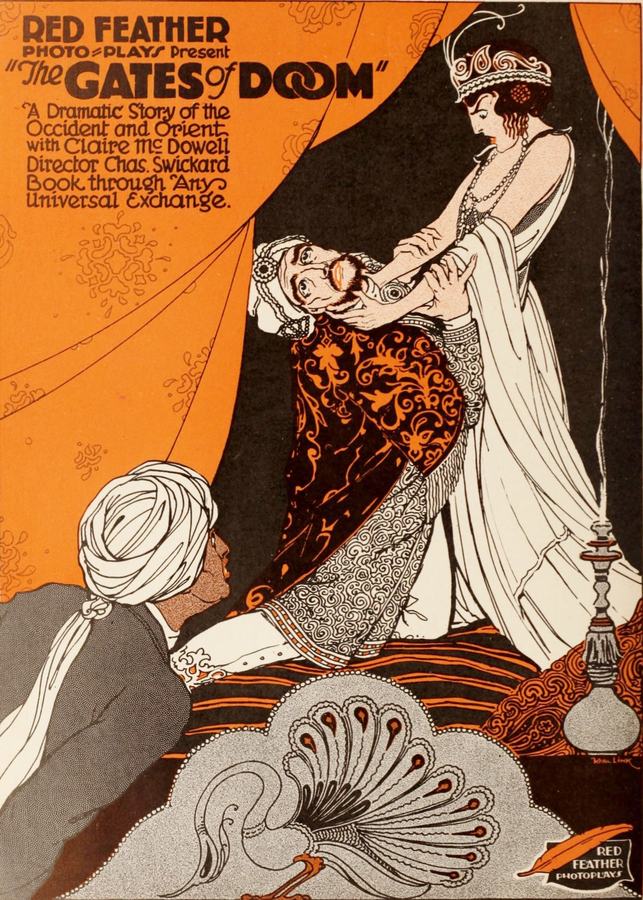
Stepping back into the nascent years of cinematic storytelling, one occasionally bumbles upon a forgotten gem whose narrative ambition and emotional intensity far outstrip the technical limitations of its era. Such is the case with "The Gates of Doom," a sprawling silent film from 1919 that, even a century later, manages to captivate with its intricate plot, grand thematic scope, and relentless dramatic momentum. Directed with a flair for the theatrical, this picture isn't merely a relic; it's a testament to the enduring power of human drama, meticulously crafted to elicit every conceivable emotion from its audience. It's a journey into a bygone era of filmmaking, yet its core concerns—love, betrayal, sacrifice, and the relentless pursuit of justice—remain strikingly universal.
From its very inception, "The Gates of Doom" plunges us headfirst into a maelstrom of illicit passion and tragic consequence. The film opens with Captain Unger, portrayed with a poignant earnestness by Mark Fenton, pouring out his heart to Captain Duane. His confession isn't merely about love; it's a desperate plea for the future of his daughter, Agatha, born of a forbidden union with Indore, a Hindoo woman. This initial exposition, delivered with the expressive gestures characteristic of the silent screen, immediately establishes a tone of impending doom. The air is thick with foreboding, a palpable tension that suggests this love, however profound, is destined for a sorrowful end. And indeed, Unger's life is swiftly extinguished by a poisoned decanter, a nefarious act orchestrated by Indore's vengeful princely husband. Indore's subsequent attempt at a shared demise is brutally interrupted, condemning her to a life of enslavement within the very walls that should have offered sanctuary. The rapidity with which tragedy strikes in these opening scenes is a masterclass in silent film pacing, leaving the viewer breathless and emotionally invested from the outset.
The narrative then elegantly pivots, transporting us to the seemingly serene landscapes of England, where Agatha, now under the benevolent guardianship of Captain Duane, blossoms into womanhood. This transition provides a momentary respite, a delicate interlude before the inexorable pull of destiny draws our protagonists back to the tumultuous heart of India. Duane, played by an earnest Tommie Dale, embarks on this return journey with his new bride, Florence, setting the stage for a fresh wave of intrigue. The introduction of Grand Duke Alexis, a character whose manipulative prowess is unsettlingly effective, injects a potent dose of psychological torment into the unfolding drama. Alexis, leveraging Florence's past acquaintance and her burgeoning jealousy towards Agatha, masterfully weaves a web of suspicion, convincing Florence of an imagined infidelity between Duane and the innocent Indian girl. This particular plot device, while perhaps melodramatic by modern standards, was a staple of the era, brilliantly designed to heighten emotional stakes and drive character actions.
Agatha's subsequent journey into the princely palace, fueled by Alexis's tantalizing hint that her mother might still be alive, forms the core of the film's second act. Lina Basquette, as Agatha, embodies a compelling blend of innocence and burgeoning resilience. Her confrontation with the prince is fraught with peril, a chilling sequence that escalates from evasive answers to a horrifying assault. It is here that the film unleashes one of its most powerful moments: Indore, hearing her daughter's desperate scream, emerges from the shadows, a spectral figure of maternal vengeance. Her swift, decisive act of stabbing the prince is a cathartic release, a moment of profound justice that transcends the confines of a simple plot point. The immediate, heartbreaking recognition between mother and daughter, captured in a fleeting embrace, is a testament to the raw, visceral power of the silent screen, conveyed through intense facial expressions and body language. However, this fragile reunion is brutally cut short, paving the way for further chaos.
The aftermath of the prince's death is nothing short of pandemonium. Jang Sahib, the malevolent hunchback, seizes this opportunity to ignite a riot, skillfully manipulating the native populace against the "English infidels." This element introduces a stark commentary on colonial tensions and the precarious balance of power, a theme explored in other dramatic works of the era, albeit often through a romanticized lens. Captain Duane, a character perpetually caught in the crosscurrents of fate, races against time to find Agatha, only to be met with deception and further conflict. Meanwhile, Florence, thoroughly poisoned by Alexis's lies, abandons Duane, adding another layer of personal tragedy to the already complex tapestry of events. The film doesn't shy away from depicting the devastating ripple effects of manipulation and misunderstanding, showcasing how easily trust can erode under duress.
Indore's subsequent escape is a harrowing odyssey of survival. Her desperate leap from a cliff, a scene undoubtedly designed for maximum visual impact, leads not to death but to a cruel twist of fate: amnesia. Rescued by traders, she wanders through the narrative, a ghost of her former self, lost to memory but not to destiny. This amnesia subplot, while a common trope in early cinema, is employed here to prolong suspense and to highlight the profound trauma Indore has endured. Simultaneously, Agatha's predicament worsens. Forced into marriage with the sinister Jang Sahib, she displays remarkable agency and courage, ultimately dispatching her tormentor on their wedding day—a moment of defiant empowerment that stands out amidst the prevailing victimhood. This sequence, handled with a blend of suspense and dramatic flourish, demonstrates the film's willingness to grant its female characters moments of profound strength, even in the face of overwhelming adversity.
Duane, meanwhile, descends into a spiral of despair, his world shattered by the perceived loss of both Agatha and Florence. His wanderings lead him to a native dive, a stark contrast to the opulence and intrigue of the palaces, where he encounters a dancing girl. In a moment of profound delusion and longing, he mistakes her for Agatha. This poignant scene, rich with dramatic irony, culminates in the shocking revelation that the dancing girl is, in fact, the amnesiac Indore. Her memory is dramatically restored not by a gentle touch, but by the sharp sting of a prince's servant's blade—a brutal awakening that propels the narrative towards its climactic resolution. Claire McDowell's portrayal of Indore's journey, from the stoic suffering of enslavement to the sudden, jarring return of memory, is a nuanced performance that anchors much of the film's emotional weight.
The final act of "The Gates of Doom" is a breathless race against time, a crescendo of action and emotion that brings all the disparate threads of the story together. Empowered by Indore's restored memory and her desperate plea, Duane, reinvigorated by purpose, leads a troop to the Walled City. He arrives in the nick of time, snatching Agatha from the horrifying brink of a funeral pyre, a barbaric fate decreed by the vengeful subjects of the murdered Sahib. This rescue sequence is a masterclass in silent film suspense, utilizing rapid cuts, frantic action, and heightened emotional displays to maximize impact. The escape, set against a backdrop of turmoil and danger, culminates in the long-awaited reunion of Duane and Agatha, a moment of pure, unadulterated joy that offers a cathartic release after the relentless onslaught of tragedy. It's a powerful affirmation of enduring love and the resilience of the human spirit, even when tested by the most formidable of adversities.
In an era before synchronized sound, the burden of conveying emotion and character fell squarely on the actors' shoulders, demanding a physicality and expressiveness that often bordered on the operatic. The cast of "The Gates of Doom" rises to this challenge admirably. Mark Fenton as Captain Unger establishes the tragic tone early on, his anguish palpable even in his brief appearance. Tommie Dale's Captain Duane carries much of the narrative's emotional weight, portraying a man buffeted by fate, yet ultimately driven by honor and loyalty. His transformation from a steadfast friend to a despairing wanderer, and finally to a determined rescuer, is compelling.
However, it is perhaps the female leads who truly shine. Lina Basquette as Agatha navigates a treacherous journey from innocent girlhood to fierce survival, her wide-eyed terror and eventual defiance resonating powerfully. And Claire McDowell as Indore delivers a performance of remarkable depth, embodying suffering, maternal ferocity, and the profound disorientation of amnesia. Her arc, in many ways, is the emotional backbone of the film, culminating in a triumphant return to self. The supporting cast, including Francis McDonald, Alfred Allen, Lee Shumway, and Jack Connolly, all contribute to the rich tapestry of characters, each playing their part in advancing the intricate plot and heightening the dramatic tension. Their exaggerated gestures and expressive faces, often a source of amusement for modern audiences, were the very language of silent cinema, and here, they are employed with considerable skill to convey a vast spectrum of human experience.
Beyond its thrilling plot, "The Gates of Doom" is a fascinating artifact for its thematic explorations and inadvertent social commentary. The central theme of forbidden love, crossing racial and cultural lines, was a perennial favorite in early cinema, often used to explore societal taboos and the destructive power of prejudice. The film boldly, for its time, depicts a relationship between a British officer and an Indian woman, a narrative choice that would have undoubtedly resonated with audiences grappling with the realities of colonialism and cultural exchange. The portrayal of the princely husband and the character of Jang Sahib, while certainly leaning into exoticized and villainous stereotypes that are problematic by today's standards, reflects the prevailing attitudes and anxieties of the era concerning "the other." These elements, rather than detracting entirely from the film's value, offer a valuable lens through which to examine the historical context of early 20th-century entertainment and its relationship to geopolitical realities.
The pervasive theme of destiny, or perhaps more accurately, the relentless hand of fate, is another cornerstone of the film. Characters are constantly thrust into impossible situations, their lives dictated by unforeseen circumstances and the machinations of others. This sense of an unstoppable force driving events forward is reminiscent of other dramatic works of the period, such as "The Juggernaut" (1915), which similarly explores themes of inevitable disaster and the struggle against overwhelming odds. The maternal instinct, embodied so fiercely by Indore, also stands out as a powerful and enduring force, transcending amnesia, slavery, and despair to ultimately save her child. It is a testament to the primal bond between mother and daughter, a beacon of hope amidst the surrounding darkness. The film, in its own melodramatic fashion, also touches upon themes of justice and retribution, with both the prince and Jang Sahib meeting violent ends at the hands of those they wronged, offering a satisfying, if somewhat brutal, sense of poetic justice.
While specific details about the cinematography or directorial choices might be lost to time, the overall impact of "The Gates of Doom" speaks volumes about its production quality. The film's ability to maintain a coherent, propulsive narrative across multiple continents and through numerous dramatic twists is a significant achievement. The use of elaborate sets, particularly those depicting the exotic locales of India, would have been crucial in immersing audiences in the story's world. The quick editing during action sequences, the expressive intertitles guiding the audience through the plot, and the reliance on striking visual compositions to convey emotion were all hallmarks of sophisticated silent filmmaking. These techniques, though rudimentary compared to today's standards, were incredibly effective in their time, creating an immersive experience for viewers who were still marveling at the very concept of moving pictures.
Comparing it to other films of its era, such as "Gold and the Woman" (1917) or "The Morals of Marcus" (1915), "The Gates of Doom" stands out for its sheer narrative ambition and the relentless pace of its melodrama. While those films might have focused on more contained social dramas or romantic entanglements, "The Gates of Doom" embraces an epic scope, weaving together elements of adventure, romance, and political intrigue into a cohesive, albeit whirlwind, narrative. Its legacy lies not just in its dramatic storytelling, but also in its representation of a particular moment in cinematic history—a time when filmmakers were fearlessly experimenting with the medium, pushing the boundaries of what was possible to tell grand, sweeping stories without uttering a single word. It reminds us of the universal appeal of human struggle and triumph, irrespective of the technological advancements that have since transformed the art form.
For all its intricate plotting and melodramatic flourishes, "The Gates of Doom" is far more than a historical curiosity; it is a vibrant, compelling piece of silent cinema that deserves to be rediscovered by contemporary audiences. Its convoluted plot, while demanding attention, rewards viewers with a rich tapestry of human emotion, moral dilemmas, and thrilling escapes. The performances, particularly from Lina Basquette and Claire McDowell, are testaments to the power of non-verbal acting, conveying profound depths of character and feeling. While some of its cultural depictions are undeniably products of their time, the film's core themes of love, loyalty, and the relentless fight for family resonate with timeless power. For enthusiasts of early cinema, or anyone seeking a truly epic dramatic experience, "The Gates of Doom" opens a portal to a bygone era, proving that even without sound, a story can scream, weep, and ultimately, triumph. It is a potent reminder that the essence of storytelling lies not in the sophistication of its technology, but in the enduring power of its heart.

IMDb 5.3
1919
Community
Log in to comment.