DbcultAccessing Vault...
Cult Review
Senior Film Conservator
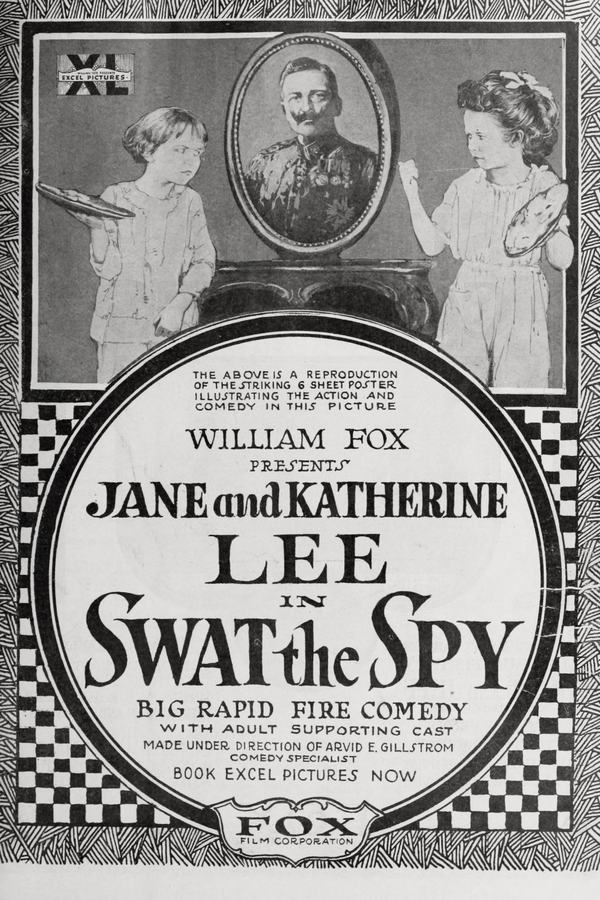
Cinema in 1918 was an industry grappling with its own potential as a weapon of statecraft. Amidst the grim realities of the Great War, Swat the Spy emerged not as a somber reflection on trench warfare, but as a riotous, almost anarchic celebration of American domesticity. Directed by Arvid E. Gillstrom, a man whose comedic sensibilities were forged in the fires of early slapstick, the film serves as a fascinating specimen of the 'Fox Kiddies' sub-genre. Jane and Katherine Lee, the diminutive stars of the era, are positioned here as the ultimate line of defense against an encroaching Teutonic threat. While many films of the period, such as A Woman's Fight, focused on the emotional toll of conflict, Swat the Spy opts for the catharsis of the pie-in-the-face.
Andrew Sheldon, portrayed with a charmingly oblivious intensity by Charles Slattery, represents the scientific vanguard. He is a man of formulas and fuses, yet he is utterly blind to the fact that his morning coffee is served by a man dreaming of the Kaiser’s victory. The irony is thick and deliciously rendered. The household staff—a collective of spies—operates with a rigid, almost mechanical Prussian efficiency that contrasts sharply with the chaotic energy of the Sheldon children. This is where the film finds its rhythm; it is a clash between the disciplined malice of the Old World and the unbridled, mischievous vitality of the New.
Jane and Katherine Lee were a phenomenon that modern audiences might find difficult to categorize. They weren't the saccharine, wide-eyed orphans of the Mary Pickford variety. Instead, they were 'pests'—a term used affectionately by audiences of the time. In Swat the Spy, their antics are elevated to the level of guerrilla warfare. When they deface a portrait of the Kaiser or prune the butler’s Prussian-style mustache while he slumbers, they are performing acts of symbolic resistance that resonated deeply with a public hungry for any victory, no matter how small or silly. Their performance is a far cry from the nuanced social drama seen in Everywoman's Husband, yet it possesses a raw, vaudevillian energy that is undeniably infectious.
The narrative pivot—a misunderstanding regarding a 'baby brother'—is a stroke of genius in the screenplay by Raymond L. Schrock and Hamilton Thompson. It grounds the high-stakes world of chemical explosives in the relatable, ego-driven world of childhood. The girls don't steal the formula to save the world; they steal it to prevent an expansion of their family. This selfish motivation makes their accidental heroism all the more palatable. It subverts the typical propaganda tropes where every character is motivated by pure, unadulterated altruism. By making the girls motivated by sibling jealousy, the film achieves a level of psychological realism that was often missing from wartime potboilers like The Call of the East.
Arvid E. Gillstrom’s direction is surprisingly kinetic for 1918. While much of the film is staged in the proscenium-style wide shots typical of the era, the final chase sequence is a masterclass in early action editing. The transition from a high-speed automobile pursuit to a battle on the Hudson River in rowboats suggests a level of ambition that rivaled contemporary spectacles like The Romance of Tarzan. The use of the river as a backdrop provides a sense of scale and topographical reality that grounds the preceding slapstick in a more urgent, cinematic world. The cinematography captures the spray of the water and the frantic rowing with a clarity that must have been breathtaking to audiences accustomed to more static fare.
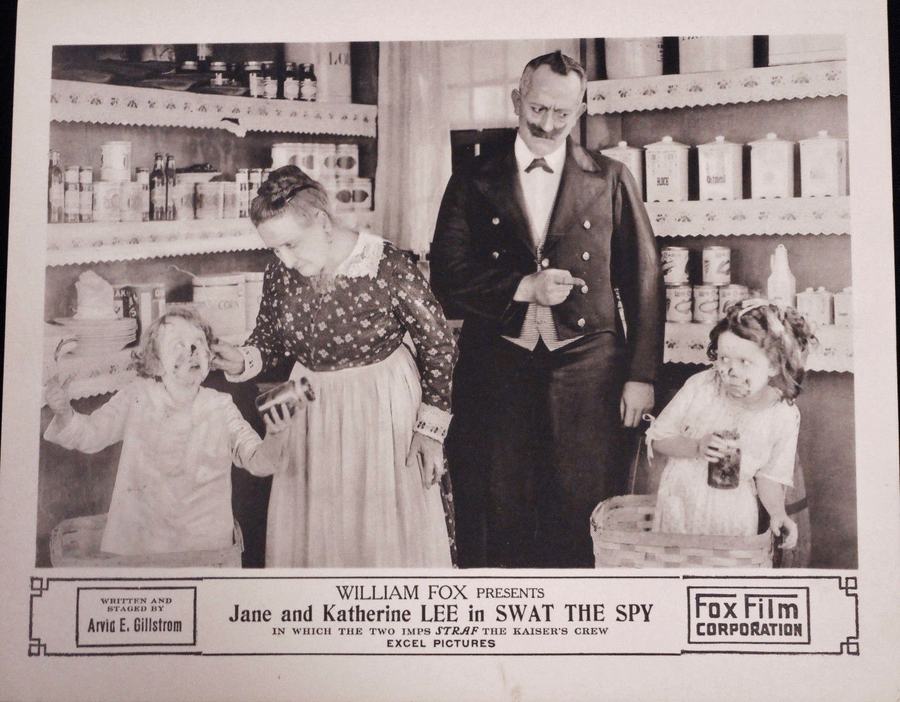
The supporting cast, particularly Pat Hartigan as the villainous butler, plays the role with a delightful lack of subtlety. Hartigan understands that he is not just a character but a symbol. Every sneer and every rigid salute is designed to elicit boos from the gallery. This binary morality—good children versus bad spies—is the engine that drives the film's brisk pacing. It lacks the moral ambiguity of In the Hour of Temptation, but what it lacks in nuance, it more than makes up for in visceral satisfaction.
It is impossible to discuss Swat the Spy without acknowledging its role as a propaganda tool. However, it is propaganda of a very specific, American flavor. It suggests that the American spirit is so robust that even its children are a match for the most sophisticated foreign intelligence networks. The film posits that the 'impish' nature of American youth is a tactical advantage. This theme of youthful exuberance overcoming rigid authoritarianism is a recurring motif in Fox’s output from this period, often contrasting with the more European sensibilities found in imports like Le ravin sans fond.
The resolution of the film, where Andrew Sheldon embraces his 'impish' daughters despite their near-catastrophic interference, reinforces the sanctity of the nuclear family. The arrival of the new baby boy is no longer a threat but a blessing, sanctified by the preservation of the father’s lethal invention. It is a strange, jarring conclusion by modern standards—blessing children for stealing a bomb formula—but within the context of 1918, it is a perfect synthesis of domestic joy and military triumph. The film manages to balance these disparate elements with a grace that is often overlooked in the study of silent comedy.
When placed alongside other 1918 releases, Swat the Spy stands out for its sheer audacity. While The Honorable Algy explored the foibles of the British aristocracy, and The Fortunes of Fifi delved into Napoleonic romance, Gillstrom’s film remains stubbornly fixed in the American 'now.' It is a time capsule of a nation in transition, moving from a position of isolationism to one of global intervention, yet doing so through the medium of a nursery prank. The film’s reliance on physical comedy over complex intertitles ensures that its humor remains accessible, even if the geopolitical specifics have faded into the annals of history.
The Lee sisters would go on to make several more films, but Swat the Spy remains perhaps their most culturally significant work. It captures a moment when the world was on fire, and the only response that made sense was to throw a pie at it. The film’s legacy is not one of deep philosophical inquiry, but of a specific kind of resilient joy. It reminds us that even in the darkest hours of global conflict, there is a place for the mischievous, the absurd, and the profoundly silly. In the grand spectrum of 1918 cinema—from the maritime drama of Plimsolleren to the societal critiques of The Gulf Between—Swat the Spy occupies a unique, chaotic niche that continues to fascinate those willing to look past the greasepaint and the grain.
Ultimately, Swat the Spy is a testament to the power of the 'Fox Kiddies' and the specific brand of escapism they provided. It is a film that weaponizes childhood innocence, turning a nursery into a battlefield and a chemistry lab into a stage for a comedy of errors. For the modern viewer, it offers a window into a world where the lines between home and front were blurred, and where the smallest hands were capable of holding the weight of a nation’s security—all while looking for a way to avoid a new baby brother.
IMDb 5.2
1925
Community
Log in to comment.