DbcultAccessing Vault...
8.1/10
Senior Film Conservator
A definitive 8.1/10 rating for a film that redefined the boundaries of cult cinema. The General remains a cornerstone of transgressive art.
Does Buster Keaton's 'The General' still deserve a spot on your watchlist in the 21st century? Short answer: absolutely, but with crucial caveats.
This film is an essential experience for cinephiles, slapstick aficionados, and anyone curious about the foundational artistry of cinema, yet it might test the patience of viewers unaccustomed to silent film conventions or those seeking a straightforward historical drama.
It works. But it’s flawed. Its brilliance is undeniable, but its presentation demands a certain engagement from the viewer that modern blockbusters rarely ask for.
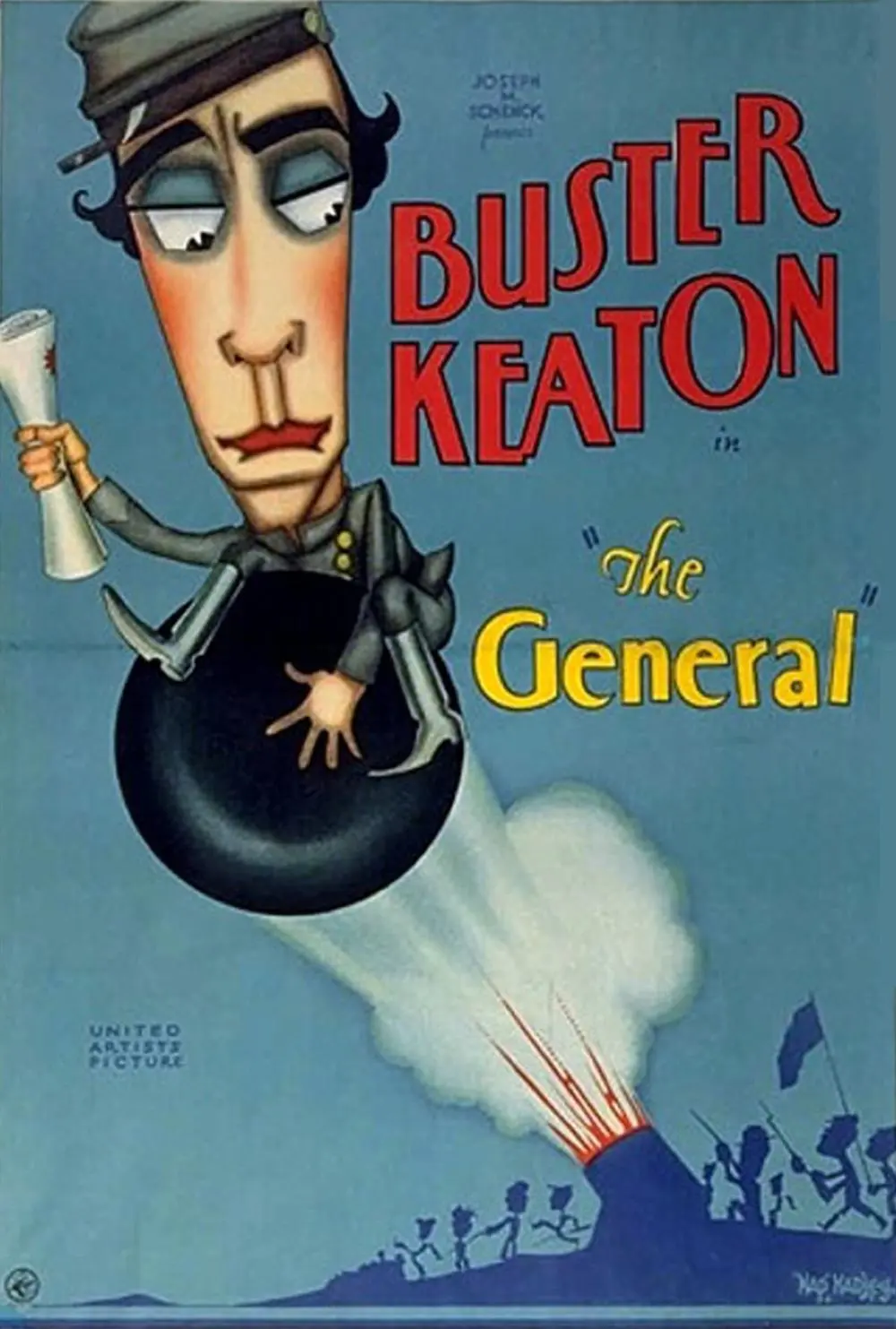
Buster Keaton’s 1926 masterpiece, 'The General', is often lauded as one of the greatest comedies ever made. It’s a bold claim, one that this critic mostly agrees with, but it's important to approach such a revered title with fresh eyes, acknowledging both its timeless genius and the elements that now feel decidedly of its era.
At its core, the film is a relentless chase, a man-versus-machine (or rather, man-with-machine-against-other-machines) narrative set against the backdrop of the American Civil War. Keaton, with his legendary 'Great Stone Face,' plays Johnnie Gray, a Confederate railroad engineer whose two loves are his locomotive, The General, and his sweetheart, Annabelle Lee (Marion Mack).
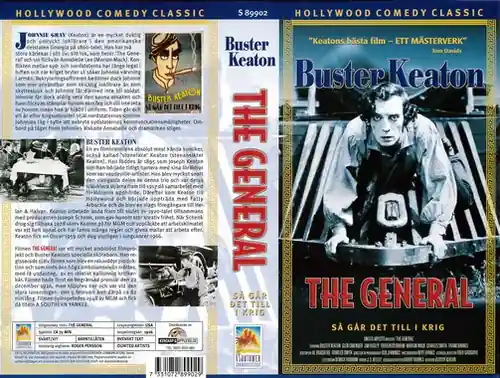
When war breaks out, Johnnie is rejected from the army due to his vital civilian role, a fact he tragically misunderstands. This perceived slight, coupled with Annabelle’s subsequent rejection, sets the stage for a quest for redemption that is both hilariously absurd and genuinely thrilling.
This film works because of Buster Keaton’s unparalleled physical prowess and his groundbreaking approach to filmmaking. He was not just an actor; he was a director, a stunt coordinator, and a visionary who understood the mechanics of cinema on a profound level.
This film fails because its deliberate pacing, especially in the setup, can feel sluggish to contemporary audiences accustomed to rapid-fire editing. Moreover, its light-hearted treatment of the Civil War, while perhaps a product of its time, can strike some modern viewers as an uncomfortable sidestepping of historical gravitas.
You should watch it if you appreciate the artistry of silent cinema, the sheer audacity of practical stunts, and the nuanced genius of physical comedy. It’s a masterclass in visual storytelling that influenced generations of filmmakers.
Keaton's performance as Johnnie Gray is a marvel of understatement and physical precision. His 'Great Stone Face' isn't merely an absence of expression; it's a canvas upon which the audience projects a spectrum of emotions. We see his determination, his frustration, his fleeting moments of joy, all conveyed through posture, movement, and the subtle shifts in his eyes.
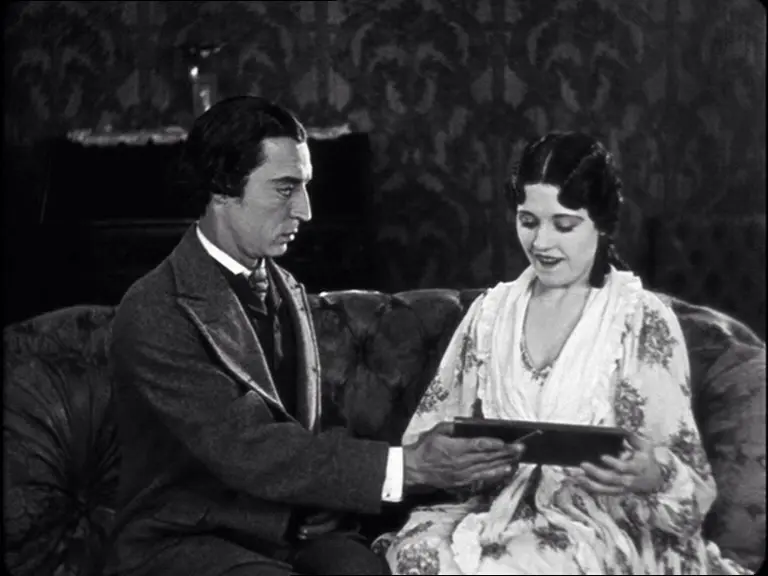
Consider the sequence where Johnnie first attempts to enlist. His earnest enthusiasm slowly deflates into bewildered despair as he's repeatedly turned away. There are no tears, no histrionics, just the quiet crumpling of a man's spirit. It's a testament to Keaton's acting that this scene, played with such restraint, remains deeply affecting.
As a director, Keaton was years ahead of his time. He favoured long takes and wide shots, allowing the audience to witness the full scope of his meticulously choreographed gags and dangerous stunts. This wasn't merely a stylistic choice; it was a commitment to authenticity and a profound respect for the intelligence of his audience.
He didn't need rapid cuts to hide imperfections or trick the eye. Instead, he invited viewers to observe the intricate mechanics of his comedic set pieces, like the iconic moment he unknowingly sits on a moving train's coupling rod, completely oblivious to his precarious position.
Frankly, anyone who dismisses Keaton as 'just a clown' hasn't truly watched 'The General'. He was an architect of narrative through motion, a cinematic poet of the absurd.
The visual grandeur of 'The General' is staggering, even by modern standards. The film's cinematography, overseen by Bert Haines and Devereaux Jennings, captures the vastness of the American landscape and the imposing power of the locomotives with a clarity that belies its age.
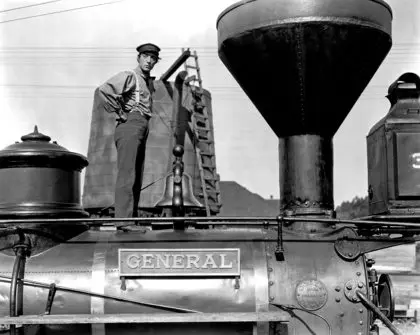
Every frame feels deliberate, designed to showcase the scale of the action. The train chase sequences, which form the backbone of the film, are a masterclass in practical effects and daring stunt work. Keaton famously performed many of his own stunts, often putting himself in genuine peril.
The most celebrated, and financially ruinous, stunt involves the actual destruction of a real locomotive as it plunges into a river when a burning bridge collapses. This single shot, costing an unprecedented (for its time) $42,000, remains one of the most expensive stunts in silent film history. It wasn't CGI; it was pure, unadulterated cinematic spectacle, a testament to Keaton's uncompromising vision.
Beyond the big explosions, there are countless smaller, equally impressive moments: Keaton running atop the moving train, dodging cannon fire, and deftly switching tracks. Each action is performed with a precise blend of athleticism and comedic timing that is simply unmatched. The film's visual language communicates the story with such clarity that intertitles often feel secondary.
The pacing of 'The General' is a critical point of discussion. The film starts relatively slowly, establishing Johnnie’s life and loves before the central conflict ignites. This deliberate exposition, while crucial for character development, can test the patience of viewers accustomed to more immediate action.
However, once The General is stolen, the film shifts into an almost relentless, propulsive chase. The rhythm of the trains, the constant back-and-forth pursuit, creates a unique kind of cinematic energy. It’s less about rapid-fire cuts and more about sustained tension and escalating comedic chaos.
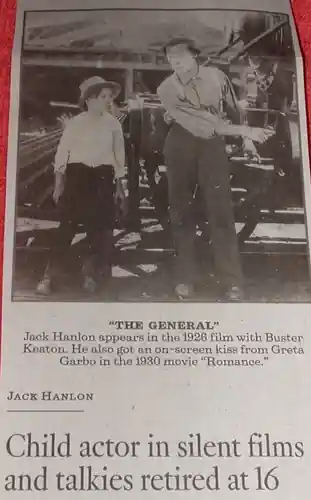
The tone is another fascinating aspect. Despite being set during the Civil War, the film largely eschews overt political commentary or heavy drama. Instead, it maintains a remarkably light, almost whimsical tone, even as Johnnie faces genuine danger. The war serves primarily as a backdrop for Johnnie’s personal quest, a grand stage for his accidental heroism.
This tonal choice is both a strength and, for some, a potential weakness. It allows the comedy to flourish unburdened by overt tragedy, but it also means the film doesn’t delve into the deeper implications of its setting. It’s a pure adventure, a caper, rather than a historical drama.
The film’s historical context is an interesting point of contention. Shot just over 60 years after the Civil War, 'The General' depicts Confederate characters as protagonists without overtly glorifying the Confederate cause. Keaton himself was reportedly more interested in the mechanics of the train chase than the politics of the war.
This apolitical stance, while allowing for broader appeal in its time, can feel a little jarring today. The film doesn't engage with the moral complexities of the conflict, choosing instead to focus on the universal themes of love, duty, and perseverance through the lens of slapstick.
However, one could argue that this detachment is precisely what makes the film enduring. By not taking a heavy-handed political stance, it allows the sheer artistry of Keaton's craft to shine through. It’s a story about a man’s devotion to his machine and his girl, a narrative that transcends specific historical grievances.
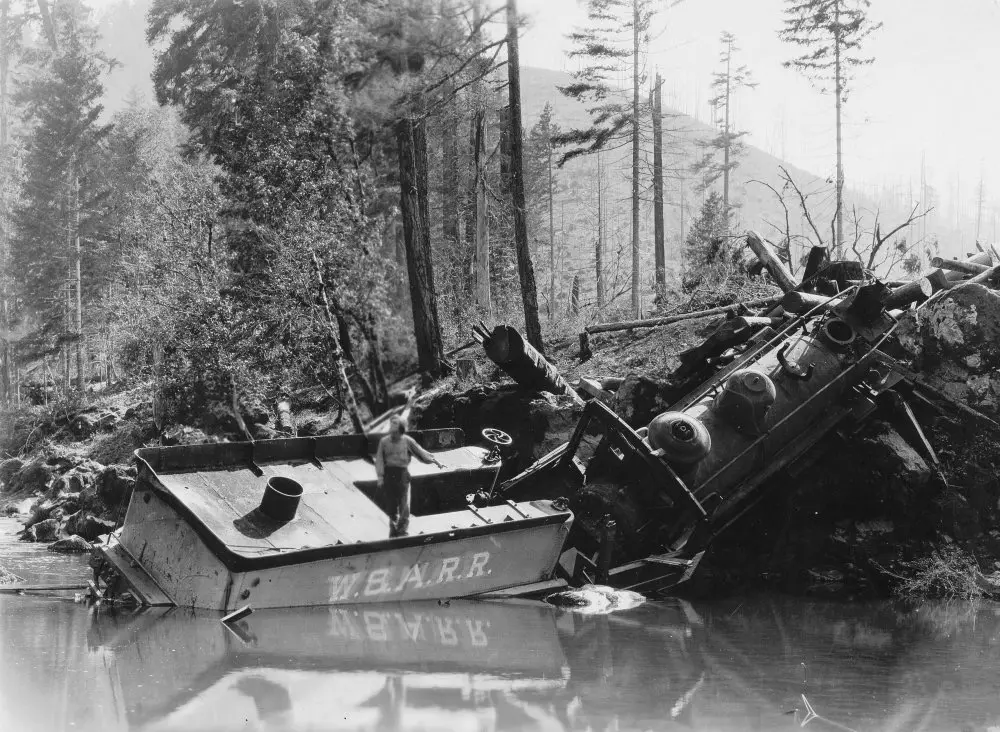
The initial reception of 'The General' was surprisingly poor, leading to a significant financial loss for Keaton and United Artists. Critics and audiences of the time, perhaps expecting more overt patriotism or traditional comedy, didn't fully grasp its innovative blend of action, comedy, and nuanced character work. It was only much later, with the rediscovery of Keaton’s genius, that the film gained its rightful place in the cinematic pantheon.
Yes, absolutely. It's a foundational piece of cinematic history.
Yes, the physical comedy and ingenious gags remain genuinely hilarious.
It's based on a real event (The Great Locomotive Chase) but takes significant artistic liberties, particularly with tone.
Fans of silent film, classic comedy, practical effects, and innovative direction.
The silent film format, the initial slow pacing, and its light treatment of a serious historical period.
'The General' is more than just a film; it’s a living testament to the sheer ingenuity and audacity of early cinema. Buster Keaton’s vision, both in front of and behind the camera, created a work that is simultaneously hilarious, thrilling, and surprisingly poignant. While its pacing and historical context might present minor hurdles for contemporary viewers, the film's enduring power lies in its universal appeal: a man's desperate, often comical, struggle against overwhelming odds to protect what he loves.
It’s an experience that demands attention but rewards it tenfold. To watch 'The General' is to witness the very foundations of cinematic action and comedy being laid by a true master. It might not be everyone’s cup of tea, especially for those uninitiated in the silent era, but for anyone willing to engage, it offers a profound and immensely entertaining glimpse into the soul of filmmaking. It is, without question, a film that continues to earn its place in the pantheon of cinematic greats.
IMDb 6.5
1926
Community
Log in to comment.