DbcultAccessing Vault...
Cult Review
Senior Film Conservator
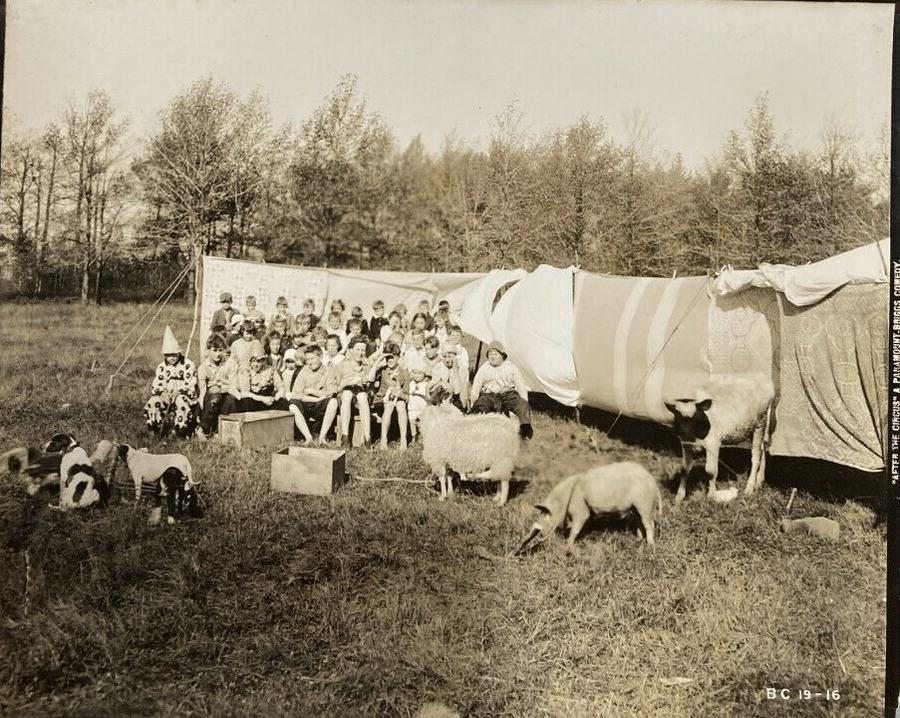
There are films that merely tell a story, and then there are those that etch themselves into the very fabric of cinematic memory, transcending their era to speak to universal human truths. Doty Hobart's 'After the Circus' stands unequivocally in the latter category, a silent era marvel that, even today, pulsates with an emotional resonance rarely achieved. It is a work of profound artistry, a meditation on identity, liberation, and the seductive, yet often perilous, nature of choice. While many silent films focused on grand melodramas or slapstick comedies, Hobart's vision delves into the nuanced psychological landscape of its protagonist, offering a rare glimpse into the inner life of a woman grappling with destiny.
From its opening frames, 'After the Circus' immerses us in a world both enchanting and grueling: the itinerant existence of a provincial circus. Here, we meet Elara, portrayed with an exquisite blend of fragility and formidable resolve. She is the troupe's star aerialist, a figure of ethereal grace soaring above the canvas, yet beneath the shimmering sequins and painted smiles, her life is one of relentless physical demand and profound emotional burden. Her father, a once-celebrated strongman, is now a shadow of his former self, his body failing, his spirit clinging desperately to the fading glory of the big top. Elara's daily existence is a testament to filial devotion, her every performance a sacrifice to keep their precarious world from crumbling. The camera, with its keen, observant eye, captures the duality of her life: the public spectacle of her artistry and the private weight of her responsibilities. It’s a stark contrast, reminiscent of the societal pressures faced by women in films like Paid in Full, where circumstances often dictate the paths available.
The narrative truly ignites with the introduction of Mr. Beaumont, a character brought to life with captivating ambiguity by John W. Kellette. Kellette, known for his nuanced performances, imbues Beaumont with an aristocratic bearing and an almost predatory elegance. He is a man of means, drawn to Elara not by mere fleeting admiration, but by an intense, almost possessive fascination with her artistry and her melancholic beauty. His appearances are always framed with a certain mystique, his gaze lingering on Elara with an intensity that hints at both profound appreciation and a more unsettling desire for ownership. Beaumont's offer is compelling: a life of comfort, financial security for her father's medical needs, and an escape from the relentless grind of the circus. It is a proposition that, on the surface, appears to be a benevolent lifeline. Yet, Hobart, through subtle visual cues and Kellette’s masterful expressions, ensures that the audience perceives the subtle, yet potent, undercurrent of a gilded cage. Is this true liberation, or merely a more refined form of captivity? The film brilliantly poses this question without offering simplistic answers, forcing the viewer to engage with the complex moral landscape.
The tension between Elara's yearning for autonomy and the allure of security is the beating heart of 'After the Circus.' Her internal struggle is rendered with remarkable clarity through Hobart's direction, utilizing close-ups that magnify Elara's fleeting expressions of hope, fear, and defiance. The contrast between the vibrant, chaotic energy of the circus and the sterile, opulent world Beaumont inhabits is vividly depicted, underscoring the stark choices Elara faces. The circus, despite its hardships, offers a sense of belonging, a rough-hewn family bound by shared experiences. The ringmaster, a gruff but paternal figure, offers pragmatic warnings, his weathered face a testament to the harsh realities of life outside the privileged spheres. This dynamic creates a powerful backdrop against which Elara's personal drama unfolds, making her eventual decision all the more impactful.
Doty Hobart's directorial prowess is on full display throughout 'After the Circus.' The film is a masterclass in visual storytelling, a testament to the power of silent cinema to convey profound emotion without a single spoken word. Hobart employs a sophisticated use of light and shadow, particularly in the circus sequences, where the spotlight illuminates Elara's performance, creating an almost mythical aura around her, while the surrounding darkness hints at the unseen struggles and dangers. The interiors of Beaumont's mansion, by contrast, are bathed in a softer, more pervasive light, yet it feels less warm, more sterile, emphasizing the lack of genuine human connection that Elara senses. The pacing is deliberate, allowing moments of quiet contemplation to breathe, punctuated by bursts of dramatic intensity. This considered tempo prevents the film from devolving into mere melodrama, instead elevating it to a contemplative character study. Hobart's sensitivity to the emotional landscape of her characters is palpable, a characteristic that sets her apart from many of her contemporaries. Her ability to extract such raw, authentic performances from her cast, particularly from the lead, speaks volumes about her skill as a storyteller.
The screenplay, also credited to Doty Hobart, is a marvel of conciseness and evocative imagery. The intertitles are spare, yet potent, serving to deepen the emotional impact rather than merely advance the plot. They are poetic fragments, carefully chosen to illuminate Elara's inner turmoil and the complex motivations of those around her. The narrative structure is tight, each scene contributing meaningfully to the overarching themes of self-discovery and agency. Unlike some episodic serials of the era, such as The Vampires: Satanas or Fantomas: The Man in Black, 'After the Circus' maintains a singular, focused emotional trajectory, pulling the audience inexorably towards Elara's climactic decision. The writing understands that true drama often lies in the unspoken, in the subtle glances and the yearning gestures, and Hobart masterfully crafts a story that maximizes the expressive potential of the silent medium.
The cast of 'After the Circus' delivers performances that are both era-appropriate and surprisingly modern in their depth. John W. Kellette, in particular, is a revelation as Mr. Beaumont. His portrayal is a delicate balancing act – he is not a mustache-twirling villain, but a man whose benevolence is inextricably linked to a desire for control. Kellette conveys Beaumont’s complexity through subtle shifts in posture, the slight narrowing of his eyes, the almost imperceptible tensing of his jaw. His performance is a masterclass in restraint, allowing the audience to project their own interpretations onto his character, making him all the more compelling and unsettling. One might draw parallels to the enigmatic figures in films like The Invisible Bond, where unseen forces and complex loyalties drive the narrative.
The actress embodying Elara (whose name, regrettably, is lost to the mists of time in some historical records, a common tragedy for many silent era artists) delivers a performance of breathtaking vulnerability and strength. Her physical presence as an aerialist is captivating, but it is her ability to convey a rich interior life solely through gesture and expression that truly elevates the film. Her eyes, often downcast in moments of contemplation, or wide with a flicker of hope or despair, communicate volumes. She navigates Elara's emotional arc with remarkable authenticity, from the weary resignation of her early scenes to the burgeoning assertiveness of her final choices. The chemistry, or rather the compelling tension, between Elara and Beaumont is palpable, a silent dialogue of wills that underpins the entire narrative.
'After the Circus' resonates deeply with timeless themes. At its core, it is a powerful exploration of personal liberty versus societal expectation. Elara's struggle to define herself outside the confines of both the circus and Beaumont's patronage mirrors the broader societal shifts occurring in the early 20th century, where women were increasingly seeking agency and independence beyond traditional roles. The film subtly critiques the notion that financial security equates to true freedom, suggesting that genuine autonomy must be forged through self-determination, often at great personal cost. This theme echoes in other films of the era that grappled with similar questions of individual destiny, such as The Chattel, where characters are often trapped by circumstances, or The Eleventh Commandment, which explores moral dilemmas within societal structures.
The film also delves into the nature of spectacle and authenticity. Elara's performances are magnificent, yet they are also a performance, a carefully constructed illusion for public consumption. Her journey is one of stripping away these layers of performance to find her true self, a self that exists 'after the circus.' The contrast between the raw, visceral reality of circus life and the polished artifice of high society is a recurring motif, brilliantly handled by Hobart. The film suggests that true art, like true identity, arises not from external validation or gilded patronage, but from an internal wellspring of passion and conviction. It's a poignant statement, particularly for a medium still finding its voice and grappling with its own artistic legitimacy.
The film builds to a breathtaking climax, set during a final, perilous performance under the big top. Here, all the narrative threads converge, and Elara is forced to make her ultimate choice amidst a tableau of dramatic tension and physical danger. Hobart orchestrates this sequence with masterful suspense, utilizing dynamic camera angles and rapid cuts to amplify the peril and Elara's internal conflict. It is a moment of profound courage and self-realization, a powerful testament to the human spirit's capacity for resilience. The resolution, far from being a conventional romantic pairing, is instead a nuanced affirmation of Elara's hard-won independence, a path she forges for herself, perhaps with a quiet dignity, rather than a fanfare. This refusal to conform to predictable narrative tropes is one of the film's greatest strengths, solidifying its status as a forward-thinking piece of cinema.
'After the Circus' is more than just a historical artifact; it is a vibrant, emotionally rich experience that continues to captivate audiences who discover it. Its exploration of identity, freedom, and the complex nature of human relationships remains as relevant today as it was a century ago. Doty Hobart, through her visionary direction and compelling screenplay, crafted a work of enduring power, and John W. Kellette’s performance as the enigmatic Mr. Beaumont provides a memorable counterpoint to Elara’s journey. It stands as a powerful example of silent cinema's capacity for profound storytelling, a film that, like its protagonist, ultimately transcends its origins to carve out a unique and unforgettable space in cinematic history. For those interested in the nuanced portrayal of characters navigating new beginnings, one might also consider films like The Busher, which similarly explores a protagonist's transition from one life to another, or Die Hochzeit im Excentricclub, which plays with societal expectations and dramatic personal choices. 'After the Circus' truly encapsulates the raw emotional power of early filmmaking, a genuine triumph of silent storytelling that demands to be seen and appreciated for its timeless artistry.
IMDb 3.6
1914
Community
Log in to comment.