DbcultAccessing Vault...
Cult Review
Senior Film Conservator
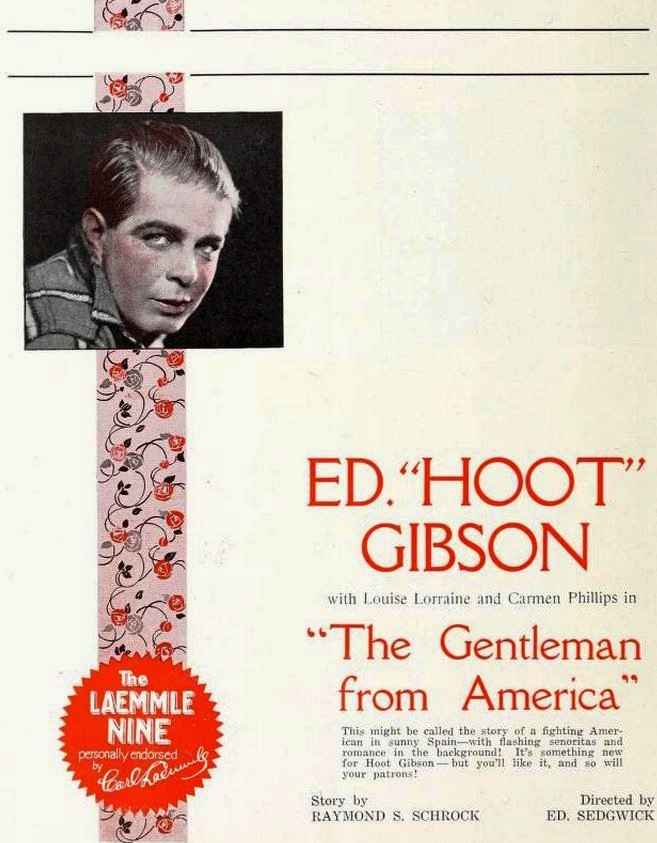
When the silent era birthed a film that could simultaneously charm, bewilder, and provoke a chuckle, it was often a product of daring storytelling and a dash of audacious casting. The Gentleman from America—directed by the industrious duo of Raymond L. Schrock and George C. Hull—stands as a testament to that alchemy. The picture, released in 1923, follows two American soldiers on a fleeting leave, whose pursuit of frivolous pleasure spirals into an unlikely coronation in a European micro‑state.
The film opens with a stark contrast: the mud‑splattered, exhausted faces of the A.E.F. juxtaposed against the bright, hopeful gleam of a borrowed dollar. Burton Law, cast as the quick‑silver protagonist, exudes a roguish charisma that instantly draws the audience into his reckless optimism. Robert McKenzie, his faithful companion, provides the essential foil—steady, skeptical, and ever‑ready with a wry quip. Their decision to gamble the lone bill is not merely a plot device; it reflects the post‑war yearning for escapism that permeated the 1920s.
A misprinted ticket and a dubious travel agent divert the duo from the glittering boulevards of Paris to the obscure principality of Cardonia. The filmmakers employ a series of rapid intertitles, each rendered in a jaunty, hand‑drawn font, to convey the characters’ bewilderment. Cardonia itself is a visual collage: pastel‑washed facades, bustling plazas, and a palace that looms like a marble mirage against a cerulean sky. The production design, though modest by today’s standards, masterfully utilizes chiaroscuro lighting to emphasize the exoticism of the setting.
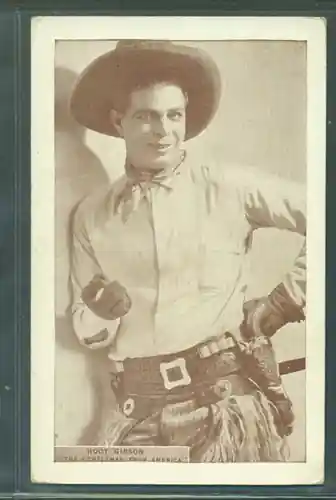
Upon arrival, the protagonist is mistakenly identified as “El Bandido,” a notorious outlaw who has haunted Cardonia’s aristocracy for years. This case of mistaken identity fuels the film’s central tension. The audience is invited to watch Law’s character navigate a delicate dance—maintaining the façade of a feared brigand while secretly yearning for a more genteel existence. The irony is palpable; his very swagger, cultivated on the Western front, becomes his passport into Cardonia’s inner circle.
Enter the senorita—portrayed with luminous poise by Carmen Phillips—who is simultaneously the most coveted and the most constrained figure in the kingdom. Her beauty is described in the intertitles as "a sunrise over the Mediterranean," yet her spirit is likened to "a wild mustang untamed by royal decree." Their first encounter, set against a moonlit fountain, is a choreography of glances and half‑spoken promises, underscored by a string of violins that, while unseen, echo through the silent frames.
The narrative accelerates as the hero becomes embroiled in a midnight duel with the villainous Count Ricardo Cortez—an actor whose performance exudes a cold, calculating menace. The duel is filmed in a narrow alley, the camera tracking the clashing swords with a kinetic energy rarely seen in silent cinema. The subsequent chase through Cardonia’s bustling market square is a masterclass in physical comedy: overturned carts, startled goats, and a cascade of oranges that tumble like a golden waterfall.
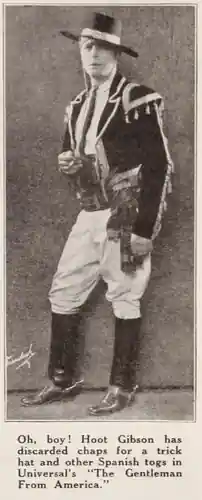
In the climactic tableau, the senorita’s true lineage is unveiled—she is the Grand Duke’s hidden daughter, separated at birth during a political upheaval. The revelation is delivered via a dramatic close‑up of a weathered portrait, the same one that had haunted the hero’s subconscious throughout his escapades. The film’s resolution sees the protagonist elevated to the role of assistant ruler, a position that blends his American bravado with Cardonia’s regal decorum.
Just as the audience begins to luxuriate in the fantasy, the final intertitle snaps us back to the trenches. Our hero, now back in uniform, receives a reprimand for overstaying his leave—a stark reminder that the world beyond Cardonia remains unforgiving. The juxtaposition of regal splendor with the drab monotony of military life is a poignant coda, echoing the post‑war disillusionment that permeated much of the era’s cinema.
Burton Law’s performance is a tour de force of expressive physicality. Deprived of spoken dialogue, Law relies on a nuanced palette of facial gestures—raised eyebrows, a half‑smirk, a lingering stare—that convey both mischief and melancholy. Robert McKenzie’s comedic timing provides a steady counterbalance, his slapstick mishaps offering relief without undermining the narrative’s stakes.
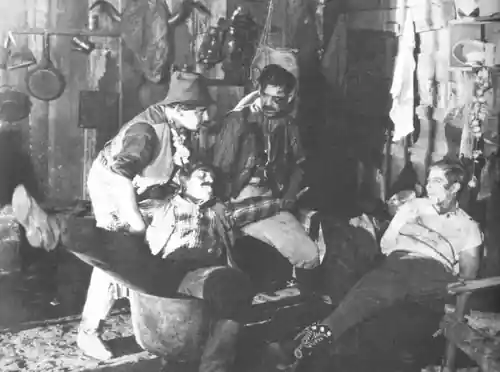
Director George C. Hull orchestrates the film’s pacing with an almost musical precision. The early sequences linger on the camaraderie of the soldiers, while the middle act accelerates through rapid cuts, each frame propelling the plot forward. The final act, however, slows deliberately, allowing the audience to savor the emotional weight of the hero’s ascension and subsequent downfall.
Cinematographer Frank Leigh employs a stark contrast between the dimly lit trenches and the sun‑drenched streets of Cardonia. The use of deep focus during the duel sequences ensures that both combatants remain in sharp relief, while the background—crowded with onlookers—adds a layer of social commentary about public spectacle. The final scene, shot in low‑key lighting, emphasizes the protagonist’s isolation, his silhouette framed against a barren, black‑and‑white horizon.
While The Gentleman from America carves its own niche, it shares thematic resonances with other silent era gems. The whimsical misadventures recall the light‑hearted romp of The Gingham Girl, where a modest heroine navigates social hierarchies with wit. Similarly, the duality of heroism and folly mirrors the narrative beats of The Tiger Man, albeit with a more comedic slant. The film’s exploration of mistaken identity also finds kinship with The Bogus Uncle, where deception becomes a catalyst for personal growth.
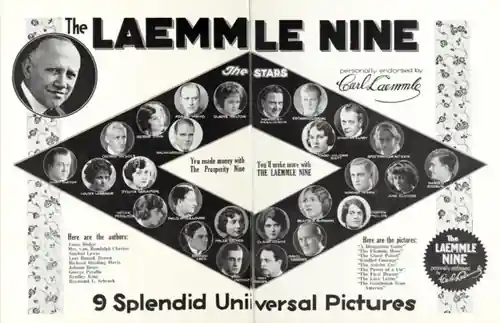
Emerging from the post‑World War I cultural milieu, the film reflects a yearning for escapism and a fascination with exotic locales. Cardonia, though fictional, serves as a canvas upon which American ideals of individualism and democratic meritocracy are projected onto a European aristocratic framework. The hero’s ascent—from a lowly soldier to a quasi‑monarch—mirrors the era’s belief in the fluidity of social mobility, a sentiment that resonated deeply with audiences recovering from the rigidity of wartime hierarchies.
The film’s legacy, though somewhat eclipsed by more renowned silent epics, endures in its daring blend of comedy, romance, and adventure. It paved the way for later hybrid genres, influencing the narrative structures of 1930s screwball comedies and even the swash‑buckling fantasies of early talkies.
The production design, overseen by Albert Prisco, showcases an inventive use of limited resources. Cardonia’s palace interiors—richly draped in velvets and gilded accents—are juxtaposed against the stark, utilitarian barracks of the opening scenes. Costumes, especially those worn by the senorita, blend European elegance with a subtle hint of American flair, underscoring the film’s cross‑cultural narrative.
Although silent, the film’s original screenings were accompanied by a live orchestra, whose score blended jaunty marches with melancholic strings. Contemporary restorations have attempted to reconstruct this musical backdrop, offering modern audiences a glimpse into the auditory experience that once complemented the visual storytelling.
The Gentleman from America stands as a vibrant artifact of an era when filmmakers relied on visual ingenuity to convey complex narratives. Its blend of humor, romance, and political intrigue, anchored by compelling performances and astute direction, ensures its relevance for cinephiles seeking a window into the creative daring of the 1920s. Whether viewed as a whimsical escapade or a subtle commentary on post‑war identity, the film rewards repeated viewings, each time revealing new layers of nuance hidden within its black‑and‑white frames.
IMDb 4.8
1930
Community
Log in to comment.