DbcultAccessing Vault...
Cult Review
Senior Film Conservator
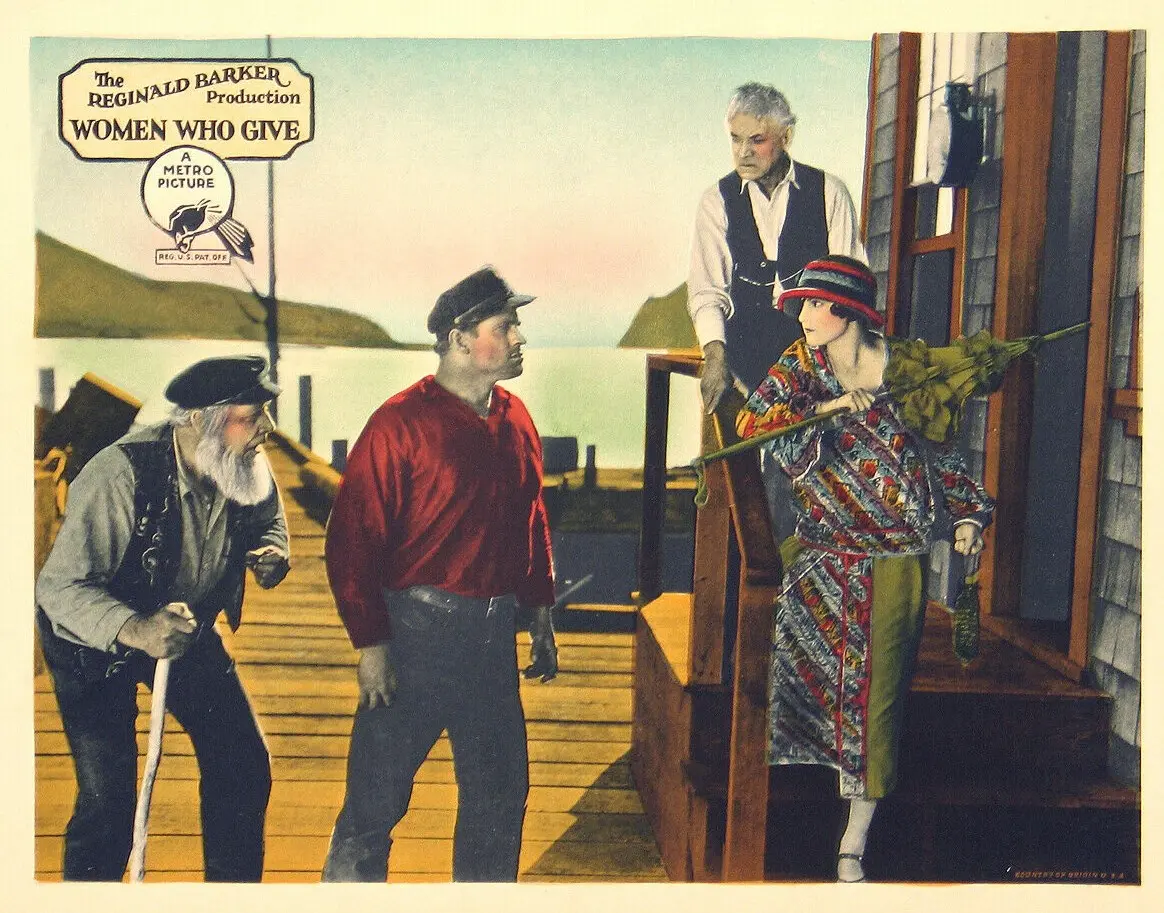
In the cinematic realm, few films have managed to adeptly navigate the intricate dynamics of familial relationships, love, and personal ambition. 'Women Who Give', a movie from a bygone era, presents a fascinating exploration of these themes, deftly crafted by its writers, J.G. Hawks, Bernard McConville, Sarah P. McLean Greene, and Andrew Percival Younger.
The narrative centers around Jonathan Swift, a stern and ambitious businessman from Cape Cod, played by Victor Potel, whose meticulous plans for his children's futures are expertly subverted by the unpredictability of love and life. His progeny, Emily and Noah, find themselves enamored with Capt. Joe Cradlebow and Becky Keeler, respectively, which sets off a chain of events that would test the mettle of even the most resolute of parents.
The film's portrayal of Swift's character serves as a thought-provoking examination of the tensions between parental ambition and the autonomy of one's children. His decision to have Noah forcibly taken away, in a bid to control his son's destiny, is a pivotal moment in the narrative, one that underscores the complexities of paternal love and the limits of parental authority.
The ensemble cast, including Jack Kenny, Renée Adorée, Joseph J. Dowling, Eddie Phillips, Robert Frazer, Joan Standing, Barbara Bedford, Frank Keenan, and Margaret Seddon, deliver performances that breathe life into the film's nuanced characterizations. The chemistry between the leads is palpable, rendering their romantic entanglements believable and emotionally resonant.
One of the most striking aspects of 'Women Who Give' is its masterful use of situational drama to explore themes of love, loyalty, and redemption. The tempestuous storm that besets the fleet serves as a metaphor for the turmoil that often accompanies personal growth and the pursuit of one's desires. The valiant actions of Capt. Cradlebow and the selfless sacrifice of Bijonah Keeler, Becky's father, serve as a testament to the enduring power of love and the human spirit.
In comparison to other films of its era, 'Women Who Give' shares some thematic similarities with The Blue Bonnet, which also explores the complexities of love and relationships. However, 'Women Who Give' distinguishes itself through its unique narrative voice and its thoughtful examination of parental ambition.
The film's cinematography, while not overly complex by modern standards, effectively captures the rugged beauty of the Cape Cod landscape and the tumultuous sea. The production design, too, is noteworthy, particularly in its depiction of the Keeler's lighthouse, which serves as a symbol of hope and guidance throughout the narrative.
In conclusion, 'Women Who Give' is a film that warrants attention from those interested in exploring the intricacies of human relationships, love, and personal ambition. Its thoughtful narrative, nuanced characterizations, and masterful use of situational drama render it a compelling watch, one that invites reflection on the complexities of life and the enduring power of love.
For those interested in exploring films with similar themes, Es werde Licht! 4. Teil: Sündige Mütter, Merchant of Menace, and The Marriage Lie may offer additional insights into the human condition.
Ultimately, 'Women Who Give' serves as a poignant reminder of the complexities of life, love, and relationships, offering a cinematic experience that is both thought-provoking and emotionally resonant.
IMDb 6
1927
Community
Log in to comment.