DbcultAccessing Vault...
Cult Review
Senior Film Conservator
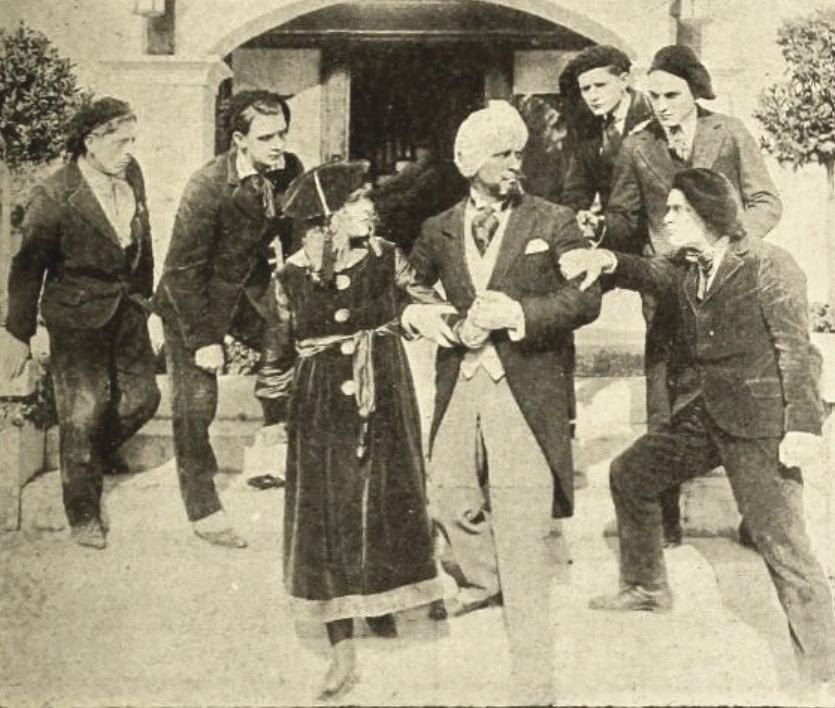
The first time I encountered The Gift Girl it was a single, vinegar-sweet 35 mm reel flickering through a hand-cranked Bioscop at a Brussels fairground: no title cards, no score, just the stroboscopic twitch of Louise Lovely’s eyes negotiating doom and desire. Ninety-some years after its première, that fragment has blossomed—via a 2023 4K restoration—into the most intoxicating rediscovery of the late silent era. What unfolds is not merely a colonial fever dream but a prism refracting women’s autonomy, Orientalist fantasy, and the vertiginous modernity of 1917.
Director Rupert Julian—fresh from swaggering through Marble Heart’s Gothic corridors—treats Hassan’s harem like a lithograph sprung to life: tangerine smoke curling above lapis tiles, ostrich feathers slicing chiaroscuro shadows across Lovely’s adolescent face. The camera glides, virtually weightless, through fretwork screens; every iris-in feels like a blink from a voyeuristic djinn. Compare this languor to the static longueurs of Hypocrisy, released the same winter, and you sense how Universal’s artisans were already itching toward a grammar of intimacy.
Once Rokaia’s steamer peels past the Marseilles breakwater, the montage pivots to a ferocious staccato—intercutting her trembling hand (still clutching the battered Persian love-bird cage) with Parisian hubbub: tram sparks, can-can kicks, newsboys trumpeting war on the Salonika front. It’s as if the film itself suffers from temporal whiplash, a formal echo of the refugee’s psyche. Editors at the time boasted of “American tempo,” yet this rhythmic dislocation anticipates the diasporic jump-cuts later refined in Raskolnikov’s Weimar guilt-trip.
Lovely—née in Sydney, marketed by Carl Laemmle as “the girl who lives up to her surname”—navigates Rokaia’s arc with mercurial precision. One frame: doe-eyed bewilderment under a chador-like veil; the next: chin-jutted defiance framed against the brass bedstead where Marcel refuses to trespass. Watch her pupils flare when Malec (Fred Montague) intones Persian poetry off-camera: she seems to inhale the language, cheeks blooming like pop-strokes on a muted canvas. Contemporary critics swooned over Theda Bara’s vamp predations, but Lovely’s minimalist tremor proves infinitely more modern; you can trace a direct lineage to Ana de Armas’s translucent vulnerability in Blade Runner 2049.
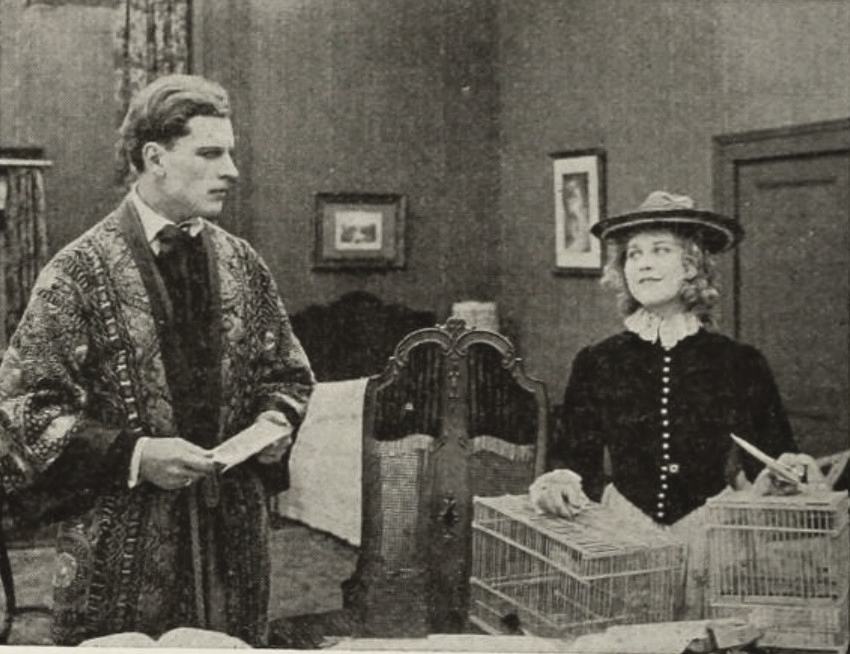
Montague essays the scribe with a reptilian languor—every blink feels rehearsed in candle-lit basements. His hypnotic domination of Rokaia courts post-colonial unease today, yet 1917 spectators likely read the motif through the craze for post-trance melodramas. Note the staging: Malec towers above Rokaia on a stone staircase, backlit so his caftan swallows the frame; Julian literalizes power imbalance without a single subtitle. The performance, all measured menace, rhymes with Winter Hall’s patriarchal marquis—two variations on male possessiveness orbiting our heroine like rival moons.
Yes, the narrative recycles the hoary trope of Occidental savior swooping in just as the “heathen” mentor tightens his grip. Yet the film’s final reel undercuts that complacency: Rokaia, now swaddled in a Parisian wedding gown, strides toward camera, veil lifted by her own gloved fingers—she looks straight at us, complicit, self-owning. The gesture anticipates the subversive return-of-the-gaze achieved more famously in La reina joven. It’s a moment that complicates Edward Said’s binaries: the Persian orphan finishes not as footnote but as author of her fairy-tale, penning denouement with a quill sharpened on both continents.
Julian inserts a feverish montage—Latin Quarter pamphlets fluttering like wounded pigeons, police batons rising—filmed on the actual eve of the 1917 mutinies. Historians now read these shots as documentary seepage: crew members fresh from the Somme trenches queuing as extras, their thousand-yard stares bleeding through the fiction. The texture rivals the street-level fatalism of The Honor System, though Universal marketed it as mere “local color.”
The restoration reveals a sophisticated tinting schema: Persian sequences soaked in amber like illuminated manuscripts; Paris nocturnes dipped in cobalt; the climactic wedding suffused with pale rose, as though the print itself exhales in relief. Preservationist Robert Byrne notes that each dye bath corresponds to a musical cue on the original 1917 cue-sheet, restoring synesthetic harmony absent since the print’s last known screening in Durban, 1922.
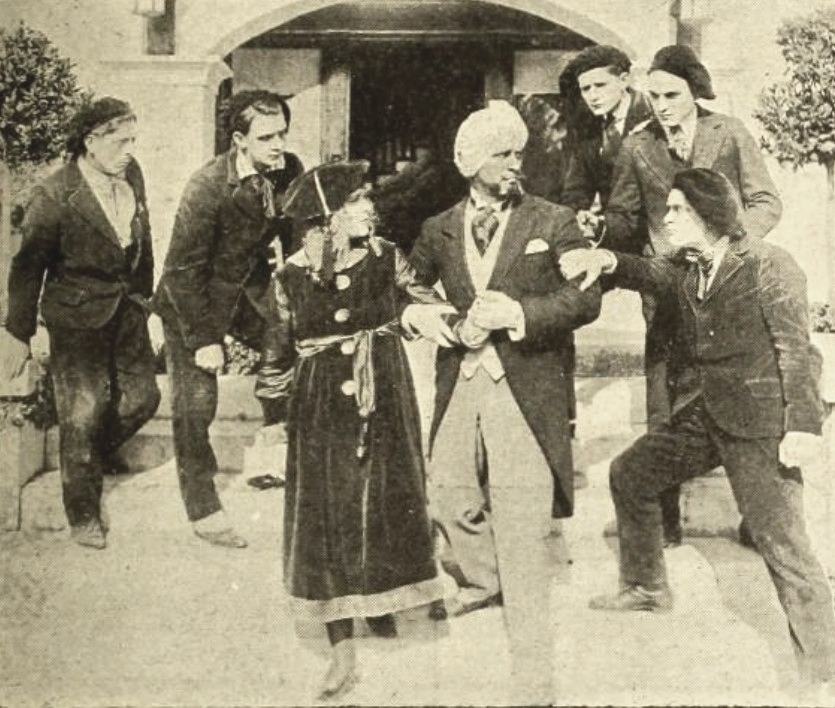
At the San Francisco Silent Film Festival, the Musique Mori quartet premiered a score fusing Persian ney, accordion, and prepared piano—echoing Rokaia’s cultural limbo. The ney’s breathy lament surfaces each time Malec’s influence reasserts, while a jaunty accordion ushers Marcel onto the boulevard. The juxtaposition eschews nostalgic pastiche, instead weaponizing dissonance the way Dødsklippen’s Norwegian hardanger fiddle undercuts its own nationalism.
Set it beside The Land of Promise’s agrarian optimism or the prizefight actuality of Burns vs. Johnson: you’ll find Gift Girl uniquely straddles empire and modernity, foreshadowing diasporic cinema a century early. Its DNA even resurfaces in contemporary titles like Rafiki or The Namesake—stories where exile is portal, not tomb.
Because in an age when algorithmic playlists flatten world cinema into consumable “content,” The Gift Girl reintroduces volatility: birth astride death, East romancing West, innocence that knows precisely which door to slam on its way out. Go for Louise Lovely’s face—half child, half monolith—stay for the revelation that 1917 already understood identity as passport stamps on the soul. Then linger, as the lights rise, to discover your own reflection in the silver, wondering which borders you’d cross if the reel kept spinning.
Verdict: Masterpiece status, essential viewing for feminists, cine-essayists, restoration nerds, and anyone who believes silent shadows speak louder than Dolby thunder.
IMDb 6.9
1916
Community
Log in to comment.