DbcultAccessing Vault...
Cult Review
Senior Film Conservator

From the very first frame, Skinny, School and Scandal immerses its audience in a world that feels simultaneously familiar and profoundly unsettling. It's a narrative that peels back the veneer of academic sanctity, revealing the rot of corruption festering beneath. Director Clare A. Briggs, a name synonymous with nuanced character studies and incisive social commentary, crafts a vision that resonates deeply, long after the credits roll. This isn't just a film about a high school; it's a searing indictment of institutional power, the insidious nature of privilege, and the quiet courage of those who dare to challenge the status quo.
The film’s protagonist, Clarence “Skinny” McGinty, portrayed with understated brilliance by Clarence McGinty, is a revelation. He’s not your typical cinematic hero; there are no grand gestures or booming pronouncements. Instead, McGinty imbues Clarence with an almost preternatural observational acuity, a quiet intensity that draws us into his world of meticulous note-taking and nascent journalistic ambition. He is the quintessential outsider, a scholarship student navigating the gilded cage of Thornewood Academy, where old money and entrenched power dictate every unspoken rule. His 'skinny' moniker, initially a descriptor of his physical slightness, quickly becomes symbolic of his perceived insignificance in a world that values pedigree over principle. Yet, it is precisely this peripheral status that grants him an unparalleled vantage point, allowing him to discern the faint tremors of discord beneath the academy's polished facade.
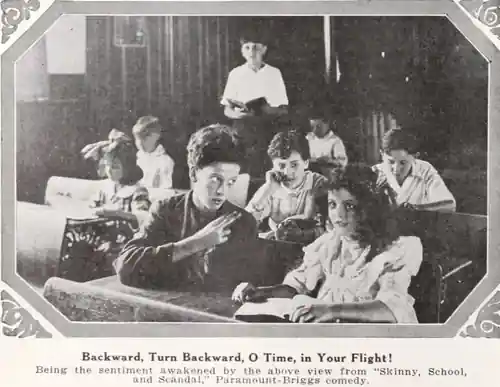
The narrative’s central conflict crystallizes around the annual 'Thornewood Legacy Fund,' an initiative ostensibly designed to bolster student scholarships and campus infrastructure. Spearheaded by Principal Hilda Darron (Hilda Darron), whose performance is a masterclass in controlled authoritarianism, and tacitly endorsed by the powerful Carr family, the fund becomes the fulcrum of the unfolding scandal. Darron, with her impeccably coiffed hair and steely gaze, embodies the very essence of institutional gatekeeping, a woman whose every smile feels carefully calculated. Hilda Darron’s portrayal is so chillingly effective that she elevates what could have been a stock villain into a complex figure, driven by a twisted sense of loyalty to an institution she has, paradoxically, begun to dismantle from within. Her interactions with John Carr (John Carr), the patriarch whose influence looms large over Thornewood, are a fascinating dance of power and complicity, each knowing the other's secrets, each bound by a shared culpability.
The catalyst for Clarence’s investigation is the sudden, inexplicable withdrawal of Myra Brooks (Myra Brooks), a bright student whose academic records are mysteriously sealed. Myra’s absence casts a long shadow, a silent testament to the academy’s darker undercurrents. Myra Brooks, though given limited screen time, leaves an indelible impression, her story serving as the moral compass for Clarence’s quest. Her fate is a stark reminder of the human cost of institutional malfeasance, a powerful emotional anchor that grounds the sprawling narrative. It's in these moments of quiet tragedy that Skinny, School and Scandal truly shines, reminding us that behind every headline and every scandal, there are real lives irrevocably altered.

As Clarence delves deeper, he unearths unsettling financial irregularities, meticulously connecting the dots between Myra’s departure and the opaque dealings of the Legacy Fund. His journey is not one of bombastic heroism, but rather a painstaking, often solitary, pursuit of truth. He’s a detective of the everyday, piecing together whispers, scrutinizing ledgers, and observing the subtle shifts in demeanor that betray deeper secrets. His alliance with Rosemary Carr (Rosemary Carr), initially an unlikely pairing, evolves into one of the film’s most compelling relationships. Rosemary, burdened by the weight of her family’s esteemed name, gradually sheds her initial skepticism, her growing discomfort with her father's secretive machinations leading her to an uneasy but ultimately vital partnership with Clarence. Rosemary Carr's arc is particularly poignant, representing the internal struggle of those born into privilege who must confront the moral failings of their own lineage. Her journey of awakening is a testament to the film's nuanced character development.
The screenplay, penned with remarkable precision by Clare A. Briggs, avoids simplistic black-and-white morality. Instead, it explores the murky grays of human motivation, showing how good intentions can be corrupted and how fear can silence even the most righteous. Lynn Hammond (Lynn Hammond), a young, idealistic history teacher, exemplifies this complexity. She possesses crucial insights into the school’s financial irregularities but is paralyzed by the fear of professional ruin. Lynn Hammond's struggle to reconcile her conscience with her career provides a powerful parallel to Clarence's more audacious pursuit, highlighting the varied forms that courage and compromise can take. Her eventual decision to provide tacit support, however small, is a moment of quiet triumph, underscoring the film’s belief in the collective power of truth.

The technical aspects of Skinny, School and Scandal are equally commendable. The cinematography, with its deliberate use of shadow and light, often casts the grand architecture of Thornewood Academy in an almost gothic pallor, transforming stately halls into oppressive labyrinths. The sound design is subtle yet impactful, employing hushed whispers and the distant echoes of student life to create an atmosphere of constant surveillance and underlying tension. The pacing is a slow burn, building suspense with deliberate precision, allowing the audience to become fully invested in Clarence’s methodical investigation. This methodical approach might not appeal to those seeking instant gratification, but for viewers who appreciate a story that unfolds with organic realism, it is deeply rewarding.
Comparisons to other cinematic explorations of institutional corruption and youthful idealism are inevitable. While it shares thematic DNA with films like The Dark Star in its unraveling of a complex mystery and the pervasive sense of a hidden menace, Skinny, School and Scandal distinguishes itself through its intimate focus on the psychological toll of such an investigation. The moral quandaries faced by its characters echo the difficult choices presented in A Woman's Honor, where personal integrity is pitted against societal expectations and powerful forces. Unlike the more overt class struggles depicted in Her Man, this film explores the subtle, almost invisible, barriers that separate the privileged from the marginalized within a seemingly unified academic community. The coming-of-age aspect, where youthful innocence confronts harsh realities, recalls the formative experiences in When We Were Twenty-One, but with a decidedly darker, more cynical edge.
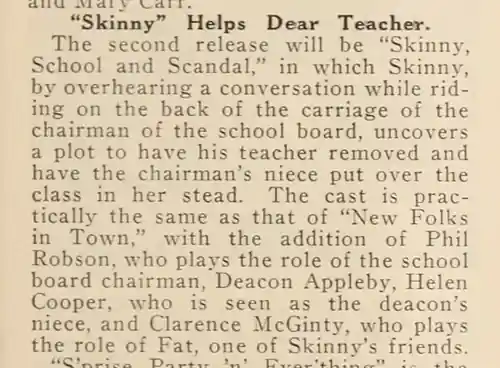
The involvement of Stephen Carr (Stephen Carr), John's brother, adds another layer of intrigue. Stephen, a board member with a more developed sense of ethics, becomes a reluctant but crucial ally, his internal conflict reflecting the broader struggle within the Carr family itself. His decision to provide Clarence with internal documents, however fraught with personal risk, is a turning point, demonstrating that even within the heart of power, dissenting voices can emerge. Stephen Carr's performance is a nuanced portrayal of a man grappling with his conscience, torn between family loyalty and moral imperative. He is not a hero in the traditional sense, but a man who, when pushed to the brink, chooses integrity over complicity, adding a vital dimension to the film's exploration of ethical responsibility.
The climax of Skinny, School and Scandal is masterfully orchestrated. It doesn’t rely on explosive action or melodramatic confrontations, but rather on the quiet power of truth unveiled. The annual Legacy Gala, a public spectacle designed to celebrate the very fund being plundered, becomes the stage for Clarence’s meticulously gathered evidence to be laid bare. The tension leading up to this moment is palpable, a testament to the director's skillful build-up. The revelations, delivered with a quiet conviction by Clarence, supported by a resolute Rosemary and Stephen, ripple through the elite gathering, shattering the carefully constructed facade of Thornewood Academy. The downfall of Darron and John Carr is not a triumphant roar, but a sobering collapse, a powerful statement on the fragility of ill-gotten gains.
Clarence McGinty's journey from 'Skinny' outsider to formidable truth-teller is the beating heart of the film. He emerges not as a hero wielding a sword, but as one armed with notebooks, keen observation, and an unyielding commitment to justice. His transformation is profound, marking his passage from adolescence into a nascent adulthood defined by moral courage. Rosemary, too, is irrevocably changed, forced to confront the tarnished legacy of her family and forge her own path. The film suggests that true honor is not inherited, but earned through difficult choices and unwavering principles. The implications for Thornewood Academy itself are left somewhat open-ended, hinting at the long, arduous process of genuine reform.
The film’s thematic depth extends beyond simple corruption. It delves into the very fabric of identity and belonging. Clarence, initially defined by his 'skinny' frame and scholarship status, redefines himself through his actions. His battle is not just against Darron and Carr, but against the societal expectations that seek to diminish him. The way The Love Brokers examines the intricacies of human relationships, Skinny, School and Scandal dissects the complex web of allegiances and betrayals within a closed community. It’s a powerful exploration of how a single individual, armed with conviction, can challenge entrenched power structures. The film also subtly critiques the education system itself, questioning whether institutions designed for enlightenment can become breeding grounds for deceit when unchecked power takes root.
In its entirety, Skinny, School and Scandal is a compelling, thought-provoking cinematic experience. It eschews gratuitous spectacle for psychological depth, delivering a narrative that is both intellectually stimulating and emotionally resonant. Clare A. Briggs has crafted a timeless tale of integrity versus corruption, reminding us that the pursuit of truth, however arduous, is always a worthwhile endeavor. The performances are uniformly strong, with Clarence McGinty’s quiet intensity and Hilda Darron’s chilling composure standing out as particular highlights. This film isn't merely entertainment; it's a mirror held up to society, reflecting the uncomfortable truths about power, privilege, and the enduring human spirit. It solidifies its place as a crucial piece of social cinema, demanding reflection and fostering dialogue long after the final scene fades to black. It’s a powerful, resonant work that deserves to be seen and discussed widely, a testament to the enduring power of storytelling that challenges, provokes, and ultimately, inspires.
IMDb —
1919
Community
Log in to comment.