DbcultAccessing Vault...
Cult Review
Senior Film Conservator
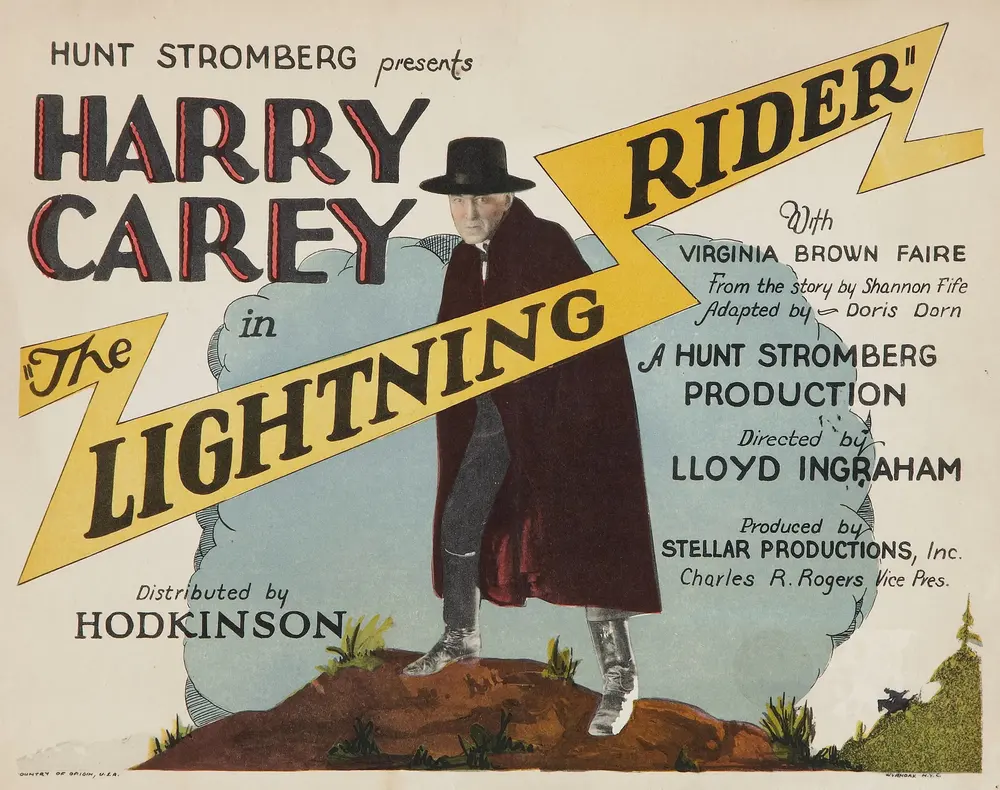
To witness The Lightning Rider is to observe the silent Western evolving into its most sophisticated, albeit gritty, form. This isn't merely a tale of galloping horses and smoky saloons; it is a profound meditation on the performative nature of heroism. In the 1924 cinematic landscape, where the genre often flirted with the simplistic morality of Victorian melodrama, this film dares to plunge its protagonist into a psychological abyss. The town of Caliboro serves as a microcosm of a world in transition, caught between the sacred sanctuary of the church and the profane violence of the borderlands.
The narrative architecture, crafted by the likes of Shannon Fife and Walter Anthony, utilizes a classic setup—the bandit terrorizing the innocent—but subverts it through the mechanism of the 'Black Mask.' Unlike the whimsical transformations seen in Pop Tuttle's Movie Queen, the disguise here is a heavy, spiritual burden. When Harry Carey's Phil Morgan assumes the identity of his nemesis, he isn't just wearing a costume; he is inviting the darkness of the frontier into his very soul.
Harry Carey’s performance is nothing short of foundational. While modern audiences might be more familiar with the later, more cynical Westerns of the 1950s, Carey was already laying that groundwork here. His Phil Morgan is a man of few gestures but immense gravity. He carries the weight of the sheriff’s death—a visceral loss that echoes the tragic undertones of The Last Moment—with a quiet dignity that anchors the film's more chaotic sequences. His transition from the law-abiding deputy to the terrifying 'Black Mask' is handled with a subtlety that belies the era's reputation for overacting.
The physical presence of Carey is contrasted beautifully by Virginia Brown Faire, who brings a luminous vulnerability to the screen. Her role, while traditional in its placement, offers a necessary emotional counterpoint to the masculine brutality of the gang raids. One can see glimpses of the narrative complexity found in The Girl with the Champagne Eyes, where the female perspective begins to encroach upon the male-dominated frontier narrative.
One of the most fascinating aspects of the plot is the priest’s decision to move the church's money. This plot point introduces a theme of 'tainted' or 'burdened' wealth, similar to the moral dilemmas explored in Tainted Money. By moving the gold from the house of God to the office of the Sheriff, the film suggests that in Caliboro, faith is no longer enough to protect the community. The Sheriff’s death, occurring in the very act of protecting this 'sacred' capital, serves as a grim reminder of the high cost of physical security.
The cinematography captures this tension through stark lighting and expansive wide shots that emphasize the isolation of the characters. When the gang attacks, the editing mirrors the frantic, relentless energy of The West~Bound Limited, creating a sense of inevitable momentum that Phil Morgan must somehow stand against. The townspeople, initially seen as a collective to be protected, quickly morph into a frenzied mob—a transformation that highlights the fickle nature of communal justice, much like the social critiques found in The Right to Happiness.
The second act of the film is where The Lightning Rider truly distinguishes itself. Morgan’s infiltration of the gang hideout is a masterclass in tension. The 'complications' mentioned in the plot summary are not merely logistical hurdles; they are existential threats. When the townspeople capture Morgan, thinking he is the real Black Mask, the film enters the territory of the 'double'—a trope explored in various ways in The Devil's Double. Here, the irony is biting: the man who sacrificed his identity to save the town is nearly destroyed by the very people he sought to protect.
This sequence serves as a scathing critique of mob mentality. The townspeople of Caliboro are quick to judge and even quicker to act, blinded by their fear and the surface-level reality of the mask. It’s a thematic resonance that feels surprisingly modern, echoing the misplaced zealotry seen in The Seekers. The film asks: does the mask make the man, or does the man define the mask?
The direction (often attributed to Lloyd Ingraham, though the writers were the credited creative force in many contemporary circles) utilizes the geography of the California border with surgical precision. The hideout is not just a location; it’s a labyrinth of shadow and rock. The use of natural light during the desert pursuits provides a raw texture that studio-bound films of the time lacked. This realism reminds one of the atmospheric depths found in The Bottom of the Well, where the environment is as much a character as the actors themselves.
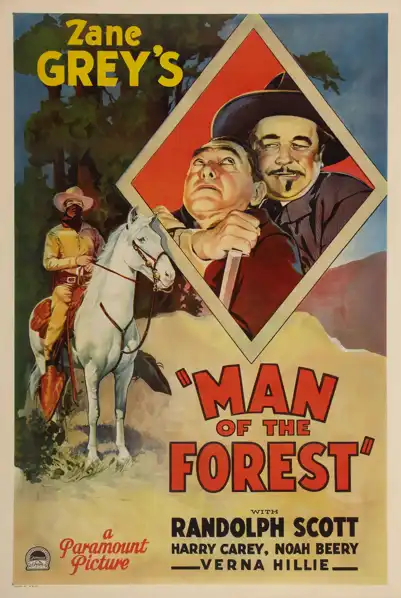
Furthermore, the inclusion of Madame Sul-Te-Wan—a trailblazer in silent cinema—adds a layer of historical significance to the cast. Her presence, along with veterans like Thomas G. Lingham, ensures that even the supporting roles are imbued with a sense of lived-in history. The ensemble works together to create a world that feels inhabited, far removed from the staged artifice of A Regiment of Two.
In analyzing The Lightning Rider, one must acknowledge its place in the lineage of the 'undercover' Western. It predates the more famous iterations of the trope by decades, yet it handles the psychological fallout with a maturity that few of its successors matched. The 'complications' that ensue are resolved not just through a final shootout, but through a restoration of truth—a difficult, dusty truth that leaves no one unchanged.
Compared to international silent works like Strandhugg på Kavringen, which deals with coastal isolation, or the European sensibilities of Der Schloßherr von Hohenstein, Carey’s film is quintessentially American—obsessed with the individual’s struggle against both the lawless wild and the restrictive town. It lacks the domesticity of Ma Hoggan's New Boarder, opting instead for a panoramic view of human fallibility.
The film’s climax is a masterclass in silent storytelling. Without a word, the tension between Morgan and the mob is resolved through action that speaks to character rather than mere spectacle. It is a resolution that feels earned, avoiding the convenient 'tenth case' logic of The Tenth Case or the somewhat theatrical endings of Madeleine.
Ultimately, The Lightning Rider survives as a testament to the power of the silent image. It reminds us that before the Western became a playground for revisionist history, it was a vital, breathing canvas for exploring the human condition. Harry Carey, with his weathered face and iron-clad resolve, remains the definitive avatar for this era. If you seek a film that combines the thrill of the chase with the weight of a moral odyssey, you need look no further than this 1924 gem. It is a striking reminder that sometimes, to see the light of justice, one must first embrace the darkness of the mask.
Reviewer's Note: For those tracing the evolution of the Western hero, this film is an essential bridge between the pulp adventures of the 1910s and the complex character studies of the 1930s. Its restoration and preservation remain a priority for any serious cinephile.
IMDb —
1917
Community
Log in to comment.