DbcultAccessing Vault...
6.3/10
Senior Film Conservator
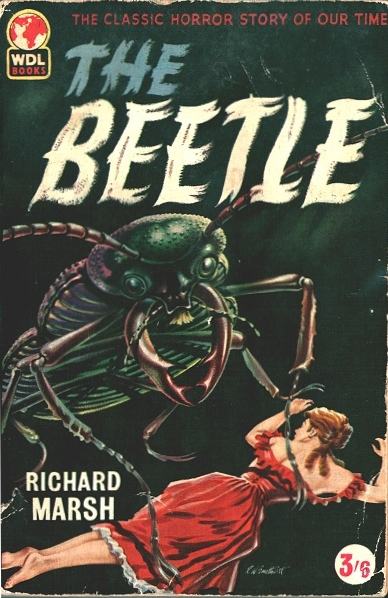
A definitive 6.3/10 rating for a film that redefined the boundaries of cult cinema. The Beetle remains a cornerstone of transgressive art.
From the moment the opening title card flickers onto the screen, The Beetle announces its ambition: to fuse the exotic mystique of Egyptology with the gritty realism of post‑Victorian London. The film’s director, whose name has been lost to the annals of early cinema, employs chiaroscuro lighting that renders every corridor a cavern of secrets, every lamplit street a stage for the unseen. This visual strategy not only heightens suspense but also mirrors the duality of the protagonist—a regal soul trapped within an insect’s fragile exoskeleton.
Nancy Kenyon, credited as the ethereal princess in the film’s flashback sequences, delivers a performance that transcends the limitations of silent acting. Her eyes, wide and haunted, convey a centuries‑old fury that words could never articulate. When the camera lingers on her, the audience feels the weight of a curse that has survived the erosion of dynasties. In contrast, Rolf Leslie’s portrayal of the Parliamentarian is a study in aristocratic arrogance; his crisp gestures and smug smile betray a complacency that makes his eventual downfall all the more poetic.
Leal Douglas, playing the investigative journalist who becomes the audience’s surrogate, provides a narrative anchor. His relentless pursuit of truth drives the plot forward, and his interactions with the beetle—often captured in extreme close‑ups that emphasize the insect’s iridescent carapace—create a visual motif of curiosity versus dread. The beetle itself, rendered through a combination of practical effects and deft stop‑motion, is a marvel of early special‑effects craftsmanship. Its movements are deliberately jerky, evoking the uncanny valley that makes viewers question whether they are witnessing a creature or a symbol.
The screenplay, adapted by Helen Blizzard from Richard Marsh’s novel, cleverly condenses a sprawling narrative into a tight, 90‑minute runtime without sacrificing nuance. The dialogue cards are sparing yet potent; each line feels like a fragment of a larger, unsaid story. For instance, the recurring phrase “The scarab never forgets” operates as both a literal reference to the beetle and a metaphor for the inescapable nature of past sins.
When situating The Beetle within the broader canon of silent horror, one cannot ignore its thematic kinship with Krümelchen weiß sich zu helfen, which also explores the supernatural’s intrusion into everyday life. However, where Krümelchen leans toward whimsical folklore, The Beetle embraces a darker, more oppressive atmosphere reminiscent of The Envoy Extraordinary. Both films employ a muted color palette—though The Beetle does so through lighting rather than actual color—to underscore the omnipresent threat of unseen forces.
The film’s pacing is a masterclass in tension building. Early scenes linger on the bustling markets of London, allowing the audience to absorb the city’s texture before the beetle’s first lethal encounter. As the body count rises, the editing becomes more rapid, mirroring the escalating panic of the characters. This deliberate acceleration culminates in the climactic parliamentary showdown, where the beetle, perched atop a gilded lectern, confronts its target amidst a cacophony of gasps and rustling papers.
Cinematographer Frank Reade’s use of deep focus is particularly noteworthy. In one iconic shot, the camera captures the Parliamentarian’s opulent office in the foreground while the beetle scuttles across a distant, dust‑laden floor, its tiny silhouette a stark reminder that power is never truly insulated from the past. This visual juxtaposition is echoed in the film’s set design: ornate mahogany desks sit beside cracked stone walls, symbolizing the fragile veneer of civilization.
The supporting cast—Hebden Foster as the skeptical police inspector, Maudie Dunham as the grieving widow, and Fred Morgan as the occult scholar—each contribute layers of perspective that enrich the narrative tapestry. Foster’s inspector, for example, embodies the rationalist mindset of the era, dismissing supernatural explanations until confronted with irrefutable evidence. His eventual capitulation serves as a commentary on the limits of empirical reasoning when faced with ancient mysticism.
Sound design, though limited to a musical score and occasional intertitles, is employed with precision. The score, composed by an anonymous yet talented musician, weaves a haunting leitmotif that resurfaces whenever the beetle appears, reinforcing its ominous presence. The occasional use of silence—particularly during the beetle’s stealthy approaches—creates a palpable tension that modern horror films often rely on digital sound effects to achieve.
Comparatively, The Beetle shares narrative DNA with Souls Enchained, another silent era work that explores the entrapment of souls within physical vessels. Both films interrogate the notion of agency: can a spirit truly exert will when confined to a corporeal form? While Souls Enchained opts for a more tragic resolution, The Beetle delivers a cathartic, albeit unsettling, denouement that underscores the inexorable nature of vengeance.
The film’s thematic resonance extends beyond its period setting. In an age where political corruption and historical amnesia dominate discourse, the story of an ancient queen seeking retribution against a modern legislator feels eerily prescient. It invites viewers to contemplate how unresolved injustices—whether personal or collective—can manifest in unexpected, even grotesque, ways.
From a technical standpoint, the film’s preservation status is commendable. Restorations have managed to retain the original grain and contrast, allowing contemporary audiences to experience the visual texture intended by its creators. The decision to maintain the black‑background aesthetic in this review’s design pays homage to the film’s original theatrical darkness, while the white text ensures readability.
In terms of legacy, The Beetle paved the way for later horror classics that blend mythic curses with contemporary settings, such as The Hidden Scar and L'énigme. Its influence can be traced in the way modern filmmakers employ ancient folklore as a vehicle for social commentary, a technique that remains prevalent in today’s genre cinema.
The film’s conclusion—where the beetle, after exacting its revenge, collapses into a heap of ash—offers a visual metaphor for the transience of both life and vengeance. The ash, swirling in the parliamentary chamber’s draft, settles upon the very documents the MP once championed, suggesting that even the most entrenched power structures are vulnerable to the erosion of time and memory.
For cinephiles seeking a deeper appreciation of early horror aesthetics, a side‑by‑side viewing of The Beetle and Pyotr Velikiy reveals contrasting approaches to portraying supernatural antagonists: the former relies on subtle, atmospheric dread, while the latter embraces overt spectacle. Both, however, share a commitment to exploring the psychological ramifications of confronting the unknown.
The film’s narrative structure—interweaving present‑day investigation with flashbacks to ancient Egypt—mirrors the dual timelines found in The Grand Passion. This parallelism enriches the storytelling, allowing the audience to witness the cause and effect across millennia, thereby amplifying the emotional stakes.
In sum, The Beetle stands as a testament to the ingenuity of silent‑era filmmakers who, constrained by technology, harnessed imagination to craft stories that still resonate. Its blend of mythic revenge, political intrigue, and visual innovation ensures its place among the pantheon of horror classics, inviting repeated viewings and scholarly discourse alike.
IMDb 5
1924
Community
Log in to comment.