DbcultAccessing Vault...
Cult Review
Senior Film Conservator

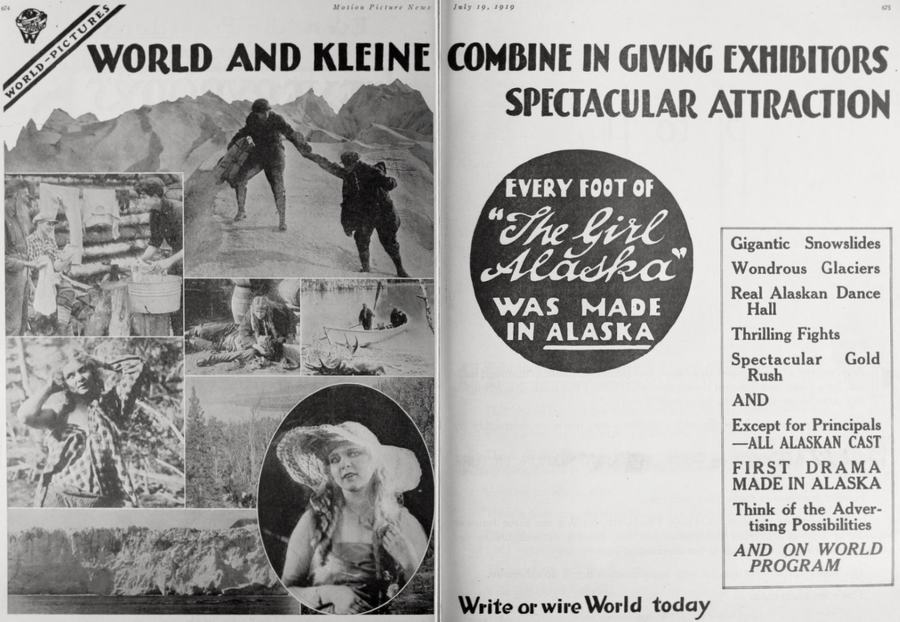
The silent era gifted cinema a handful of narratives that still echo in contemporary storytelling, and The Girl Alaska is a luminous exemplar. Its premise—an orphaned girl masquerading as a boy to chase a father’s elusive promise—unfolds against the stark, unforgiving backdrop of the Yukon, a setting that becomes as much a character as any human protagonist.
Lottie Kruse, embodying Mollie with a blend of steely resolve and tender vulnerability, navigates the film’s tonal shifts with a poise that belies the medium’s technical constraints. Her performance is a study in silent expressiveness: a lingering glance, a clenched jaw, the subtle tilt of a head—all convey a narrative depth that words could scarcely match.
C. Edward Cone’s Phil Hadley serves as both foil and confidant. Their chemistry, rendered through synchronized glances and mirrored gestures, feels organic, avoiding the melodramatic excesses that plague many contemporaneous productions. The duo’s camaraderie evolves from transactional partnership to a bond forged in shared adversity, a trajectory that feels both inevitable and freshly surprising.
The film’s visual palette, though constrained to monochrome, exploits contrast to accentuate the Yukon’s brutal beauty. Snow‑capped peaks loom in the distance, while the cramped interiors of the prospector’s cabin pulse with claustrophobic intimacy. The cinematographer’s use of chiaroscuro—light slicing through the darkness—mirrors Mollie’s internal struggle between concealment and revelation.
Narratively, the story is a tapestry woven from classic motifs: the quest for gold, the search for identity, and the redemptive power of love. Yet it subverts expectations by placing a female protagonist at the center of a traditionally masculine adventure, challenging early 20th‑century gender norms with a subtle, yet potent, feminist undercurrent.
When Mollie discovers the old timer’s mine, the film pivots from a survival tale to a treasure‑hunt spectacle. The mining sequences, choreographed with rhythmic precision, juxtapose the clatter of pickaxes against the quiet determination etched on Mollie’s face. The old man’s revelation—he is her father—delivers a cathartic emotional crescendo, echoing the paternal reunions found in Les Misérables (1917) and The Life Story of John Lee.
Phil’s recurring illnesses function as narrative devices that repeatedly thrust Mollie into the caregiver role, reinforcing her agency and compassion. Each episode of nursing underscores a reversal of traditional gender expectations: the male youth is rendered dependent, while the female protagonist assumes the mantle of healer.
The film’s climactic revelation—Phil’s discovery of Mollie’s true sex during a bathing scene—unfolds with a delicate balance of humor and pathos. The moment is handled without sensationalism; instead, it is a quiet acknowledgment of authenticity, a theme resonant with modern audiences attuned to discussions of gender fluidity.
The impromptu marriage, officiated by a traveling minister, serves as both narrative resolution and symbolic unification of the film’s dual themes: love and wealth. Their return to civilization, now affluent from the hidden mine, offers a bittersweet commentary on the cost of ambition and the price of secrecy.
From a technical standpoint, the film’s editing is commendable. Cuts between the steamer’s bustling decks and the desolate Yukon wilderness are seamless, maintaining narrative momentum while preserving atmospheric tension. The intertitles, sparingly employed, convey essential dialogue without disrupting the visual flow.
The supporting cast, though limited, contributes meaningfully. Henry Bolton’s portrayal of the old prospector exudes a weary gravitas, his final confession delivering an emotional anchor that grounds the film’s more fantastical elements.
Comparatively, The Girl Alaska shares thematic DNA with Merely Mary Ann, particularly in its exploration of a young woman navigating a male‑dominated world. However, where Merely Mary Ann leans toward domestic melodrama, The Girl Alaska thrusts its heroine into the raw, untamed frontier, amplifying the stakes and the narrative’s visceral impact.
The film’s pacing, while deliberate, never lapses into monotony. Each act—boarding the steamer, the labor on deck, the trek to the cabin, the mining triumph, the revelation, and the final return—functions as a self‑contained arc, collectively composing a symphonic whole.
The use of color symbolism, despite the black‑and‑white medium, is cleverly implied through costume and set design. Mollie’s modest attire, initially muted, gradually adopts brighter hues as she embraces her true identity, a visual metaphor echoed in the film’s occasional use of tinted frames—a technique popularized in the era’s epics.
The film’s soundscape, though silent, is enriched by the implied auditory cues: the creak of the steamer’s hull, the clatter of deck‑washing, the distant howl of the Yukon wind. Modern screenings often pair these visuals with period‑appropriate scores, enhancing immersion without compromising authenticity.
In terms of cultural impact, The Girl Alaska prefigures later cinematic explorations of gender disguise, such as the 1930s classic Boots, and anticipates contemporary narratives that interrogate the fluidity of identity.
The film’s legacy endures not merely as a relic of silent cinema but as a touchstone for discussions about agency, resilience, and the transformative power of love amidst adversity. Its narrative elasticity allows it to be revisited through various critical lenses—feminist, historical, and genre‑specific—each yielding fresh insights.
For scholars of early American cinema, the film offers a case study in how frontier mythos was leveraged to challenge societal norms. Its production values, while modest, demonstrate an ambition to craft a story that transcends its budgetary constraints.
The film’s distribution history, though fragmented, underscores the challenges faced by independent productions of the era. Surviving prints, restored by dedicated archivists, attest to the enduring fascination with its narrative daring.
Modern audiences, accustomed to high‑definition spectacle, may find the pacing measured, yet the emotional resonance remains potent. The universality of Mollie’s quest—seeking belonging, confronting deception, and ultimately claiming her truth—speaks across generations.
In sum, The Girl Alaska is a masterclass in silent storytelling, marrying visual poetry with a plot that defies its time. Its blend of adventure, romance, and identity politics renders it a timeless artifact worthy of both scholarly attention and casual appreciation.
If you are intrigued by narratives that blend frontier grit with intimate character study, consider exploring related titles such as Paying the Price or Red Crossed, which echo similar thematic currents.
Ultimately, the film invites viewers to contemplate the masks we wear, the gold we chase—whether literal or metaphorical—and the love that can emerge when we finally lay our façades aside.

IMDb 5.7
1936
Community
Log in to comment.