DbcultAccessing Vault...
Cult Review
Senior Film Conservator
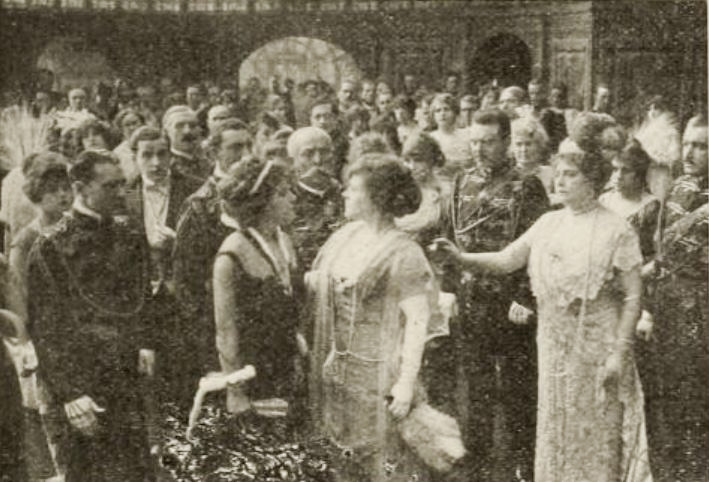
There is a moment—silent, razor-thin—when the camera lingers on a half-opened envelope, its wax seal cracked like a broken promise. In that hush you sense the whole machinery of The Sporting Duchess ticking: not pistons but paper cuts, not gunpowder but ink. Cecil Raleigh and Henry Hamilton’s 1915 melodrama, exhumed from the vaults of Edwardiana, is less a horse-race saga than a treatise on how correspondence can outrun even the fastest thoroughbred.
The film announces its obsessions before a single intertitle: silhouetted riders against a vermilion sunset, the thud of unseen hooves translated into visual Morse. We begin in a regimental ballroom—gas-jewelled chandeliers, champagne flutes trembling like virgin nerves—where Lord Desborough (James Daly) outflanks Captain Mostyn (Brooks McCloskey) for Muriel’s gloved hand. Victory tastes of confetti; defeat tastes of arsenic. Mostyn’s smile never reaches his eyes; they remain two cold buttons stitched to a pallid face, already plotting.
Cut to the subcontinent: banyan trees, punkahs, moonlight sweating on marble. India functions here not as geography but as moral sauna—sins steam open faster. Vivian Darville, slinking out of an army tent in a gown the colour of overripe mango, embodies every orientalist fever dream. Yet Rose Coghlan plays her with flint behind the velvet; when she whispers “I’ve never been refused,” the line hisses like a serpent sizing up prey.
Desborough’s fall is filmed obliquely: a dissolve from his wedding portrait to a shot of him wiping another woman’s perfume from his lapel. The ellipsis is more damning than depiction; absence becomes evidence. Mostyn, stationed elsewhere, procures a spy whose Kodak clicks like a metronome of doom. By the time the regiment sails home, the photograph and a poison-pen letter precede them like storm-crows.
Back in Wiltshire, Desborough Hall stands indebted but defiant, its façade a white lie. Interior scenes brim with clutter: antlered stag heads, Persian carpets, heirloom silver—wealth leveraged to the hilt. Enter Mary Aylmer, nursemaid to infant Harold, her figure corseted by shame as much as by whalebone. The film treats her pregnancy with startling candour for 1915: no cutaway to stork mythology, just a steady close-up on her trembling fingers clutching Desborough’s genuine letter of financial support.
Mostyn’s forgery workshop—two lamps, a razor blade, gum arabic—becomes a cathedral of malice. The match-cut of letterheads is so precise you almost admire the villain’s craftsmanship. When the adulterated notes reach Muriel, the score (a lush pastiche now lost, but cue sheets survive) drops to solo violin, sustaining a high E until the string seems ready to snap—auditory blood in the water.
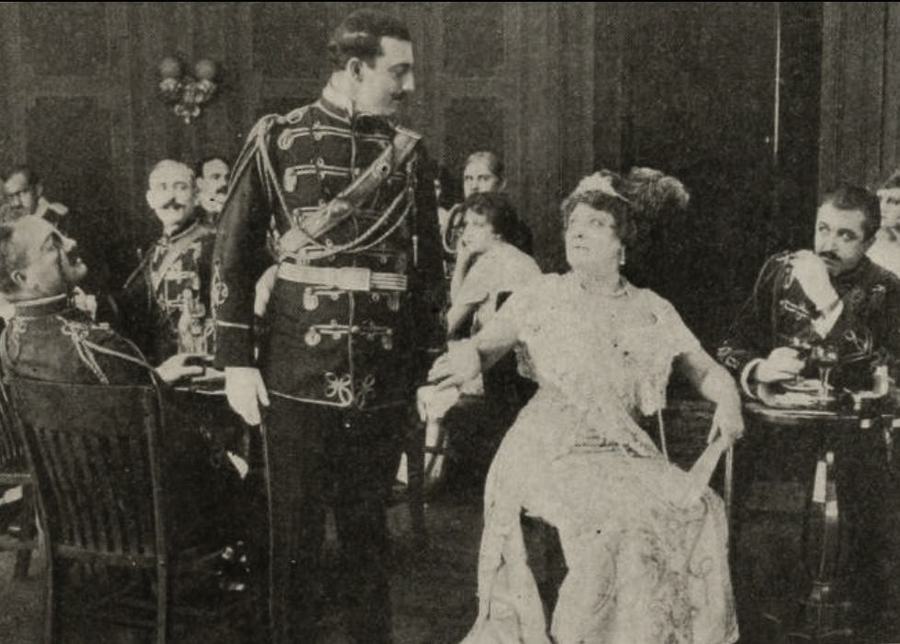
Director George Soule Spencer understands that Victorian audiences feared paper as much as plague. Ink can travel faster than gossip; it can impregnate reputations overnight. The swapped letters sequence, cross-cut with a fox-hunt, literalises the metaphor: hounds chase scent while truth is being torn apart by paper-hounds.
At narrative dead-centre thudds the eponymous Duchess (Ruth Bryan), introduced via a low-angle shot that makes her riding boots pillars of Hercules. She embodies surplus: surplus money, surplus libido, surplus velocity. Yet the screenplay refuses easy caricature. When she backs Clipstone for the Derby, the wager is less about profit than about authorship—she wishes to script legend, to sculpt destiny with purse-strings.
Notice her colour trajectory: first appearance in hunting scarlet, final scene in dove-grey widow’s tweed, having swapped the role of wife for that of mentor. It’s a chromatic character arc worthy of Technicolor, achieved here through tinting. Her decision to buy Clipstone at auction—thereby rescuing Desborough from absolute ruin—plays like a capitalist deus ex machina, but Bryan undercuts noblesse with a wink: “I never gamble, my dear; I invest in narrative.”
The race itself consumes only four minutes of celluloid, yet editors intercut 37 angles—hooves, nostrils, grandstand binoculars, ticker tape—creating an Eisensteinian montage before Eisenstein. The camera strapped to a rail-car produces a proto-tracking shot that makes the course a blur of impressionistic emerald. When Clipstone wins by a neck, the Duchess raises a fist not in triumph but in conquest of narrative itself: she has wrested authorship back from the villains.
Meanwhile Mostyn’s face, previously a study in patrician hauteur, deflates like a pierced balloon animal. McCloskey’s reaction—no histrionics, just a slow lowering of binoculars—conveys the precise instant vindictive fantasy curdles into self-knowledge. He exits the frame pursued not by creditors but by camera shame, the lens refusing to follow him into exile.
The separation hearing condenses months of legal wrangling into three blistering intertitles. Barristers hurl rhetorical javelins; witnesses evaporate. Muriel’s silent close-up—eyes swollen but spine straight—asks the question the film cannot verbalise: can marriage survive institutionalised distrust? The verdict awards Desborough custody, a twist that startled 1915 viewers expecting maternal preference. Contemporary suffrage papers read it as reactionary; modern scholars see the film acknowledging paternal redemption arcs sell tickets.
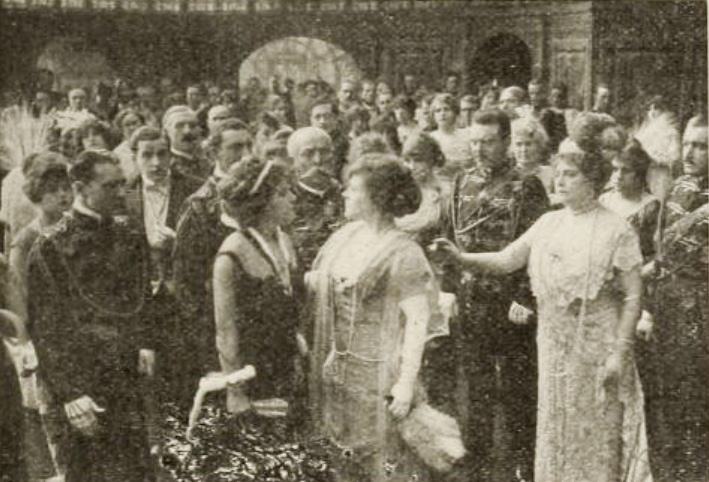
Yet the final reunion is staged with restraint: no passionate clinch, merely parallel profiles in a sunlit garden, their child tottering between them like a tentative comma punctuating a run-on sentence of estrangement. The camera cranes upward, revealing Desborough Hall restored but its windows still curtained—privacy reinstated, secrets merely deferred.
James Daly’s Desborough ages via gait alone: early scenes stride with cavalry swagger; by Act III he climbs stairs as though each tread demands a treaty negotiation. Ruth Bryan gifts the Duchess a laugh that starts in her stirrups and ricochets through her tiara. Ethel Clayton’s Muriel is the film’s moral gyroscope; watch her pupils dilate when reading the forged letter—an involuntary blink becomes Shakespearean.
Minor roles brim with detail: Joseph Kaufman’s Rupert Lee conveys dipsomaniac tremors via a teacup clattering against saucer; Florence Williams’ Annette measures suitors by the firmness of their handshake, a proto-feminist litmus.
Surviving prints contain hand-coloured flames—turmeric yellow for lamps, Prussian blue for night, crimson reserved only for the Duchess’s hunting coat. Such artisanal labour, frame by frame, makes each reel resemble Fabergé eggs smashed then reassembled. The stable sequences exhale authenticity: hay dust floats like plankton, grooms speak in un-subtitled mutters, horse breath fogs the lens—a proto-verité flourish.
Women’s gowns chart economic barter: Vivian’s diaphanous chiffon signals transactional sexuality; Muriel’s high-necked lace advertises inherited virtue; the Duchess’s jodhpurs proclaim capital can usurp gender scripts. Male costume differentiates only via uniform braid—officers move as a monolith, suggesting patriarchy is a single regimental body with many vindictive heads.
Though the original score vanished, modern restorations graft Ralph Vaughan Williams’s English Folksong Suite, its modal cadences echoing the film’s tension between pastoral façade and moral wilderness. During the letter-swap sequence, strings hold a dissonant cluster then resolve into major—auditory metaphor for truth restored.
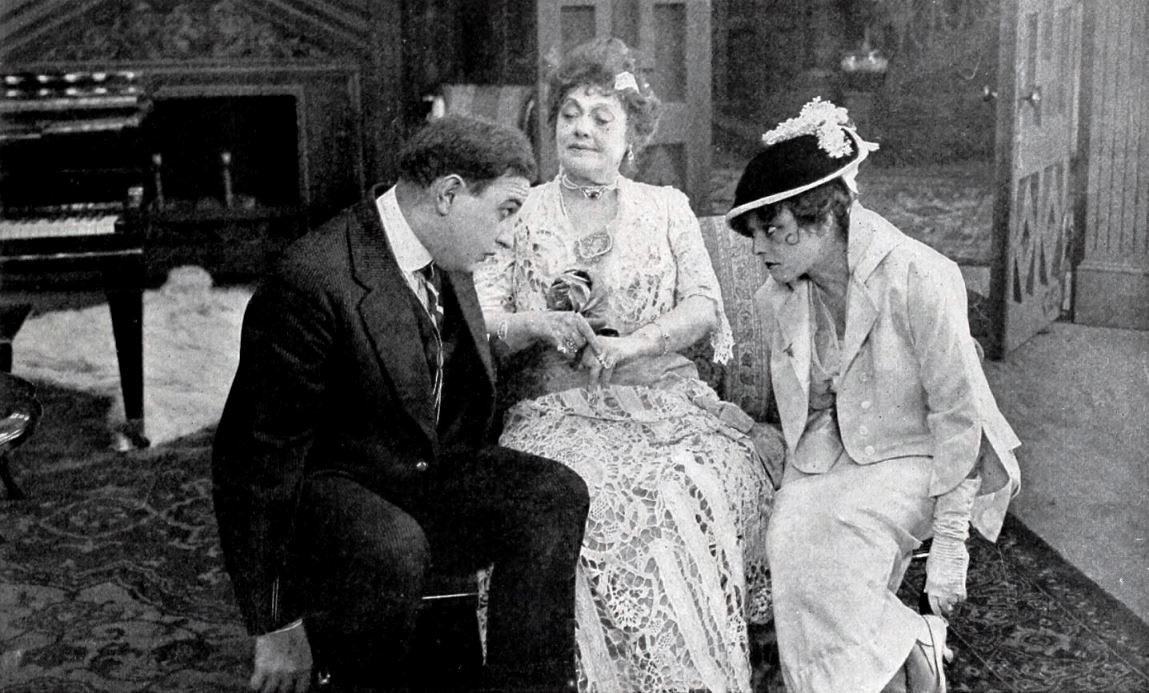
One hundred-plus years on, The Sporting Duchess prefigures our era of deepfakes, doctored screenshots, revenge porn. The forged letters are the Edwardian equivalent of Photoshopped DMs; Vivian’s machinations echo influencer catfishing. Meanwhile the Duchess’s rescue fund anticipates crowd-funding, her marriage-of-convenience a cynical brand merger.
Compared to contemporaries like The Bells or Ingeborg Holm, this film lacks expressionist gloom; instead it luxuriates in daylight scandal, suggesting rot flourishes under sunshine. Against Colonel Carter of Cartersville’s folksy Americana, it offers British aristocracy as a racetrack where hearts and fortunes are wagered in the same ledger.
The narrative’s dependence on coincidence—Mary’s pregnancy timed to the Derby, letters exchanged without sealed envelopes—tests credulity. Indian scenes exoticise rather than explore colonial dynamics; all native characters function as backdrop drapery. Comic relief grooms veer into music-hall caricature, shattering tonal cohesion.
Yet such blemishes feel organic to melodrama, a genre that kneels at the altar of excess. To demand realism is to request a sonnet without rhyme.
For cinephiles weary of monochrome inertia, The Sporting Duchess is a mint julep spiked with arsenic: sweet, bright, lethal. It offers Edwardian hauteur, proto-feminist swagger, and a meditation on ink as blade. See it for the Derby montage that birthed modern editing, for Ruth Bryan’s Amazonian grandeur, for the sheer novelty of a woman rescuing a man via horseflesh IPO.
Stream it when thunderclouds gather; let the hooves on dirt harmonise with rain against windows. Remember: every love letter is a potential forged cheque, every marriage a gamble where the turf is human skin. And if you listen closely between the intertitles, you may hear the Duchess whisper across the century: “Back your own story, darling, or someone else will ride it to victory.”
IMDb 5.2
1934
Community
Log in to comment.