DbcultAccessing Vault...
Cult Review
Senior Film Conservator
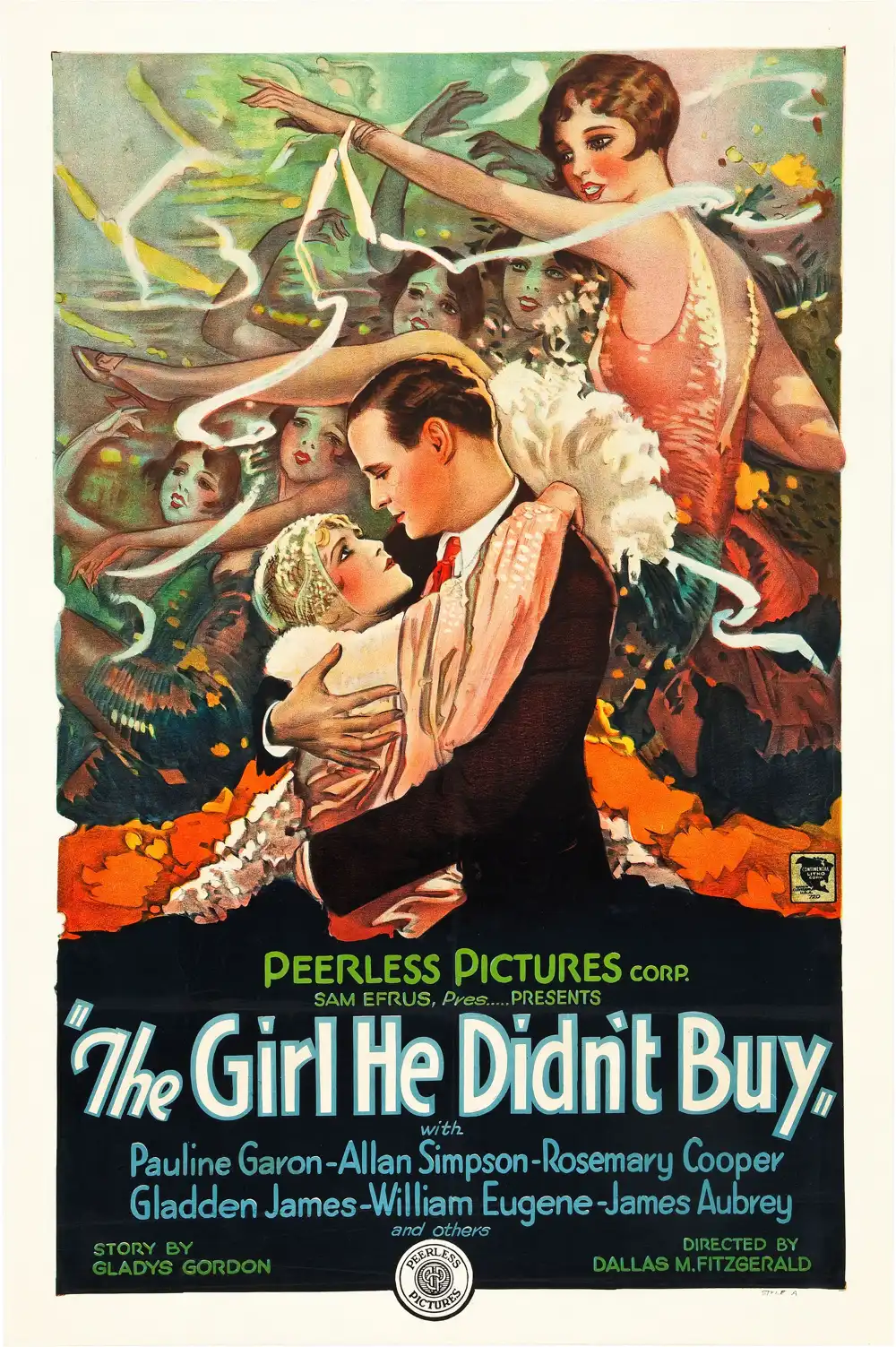
Right off the bat, if you're not already deep into silent-era melodrama or very early talkies, The Girl He Didn't Buy is probably not for your Friday night. It's got that specific kind of plot, you know, where a "pure" girl gets caught between an ambitious career move and true love. If you enjoy watching good folks navigate utterly bonkers social traps from a century ago, this might just be a curiosity worth a look; otherwise, you might find yourself checking the clock. 🕰️
The story hangs on Ruth Montaige, played by Pauline Garon, who is described as "dumb but pure." And honestly, the film leans into that description. Ruth is offered a starring role by Philip D'Arcy (William Eugene), a man with money and, apparently, a rather specific, transactional idea of romance. He wants her to agree to marry him in a year. A year! It's such a strange, business-like proposal, even for a gold-digger plot. Ruth, bless her heart, agrees, thinking she’ll get her stardom and then ditch the "lustful money-man." You can almost feel the movie trying to convince you this contract is a good idea for her.
Of course, true love, as it always does in these tales, strolls right in in the form of Edwin Edinburh (Allan Simpson). He's pure, she's pure, and they fall hard for each other. This, predictably, does not sit well with Philip D'Arcy. William Eugene plays D'Arcy with a kind of smug villainy that’s almost too perfect. He just oozes bad intentions, especially when he's glowering from across a room. It’s less subtle menace and more "I'm the bad guy, look at my face!"
The plot really gets moving when D'Arcy decides to ruin Ruth. He enlists a jealous girl from the show’s cast – because of course there’s a jealous girl – to set up a situation. This leads to the infamous deserted yacht scene. It’s supposed to be this huge scandal, right? Ruth and Edwin, alone on a boat. The movie really wants you to understand how terrible this looks, how it could just shatter a woman’s career and reputation. The tension here feels so specific to its time, it’s almost quaint now. The stakes are so high for such a seemingly minor thing.
Pauline Garon as Ruth tries her best to convey innocence and distress through some truly dramatic expressions. There's a moment when she realizes the trap, and her eyes widen so much it’s almost comical. You can tell she's really putting her all into that "pure but dumb" part of the character brief.
The pacing is a bit all over the place. Some scenes drag a touch too long, letting the melodramatic setup sink in. Then other pivotal moments feel rushed, almost like they knew the audience already got the gist and wanted to move to the next bit of anguish. The whole "shame and scandal" bit, for example, is hammered home with a few lingering shots of shocked faces, and then we're quickly on to the fallout.
Watching D'Arcy and the jealous girl cook up their schemes, it’s all very straightforward villainy. No complex motivations here, just pure spite. It’s refreshing in a way, like a comic book where the bad guy is just bad. No deep trauma, just "I didn't get what I wanted, so I'll destroy it."
The film doesn't really try to explore the deeper implications of Ruth's choices or the societal pressures on women in show business back then. It's more concerned with the surface-level drama. And that's fine, sometimes you just want to watch a simple story unfold. No need for profound explorations of the human condition here. Just a girl, a greedy man, and a good guy.
Is it a lost gem? Probably not. But it’s a neat little time capsule of what passed for high drama on screen. You see the seeds of so many tropes that would follow. If you're a film student or just someone curious about the early days of Hollywood, it's worth a quick peek. Otherwise, there are plenty of other silent films to explore. This one is just... okay.
Oh, and the title cards, if it’s a silent, have this certain flair to them. They really lean into the dramatic pronouncements. 📜
IMDb —
1913
Community
Log in to comment.