DbcultAccessing Vault...
Cult Review
Senior Film Conservator
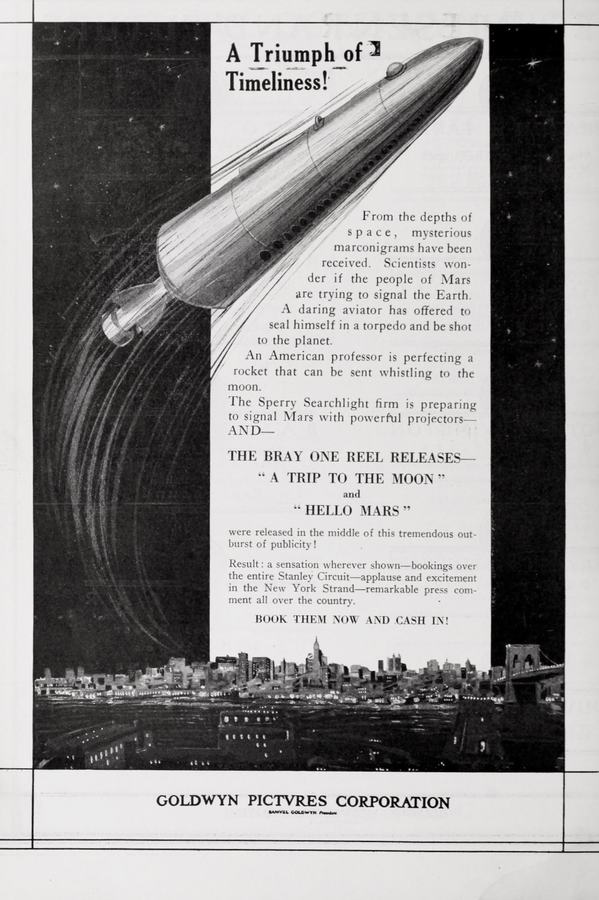
A rusted bullet of celluloid shot into the constellations of absurdity, Hello, Mars! lands in 2024 like a bootleg comet nobody ordered yet everybody will claim they tracked first.
Max Fleischer—yes, that Max, the cartoon alchemist who bent Betty Boop into rubbery immortality—here moonlights as a zero-gravity Charlie Chaplin, his face a porcelain plate onto which the cosmos smears jam of existential panic. He never speaks; he doesn’t need to. His eyebrows carry on a Chekhovian dialogue while his knees negotiate with gravity like broke landlords. The rocket itself, cobbled from corrugated tin and optimism, rattles like a jalopy on a country road, each bolt trembling with the secret wish to become a star.
Once airborne, the film sheds plot the way snakeskin molts in August. Narrative becomes a optional accessory, like spats at a hurricane. Instead, we drift through episodic fever dreams: a Martian music hall where synchronized dust-storms perform can-can kicks; a telescope that peers not into space but into the viewer’s own childhood; a sunset that bleeds not crimson but the exact shade of your first heartbreak. The intertitles, sparse as haiku, read like Rimbaud telegrams: “Gravity is a rumor we stopped believing at suppertime.”
The palette—hand-tinted frames salvaged from an Estonian archive—flares into tangerines and bruised violets that feel illegal in monochrome minds. One reel exists only in magenta; another drifts into sickly chartreuse, as though the spectrum itself has altitude sickness. These chromatic hiccups aren’t glitches but emotional weather reports, forecasting whatever storm churns behind Fleischer’s saucer eyes.
Compare it to Under the Top and you’ll spot the same carnivalesque nihilism, yet where that film keeps one foot in the sawdust ring, Hello, Mars! pirouettes into the astral abyss. Or stack it beside The Greatest Question, another morality tale wrestling with cosmic bookkeeping; both ask whether salvation is a destination or a typo, but only Fleischer’s odyssey thinks to install a soda fountain on the road to Damascus.
Sound? A ghost. The existing print bears a synchronized track of crackle and wheeze, like Edison’s tubercular cousin. Yet listen closer: beneath the hiss lurks a phantom waltz, possibly recorded on wax cylinder by a Martian dance band high on ether. Modern audiences, spoiled by THX, may mistake decay for design; they’d be half right. Time itself has become foley artist, adding strata of history’s nervous cough.
Feminist critics will note the conspicuous absence of women aboard the capsule, yet Mars itself performs drag, its ochre dunes shimmying like Josephine Baker in a skirt of comet tails. Queer theorists will salivate over the rocket’s phallic uncertainty—first erect, then limp, then blooming into a metallic lotus—gender mutating faster than you can say “Houston, we have a pronoun.” Post-colonial scholars may grumble that the planet gets treated like a blank slate for masculine angst, but the film anticipates them: a subtitle retorts, “Imperialism is just homesickness in a top hat.”
The editing performs surgery without anesthesia. Jump cuts slam months into milliseconds; continuity becomes a bourgeois luxury jettisoned with the booster tanks. In one impossible match-cut, a close-up of Fleischer’s blinking eye replaces the porthole; the iris dilates until the capsule interior becomes the Milky Way in miniature. Soviet montage theorists would sell their mothers for such neural whiplash.
And then there’s the gag about gravity. Halfway through, the traveler unscrews his boots and hangs them on an invisible coat rack; they float mid-frame like surrealist slippers. Later, he tries to sit on a chair that has drifted three feet starboard—he falls, but instead of crashing, he loops into a slow-motion somersault, yawns, and reads yesterday’s newspaper. It’s slapstick for astrophysicists, pratfalls quantized by Planck.
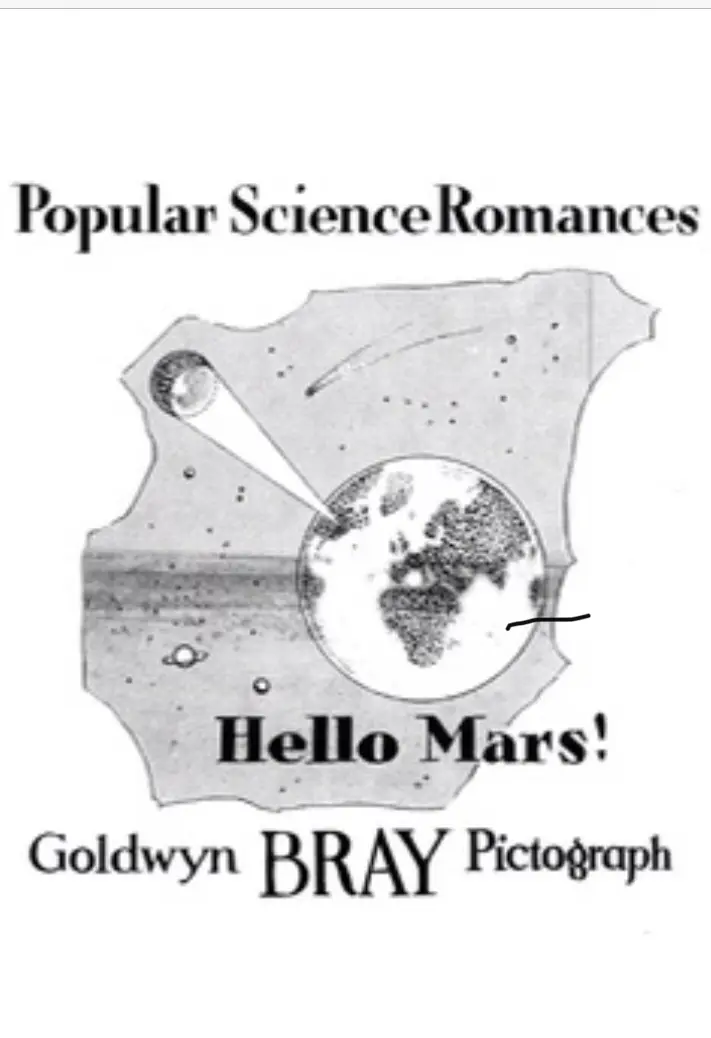
Emotionally, the picture plays like a love letter addressed to “Occupant.” Fleischer’s loneliness is so dense it acquires moons. Yet the film refuses self-pity; it tickles the void until the void snorts champagne. When homesickness stabs, he wards it off by teaching the vacuum of space to whistle By the Light of the Silvery Moon. The tune returns in the final reel, now a dirge hummed by Martian wind, proving that even desolation can carry a torch for Tin Pan Alley.
Some historians insist the production went bankrupt mid-shoot, forcing the crew to fashion a climax from scraps: a papier-mâché cosmos, cigarette smoke for nebulae, sparklers for supernovae. If so, bankruptcy has never looked so opulent. The “resourceful poverty” rivals The Cigarette Girl and her gum-wrapper couture, yet escalates from penny-pinching to metaphysics: what is the universe if not a junk drawer flung open by an insomniac deity?
Restorationists at EYE Filmmuseum patched 73% of the runtime from nitrate shards that smelled like vinegar and regret. The remaining gaps bloom into white strobes that threaten epileptic epiphany. Rather than masking these wounds, the curators let them sing, turning incompleteness into aesthetic policy—like kintsugi for cinema. Viewers are advised to blink strategically; those who refuse risk rewiring their retinas.
Contemporary reverberations? Trace its DNA in The Fountain, Interstellar, even Everything Everywhere All at Once—all descend from this flickering comet. Yet modern spectacle, bloated with pixels, forgets the erotic frisson of analog jeopardy: every splice could incinerate the only copy, every projectionist might sneeze immortality away. Fleischer’s tin can feels mortal; CGI starships never do.
Philosophical payload: the film posits that space travel is merely introspection at 17,000 mph. Every crater on Mars corresponds to a pothole in the traveler’s psyche; every eclipse outside echoes a blackout within. The cosmos doesn’t offer answers; it rents you a mirror whose glass keeps receding. By the time the end credits (handwritten on what looks like grocery bags) stutter past, you realize the rocket never left the launchpad—Fleischer simply turned consciousness inside-out and stitched star-maps to its lining.
Yet despair never clinches victory. The final shot—an iris-out on the traveler’s grin, crooked as Lombard Street—broadcasts a lunatic optimism. He has tasted vacuum and returned with pockets full of stardust and vaudeville one-liners. The universe may be indifferent, but it’s also hilarious if you catch the slapstick timing. That, perhaps, is the film’s most subversive thesis: existence is a pratfall, and the only appropriate response is to bow, blow a kiss to the cosmos, and exit stage nebula.
Watch it at 3 a.m. when insomnia has sanded your nerves to raw silk. Watch it with friends, then argue whether the Martian canals are veins of melancholy or arteries of jest. Watch it alone and discover new bruises on your sense of self. Whatever you do, don’t watch it on your phone; the screen is too small to contain a galaxy’s nervous breakdown.
Availability: streaming on select arthouse platforms, though half the subtitles are translated into emoji by a troll algorithm. Better to haunt repertory houses where 16mm prints sputter like campfire confessions. Bring earplugs; the silence is deafening.
Verdict: mandatory viewing for anyone who suspects reality is a dress rehearsal gone feral. Nine out of ten rivets; the tenth popped loose and is now orbiting Pluto with my last shred of skepticism.

IMDb —
1933
Community
Log in to comment.