DbcultAccessing Vault...
Cult Review
Senior Film Conservator
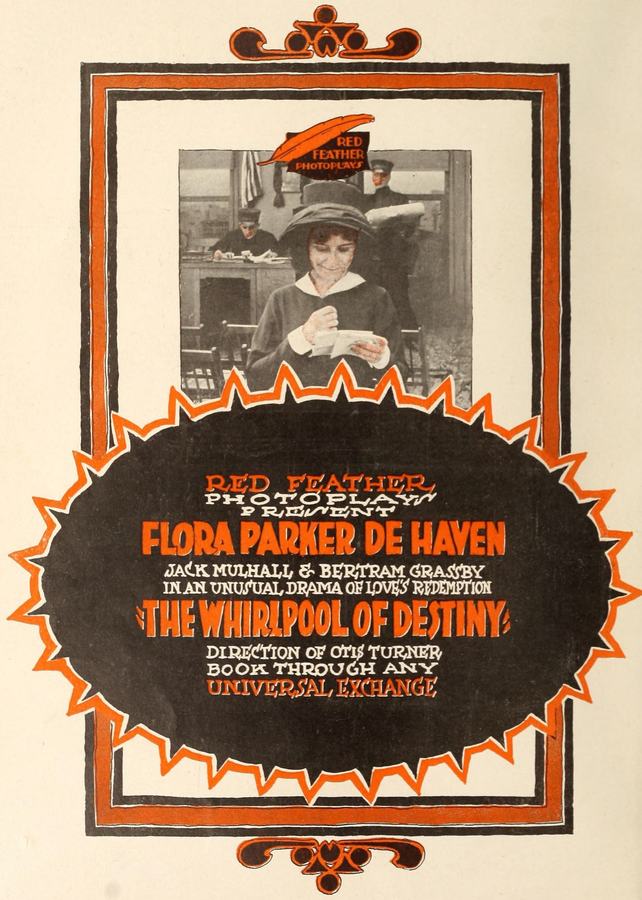
Few spectacles from the flickering twilight of the silent era feel as electrically alive—as if nitrate itself were breathing—as The Whirlpool of Destiny. Shot through with the dust of California rangelands and the coal-smoke of St. Louis riverfronts, this 1920 melodrama is less a pastoral fable than a palimpsest of bruised yearnings, overwritten by the redemptive ink of sacrifice.
Cinematographer Pliny Goodfriend (never lauded enough outside archival circles) wields chiaroscuro as a lasso: interior ranch scenes swim in umber pools, faces half-submerged like moonlit canyons, while Salvation Army skylines flare with a sulfuric yellow that seems to corrode the very film stock. The juxtaposition is ideological; virtue is not bathed in soft diffusions but scorched by harsh Americana glare. When Polly clasps her tattered nurse’s cape, the fabric absorbs a shaft of light the color of old bourbon, telegraphing salvation laced with addiction’s residue.
Bertram Grassby’s George oscillates between arrogant swagger and coltish bewilderment without the aid of spoken syllable. Watch the micro-shrug when he pockets coin for the horse: shoulders retreat a millimeter, guilt masquerading as nonchalance. Opposite him, Flora Parker DeHaven lets us glimpse Polly’s calculations; her pupils dilate not in passive gratitude but in ledger-like assessment—can this man be trusted, and at what tariff? Their chemistry smolders rather than flames, a tactical slow burn that silent cinema rarely dared.
Where other films of the period sentimentalize charity barracks, director Frank Reicher frames the Army foyer like a train-terminal purgatory: rows of iron beds, a communal pump spewing cold water, hymn sheets fluttering like wounded doves. It’s here that Polly’s secular self meets institutional piety, and the clash yields narrative torque. She will not genuflect, yet she’ll scrub bedpans; the film’s feminism, embryonic but unmistakable, resides in that tension.
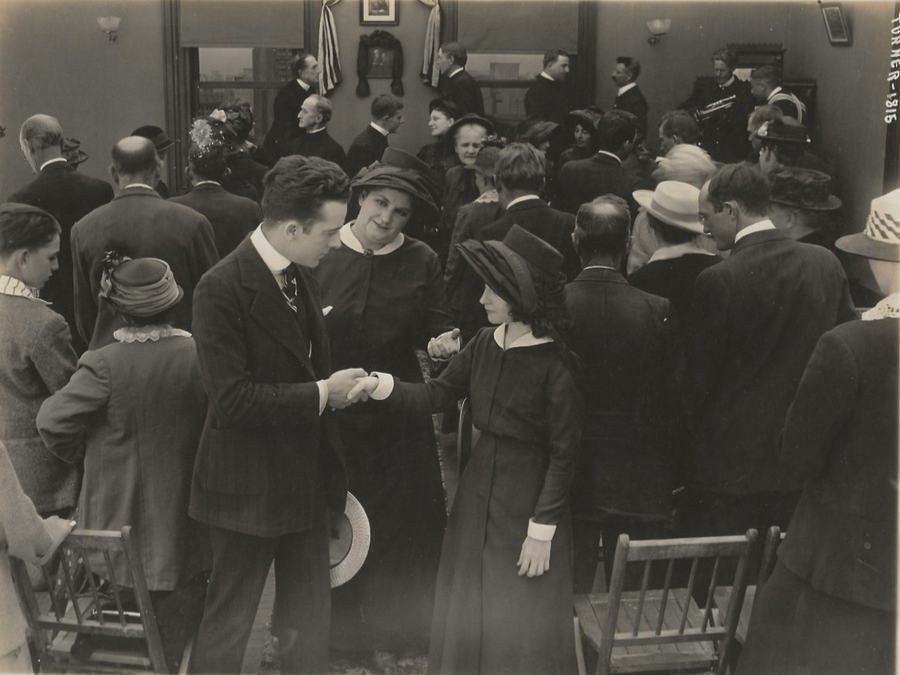
Charles Hill Mailes essays Thomas Bell with granite-sinewed restraint. Notice the scene where he wakes to find Polly changing his splint: the camera lingers on his weather-cracked knuckles unclenching—an entire apology without syntax. Later, when he intercepts George’s telegram, his eyes flicker through a sea-blue spectrum of possessiveness, resignation, and finally paternal surrender. In a decade larded with Victorian patriarchs, Thomas’s capacity for self-effacement feels almost radical.
The grain-exchange sequences—shot on location in a soot-clogged warehouse—pulse with montage rhythms indebted to Soviet agitprop yet laced with Midwestern malaise. Grain dust drifts like pale flurries, coating clerks until they resemble statues of ash. George’s descent from wrangler to ledger rat is rendered in a single match-cut: a stallion’s gallop dissolves into a clerk’s stamping fist, the sonic implication (even in silence) of hooves transmuting into the dull thud of rubber stamps.
Bill Martin’s abuse of Polly is suggested through shadow-play: a silhouette arm raised, a whiskey bottle glinting, then darkness. The absence of graphic detail paradoxically intensifies dread; viewers fill the frame with private phobias. After his fatal plunge, Reicher withholds triumphant release; Polly’s face registers not jubilation but the hollow click of a trapdoor shutting on childhood. It’s a rare instance of trauma acknowledged yet not monetized for thrills.
Recent 4K restoration by Elephant Gate Archives pairs the film with a commissioned score—piano, celesta, and musical saw. When the whirlpool motif appears (a literal spiral etched into George’s pocket-watch glass), the saw’s warble bends time; you feel the image sucking inward, destiny as auditory vortex. Purists may carp, but the approach honors silence by filling it with spectral echo rather than illustrative honky-tonk.
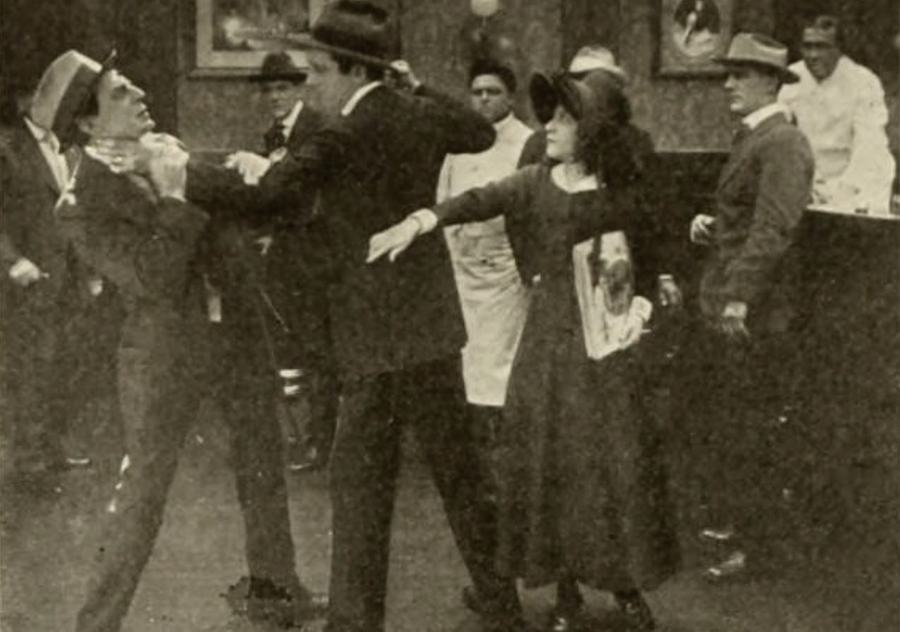
Place The Whirlpool of Destiny beside The Family Cupboard and you’ll note both traffic in patriarchal absolution, yet the former refuses the cupboard’s cloying moral absolutism. Conversely, The Huntress of Men gender-inverts the redemption arc, pitching woman as predator rather than pilgrim. Meanwhile, Was She Justified? interrogates viewer complicity through courtroom rhetoric, whereas Reicher’s film lets landscape plead the case. Even overseas, the Russian epics Pyotr Velikiy and Sorvanets share a preoccupation with dynastic rupture, though they resolve in blood not baptism.
Indian vaqueros drift through background shots, faces averted, suggesting colonized labor on which ranch prosperity rests. Their wordless presence indicts Manifest Destiny’s mythos without derailing the central narrative. Likewise, grain speculators swilling champagne while breadlines sprout outside anticipate Gilded Age ruptures. Reicher’s camera doesn’t preach; it simply refuses to crop out inconvenient shadows.
Viewed post-#MeToo, Polly’s refusal to marry until she has secured autonomous footing feels startlingly modern. Her stipulation—“I will not be another man’s chattel traded for absolution” (rendered in a pithy intertitle)—echoes in today’s debates around power asymmetry. Likewise, Thomas’s relinquishing of romantic claim models a masculinity predicated on emotional largesse rather than ownership, a template scarce in 1920 or 2020.
As of this month, the Elephant Gate restoration streams on Criterion Channel and receives a deluxe Blu-ray complete with a 40-page booklet featuring essays by Dr. Keiko Anzalone and a fold-out map of Paradise Valley locales. Physical media devotees will relish the booklet’s tipped-in replicas of lobby cards, their lurid oranges prefiguring the tangerine sunsets that dominate reel three.
Destiny, the film insists, is not a pre-written ledger but a gambit renewed each dawn. Its whirlpool is less a fatalistic maw than a centrifuge, flinging off dross—pride, cruelty, cowardice—until what remains is a triad bound not by law or DNA but by deliberate choice. The last shot, an iris-out on three clasped hands against a rising sun, feels neither cloying nor pat. It vibrates with the possibility of future fractures, yet affirms that to persist in the attempt at family is itself heroic. For a century-old artifact, such nuanced humanism is a minor miracle—one deserving of eyeballs beyond archival vaults.
Review by Celia Thorne | @celluloidbaroque

IMDb 6.5
1933
Community
Log in to comment.