DbcultAccessing Vault...
Cult Review
Senior Film Conservator
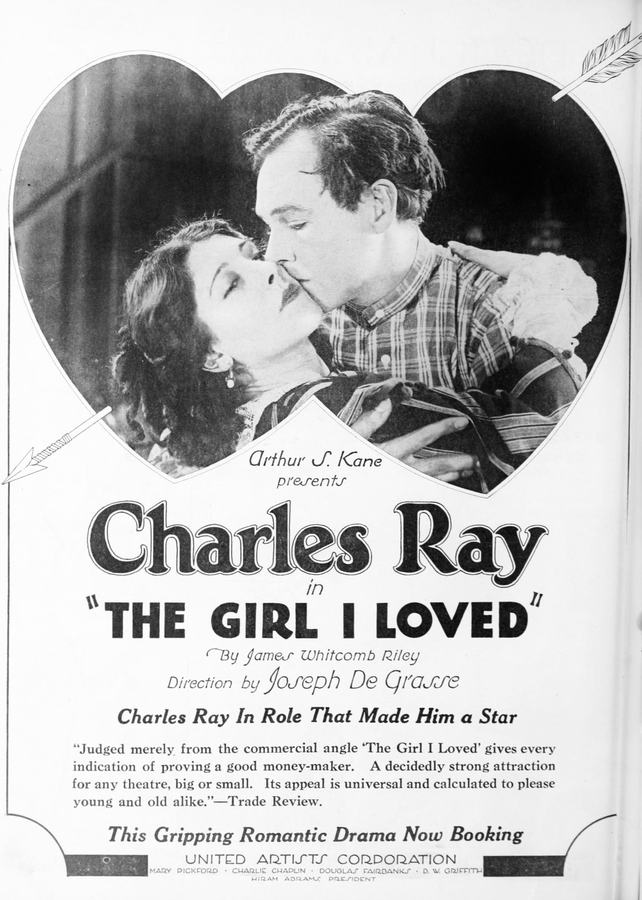
In the annals of silent cinema, where emotions were writ large across faces and narratives unfolded with a lyrical, often melancholic, grace, few films capture the poignant agony of missed connection and belated realization quite like "The Girl I Loved." Released in 1923, this cinematic gem, an adaptation of James Whitcomb Riley's evocative poetry and brought to the screen by writers Albert Ray and Edward Withers, transcends its era to deliver a timeless commentary on human nature's most regrettable tendencies. It is a film that, despite its sepia-toned existence, pulses with a vibrant, albeit sorrowful, heart, inviting audiences to reflect on the paths not taken and the affections discovered only when their object has drifted irrevocably out of reach.
At the narrative's core stands John Middleton, portrayed with a compelling blend of youthful arrogance and burgeoning regret by Charles Ray. John's initial disposition towards Mary, the orphan girl taken in by his family, is nothing short of an emotional fortress. He is a young man cloaked in a perplexing, almost deliberate, indifference, turning a cold shoulder to every innocent attempt Mary makes to forge a bond. This isn't merely childish petulance; it's a profound, almost pathological, inability to recognize worth or affection when it presents itself in an unassuming form. Ray’s performance here is critical; he doesn't just play a character who dislikes Mary, but one who is actively, almost stubbornly, blind to her growing charm and intrinsic goodness. This early characterization sets the stage for the crushing irony that will define his later years.
The film masterfully illustrates John's emotional isolation, not through grand dramatic gestures, but through subtle visual cues and the lingering gazes of other characters. While his family, and indeed the entire community, slowly but surely succumbs to Mary’s quiet grace and burgeoning beauty, John remains stubbornly aloof. This delay in his perception isn't a simple oversight; it's a fundamental flaw in his character, a self-imposed emotional myopia that prevents him from appreciating the treasure right before his eyes. It’s a powerful exploration of how personal biases and preconceived notions can blind us to profound connections, a theme that resonates deeply even today, making the film's message startlingly relevant.
Opposite John's initial coldness is Mary, brought to life with understated grace by Billie Latimer. Her character is a study in quiet resilience. Despite John's consistent rebuffs, Mary doesn't descend into bitterness or despair. Instead, she continues to grow, to blossom, embodying an inherent sweetness and an unwavering capacity for affection. Latimer's portrayal avoids any hint of a victim complex; rather, she crafts a character who, while perhaps hurt by John's indifference, never lets it define her. Her attempts at friendship, though repeatedly rebuffed, are earnest and pure, highlighting John's tragic flaw more than her own vulnerability. Her journey from an overlooked orphan to a beloved young woman is handled with a delicate touch, emphasizing her innate worth that slowly, inevitably, wins over everyone but the one who matters most.
The film’s power lies not just in John’s eventual realization, but in Mary’s independent emotional trajectory. She doesn't wait for John; she lives her life, forms genuine connections, and ultimately finds love and commitment with Willie, John's friend. This narrative choice elevates Mary beyond a mere object of John's belated affection, establishing her as a fully realized character with her own agency and emotional landscape. Her happiness, though it contributes to John's heartbreak, feels earned and deserved, preventing the story from becoming a mere lament for John's poor judgment and instead imbuing it with a sense of natural, albeit cruel, consequence.
The central, most agonizing theme of "The Girl I Loved" is the inexorable march of time and its unforgiving verdict of "too late." John's awakening to his love for Mary is not a sudden epiphany, but a drawn-out, almost torturous process, occurring long after everyone else in their orbit has recognized Mary's charm and his own latent feelings. This delayed recognition is the film's dramatic engine, transforming a simple tale of unrequited love into a profound exploration of regret and the irreversible nature of human decisions. The film doesn't rush this process; instead, it allows John's realization to simmer, to slowly come to a boil, only to find the pot empty.
The narrative structure, while seemingly straightforward, cleverly uses the passage of time as an almost palpable antagonist. Each fleeting moment, each missed opportunity for John to connect with Mary, accumulates into an insurmountable barrier. By the time his heart finally catches up with the truth, Mary's affections have quite naturally and understandably settled elsewhere. This is where the film achieves its most devastating emotional impact. It’s not a story of a love that was never reciprocated, but a love that was reciprocated by time, only for the protagonist to miss the window. The heartbreak is not just John’s, but the universal pang of recognizing a truth only when its moment has passed. This theme is often explored in cinema, from the grand romances to subtle character studies, but "The Girl I Loved" presents it with a stark, almost brutal, clarity that resonates long after the credits roll.
As a silent film, "The Girl I Loved" relies heavily on visual storytelling, and its direction, likely by Albert Ray who also co-wrote, is remarkably adept at conveying complex emotions without dialogue. The use of close-ups, particularly on the faces of Charles Ray and Billie Latimer, allows the audience to delve into their characters' internal worlds. A lingering shot of John's distant gaze, a subtle shift in Mary's expression, or the shared glances between Mary and Willie – these non-verbal cues carry the weight of entire conversations. The cinematography, though perhaps not groundbreaking for its time, effectively establishes the rural, idyllic setting, making John's emotional turmoil feel all the more stark against a backdrop of natural harmony.
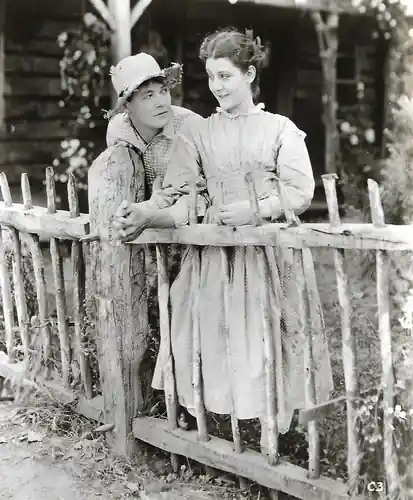
Intertitles are used sparingly but effectively, often delivering lines that echo the poetic sentiment of James Whitcomb Riley's original work. They serve not just to convey dialogue or plot points, but to punctuate the emotional beats, adding a layer of literary depth to the visual narrative. This thoughtful integration of text and image prevents the film from feeling overly reliant on expository cards and instead uses them as a form of visual poetry, enhancing the overall melancholic atmosphere. The film's pacing, while deliberate, never feels sluggish, allowing the emotional arcs to develop organically and authentically.
While Charles Ray and Billie Latimer anchor the film, the supporting cast provides crucial texture to the narrative. Actors like Lon Poff, Jess Herring, George F. Marion, and William Courtright, among others, contribute to the sense of a close-knit community, making John's initial alienation and later regret all the more pronounced. Edythe Chapman and Charlotte Woods, likely portraying family members, help establish the warm, welcoming environment that Mary finds, further highlighting John's self-imposed emotional exile. These performances, though often in the background, are vital in creating a believable world where the central drama can unfold with genuine stakes. Their reactions to Mary, their quiet observations of John, act as a communal conscience, reflecting the audience's own growing awareness of John's tragic oversight.
The film's connection to James Whitcomb Riley, the celebrated "Hoosier Poet," is not merely a footnote but a foundational element of its emotional depth. Riley's poetry often celebrated simple, rural life, childhood innocence, and the bittersweet pangs of nostalgia and lost love. "The Girl I Loved" embodies these themes with a fidelity that suggests a deep understanding of Riley's sensibility. The narrative's gentle unfolding, its focus on internal emotional landscapes, and its ultimate melancholic resolution are all hallmarks of a story steeped in the tradition of poetic realism. The writers, Albert Ray and Edward Withers, deserve commendation for translating Riley's lyrical voice into a compelling visual narrative, capturing the essence of his poignant observations on human nature and the passage of time.
The lasting resonance of "The Girl I Loved" lies in its universal exploration of regret. Who hasn't, at some point, looked back on a past decision, a missed opportunity, or an unacknowledged feeling, and wished they could turn back the clock? John Middleton's journey is a microcosm of this universal human experience. His tragedy is not that Mary didn't love him, but that he failed to love her when it mattered, when it could have made a difference. This makes the film deeply relatable, even a century after its release. It serves as a cinematic cautionary tale, a gentle reminder to open our hearts and minds to the people around us before the sands of time shift irrevocably.
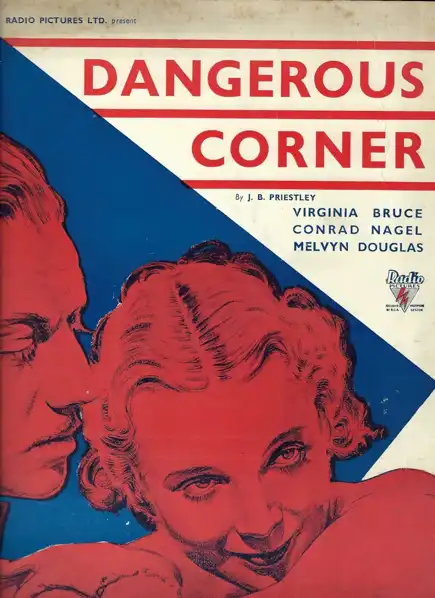
While many silent films explored themes of love and loss, "The Girl I Loved" distinguishes itself through its focus on the internal psychological journey of its protagonist and the profound consequences of his emotional blindness. It stands apart from more melodramatic offerings of the era, opting for a subtle, character-driven pathos. For instance, films like The Woman in the Suitcase might delve into mysteries surrounding identity and hidden pasts, or A Jewel in Pawn might explore material sacrifices for love; "The Girl I Loved" focuses squarely on the psychological sacrifice of a love unacknowledged. The film's strength is its quiet observation of human folly and the unyielding nature of consequence. It doesn't rely on grand gestures or sensational plot twists; instead, it finds its drama in the subtle shifts of the human heart and the cruel timing of its awakening.
The film's exploration of delayed emotional intelligence can also be loosely compared to the thematic undercurrents in films like What Do Men Want?, albeit through a different lens. While the latter might dissect societal expectations and desires, "The Girl I Loved" dissects the internal impediments to genuine connection. It's a testament to the power of early cinema that such nuanced psychological portraits could be painted without the aid of spoken dialogue, relying instead on the mastery of visual storytelling and the emotive capabilities of its performers.
"The Girl I Loved" endures as a powerful example of silent film's capacity for profound emotional storytelling. It is a film that challenges viewers to look beyond the surface, to appreciate the quiet, unassuming beauty that often goes unnoticed until it's too late. The performances, particularly from Charles Ray and Billie Latimer, are nuanced and deeply affecting, conveying a wealth of unspoken emotion that remains palpable through the decades. The film serves as a somber reminder of the preciousness of time and the irreversible consequences of emotional negligence. It compels us to consider the loves we might have overlooked, the friendships we failed to nurture, and the truths we recognized only when the moment for action had passed. In its simplicity, it finds a universal truth, making "The Girl I Loved" not just a piece of cinematic history, but a timeless mirror reflecting the human condition's most poignant regrets.
This film is more than just a historical artifact; it is a vital piece of emotional cinema, offering a quiet, introspective journey into the heart of a man who learns, with devastating clarity, the true cost of a love discovered too late. Its legacy is not built on spectacle, but on the enduring power of its human story, a story that continues to resonate with anyone who has ever pondered the bittersweet 'what ifs' of life. Its impact lies in its ability to evoke a deep, empathetic understanding of John's predicament, even as we lament his initial blindness. It's a film that stays with you, prompting reflection on your own perceptions and the value you place on the affections that surround you, before they, too, become merely a memory of the girl (or boy) you loved.

IMDb —
1934
Community
Log in to comment.